3 December 2025 The Future is the Product of the Past

A Nymphaeum was discovered in the ancient Thracian city of Perperikon

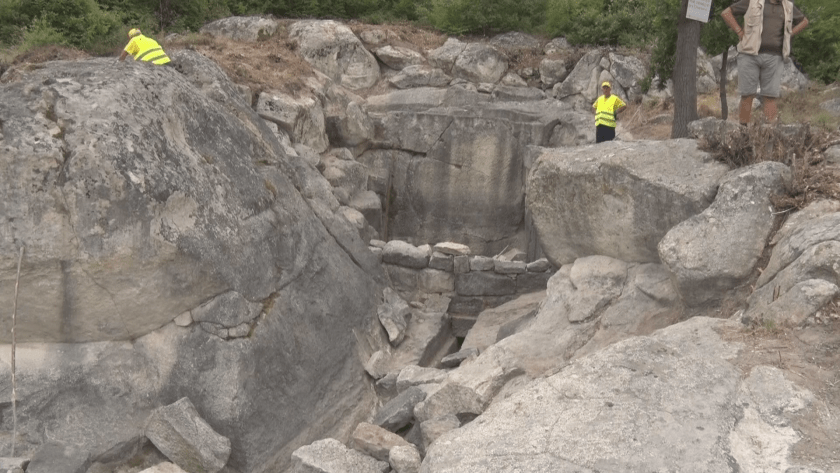
New researchs uncovered a huge monumental sanctuary of water (Nymphaeum) above the reservoir in the southern quarter of Perperikon. Professor Nikolay Ovcharov, head of the excavation of the archaeological complex, told reporters that it is a Nymphaeum from 2-3 centuries.

Perperikon, an archaeological complex located at an altitude of 470 meters near the city of Kardzhali, Bulgaria, in the Eastern Rhodopes, is considered one of the oldest megalithic monuments.

Until now, it was believed that there was only a water reservoir on the site. Recent excavations show that there was a sanctuary with a beautiful wall and columns from the Roman period.

Nymphaeums were sanctuaries for water nymphs. It was an elaborately decorated public drinking fountain – a semicircular monumental Classical fountain house. It often had niches filled with sculpture. The nymphaeum served as a sanctuary, a reservoir, and an assembly chamber where weddings were held.

Professor Nikolay Ovcharov said that the area, which is one of the longest-studied areas of Perperikon, has so far only been considered a reservoir with a drinking water volume of close to half a million liters and a depth of about 5 meters.


📣 Our WhatsApp channel is now LIVE! Stay up-to-date with the latest news and updates, just click here to follow us on WhatsApp and never miss a thing!!
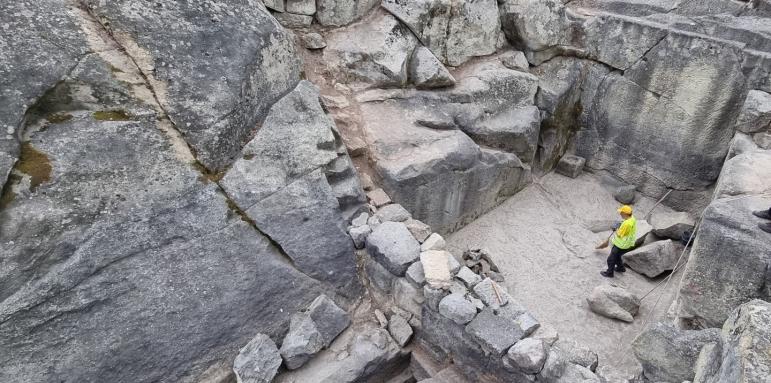


Photo: BTA

It was the new discoveries during the current restoration project of the site that led archaeologists to conclude that the water temple existed.

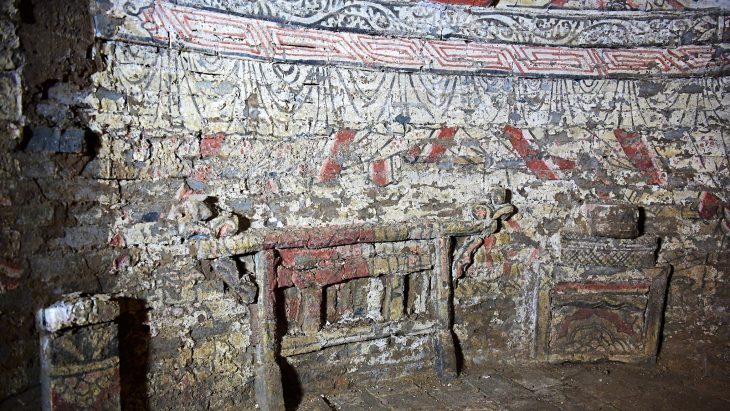
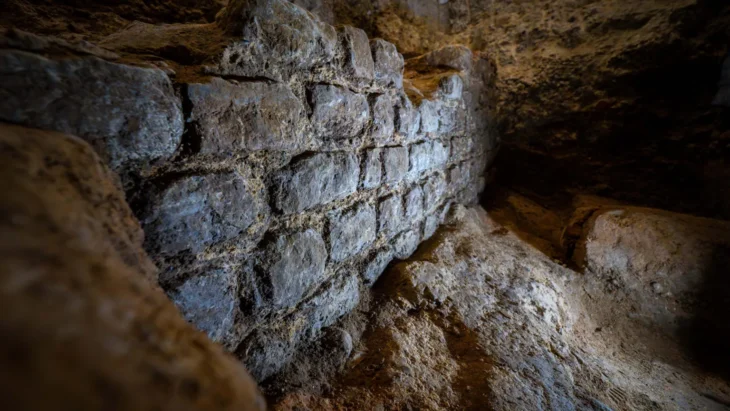
It turned out that this cistern, unlike the cistern on the Acropolis, which was completely cut into the rocks, here was cut on only three sides. On the east side, it has a beautiful, very well-made square wall, which, as it turned out, was actually the facade of this facility. In the excavations, we found parts of cornices, pedestals of columns, bases of columns, and perhaps also of statues, explained Prof. Ovcharov.

In his statement, Ovcharov emphasized the importance of urban nymphaeums, especially during the siege periods, and pointed out that such examples exist in Asia Minor, but similar artifacts of glorification and deification of water are rare in Bulgaria.

Archaeological excavations in Perperikon have been going on for 2 years only with the support of the Municipality of Kardzhali due to the lack of state support, and the work will continue until mid-September.
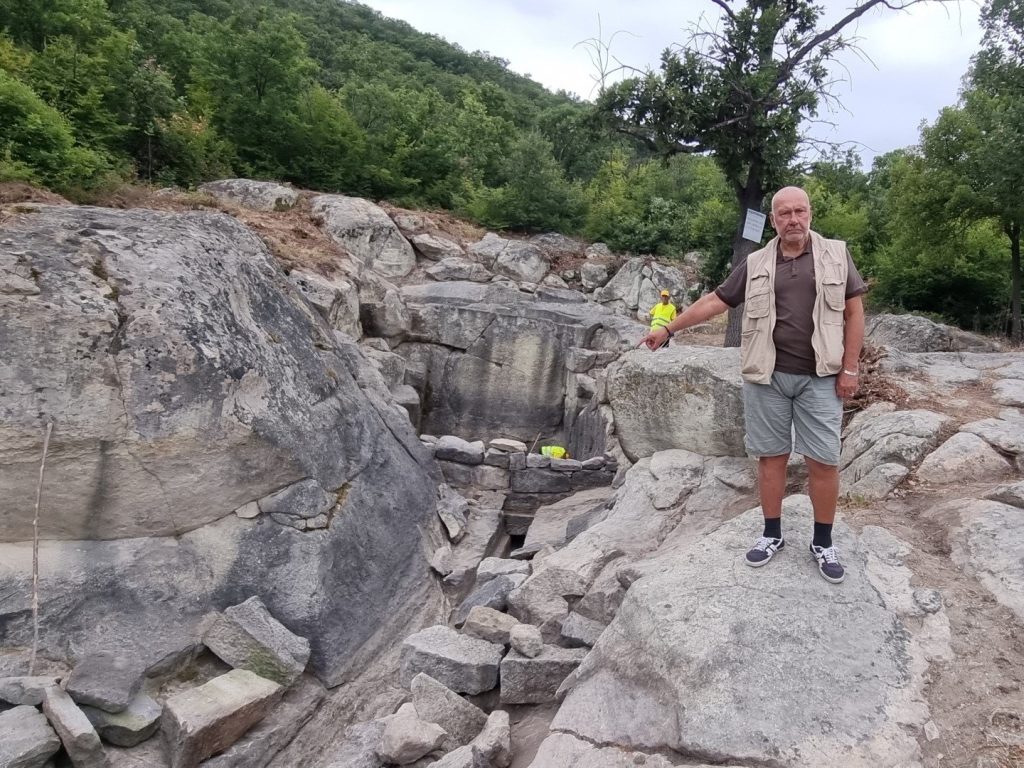
Professor Nikolay Ovcharov shows the Nymphaeum found in Perperikon. Photo: BTA

The ancient Thracian city of Perperikon is located in the Eastern Rhodope mountains, southern Bulgaria, 15 km northeast of the present-day town of Kardzhali, on a 470 m high rocky hill, which is thought to have been a sacred place.

Perperikon has its roots from the Chalcolithic period over 8000 thousand years ago but reached its heyday during late Antiquity, when it became a city center within the Thracian province of the Roman Empire.

Google Translate was used to translate articles from Standartnews.

Cover Photo: BTA
Related Articles

Dutch Shrimp Fishermen caught a centuries-old carved wooden statue off the coast of Texel

17 August 2022

17 August 2022

A carved wooden statue in exceptional condition has been attached to fishing nets off the coast of Texel, one of...

Ancient Roman city of Pompeii, archaeologists have unearthed a fresco depicting the Greek mythological siblings Phrixus and Helle

2 March 2024

2 March 2024

Archaeologists excavating a house adjacent to the House of Leda in Insula 6, Regio V, in the ancient Roman city...

A Circular Building with Six Towers of the Achaemenid Period discovered in Khorasan

3 April 2024

3 April 2024

Archaeologists have uncovered an almost circular adobe building with six towers, built in the 6th century BC, near Birjand in...

Aramaic four inscriptions found for the first time in eastern Turkey

17 September 2022

17 September 2022

Four inscriptions written in Aramaic were discovered in the ancient city with a grid plan, located on an area of...

Turkish researchers to work in Mount Ağrı believed to host Noah’s Ark remains

15 December 2022

15 December 2022

A team from Istanbul Technical University (İTÜ) and Ağrı İbrahim Çeçen University (AİÇÜ) has started in the area where the...

Archaeologists discovered the first evidence of early administrative management in eastern Iran

21 June 2022

21 June 2022

Iranian archaeologists believe they have discovered the first evidence of early administrative management in an eastern Iranian province, which they...

Spectacular 222-gram Gold Necklace Unearthed in Poland, Possibly of Goth Origin

10 August 2025

10 August 2025

A spectacular archaeological find has emerged from the forests near Kalisz, Poland — a massive bent gold necklace weighing an...

New evidence for early regional exchanges in Eurasia: Ice skates made of animal bones over 3,000 years old

9 March 2023

9 March 2023

Chinese archaeologists have discovered ancient ice skates made of animal bones at the Gaotai Ruins in the Xinjiang Uygur Autonomous...

Archaeologists Discover 40,000-Year-Old Evidence of Neanderthal Habitation in Ghamari Cave, Iran

13 March 2025

13 March 2025

Iranian archaeologists have made a groundbreaking discovery in Ghamari Cave (also known as Qamari Cave), located near Khorramabad in Lorestan...

Detector finds rare Merovingian gold ring refers to a previously unknown principality

22 February 2024

22 February 2024

A metal detectorist has unearthed a very rare, 1,500-year-old Merovingian gold ring made of 22-carat gold at Emmerlev in Southwest...

The 3,200-year-old perfume of Tapputi, the first female chemist in history, came to life again

24 July 2022

24 July 2022

One of the scent formulas written in Akkadian on clay tablets by Tapputi, known as the world’s first female perfumer...

110 Megaliths Discovered in Kerala and Inscriptions Revealing Ancient Pilgrimage Center in Andhra Pradesh

26 March 2025

26 March 2025

The Archaeological Survey of India (ASI) has unearthed a significant number of megalithic structures near the Malampuzha dam in Palakkad,...

3D Scans reveal details of ‘unusual’ Roman burial ritual

6 June 2023

6 June 2023

Archaeologists at the University of York, have used 3D scans to study the Roman burial practice of pouring liquid gypsum...

A 13th-Century Italian Fresco Reveals the Medieval Church’s Use of Islamic Altar Tents

3 February 2025

3 February 2025

A recently rediscovered 13th-century fresco in Ferrara, Italy, offers significant insights into the medieval practice of utilizing Islamic tents to...

1,800-Year-Old Roman Watchtower Discovered in Croatia

3 August 2025

3 August 2025

Archaeologists in Croatia have uncovered the remains of a 1,800-year-old Roman watchtower that once stood guard along the empire’s northern...