A groundbreaking archaeological discovery in southwestern China is reigniting global curiosity about ancient technologies—and even the possibility of materials originating beyond Earth. At the center of this debate is a mysterious metal object uncovered at the renowned Sanxingdui archaeological site, a location already famous for rewriting what historians know about early Chinese civilization.
Now, this latest find is challenging long-held assumptions about metallurgy during the Shang Dynasty, suggesting that ancient societies may have worked with materials far more advanced—or unusual—than previously believed.
A Discovery That Defies the Bronze Age
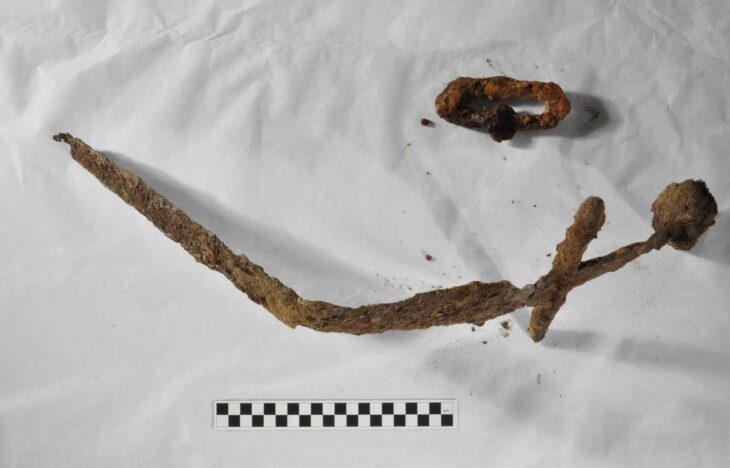
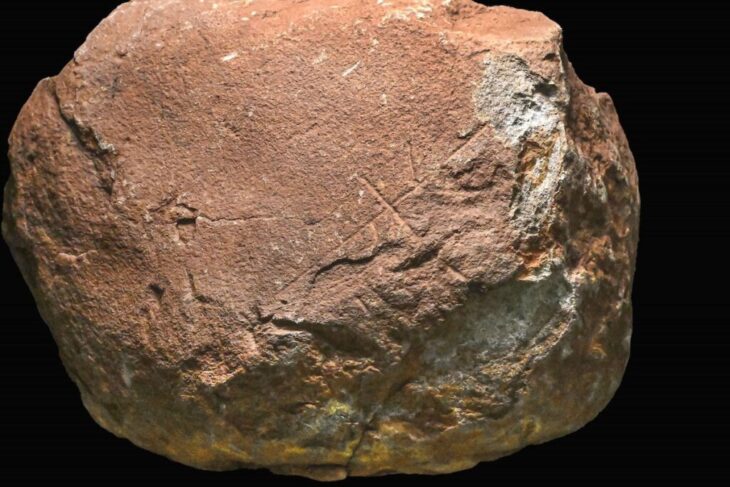
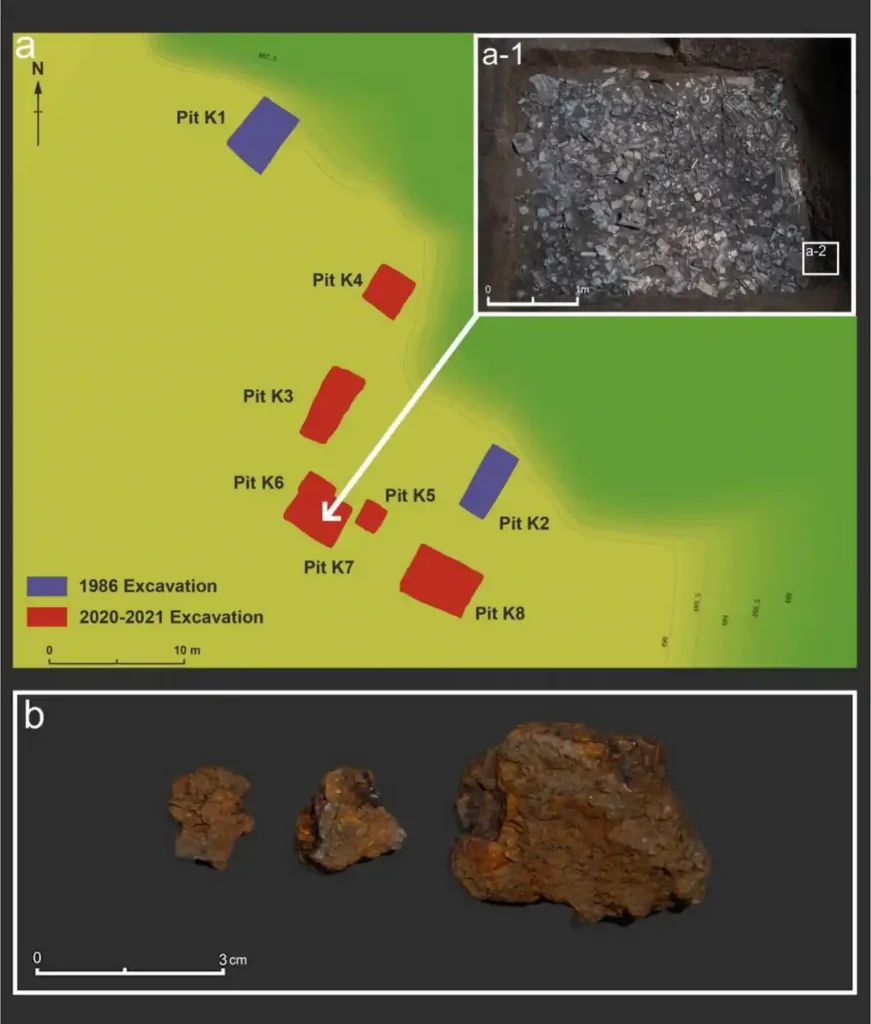
The artifact, labeled K7QW-TIE-1, was excavated from Pit No. 7, one of several sacrificial pits at Sanxingdui. Measuring approximately 20 centimeters in length, the object resembles an elongated axe or tool. While its shape alone drew interest, it was the composition that truly stunned researchers.
Initial testing revealed that the object contains more than 90% iron and approximately 7.41% nickel—an extremely rare combination for artifacts dating back to the Bronze Age (3000–1200 BCE). At that time, iron smelting technology had not yet developed in China, making the existence of such an object highly unusual.
The findings, published in Archaeological Research in Asia, suggest that this artifact could not have been manufactured using known techniques of the era.
📣 Our WhatsApp channel is now LIVE! Stay up-to-date with the latest news and updates, just click here to follow us on WhatsApp and never miss a thing!!
The Nickel Clue: Evidence from Space?
What truly sets this discovery apart is the presence and distribution of nickel within the object. Advanced analysis using scanning electron microscopy revealed something extraordinary: nickel levels reaching around 20% were distributed uniformly throughout the material.
This kind of chemical homogeneity is nearly impossible to achieve with early metallurgical processes. Even much later civilizations struggled to create such evenly mixed alloys.
Scientists point out that iron and nickel diffuse at different rates during smelting, making this level of consistency extremely difficult without modern technology. As a result, researchers began considering an alternative explanation—one that points to outer space.
Meteorites are known to contain high levels of nickel-rich iron. This has led experts to hypothesize that the artifact may have been crafted from meteoritic material that fell to Earth thousands of years ago.
A Structure Formed Beyond Earth
Further supporting this theory is the object’s internal structure. Microscopic examination revealed equiaxed ferrite grains—crystalline formations that typically occur only when metal cools extremely slowly over long periods.
Such conditions are not found on Earth but are characteristic of the vacuum of space, where metallic meteorites form and cool over millions of years.
This evidence strongly suggests that the material was not smelted but instead shaped directly from a meteorite fragment. In other words, ancient artisans may have worked with a piece of metal that literally fell from the sky.
Tool, Ritual Object, or Both?
While the composition of the artifact is becoming clearer, its purpose remains a subject of debate.
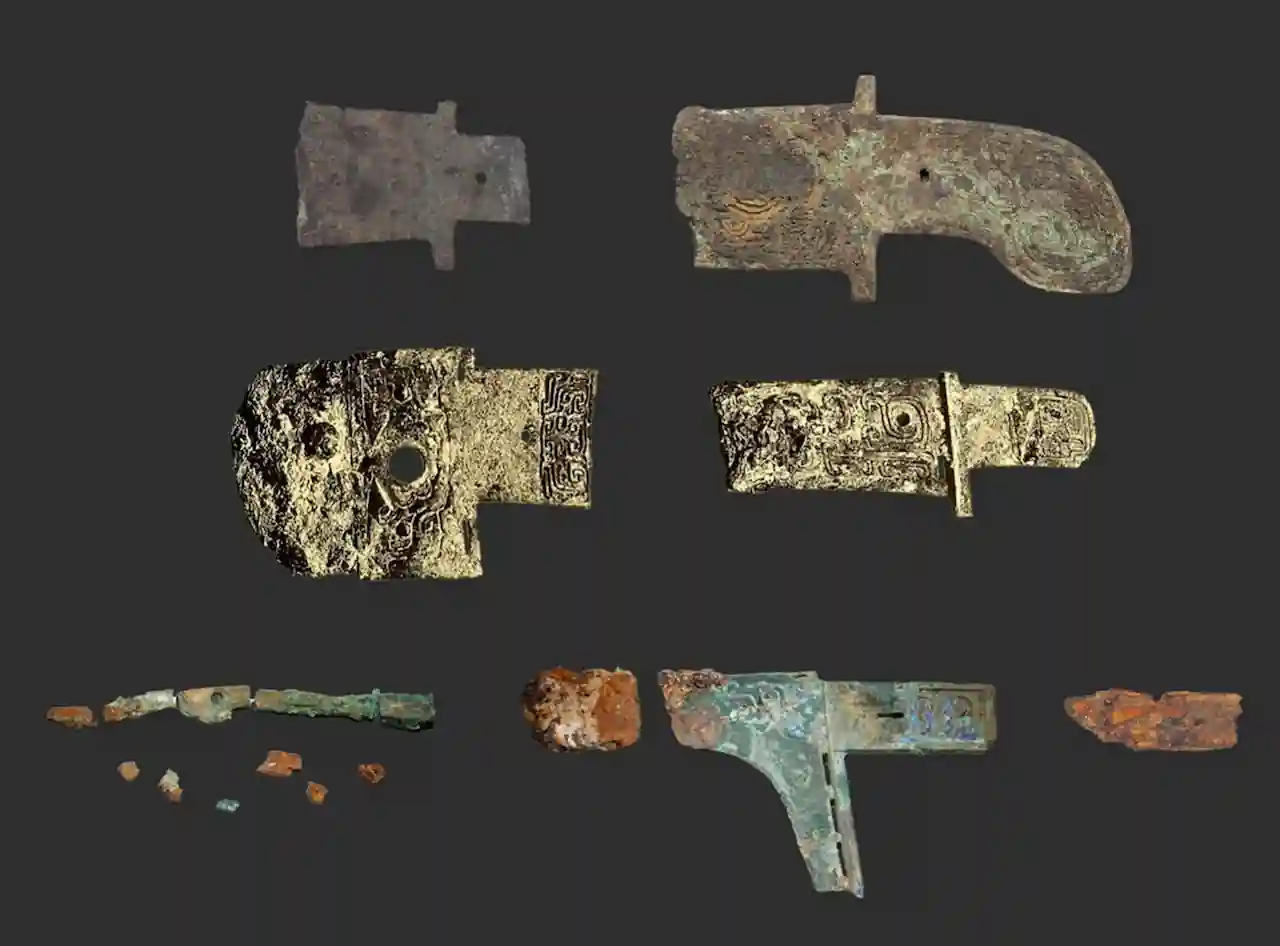
Unlike other ancient Chinese objects that combine bronze and iron, this piece is entirely monometallic and shows no visible decoration. Its hardness, however, indicates it could have been used as a cutting or carving tool—possibly to refine the intricate bronze masks and sculptures for which Sanxingdui is famous.
At the same time, its discovery within a sacrificial pit suggests it may have held ritual or symbolic significance. In many ancient cultures, materials from the sky were considered sacred, often associated with divine power or cosmic meaning.
Researchers believe that both practical and spiritual uses may have coexisted, especially given the rarity of meteoritic iron during that period.
A Rare Find in a Global Context
Although meteoritic iron artifacts have been discovered in other parts of the world, such as Spain’s ancient Villena Treasure, they remain extremely rare. In China, only about 13 such objects have been identified to date, most of them concentrated in northern regions.
The Sanxingdui artifact stands out as the largest of its kind ever found in the country—and the oldest in southwestern China. This makes it a crucial piece in understanding regional differences in ancient metallurgical practices.
Interestingly, while northern Chinese artifacts often combine meteoritic iron with bronze, the Sanxingdui object is entirely composed of iron, suggesting a distinct technological or cultural approach in the region.
Preservation and Future Research
Due to centuries of corrosion, the artifact is in a fragile state. It was carefully removed along with surrounding soil and transported to a conservation laboratory at the Sanxingdui Museum, where it is currently being preserved under strict conditions.
Scientists hope that future studies using more advanced, non-invasive technologies will help determine the exact type of meteorite from which the object originated. However, preservation concerns may limit further sampling.
Redefining Ancient Innovation
This discovery is more than just a fascinating anomaly—it has the potential to reshape our understanding of early human ingenuity.
If confirmed as meteoritic in origin, the artifact demonstrates that ancient civilizations were not only aware of rare natural materials but also capable of skillfully shaping them into functional or symbolic objects.
It also highlights the uniqueness of the Sanxingdui culture, which continues to surprise researchers with its advanced craftsmanship and distinct traditions.
As investigations continue, one thing is certain: this remarkable object serves as a powerful reminder that the ancient world still holds secrets capable of challenging modern assumptions—and perhaps even connecting humanity’s past with the cosmos itself.
Haichao Li, Zishu Yang, Yuniu Li, Jiahui Liu, Yu Lei, Honglin Ran, The earliest meteoritic iron artefact of the Chinese Bronze Age discovered at Sanxingdui, Southwest China. Archaeological Research in Asia, Volume 46, June 2026, 100692. doi.org/10.1016/j.ara.2026.100692
Cover Image Credit: H. Li et al. 2026, Archaeological Research in Asia