
12 June 2026 The Future is the Product of the Past

Legend of Secret Cossack Tunnels Revived After Underground Discovery in Pervomaisk, Ukraine

A surprising archaeological discovery has captured public attention in Ukraine, where construction workers uncovered underground structures during renovation works near a central stadium in Pervomaisk. The finding has reignited long-standing local legends about hidden Cossack tunnels beneath the Southern Bug River.

Unexpected Discovery During Construction

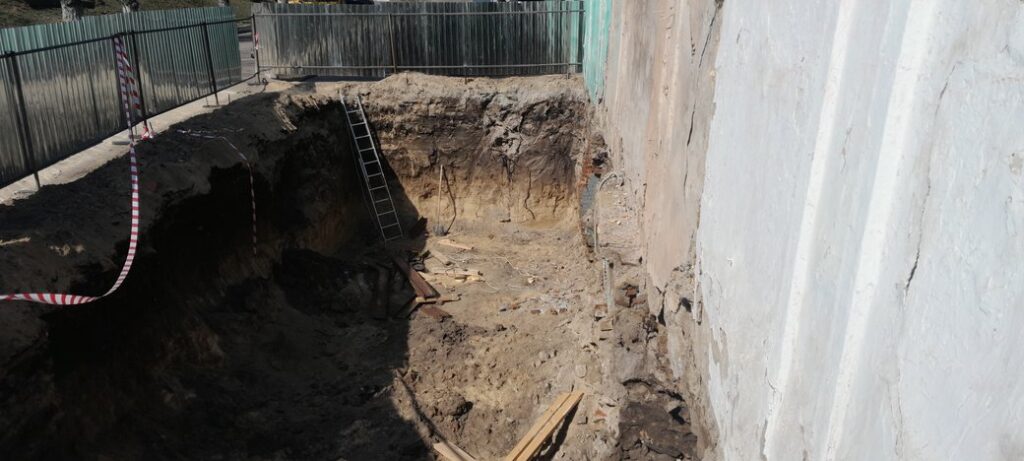
The discovery occurred while workers were reconstructing a basement space beneath a former beer bar located near the city’s central stadium. As excavation began, builders stumbled upon two deep underground niches made of stone, each stretching up to 10 meters in length.

Initially, the structures sparked excitement among residents, many of whom associate the area with folklore about secret underground passages allegedly built by Cossacks in the 18th century. According to the legend, these tunnels once connected different settlements beneath the river, serving as hidden routes during times of conflict.

Historical Context Behind the Structures

However, local historians and officials suggest a far less mythical explanation. According to tourism advisor Volodymyr Voitenko, the site was once home to an old settlement dating back over 200 years. This settlement, known historically as Holta, was eventually abandoned due to repeated flooding.

Voitenko explained that when residents relocated to higher ground, many of the original stone buildings—including their basements—were left behind. Over time, these structures were buried, particularly during the 1950s when the stadium was constructed on top of the area.


📣 Our WhatsApp channel is now LIVE! Stay up-to-date with the latest news and updates, just click here to follow us on WhatsApp and never miss a thing!!


He also noted that the region has long experienced soil instability, which further supports the idea that numerous buried basements may still exist beneath the surface.

Scientific Insights and Lost Artifacts

Historian Oksana Doroshenko, a former museum director and candidate of historical sciences, provided additional context. She referenced a scientific initiative from the 1920s known as the Bug Expedition, which studied settlements along the Southern Bug River.

The findings from this expedition contributed to the establishment of a local history museum. Although many artifacts were lost after World War II, archival materials from the research are still preserved at Ukraine’s Institute of Archaeology.

These records further support the theory that the newly discovered structures are remnants of historical buildings rather than hidden tunnels.
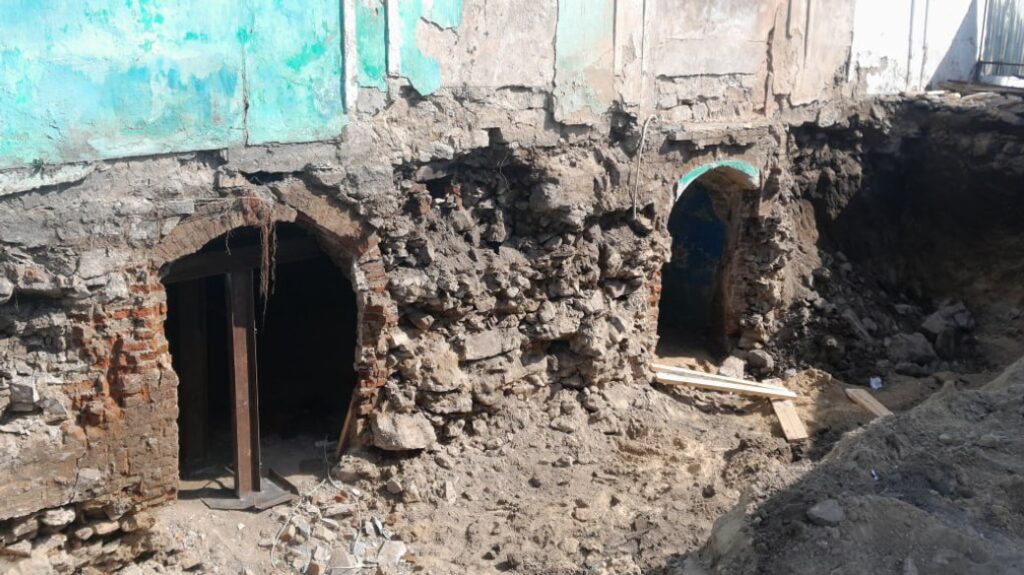
 Builders uncover two խոր underground stone niches, each reaching up to 10 meters in length during excavation near the stadium in Pervomaisk. Credit: Суспільне Миколаїв/Юрій Островершенко
Builders uncover two խոր underground stone niches, each reaching up to 10 meters in length during excavation near the stadium in Pervomaisk. Credit: Суспільне Миколаїв/Юрій Островершенко

Builders Dismiss Tunnel Theories

Construction workers on-site have also dismissed the idea that the niches are part of an underground tunnel system. They describe the structures as typical хозяйственные (utility) basements built with rubble stone, commonly used in older architecture.

Project contractor Ruslan Ostapenko emphasized that the dimensions and structure of the niches do not match what would be expected from large-scale underground passages. He also pointed out the historical context: during the 18th century, the Southern Bug River served as a border between the Russian Empire and the Ottoman Empire.

Given this geopolitical significance, constructing extensive underground tunnels without detection would have been highly unlikely.

Public Curiosity and Safety Concerns

Despite expert opinions, the discovery has attracted curious locals eager to explore what they believe could be legendary tunnels. Many have visited the site hoping to catch a glimpse of the underground structures.

However, access to the excavation area is strictly prohibited due to safety regulations. Officials have warned that entering the pit without proper authorization poses serious risks.

Future Plans for the Site

Looking ahead, developers plan to continue reconstruction and improve the surrounding infrastructure near the stadium. While no significant archaeological excavation is currently planned, officials remain open to preserving any historically valuable artifacts if discovered.

Although the mystery may not involve hidden Cossack tunnels, the discovery still offers a fascinating glimpse into the layered history of Pervomaisk—proving that even routine construction can uncover stories buried beneath the surface.

Cover Image credit: Суспільне Миколаїв/Юрій Островершенко

Related Articles

Jomon Ruins Adding to UNESCO World Heritage List

26 May 2021

26 May 2021

An international advisory panel has recommended that a group of ruins from the ancient Jomon period in northern Japan is...

Albastı “A Mother’s Nightmare “

5 February 2021

5 February 2021

Albastı is one of the bad characters in Turkish mythology. The fearful dream of puerperal women and babies, Albastı continues...

Rare Roman Articulated Terracotta Doll Unearthed at Torreparedones Archaeological Park

25 September 2025

25 September 2025

Archaeologists working at the Torreparedones Archaeological Park in Baena, Córdoba, Spain, have made a remarkable discovery: a rare Roman-era articulated...

2.3-meter sword found in 4th-century tomb in Japan

27 January 2023

27 January 2023

The largest bronze mirror and the largest “dako” iron sword in Japan were discovered at the Tomio Maruyama burial mound...

New discoveries have been made at a 9,000-year-old Amida mound in Turkey

1 January 2022

1 January 2022

The most recent archeological investigations at the 9,000-year-old Amida Mound in southeastern Turkey’s Diyarbakir province have uncovered fresh finds that...

Archaeologists unearth a portrait of a king carved into stone in a 4,300-year-old Chinese Pyramid

9 August 2022

9 August 2022

A team of archaeologists say they have found what could be the portrait of a king carved into stone at...

7500-year-old cursed city of Iran

17 March 2023

17 March 2023

Sialk Hills, located in the southwestern part of Kashan city in Iran, was known among the locals as a ‘cursed...

The Lost Georgian King: Archaeologists Discover the Tomb of Ashot the Great Beneath Gevhernik Fortress

8 October 2025

8 October 2025

High in the misty mountains of northeastern Türkiye, where emerald valleys carve through the rugged Artvin landscape, an ancient fortress...

5,000-year-old Settlement Unearthed in Al Mudhaibi, Oman

3 January 2023

3 January 2023

The Oman News Agency announced that a 5,000-year-old settlement was discovered during archaeological excavations at the Al Gharyein archaeological site...

Researchers Examine 4,000 Bricks to Solve the Secrets of an Ancient Roman Metropolis of Trier

12 April 2025

12 April 2025

Trier, once a significant economic and political center in the northern provinces of the Roman Empire, is set to be...

Pendants and beads reveal nine European Cultures living across the continent 30,000 years ago

1 February 2024

1 February 2024

In a new study, researchers have constructed a continent-wide database of personal ornaments worn by Europeans 34,000-24,000 years ago, a...

Evidence of Necromancy during Roman era in the Te’omim Cave, Jerusalem Hills: Oil Lamps, Spearheads, and Skulls

14 July 2023

14 July 2023

Te’omim Cave in the Jerusalem Hills may once have served as a local oracle where people communed with the dead...

Recent Excavations in Spain Reveal 7th Century BCE Religious Structure, Showcasing Eastern Influences within Tartessian Culture

18 February 2025

18 February 2025

A research team led by the National University of Distance Education (UNED) has made an important archaeological discovery at the...

Unearthing Secrets of Ancient Cyprus: New Discoveries at Pyla-Vigla Reveal Hidden Stories of a Hellenistic World

8 November 2025

8 November 2025

In a remarkable new chapter for Cypriot archaeology, researchers from the Pyla-Koutsopetria Archaeological Project (PKAP) have unveiled groundbreaking findings from...

The first time in Anatolia, a legionnaires’ cemetery belonging to the Roman Empire unearthed

18 November 2022

18 November 2022

In the ancient city of Satala, in the Kelkit district of Gümüşhane in the Eastern Black Sea region of Turkey,...