
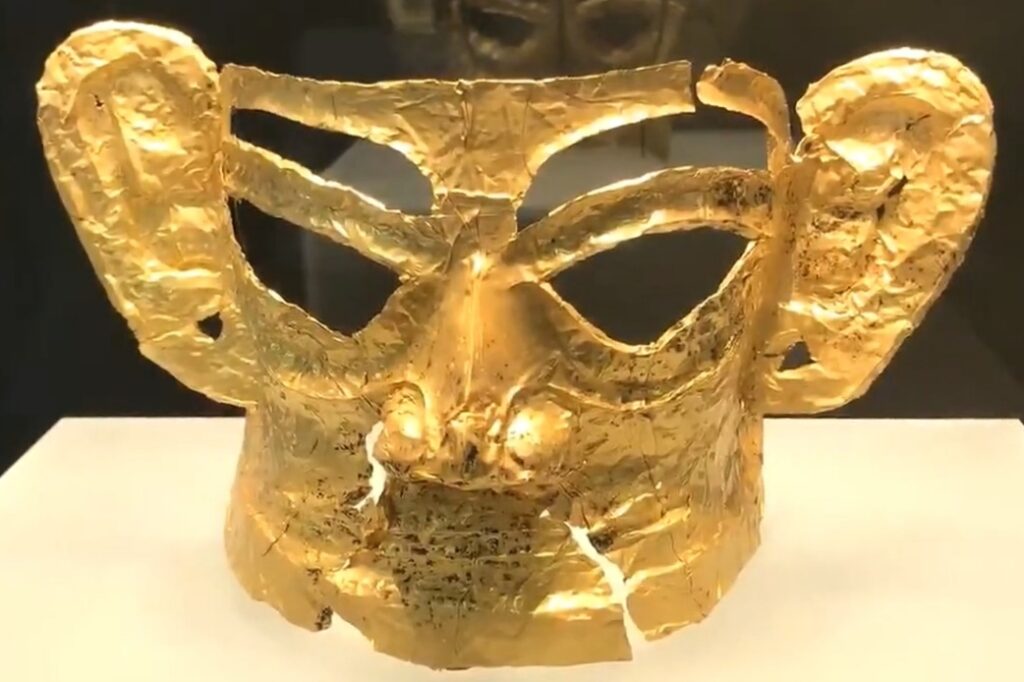
A bold new theory is reshaping how scholars view one of China’s most enigmatic archaeological sites. According to Professor Sun Hua of Peking University, internal strife at Sanxingdui, the capital of the ancient Shu kingdom, may have triggered mass migration, the destruction of city walls, and the disappearance of ritual spaces some 3,000 years ago.
Speaking at a recent academic forum in Sichuan, Sun argued that a war for political and religious control divided Sanxingdui during its later cultural phase. “Evidence suggests that this war was likely an internal conflict within the Sanxingdui state, and the group most severely affected appears to have been the theocratic aristocracy in charge of religious and ritual affairs,” Sun was quoted as saying.
A City of Masks and Mysteries
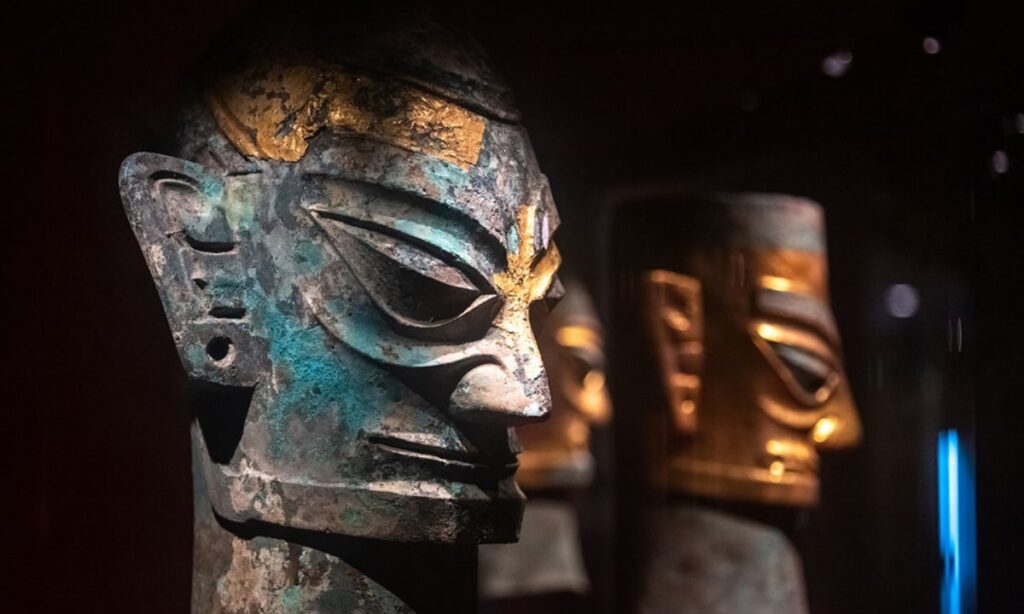
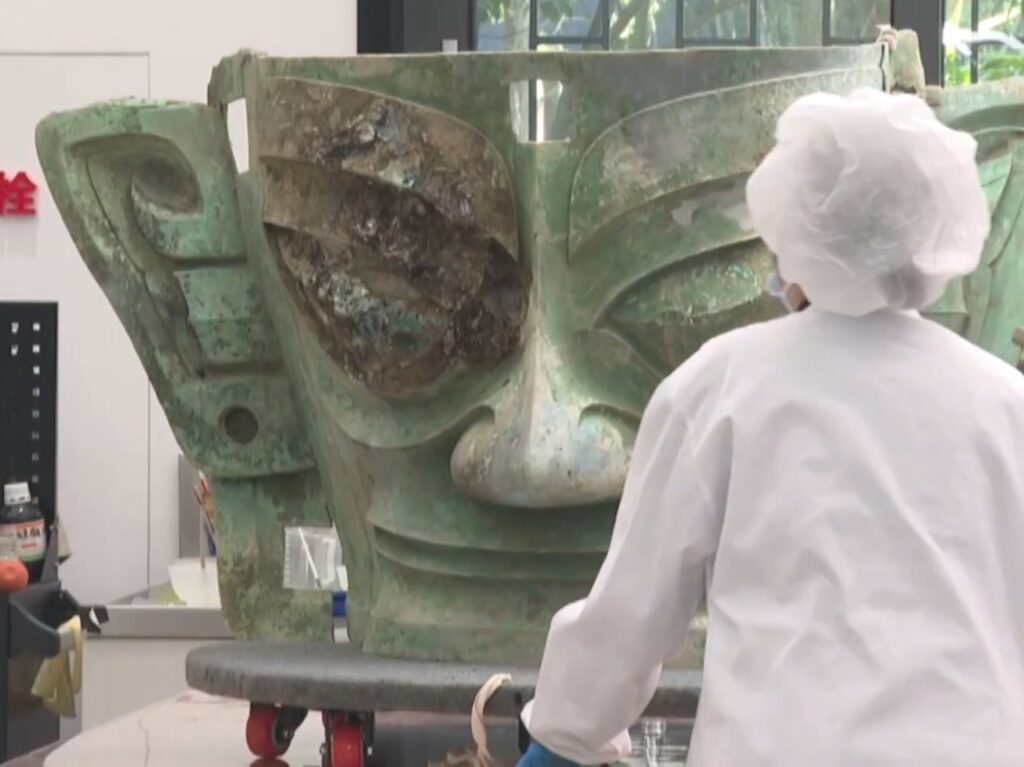
Sanxingdui, located in Deyang, Sichuan province, is widely regarded as one of the greatest archaeological discoveries of the 20th century. First uncovered in the 1920s and dramatically revealed in the 1980s, the site stunned researchers with its monumental bronzes—oversized masks with staring eyes, towering trees cast in bronze, and gold scepters that bore no resemblance to anything found in the Central Plains dynasties.
Archaeologists have identified three cultural phases at Sanxingdui. The earliest saw the rise of walled settlements along the Chengdu Plain, while the middle phase marked its transformation into a flourishing capital of the Shu kingdom. The final phase, however, shows signs of disruption: city walls broken, water systems altered, construction halted, and the sudden burial of ritual pits filled with bronzes, jade, gold, and ivory.
Sun interprets this sequence as evidence of civil war. The defeated faction—likely the ritual elite who oversaw sacrificial ceremonies—lost both political and spiritual authority. Survivors either moved into the smaller northwestern city within Sanxingdui or abandoned the capital altogether, spreading across the Sichuan Basin.
Treasures and Sacrificial Pits
Since 1986, archaeologists have excavated eight large pits at the site, each containing hundreds of extraordinary objects. These include life-sized bronze heads with protruding eyes, masks overlaid with gold foil, elephant tusks, finely worked jades, and intricate bronze trees believed to have been ritual symbols connecting heaven and earth.
Radiocarbon dating now places four of the pits, including the largest, between 1200 and 1010 BC—a period overlapping with the late Shang dynasty of northern China. The decision to bury such precious artifacts remains one of archaeology’s great puzzles. Were they offerings to the gods, emergency concealments during crisis, or symbolic closures of a city in decline?
Sanxingdui and the Shang: Two Worlds, One Era
The Sanxingdui civilisation coexisted with the Shang dynasty, often called China’s first historically documented dynasty. While the Shang left oracle bone inscriptions—the earliest known Chinese writing—no written records have yet been found at Sanxingdui. This absence deepens its mystery: a state advanced enough to cast massive bronzes somehow left no texts to explain its worldview.
Although contemporaneous, the two societies diverged in remarkable ways. Shang bronzes typically carried inscriptions and were used in ancestral rituals involving wine and food offerings. By contrast, Sanxingdui’s artifacts reveal a different spiritual landscape: masks with exaggerated eyes may reflect beliefs in divine vision, while bronze trees could symbolize cosmic connections. Some scholars suggest that Sanxingdui’s rituals centered on shamanistic practices and fertility cults distinct from the ancestor worship of the Shang.
A little-known fact is that the Shang and Shu regions were not isolated. Archaeological evidence shows the movement of jade, ivory, and even elephant bones between Sichuan and the Central Plains. This suggests trade or diplomacy, and possibly rivalry, between the two civilizations. Yet while the Shang kings meticulously recorded divinations, Sanxingdui’s silence remains deafening.
A Population in Motion
Sun Hua emphasized that the cultural transition at Sanxingdui was marked by shifts in architecture and burial practices, pointing to a large-scale population replacement. As he explained, newcomers from other cultures entered the Chengdu Plain during this period, altering the demographic composition of the region. These waves of migration likely transformed Sanxingdui from a grand capital into a secondary city, paving the way for later centers of power such as Jinsha, just 50 kilometers away.
The dispersal of people from Sanxingdui may explain the sudden appearance of new settlements across the Sichuan Basin, signifying a fresh stage of social development in the region.
Modern Echoes of an Ancient Collapse
Today, Sanxingdui is more than an archaeological site—it is a symbol of China’s ancient diversity and an engine of cultural diplomacy. Digital exhibitions are now bringing its treasures to global audiences, including artifacts too fragile or valuable to travel overseas.
As research continues, archaeologists hope to solve the riddle of why Sanxingdui fell. Was it purely internal strife, environmental pressures such as flooding or earthquakes, or contact with external rivals? Whatever the answer, the story of Sanxingdui shows how even the mightiest Bronze Age civilizations could fracture from within.
For now, the broken walls and buried bronzes stand as silent witnesses to a forgotten war that changed the fate of China’s mysterious Shu kingdom.
Cover Image Credit: Sanxingdui Gold Mask excavated in 2021. Wikimedia Commons
