19 January 2026 The Future is the Product of the Past

World’s Oldest Customer Complaint “at 3800 Years Old”

When we are not satisfied with the product we receive, what almost all of us do is complain about the product. We do this sometimes by calling customer service and sometimes by applying to consumer complaint lines. We even announce it to everyone on social media.

It seems that although centuries have passed, people have not changed much. It is clear that our job is easier now, but there were determined people in the past. He carved his complaints on both sides of the clay tablet without feeling cold.

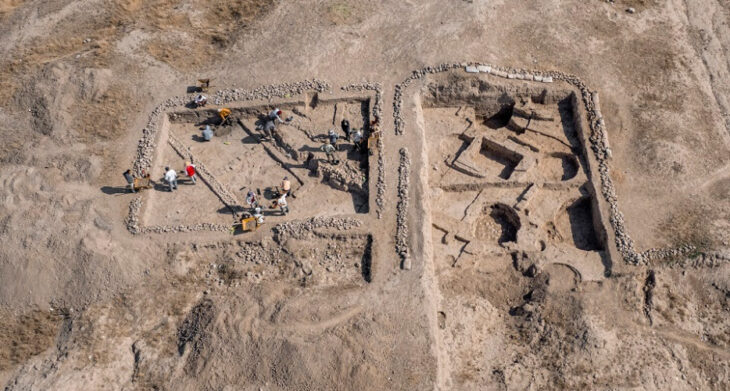
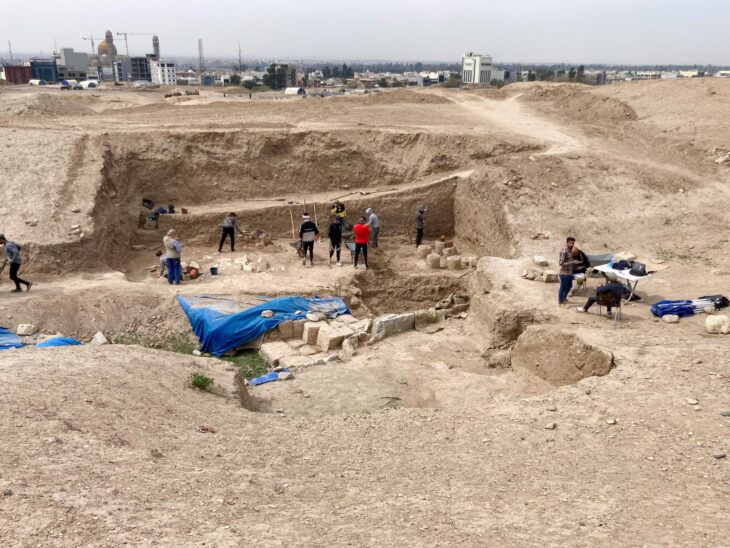
The world’s first known customer complaint was sent from Ur city, southern Mesopotamia about 3,800 years ago. (Tell al-Mukayyar in Iraq today)

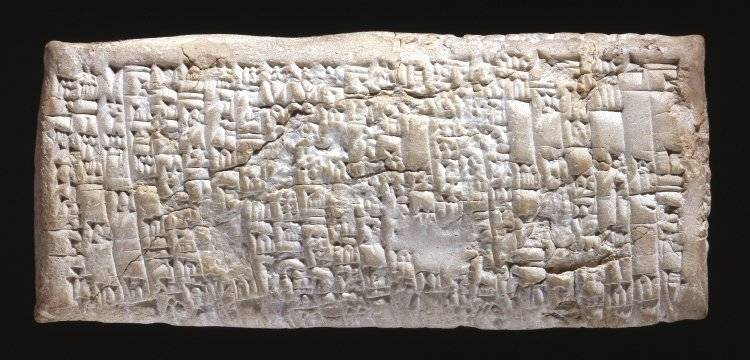
The Old Babylonian tablet with inventory number 131236, found in the British museum in London, is a clay tablet from a man named Nanni telling ea-nasir that he complained that copper ore of the wrong quality was delivered and another shipment was misdirected and delayed.

Ea-nasir was a member of Alik Tilmun, a trade guild based in Dilmun. Archaeologists have discovered that he was a prominent copper merchant. Apparently, Ea-nasir was a pretty bad businessman and received lots of complaints from angry customers.


📣 Our WhatsApp channel is now LIVE! Stay up-to-date with the latest news and updates, just click here to follow us on WhatsApp and never miss a thing!!
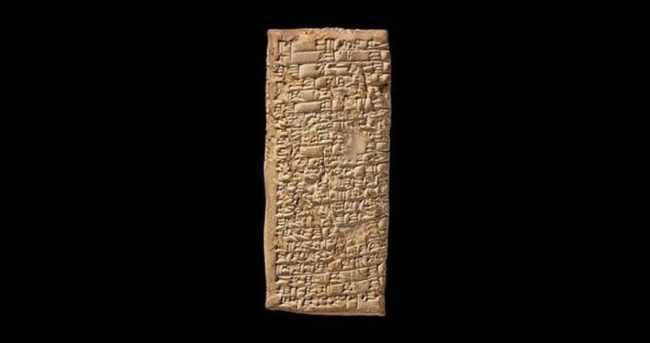


Letter from Nanni to Ea-nasir complaining after a gulf cruise that the wrong grade copper ore was delivered, misdirected, and another delivery delay. Source: British Museum.

The tablet was translated by the Asurologist A. Leo Oppenheim in Letters from Mesopotamia, which was out of print in 1967: The official, Business and Special Letters on Clay Tablates from Two Thousand Years and it was read as follows:

Addressing Ea-nasir, Nanni sends the following message:

When you arrived you said to me: “I will give Gimil-Sin (when it comes) good quality copper ingots.” Then you went but did not do what you promised me. You put in bad ingots before my envoy (Sit-Sin) and said, “If you want to get them, take them; if you don’t want to buy it, go! ” You said.

What are you taking for such a contempt for someone like me? I sent as messengers like ourselves to collect my purse with money (he was deposited with you), but by sending me your empty hand back to me several times and you despise me in enemy territory. Is there anyone among the traders who trade with Telmun who treated me this way? Just be disrespectful to my envoy! Because of a silver mina that I owe you (muttering), you are free to speak like this, I gave 1,080 pounds of copper to the palace in your name and Šumi-abum likewise, except for what we wrote on a sealed tablet to hide in Damascus’s temple, we was give 1,080 kilograms of copper.

How did you treat me for this copper? You hid my money bag from me in enemy territory; It is now up to you to fully restore (my money) to me.

Note that (from now on) I will not accept any non-good quality copper from you. I will select and take the ingots individually in my own garden and exercise my right to be rejected against you because you have insulted me.

– Leo Oppenheim, Letters From Mesopotamia.

This tablet found among the ruins of Ur was bought by the British Museum in 1953.

The tablet is 11.6 centimeters (4.6 inches) high, 5 centimeters (2.0 inches) wide, 2.6 centimeters (1.0 inches) thick, and slightly damaged. Translated from Akkadian.
Related Articles

For the first time, researchers discovered bioarchaeological evidence of familial embalming in early modern France

16 November 2024

16 November 2024

A unique discovery has revealed new insights into the burial rituals of early modern Western Europe: For the first time,...

Southeast Asia’s oldest stringed instrument may be a 2,000-year-old antler

21 February 2023

21 February 2023

Archaeologists unearth a 2,000-year-old stringed instrument made from deer antler in southern Vietnam. This unusual deer antler may be one...

Remains of painkillers were found in 4500-year-old vessels during excavations at Küllüoba Höyük in Turkey

20 September 2022

20 September 2022

In the excavations of the Early Bronze Age Küllüoba Höyük (Kulluoba Mound) in Eskişehir, where the first urbanization structure of...

Who really fought in the Battle of Himera? Researchers found the answer to the question

14 May 2021

14 May 2021

According to the Ancient Greek Historians, victory over the Carthaginians in the Battle of Himera was won by the alliance...

400-year historical document confirms the martyrdom of Japanese Christians

27 February 2021

27 February 2021

In Japan, the suppression of Christianity increased from the end of the 16th century to the beginning of the 17th...

In Peru, Archaeologists Discovered an Ancient Dance Floor that can Imitate Rumbling of Thunder

21 July 2023

21 July 2023

Archaeologists have discovered an ancient “sounding” dance floor in Peru that was designed to create a drum-like sound when stepped...

The 6th-Century “Türk-Kagan” Coin Discovery in Uzbekistan Could Rewrite History as the Oldest Known Record of the Name “Türk”

15 May 2025

15 May 2025

A remarkable archaeological find in Uzbekistan has unearthed a 6th-century coin bearing the inscription “Turk-Kagan,” a discovery that could significantly...

Thousand-Year-Old Christian Viking-era Graves Found in Sweden

28 June 2021

28 June 2021

Seven Christian tombs dating to the Viking Age have been found at Sigtuna. According to archaeologists, the tombs date to...

4750-year-old Megalithic Stone Plaza Discovered in the High Andes of Peru

15 February 2024

15 February 2024

Two anthropology professors from the University of Wyoming have discovered a prehistoric plaza high in the Andes, known as Callacpuma...

A prehistoric monument consisting of three round enclosures, one of which resembles a horseshoe, was discovered in France

7 April 2024

7 April 2024

Archaeologists from the French National Institute for Preventive Archaeological Research (INRAP) unearthed an unusual, prehistoric monument in the shape of...

Medieval Islamic Burials in a Neolithic Giant: DNA Reveals the Afterlife of Spain’s Menga Dolmen

5 January 2026

5 January 2026

A new interdisciplinary study suggests that the Menga dolmen—one of Europe’s largest Neolithic monuments—did not lose its symbolic importance with...

Excavations at the ‘Westminster Abbey of Wales’ Yielded a Few Surprises: a lost Aqueduct and a Buried Celtic Treasure

12 March 2024

12 March 2024

Archaeologists working in Wales revealed recently they may have discovered a Celtic monastery at the site of a 12th-century Cistercian...

“If this site (Sharda temple)is restored and conserved, it will attract thousands of Hindus and Buddhists from Kashmir and the rest of the world”

7 August 2021

7 August 2021

Sharda Peeth, a historic learning institution located 200 kilometers (124 miles) from Muzaffarabad, the capital and largest city of Pakistan-administered...

Luxurious Feather Beds of Iron Age Warriors

27 March 2021

27 March 2021

According to a new study, two warriors from the 7th century in Sweden were buried in graves where they were...

Rare Roman Cavalry Swords Lead to Major Archaeological Discovery of Iron Age to Roman Settlement in Gloucestershire

4 July 2025

4 July 2025

A remarkable archaeological excavation in Gloucestershire has unveiled a vast settlement site dating back over 2,000 years, bridging the Iron...