
8 November 2025 The Future is the Product of the Past

4,500-Year-Old ‘Gifted Graves’ Unearthed at Ikiztepe Mound in Northern Türkiye

Archaeologists working at the prehistoric site of Ikiztepe Mound in northern Türkiye have uncovered two extraordinary burials — one belonging to a hunter and the other to a child — each interred with personal items. The discovery sheds new light on Bronze Age beliefs, burial customs, and social organization in one of Anatolia’s most enduring settlements.

New Discoveries from the Southern Sector

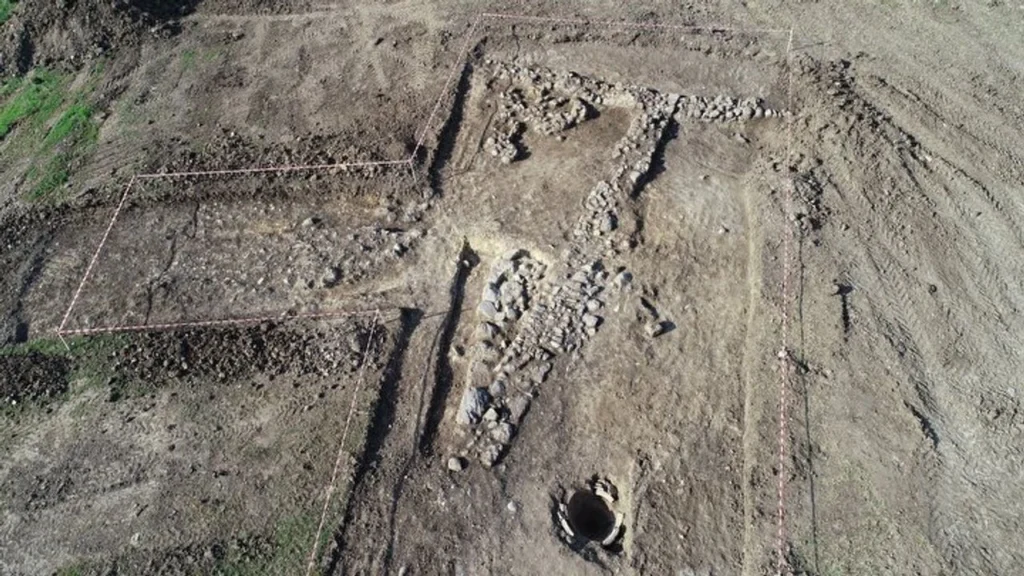
This year’s excavations, directed by Assoc. Prof. Aslıhan Beyazıt of Istanbul University, mark the first systematic exploration of Ikiztepe’s southern area. The work revealed three graves lying just beneath the surface — two of them so-called “gifted graves,” where the dead were buried with items reflecting their identity and role in the community.

One grave belonged to an adult male thought to be a hunter, laid to rest with bronze harpoon points, while the other contained the remains of a six-year-old child wearing bracelets. These findings not only mirror burial traditions seen in the site’s northern necropolis but also suggest subtle chronological and cultural variations between the two areas.

“The appearance of Early Bronze Age graves so close to the surface indicates a different stratigraphic sequence in the south,” Beyazıt explained. “That difference may point to shifts in settlement organization or even changing rituals over time.”
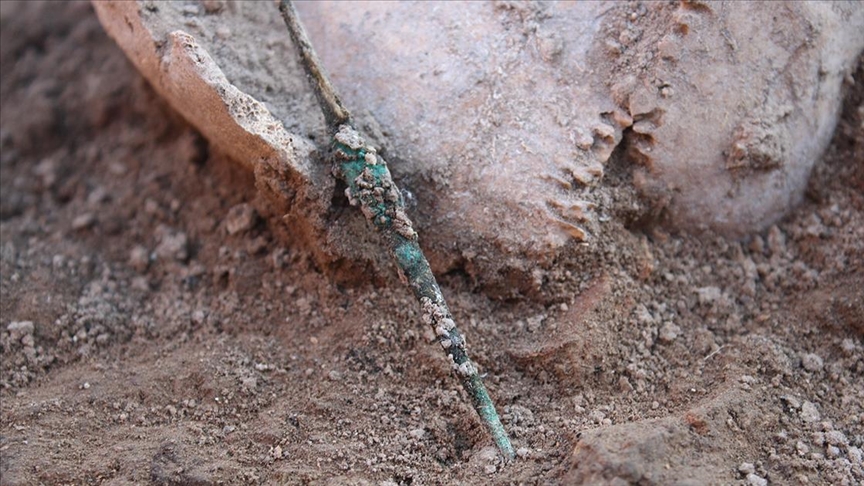
One grave belonged to an adult male thought to be a hunter, laid to rest with bronze harpoon points, while the other contained the remains of a six-year-old child wearing bracelets
One grave belonged to an adult male thought to be a hunter, laid to rest with bronze harpoon points, while the other contained the remains of a six-year-old child wearing bracelets. Credit: AA

Half a Century of Excavations

Located in Bafra, in the province of Samsun, the Ikiztepe Mound has been under excavation for over 51 years and remains one of the longest-running archaeological projects in the Black Sea region. The site was continuously inhabited from 4500 to 2000 B.C., spanning the Chalcolithic and Early Bronze Ages. More than 15,000 artifacts have been unearthed — from pottery and bone tools to early examples of medical instruments and textile equipment — providing a detailed picture of prehistoric Anatolian life.


📣 Our WhatsApp channel is now LIVE! Stay up-to-date with the latest news and updates, just click here to follow us on WhatsApp and never miss a thing!!


The mound’s four main hills (Tepe I–IV) form a complex archaeological landscape where settlement, production, and burial areas intermingled. Ikiztepe’s strategic location near the Kızılırmak River delta made it a hub of trade and cultural exchange linking the Anatolian interior with the Black Sea coast.

Daily Life and Ancient Industry

Beyond its funerary finds, Ikiztepe offers rare insight into prehistoric industry and social structure. Numerous spindle whorls, loom weights, and bone awls indicate the presence of organized textile production, likely involving women and children as active contributors. Archaeobotanical and zooarchaeological analyses are underway to reconstruct dietary patterns — from domesticated grains to wild plants and animal protein sources — offering a glimpse into Bronze Age subsistence strategies.

These material traces show that the people of Ikiztepe were not isolated villagers but participants in regional exchange networks. Copper and tin artifacts, as well as imported pottery, reveal long-distance connections that may have extended as far as the Caucasus and Central Anatolia.
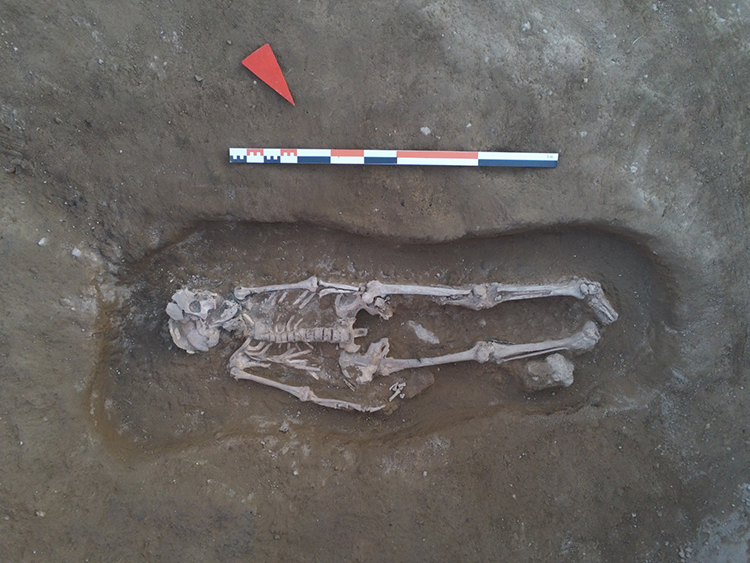
One grave belonged to an adult male thought to be a hunter, laid to rest with bronze harpoon points. Credit: AA

A Window into Anatolia’s Prehistoric Heritage

Ikiztepe continues to stand as a cornerstone of Anatolian archaeology, illuminating the evolution of early communities in northern Türkiye. The new “gifted graves” expand our understanding of how ancient societies expressed identity, status, and spirituality through burial practices.

As Beyazıt’s team continues its work under the “Legacy for the Future” project of the Ministry of Culture and Tourism, future excavations are expected to uncover further evidence of how this coastal settlement adapted to environmental change, shifting economies, and evolving social norms.

“Each layer of soil at Ikiztepe tells us not only how people lived,” Beyazıt says, “but also how they remembered their dead — and, in doing so, how they defined themselves.”

Cover Image Credit: AA

Related Articles

60 Elongated Structures of Unknown Function and Neolithic Silos Discovered in France

12 October 2024

12 October 2024

The Pfulgriesheim site, located in northeastern France’s Alsace region, underwent extensive archaeological research before being developed as a new urban...

Sacred Sanctuary of Phrygian Mother Goddess Matar Unearthed in Attouda Ancient City

2 October 2025

2 October 2025

A groundbreaking archaeological discovery has been made in Attouda Ancient City, located in the Sarayköy district of Denizli, Turkey. Excavations...

Bronze Age Ceremonial Sword Found in Håre in Vestfyn will be on Display Soon

13 March 2021

13 March 2021

Archaeologists excavating the village of Håre on the island of Funen in Denmark have discovered an ornate Bronze Age sword...

New ancient ape from Türkiye challenges the story of human origins

2 September 2023

2 September 2023

A recently discovered fossilized ape from a site in Turkey that is 8.7 million years old is inspiring scientists to...

Massive New Kingdom Fortress Unearthed on the Horus Military Road in North Sinai

12 October 2025

12 October 2025

An Egyptian archaeological mission has uncovered a massive military fortress dating back to Egypt’s New Kingdom period along the ancient...

Treasure Hunters’ permission given to raise mystery canister in hunt for lost Nazi Gold

5 August 2022

5 August 2022

Treasure hunters claim they have permission to lift a buried canister that they believe may hold the loot next month...

3,500-Year-Old Cuneiform Tablets and Seal of Unknown Hittite Prince Unearthed in Türkiye

19 October 2025

19 October 2025

In the ancient heart of southern Türkiye, history has once again spoken through the clay. Archaeologists excavating the site of...

Archaeologists Discovered 8th-century BC Settlement in Uzbekistan

25 June 2024

25 June 2024

A team of Chinese and Uzbek archaeologists discovered an ancient settlement dating back to the 8th century BC in Uzbekistan,...

Egypt discovers five 4,000-year-old ancient tombs in Saqqara necropolis

19 March 2022

19 March 2022

The Egyptian Ministry of Tourism and Antiquities announced recently the discovery of five 4,000-year-old ancient tombs in the Saqqara archaeological...

The new type of Silla tombs discovered in Gyeongju, South Korea

27 June 2024

27 June 2024

Archaeologists have made a groundbreaking discovery in the ancient capital of the Silla Kingdom (57 BC-AD 935) in the ancient...

Discovery Shedding Light on the Mysteries of Anatolia: 3500-year-old Double-Headed Eagle Seal

21 October 2024

21 October 2024

A grain silo and two different seal impressions, one of which is a double-headed eagle, were found during the excavation...

Analysis of Ancient Scythian Leather Samples Shows Ancient Scythians Made Leather from Human Skin

20 December 2023

20 December 2023

The ancient Scythians’ history as fearsome warriors dates back more than 2,000 years, and now research from a multi-institutional team...

According to new research, medieval warhorses were shockingly diminutive in height

12 January 2022

12 January 2022

Medieval warhorses are often depicted as massive and powerful beasts, but in reality, many were no more than pony-sized by...

Ancient gypsum furniture was discovered in a fire temple in the ancient region of Vigol in Iran

1 June 2021

1 June 2021

Sets of gypsum furniture, including a carved table and chairs, were discovered during an archaeological dig in central Iran. According...

Stone-arched tunnel discovered near Achaemenid dam in southern Iran

4 February 2022

4 February 2022

A cultural heritage protection team has recently discovered a stone-arched tunnel located near an Achaemenid embankment dam in southern Iran....