Muzeul de Istorie Națională și Arheologie Constanța has announced the discovery of 34 Roman-period tombs during preventive archaeological excavations at the Municipal Hospital site in Constanța — a location that lies within the ancient necropolis of Tomis.
What began as a routine heritage assessment tied to infrastructure upgrades has evolved into one of the most significant urban archaeological discoveries in recent years along Romania’s Black Sea coast.
A Necropolis Beneath the Modern City
The excavation area falls inside the protected archaeological zone of the Necropolis of ancient Tomis, the Greco-Roman city that once flourished as a major port on the western Black Sea. Tomis — known historically for its strategic maritime position and as the place of exile of the Roman poet Ovid — was one of the most important urban centers in Roman Moesia Inferior.
Because the hospital complex stands within a legally designated archaeological site, preventive research was mandatory under Romanian heritage law before construction works could proceed. Field investigations were conducted in two phases between September 2025 and February 2026, under authorization from the Ministry of Culture.
Despite interruptions caused by demolition works and hazardous structural conditions on site, archaeologists completed 39 days of active excavation within the designated perimeter.
📣 Our WhatsApp channel is now LIVE! Stay up-to-date with the latest news and updates, just click here to follow us on WhatsApp and never miss a thing!!
What they uncovered reshapes our understanding of Roman funerary practices in Tomis.
Catacombs, Multiple Burials, and African Amphorae
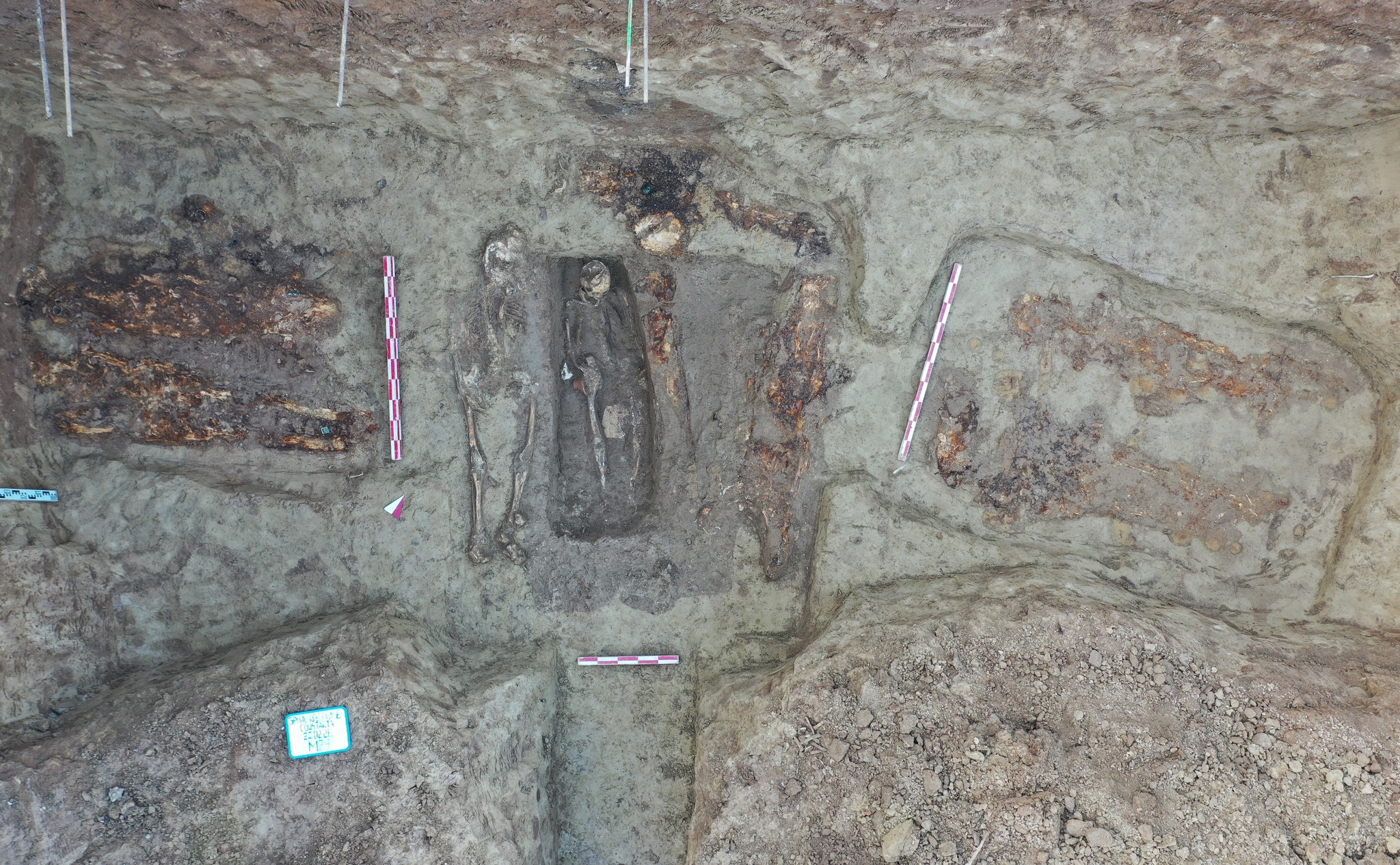
The team documented 34 Roman-era graves, several of which contained multiple inhumations arranged within catacomb-style structures. These underground burial chambers suggest organized funerary architecture rather than isolated interments, pointing to structured family or community burial traditions.
A significant number of tombs yielded grave goods, including:
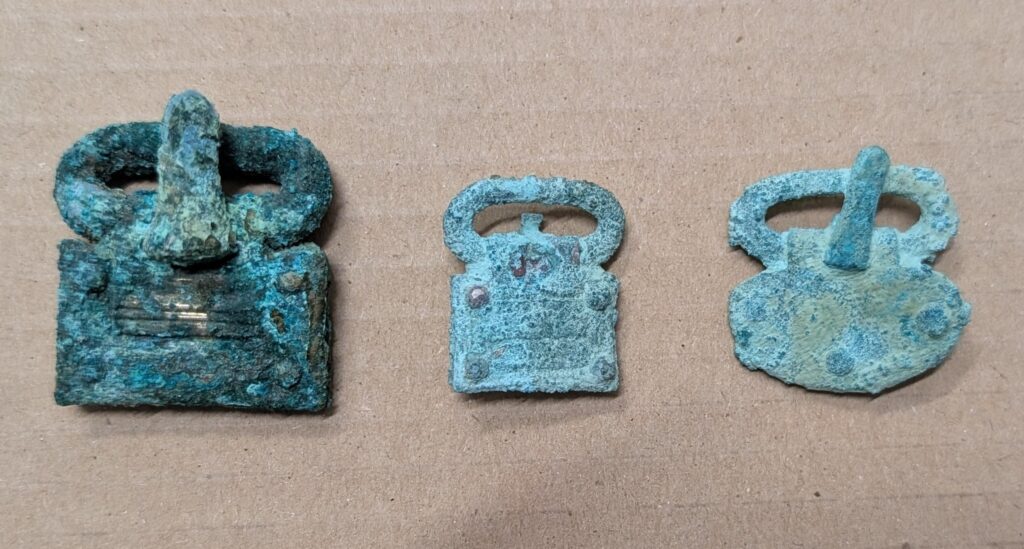
Personal adornments and jewelry
Glass vessels
Coins
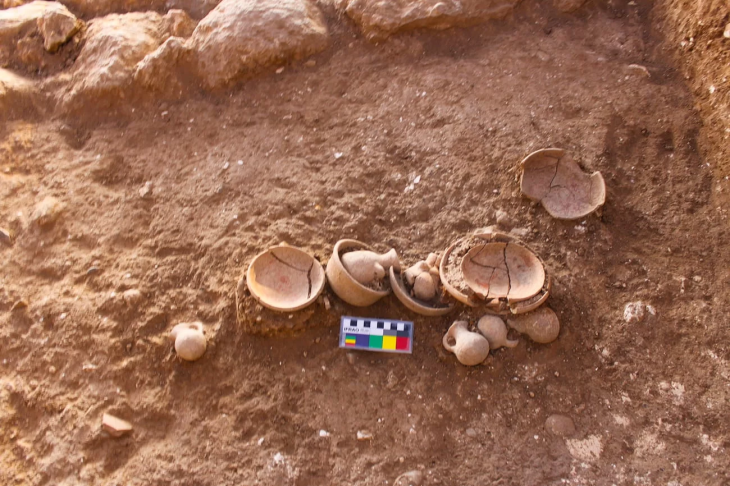
An exceptional quantity of ceramic material, notably African amphorae
The presence of African amphorae is particularly revealing. These transport vessels, commonly used for wine or olive oil, indicate sustained commercial connections between Tomis and North Africa during the Roman Empire. Their discovery in funerary contexts may reflect both trade wealth and symbolic offerings linked to status and identity.
Two Exceptional Finds: Greek Inscription and Parade Shield Umbo
Among the discoveries, two objects stand out as especially rare.
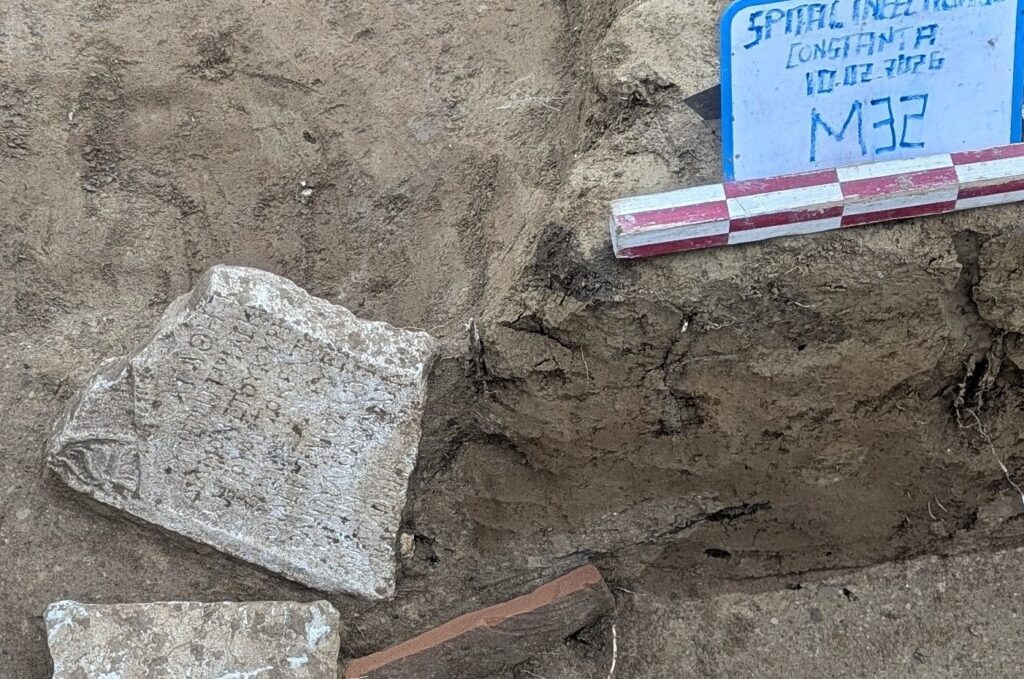
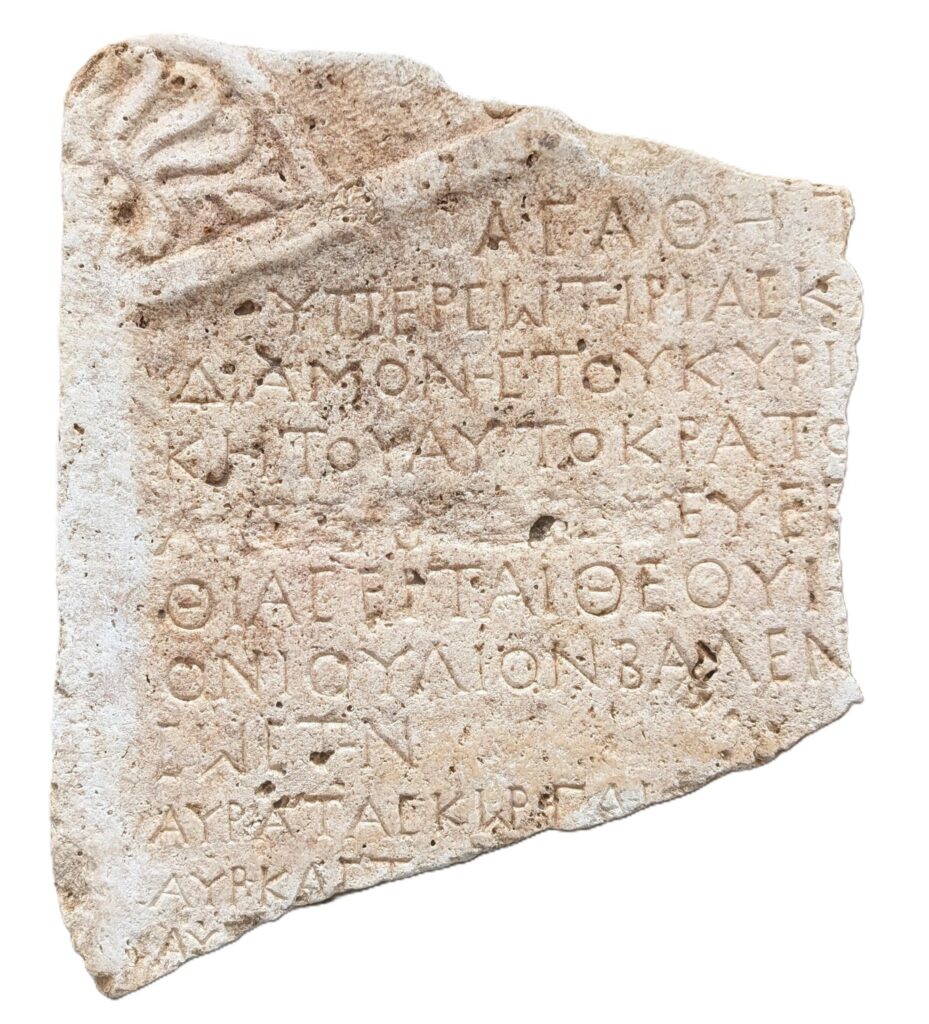
The first is a Greek-language inscription dated to the 3rd century CE, which attests to the existence of a religious association in Tomis. While details of the inscription are still under study, its epigraphic content offers valuable insight into the city’s spiritual and social organization during the Roman period. Religious associations played a central role in urban life, often functioning as both devotional and social networks.
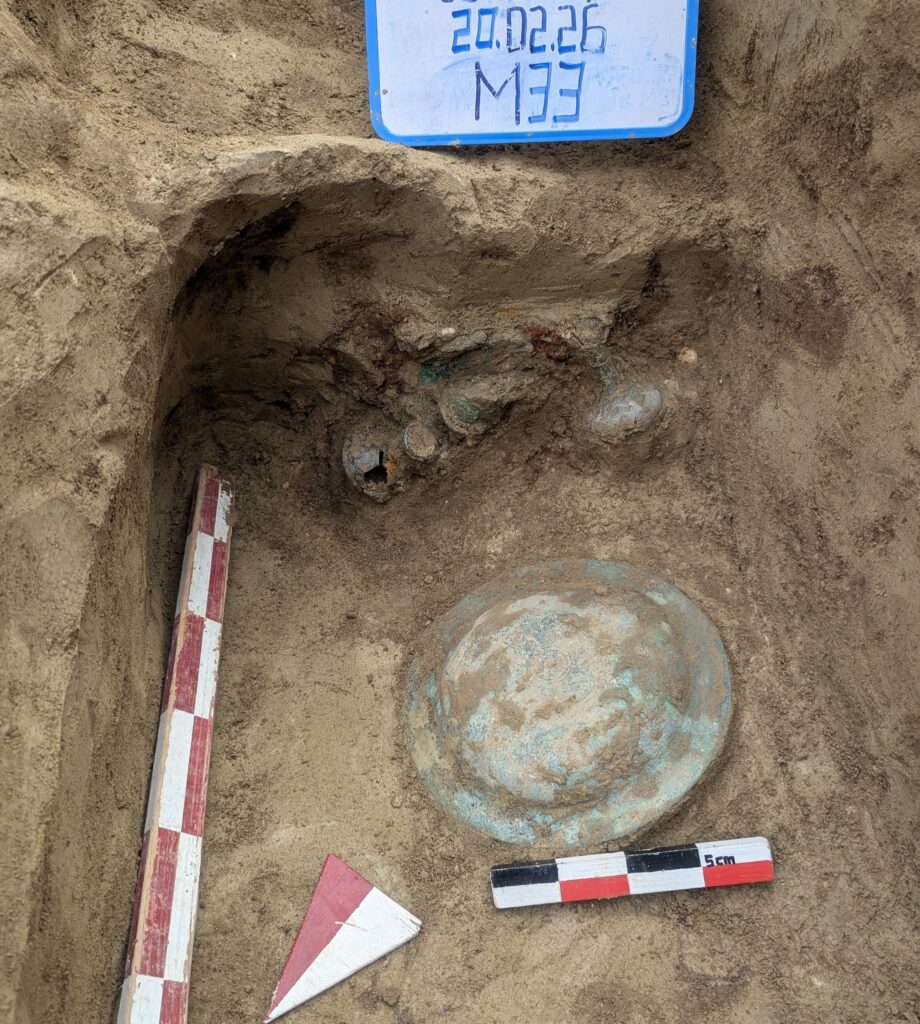
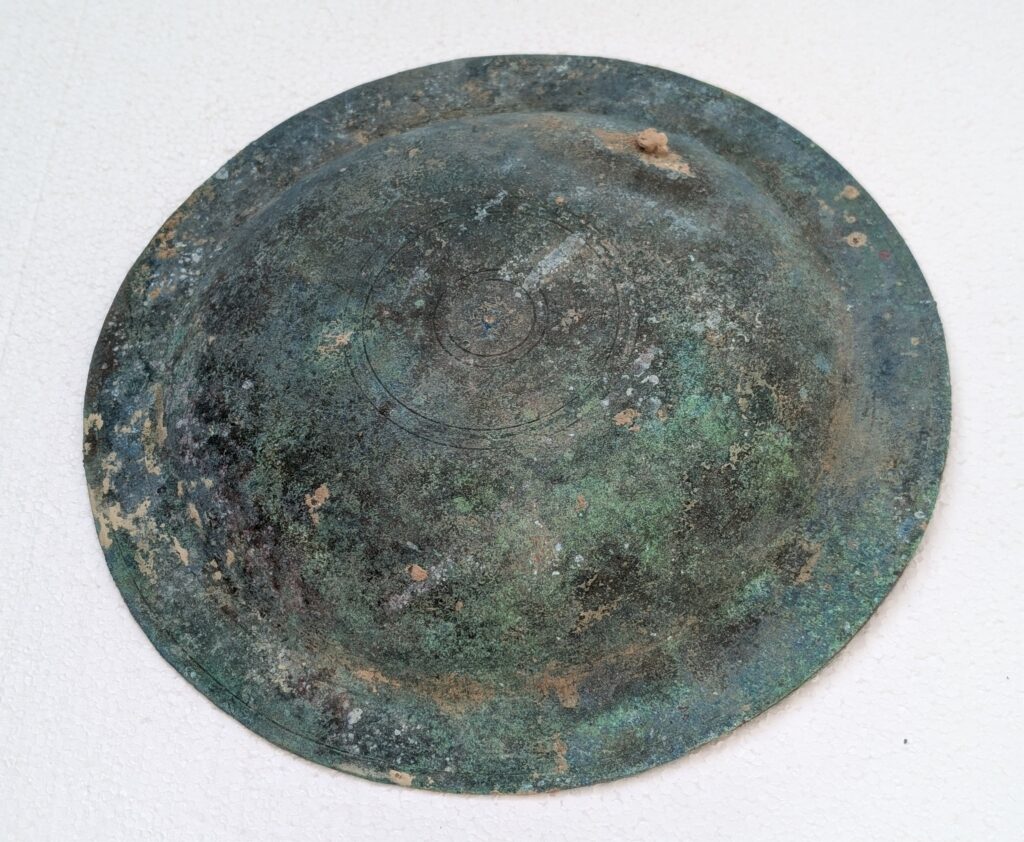
The second remarkable find is an umbo — the central metal boss of a parade shield. Unlike functional battlefield shields, parade shields were often ceremonial, associated with display, prestige, and possibly military honors. Such objects are extremely rare in funerary contexts, raising intriguing questions about the individual buried with it. Was he a decorated officer? A member of a prestigious urban militia? Further analysis may clarify this.
Together, these two finds significantly elevate the importance of the excavation.
Working Under Dangerous Conditions
The excavation was not without risk. Archaeologists reported extremely hazardous working conditions due to ongoing demolition works and the structural instability of adjacent buildings, including a nearby structure classified as seismic risk category Rs1.
At one point, official documentation confirmed that staff safety could not be guaranteed. The museum temporarily suspended excavation in the most dangerous sectors until safety measures were implemented. Even during suspension, specialists returned to collect exposed materials and complete topographic documentation to avoid data loss.
Despite winter temperatures below freezing, rain, snow, and ground frost — all recorded in the daily site log — the archaeological team maintained progress.
The museum emphasized that delays attributed to archaeological work were unrelated to the institution’s performance, noting that preventive excavation timelines cannot be predicted in advance due to the unpredictable nature of subsurface discoveries.
Tomis: A City of Layers
The Municipal Hospital site also lies within the protection zone of the 4th-century “Cavoul with Orant” monument, a Late Roman funerary structure decorated with Christian imagery. This reinforces the broader historical significance of the area.
Tomis itself evolved from a Greek colony to a Roman provincial capital. By the 3rd century CE — the same period as the newly discovered inscription —the city was an active urban center marked by trade, religious plurality, and complex funerary customs.
The latest discoveries add tangible archaeological evidence to that narrative.
How the Constanța Excavation Is Rewriting the Story of Ancient Tomis
Urban archaeology often unfolds under the pressure of modern development, yet the discoveries at Constanța demonstrate how preventive research can reveal irreplaceable chapters of the past hidden beneath contemporary infrastructure.
The thirty-four Roman tombs, the 3rd-century Greek inscription attesting to a religious association, and the rare parade shield umbo together deepen our understanding of funerary architecture in the western Black Sea region, illuminate trade connections between Tomis and North Africa through the presence of African amphorae, and shed new light on religious organization and elite or military display culture in a provincial Roman city.
Far from being a routine compliance procedure, this excavation underscores how densely layered the ancient landscape of Tomis remains beneath the modern city. As laboratory analyses of human remains, inscriptions, and associated artifacts continue, researchers expect to refine the chronological framework and social context of the site, potentially revealing further insights into the demographics, burial customs, and urban identity of Roman Constanța.
For now, the excavation stands as a major discovery within Romania’s archaeological heritage — and a powerful illustration of how much of ancient Tomis remains beneath the surface.
Muzeul de Istorie Națională și Arheologie Constanța
Cover Image Credit: Muzeul de Istorie Națională și Arheologie Constanța via Facebook