
8 December 2025 The Future is the Product of the Past

2,000-year-old Roman Silver Hoard Unearthed Near Borsum: One of Germany’s Largest Finds

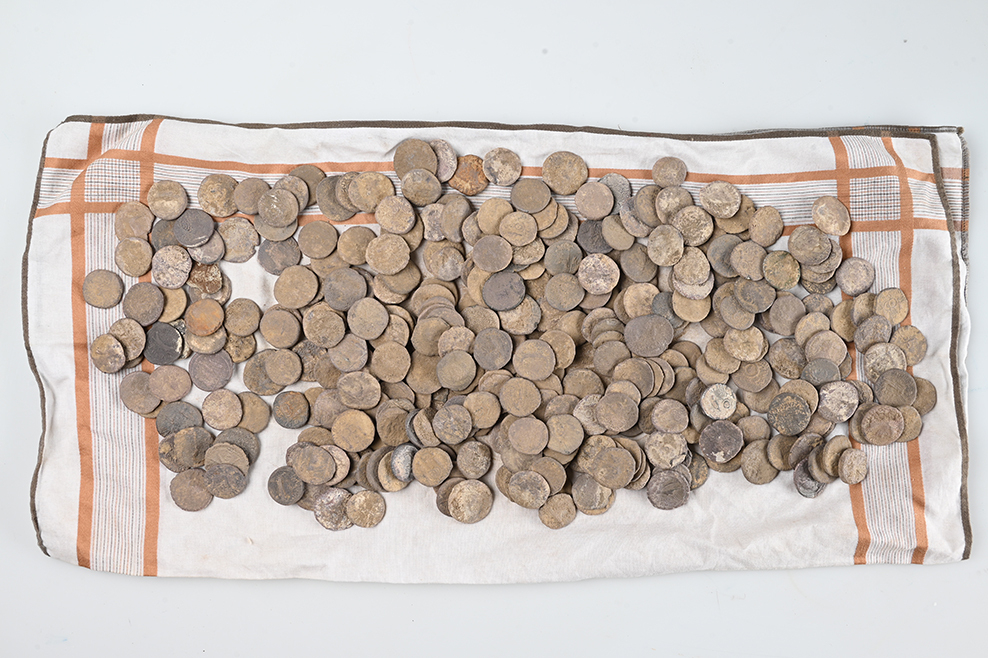
A remarkable archaeological discovery has come to light near Borsum, a village in the district of Hildesheim in Lower Saxony. Authorities have confirmed the recovery of a Roman silver hoard consisting of approximately 450 silver coins, several silver ingots, a gold ring, and a gold coin, making it one of the largest Roman treasure finds in northern Germany.

The treasure, estimated to be around 2,000 years old and dating back to the early Roman Imperial period, was initially found in 2017 by an illegal metal detectorist. The finder only recently reported the hoard to the Hildesheim police and local heritage authorities, prompting a formal investigation and archaeological study.

From Illegal Discovery to Official Excavation

According to the Lower Saxony State Office for the Preservation of Monuments (Niedersächsisches Landesamt für Denkmalpflege, NLD), an initial inspection of the find site took place in April 2025 with the participation of the original finder. A comprehensive archaeological excavation followed last week, conducted by the NLD, the Lower Monument Protection Authority of the Hildesheim district, and the City Archaeology of Hildesheim.

The excavation aimed to locate the original digging site from 2017 and to recover any remaining objects still buried in the ground. Despite the destruction of the find’s original context due to the unauthorized excavation, archaeologists hoped to gain new insights into the circumstances of the hoard’s deposition nearly two millennia ago.

Their efforts proved successful: additional coins were uncovered, and the treasure has now been completely excavated and secured for conservation.


📣 Our WhatsApp channel is now LIVE! Stay up-to-date with the latest news and updates, just click here to follow us on WhatsApp and never miss a thing!!


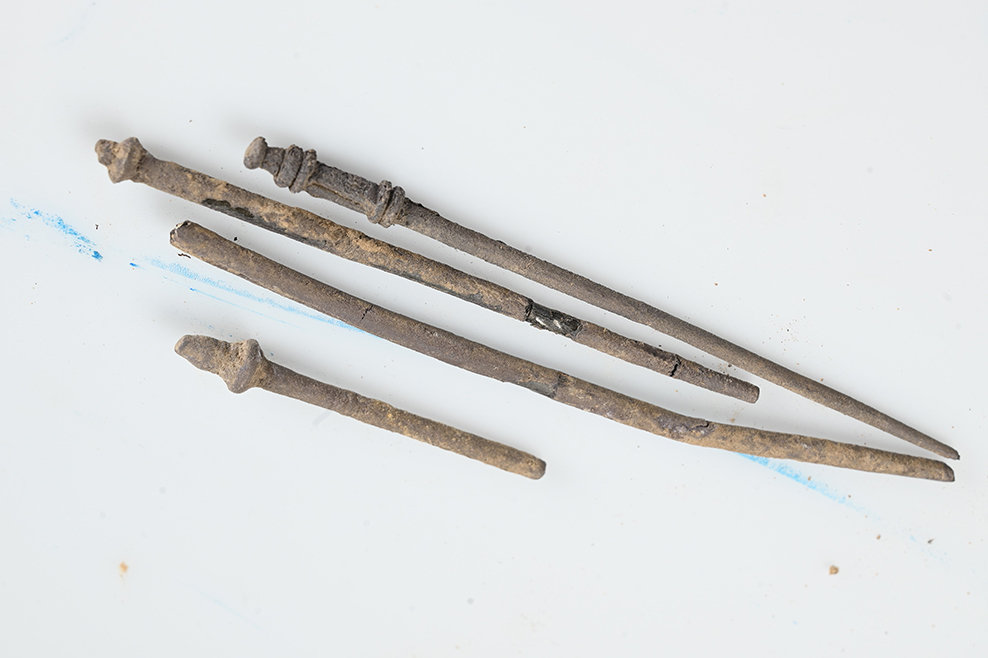
Metal pins recovered from the Roman-era hoard near Borsum, Hildesheim. Credit: Bartels, PI Hildesheim, ZKD/FK Forensik

Scientific Analysis and Restoration Underway

The restoration and scientific examination of the Borsum silver hoard are now being carried out at the NLD. Experts believe that the coins date to the early Roman Imperial era, a period characterized by complex interactions between Romans and Germanic tribes across northern Europe.

However, determining the exact date and purpose of the hoard’s burial will require detailed study. Archaeologists hope to learn whether the treasure was hidden by Roman soldiers, traders, or local Germanic inhabitants, and what circumstances — possibly related to conflict, trade, or ritual — led to its deposition.

Once the analysis is complete, researchers will also be able to identify the origin of the coins and precious metals, shedding light on the economic and cultural connections between the Roman Empire and the regions beyond its frontiers.

Legal and Cultural Implications

The finder of the hoard has since attended a training course for responsible metal detecting, organized by the NLD. Although his original discovery in 2017 was illegal, the public prosecutor’s office in Hildesheim has dropped the case due to the statute of limitations.

In Lower Saxony, the use of metal detectors for archaeological purposes is strictly regulated. Detectorists must obtain a special permit to ensure that significant archaeological finds are properly documented and preserved for future research. Unauthorized excavations can lead to the loss of invaluable historical information, as happened in this case.
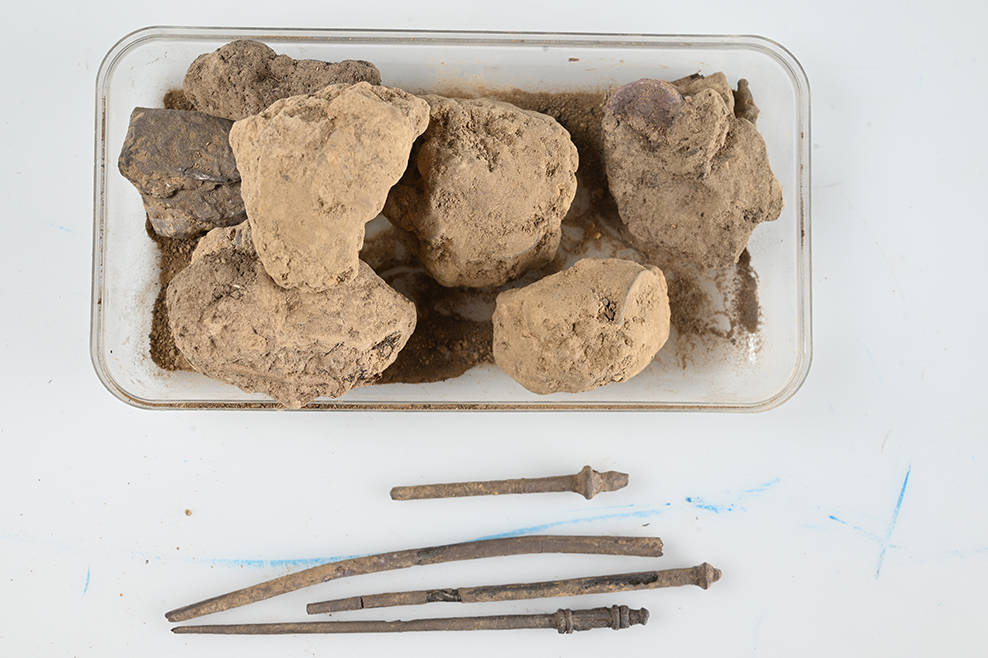
Selection of finds from Borsum, Hildesheim district. Credit: Bartels, PI Hildesheim, ZKD/FK Forensik

A Window into the Past

The Borsum silver hoard represents a significant archaeological discovery that may transform our understanding of Roman activity in northern Germany. As one of the largest Roman coin hoards ever found in Lower Saxony, it offers a rare glimpse into a turbulent period marked by trade, warfare, and cultural exchange between Romans and Germanic peoples.

Once the conservation and analysis are complete, the Hildesheim authorities plan to exhibit the treasure to the public, highlighting both its historical importance and the need for responsible archaeological practice.

Lower Saxony State Office for the Preservation of Monuments

Cover Image Credit: Bartels, PI Hildesheim, ZKD/FK Forensik

Related Articles

Medallion of Emperor Caracalla Minted in Pergamon Found in Roman Tombs in Bulgaria

13 February 2024

13 February 2024

One of the valuable discoveries from the Roman tombs discovered near the village of Nova Varbovka in Strazhitsa municipality in...

8th-Century Tang Dynasty Tomb Unearthed in China Reveals Vivid Murals — and a Blond Foreigner

15 October 2025

15 October 2025

Archaeologists in northern China have uncovered an exceptionally preserved 8th-century Tang dynasty tomb whose breathtaking murals offer a window into...

Two Infant burials found under prehistoric “Dragon Stone” in Armenia

4 June 2024

4 June 2024

An international team of researchers has unearthed the remains of an adult woman and two infants buried under a basalt...

2,700-year-old Children’s Cemetery unearthed in Turkey’s Tenedos

2 March 2024

2 March 2024

A 2700-year-old children’s cemetery was discovered during ongoing excavations in the ancient city of Tenedos in Bozcaada,  southeast of the...

Recent Excavations in Spain Reveal 7th Century BCE Religious Structure, Showcasing Eastern Influences within Tartessian Culture

18 February 2025

18 February 2025

A research team led by the National University of Distance Education (UNED) has made an important archaeological discovery at the...

Vindolanda marks the 1900th anniversary of Hadrian’s Wall with an altar discovery

9 February 2022

9 February 2022

The excavation season hasn’t started yet, but the Vindolanda Roman fort has kicked off Hadrian’s Wall’s 1900th anniversary year with...

The Artificial Intelligence Revolution: The Dark Age of Ancient Scrolls Ends

2 May 2025

2 May 2025

Artificial intelligence, often envisioned for future applications, is now playing a pivotal role in unraveling the mysteries of the past....

Archaeologists opened an untouched Etruscan tomb

31 October 2023

31 October 2023

In Vulci Archaeological Park, central Italy, a 2,600-year-old intact double-chambered Etruscan tomb that was discovered in April and had remained...

Findings showing the connection between Troy and Tavşanlı Höyük have been reached

23 August 2022

23 August 2022

Archaeologists unearthed 4,200-year-old hazelnut remains and marble idols during excavations at Tavşanlı Höyük (Tavsanlı Mound), located in the central Turkish...

Japan Researchers Uncover Lost Villa Believed to Belong to First Roman Emperor

19 April 2024

19 April 2024

Researchers from the University of Tokyo have discovered a nearly 2,000-year-old building at a site with ancient Roman ruins buried...

Ancient objects found in Jerusalem could be hand grenades used 1000 years ago, New study says

27 April 2022

27 April 2022

New analysis into the residue inside ancient ceramic pots from 11th–12th century Jerusalem has found that they were potentially used...

Researchers found similar descriptions in the Book of Revelation and ancient curse tablets

10 February 2023

10 February 2023

A research project headed by Dr. Michael Hölscher of Johannes Gutenberg University Mainz (JGU), has uncovered that the book of...

The First Evidence of Match-Fixing Found in the Ancient World

23 February 2021

23 February 2021

There are hundreds of things that are old in our world, one of them is people’s passion to win. Where...

Celtic gold rainbow cup coin discovered in Bavaria

12 September 2023

12 September 2023

An extremely rare “rainbow cup” Celtic coin dated to the second or first century B.C. has been discovered next to...

A new study reveals that “Bog Bodies” were part of a Millennia-old tradition

10 January 2023

10 January 2023

Archaeologists have studied hundreds of ancient “Bog Bodies” discovered in Europe’s wetlands, revealing that they were part of a millennia-old...