
A 2,000-year-old Iron Age cemetery containing more than 100 cremation burials has been uncovered near Chelmsford in eastern England. Five unusually rich graves found within the cemetery suggest that members of the local elite had established diplomatic and economic connections with the Roman world before the conquest of Britain in AD 43.
The cemetery was excavated by Archaeology South-East, part of the UCL Institute of Archaeology, inside a square enclosure surrounded by a ditch. Most of the burials date to the first century AD, a period that covered the final decades of Iron Age Britain and the beginning of Roman rule.
While dozens of individuals had been cremated and placed in relatively simple urn burials, five people received markedly different treatment. Their burnt bones were deposited directly in large square pits and surrounded by collections of valuable and sometimes imported objects.
Archaeologists believe the grave goods belonged to unidentified individuals of high social or political status living in Iron Age East Anglia.
Imported wine vessels and rare Roman glass
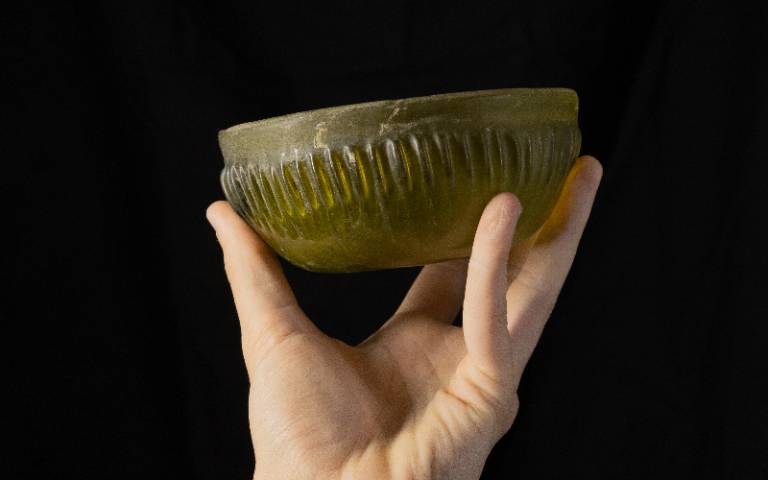
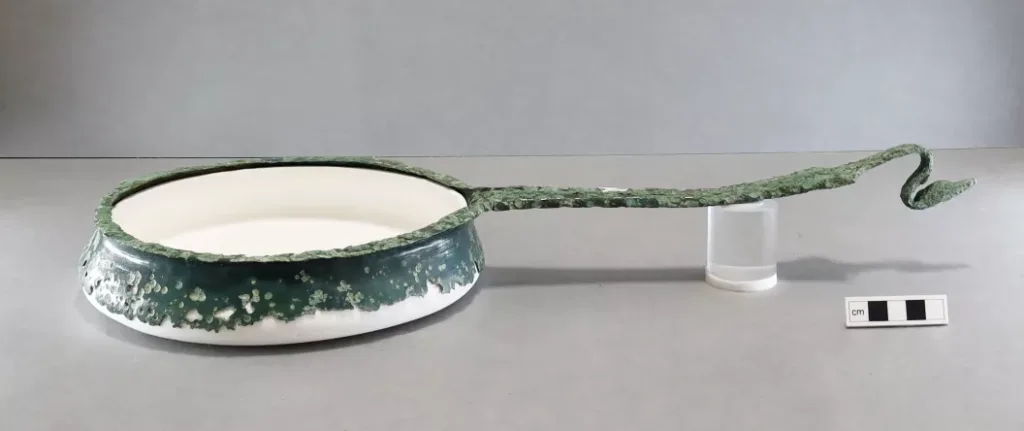
Objects recovered from the five elite burials include copper-alloy vessels, brooches, hobnails, ceramic amphorae and a pillar-moulded glass bowl.
The amphorae were large transport containers commonly used to carry wine and other products across the Roman world. Their presence in Essex suggests that imported wine may have been consumed by local elites as part of feasts, ceremonies or political gatherings.
The glass bowl is considered particularly significant. Pillar-moulded vessels were among the earliest glass containers to reach Britain and would have been rare and expensive possessions during the late Iron Age.
According to excavation director Angus Forshaw, the objects probably reflect diplomatic contact and economic exchange between communities in Britain and the Roman Empire before the Claudian invasion.
“The pillar-moulded glass bowl alone—one of the earliest glass vessels to arrive in Britain—would have been a highly prized personal possession,” Forshaw said. He added that the amphorae may have reached Britain filled with wine intended for elite consumption.
The finds indicate that contact with Rome did not begin suddenly with the arrival of the Roman army in AD 43. Imported goods, political relationships and continental customs had already reached influential communities in southeastern Britain.
Burials created during a period of political change
The cemetery was used at a time when local societies were facing growing Roman influence and increasing political uncertainty.
Samara King, project manager at Archaeology South-East, said the burials may have allowed different Iron Age communities to express their identities, authority and perceived allegiance to Rome.
Lavish funerals were not only displays of wealth. The choice and arrangement of imported objects could also communicate the position of the deceased and their family within wider political networks.
The five rich graves resemble a group of elite cremation burials known as Welwyn-type burials, named after discoveries made in Hertfordshire. Similar graves have also been uncovered at Stansted and Stanway in Essex.
These burials are generally associated with prominent individuals who had access to imported wine, metal vessels, glassware and other luxury goods from continental Europe.
Researchers have not yet established whether the individuals buried near Chelmsford were local rulers, members of powerful families or intermediaries involved in trade and diplomacy with Rome.
Three Iron Age settlements found nearby
The cemetery formed part of a much larger inhabited landscape.
Across the 11-hectare excavation area, archaeologists identified at least three previously unknown Iron Age settlements. These contained multiple roundhouses surrounded by ditches, together with field systems, waterholes and smaller agricultural enclosures.
The settlements show that the cemetery did not stand in isolation. It was located within an organised landscape occupied by farming communities whose leaders may have controlled access to land, imported goods and regional trade routes.
The wider evidence also challenges the idea that the Chelmsford area was a remote or sparsely occupied part of Iron Age Britain. Instead, it appears to have been a busy landscape connected to economic and political developments taking place across southern Britain and continental Europe.
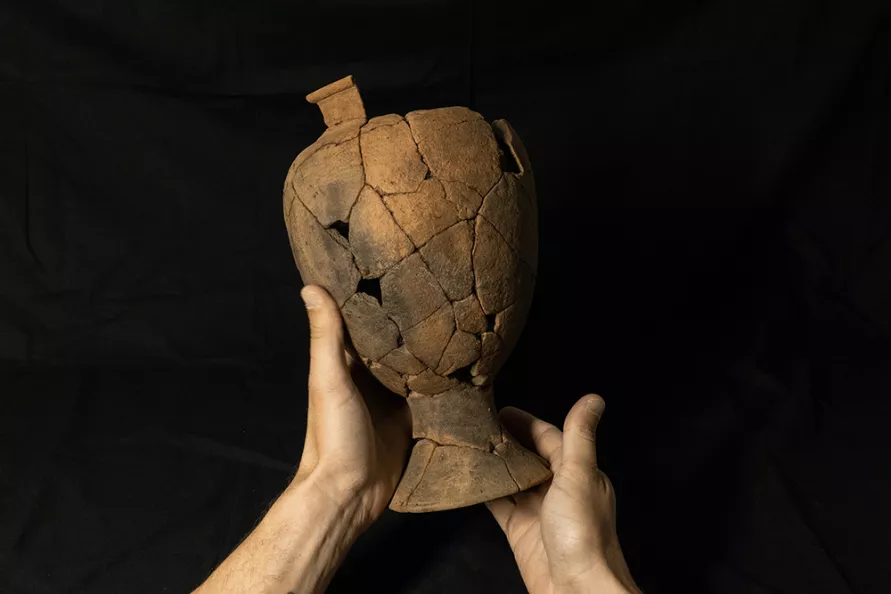
Archaeology South-East reconstructed a trumpet pedestal jar. Credit: UCL Archaeology South-East
Archaeologists search for the identities of the dead
Although fieldwork has now been completed, the investigation is continuing through laboratory analysis.
Specialists are cleaning and conserving the glass, metal and ceramic objects recovered from the graves. Researchers will also examine the cremated human remains and establish a more precise chronology for the cemetery.
One aim is to determine whether the cemetery was used before, during or after the Roman conquest. Comparing the burial dates with the surrounding settlements may reveal how long the site remained active and whether funerary traditions changed after Roman rule was established.
Further analysis could also clarify why only five individuals received exceptionally rich burials while the majority were placed in simpler urn graves.
Identifying the dead will be difficult because cremation destroys much of the biological evidence normally used to study ancient individuals. Nevertheless, the surviving bone fragments and grave goods may provide information about age, burial practices, social status and regional connections.
Finds to be displayed in Chelmsford
Ten objects from the excavations, including glassware, amphorae and other ceramics, will be displayed at the Museum of Chelmsford in the exhibition Timeless Treasures: Unlocking the Great Baddow Coin Hoard, opening on July 18.
The exhibition will also examine the Great Baddow Hoard, a collection of 935 Iron Age gold coins discovered near Chelmsford in 2020.
Museum curator Claire Willetts said the cemetery and coin hoard demonstrate that Chelmsford was part of an active and well-connected Iron Age landscape. The exhibition will also consider whether the two discoveries could be related.
Although no direct link has yet been established, both finds point to the presence of wealth and powerful communities in the region during the final years before Roman Britain emerged.
UCL Archaeology – UCL Institute of Archaeology
Cover Image Credit: UCL Archaeology South-East
