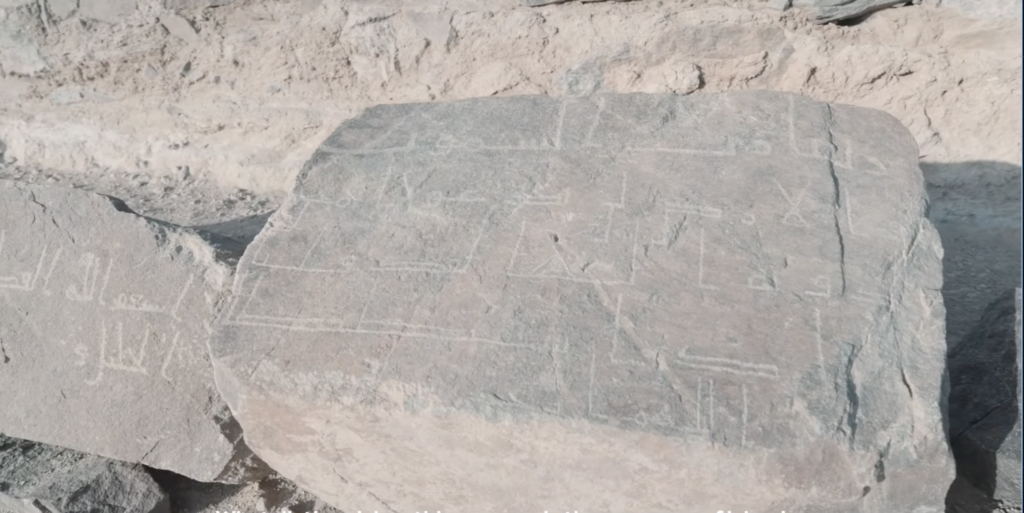
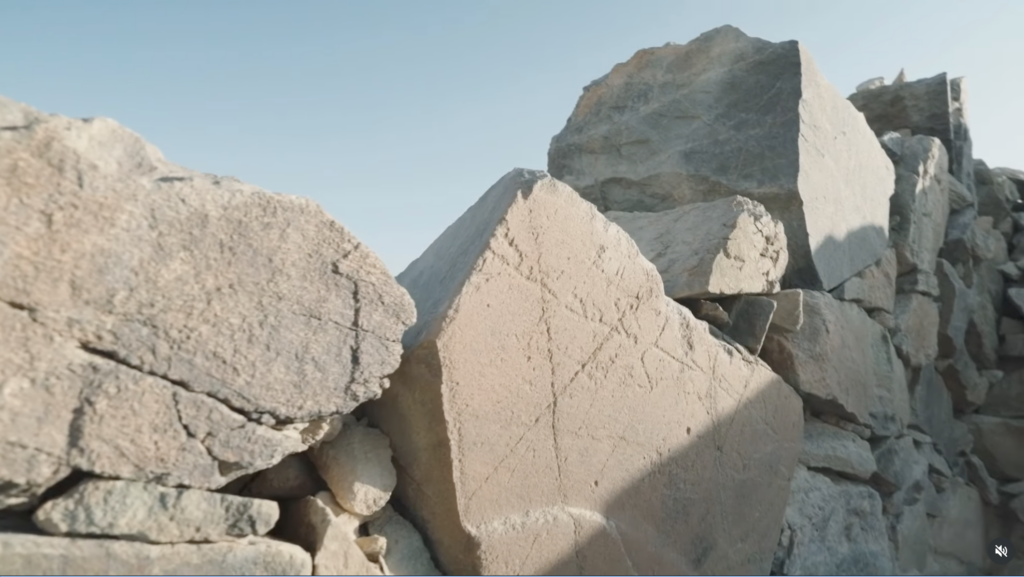
Archaeologists working at the Al-Ma’mala site in southwestern Saudi Arabia have uncovered a mosque dated to the first century of the Hijri calendar, placing the building among the earliest centuries of Islamic architecture in the Arabian Peninsula. Built from carefully dressed granite, the mosque also preserves inscriptions, traces of wall plaster and architectural features that reveal how a religious building functioned within a community shaped by mining and trade.
The discovery was announced following the fourth season of excavations at Al-Ma’mala, an archaeological site in the Al-Baha region near Al-Aqiq. The Saudi Heritage Commission dates the mosque to the first century AH, broadly corresponding to the seventh and early eighth centuries CE.
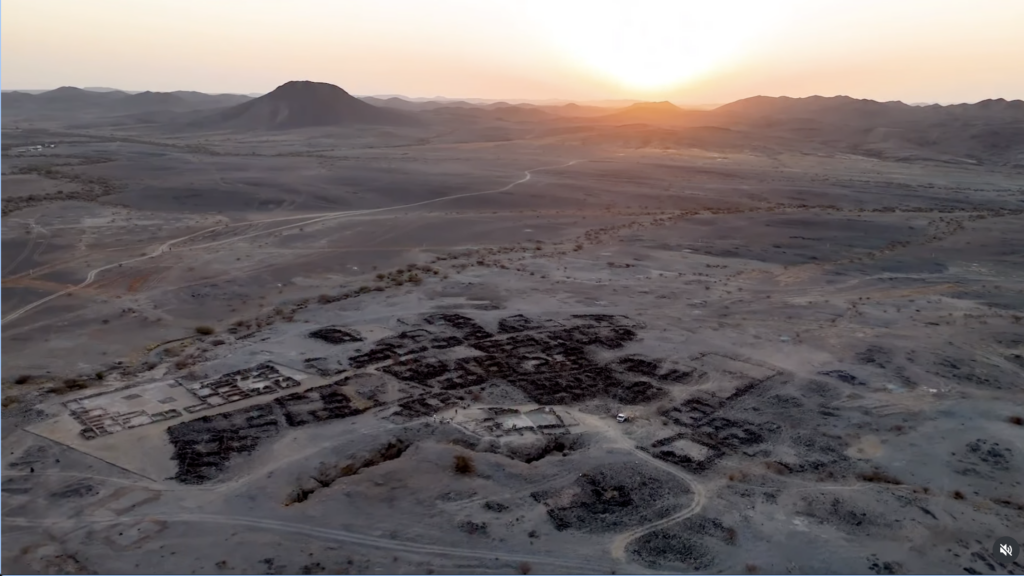
A granite mosque more than 1,300 years old
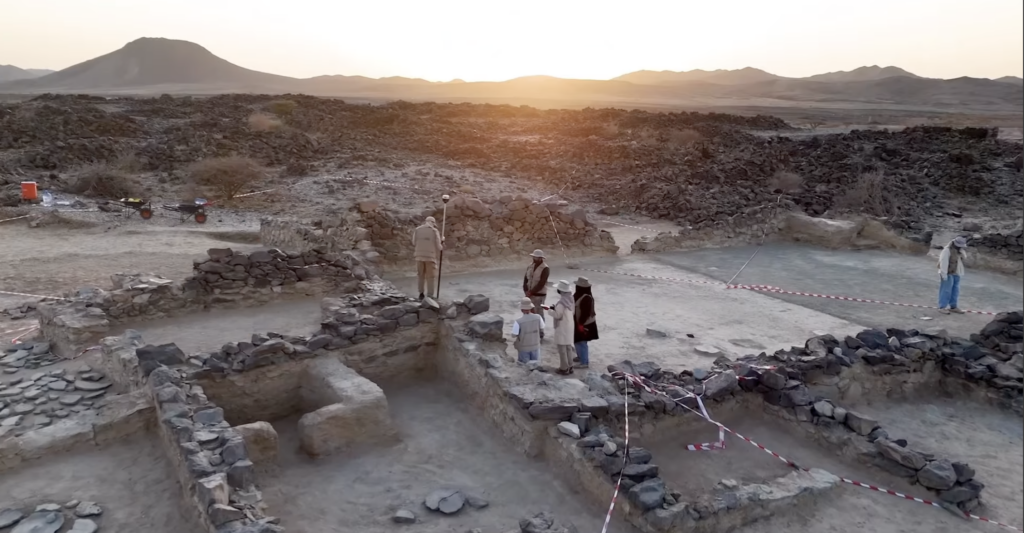
The mosque occupies the western side of the settlement and measures approximately 16 meters from north to south and 10 meters from east to west. Its walls were constructed from dressed granite blocks, while surviving traces of gypsum plaster indicate that at least parts of the interior once had finished surfaces rather than exposed stone.
The building includes a mihrab marking the direction of prayer and three entrances positioned on its eastern, western, and southern sides. Archaeologists also identified a square structure interpreted as a minaret in the southeastern part of the complex. Eight adjoining rooms appear to have supported activities associated with the mosque and surrounding settlement.
The arrangement is particularly valuable because much of the building’s ground plan survives clearly enough to show the relationship between the prayer space and its auxiliary rooms. Storage installations, basins and structural supports found in nearby spaces indicate that the mosque did not stand in isolation but formed part of a larger functioning community.
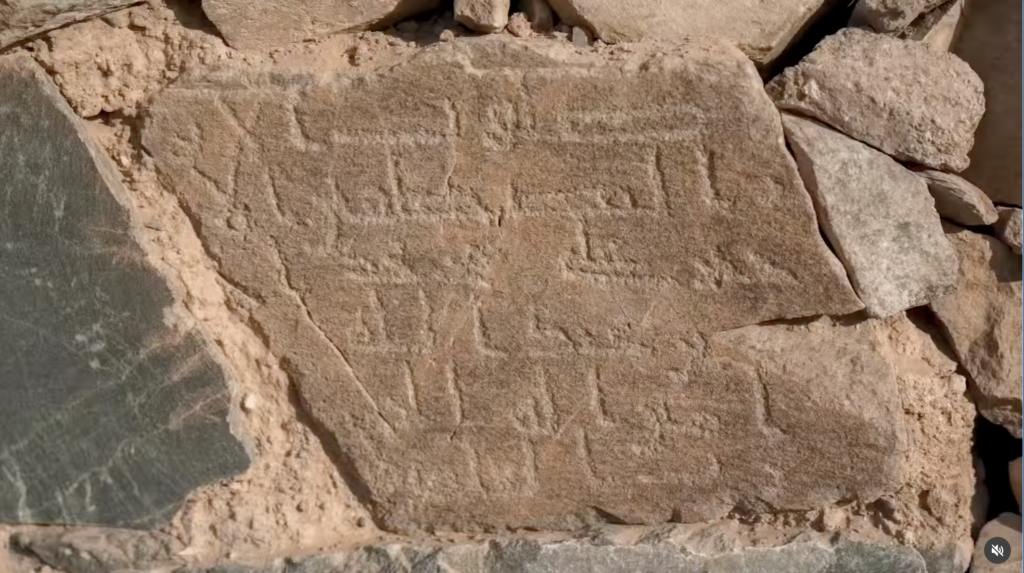
Inscriptions survived on the mosque walls
One of the most distinctive features of the discovery is a series of Arabic inscriptions preserved on stones associated with the mosque. According to the Heritage Commission, inscriptions occur both inside the building and on its exterior walls and include religious invocations and Qur’anic material.
An inscription on the qibla wall contains a prayer invoking blessings upon Muhammad ibn Abdullah. The survival of such texts within their archaeological setting gives researchers something that architecture alone cannot provide: direct evidence of the religious language used by the people who occupied the site.
The inscriptions are therefore more than decorative elements. Together with the mihrab and other architectural features, they strengthen the identification of the structure as a mosque and provide an additional line of evidence for understanding religious life at Al-Ma’mala during the early Islamic period.
A mosque inside an ancient mining community
Al-Ma’mala was not primarily a religious settlement. Archaeological evidence shows that the site developed around the exploitation and processing of mineral resources, particularly gold, silver and copper. Previous seasons uncovered installations and tools connected with mining as well as residential structures and evidence for craft production.
Scientific analysis of samples recovered during earlier excavations indicates that mining activity began before the Islamic period and became particularly intensive between the late sixth and ninth centuries CE. That chronology means the community witnessed a major historical transition, from the final decades before Islam through the development of early Islamic society.
The mineral wealth of the area appears to have drawn miners, metalworkers, merchants and other laborers to the settlement. Archaeologists have also recovered pottery, soapstone vessel fragments, pestles, grinding stones and other objects connected with everyday domestic and industrial activity.
This broader setting is what makes the newly identified mosque especially significant. Rather than representing an isolated religious monument, it provides evidence for worship inside an economically active settlement whose inhabitants depended on mining, processing and regional exchange.
Al-Ma’mala stood beside an important route
The site’s location also helps explain its development. Earlier research places Al-Ma’mala about 13 kilometers east of Al-Aqiq and roughly 45 kilometers from Al-Baha, close to the ancient Darb Al-Feel, or Elephant Road. The route once connected southern Arabia with regions farther north and later became part of the network used by travelers and pilgrims during the Islamic period.
The mosque, mining installations, houses and inscriptions together are beginning to reveal a settlement whose history cannot be understood through a single activity. Al-Ma’mala was at once a place of production, movement, residence and worship.
The Heritage Commission says archaeological investigation at the site will continue as part of a broader program to document and protect archaeological remains across Saudi Arabia. Future excavation may clarify when the mosque was first constructed, how long it remained in use, and how its role changed as Al-Ma’mala’s mining economy developed.