
Fragments of low-fired clay containers from Çemka Höyük in southeastern Türkiye are changing how archaeologists understand the beginning of pottery in South-west Asia. The finds suggest that ceramic technology did not appear suddenly in the seventh millennium BC, but developed through earlier, local experiments with clay, fire, buildings and daily life.
Published in Antiquity, the study examines clay fragments from Çemka Höyük, a Pre-Pottery Neolithic site in Mardin Province. The research was conducted by Ergül Kodaş, Natalia Petrova, Maria Daghmehchi and Rana Özbal. Their analysis points to a formative phase of ceramic innovation nearly 12,000 years ago, long before pottery became common across the region.
An Early Neolithic Settlement on the Upper Tigris
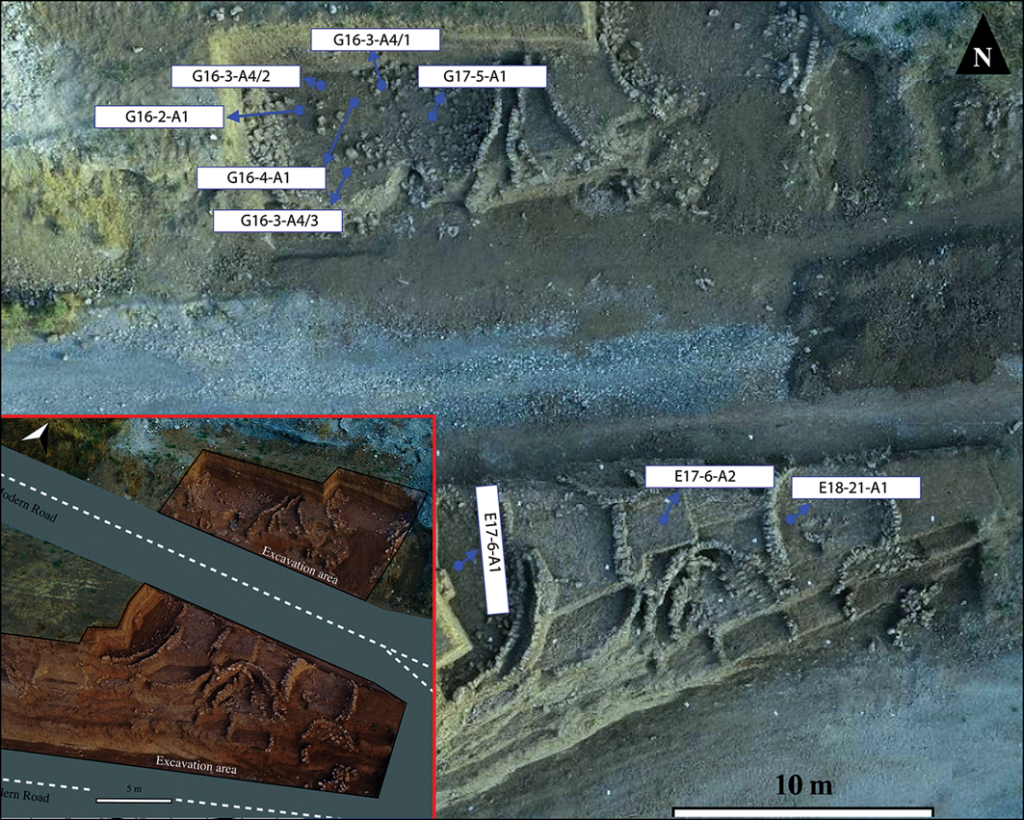
Çemka Höyük lies in Mardin Province, in the Upper Tigris region of southeastern Türkiye. The site was investigated through rescue excavations after roadbuilding linked to the Ilısu Dam Project damaged the mound and divided it into northern and southern sections.
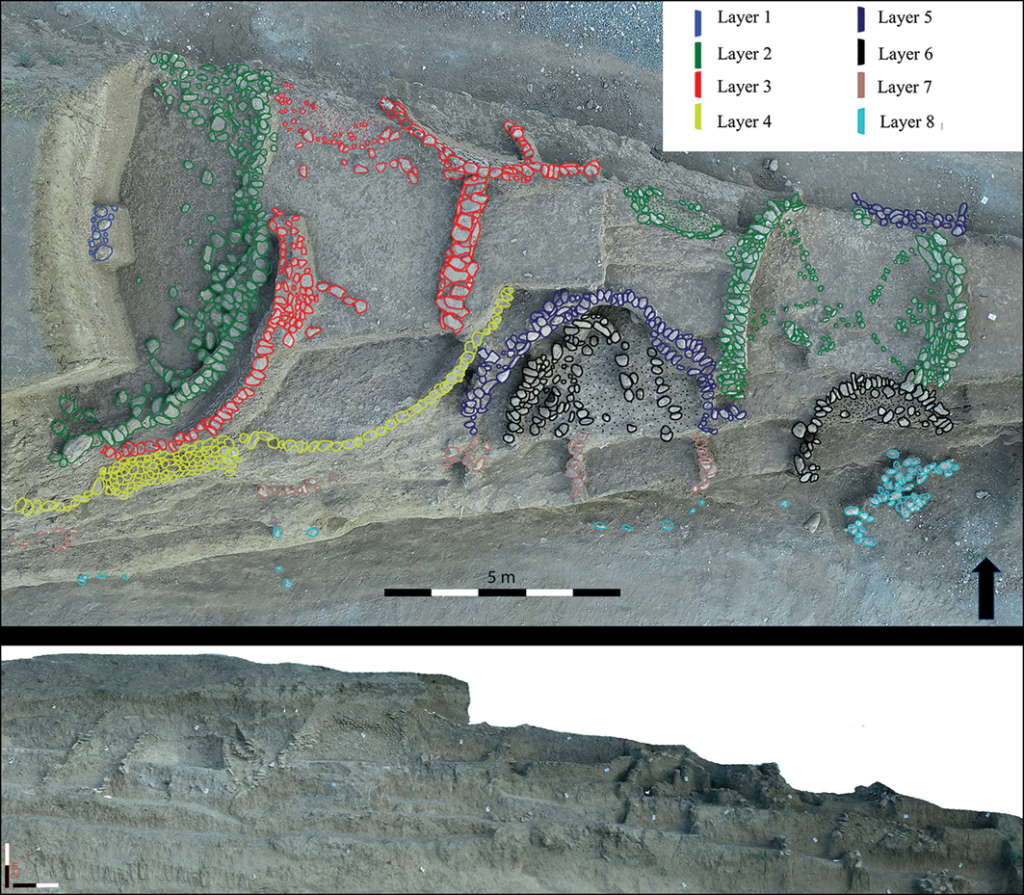
Despite this disturbance, the exposed profiles gave archaeologists a rare view into the settlement’s long sequence. Excavations revealed two main phases: a proto-Neolithic or Late Epipalaeolithic level dated to 10,800–9600 BC, and a Pre-Pottery Neolithic A level dated to 9600–8700 BC. Within these phases, researchers identified eight building levels.
This makes Çemka Höyük more than a site with unusual clay fragments. It preserves a record of a community in transition, moving from earlier forms of shelter toward more durable architecture and more complex uses of material culture.
From Round Huts to Pit Shelters
The architectural sequence at Çemka shows a gradual transformation in settlement life. The earliest levels include traces of round structures, possibly tent-like shelters. Later phases show round or elliptical subterranean and semi-subterranean buildings, some with internal divisions and more substantial stone masonry.
By building levels 5 and 6, the settlement had semi-subterranean pit houses with radial compartments. Building level 2 produced large round structures, some about 10 meters in diameter, and this is where the early fired clay fragments were found.
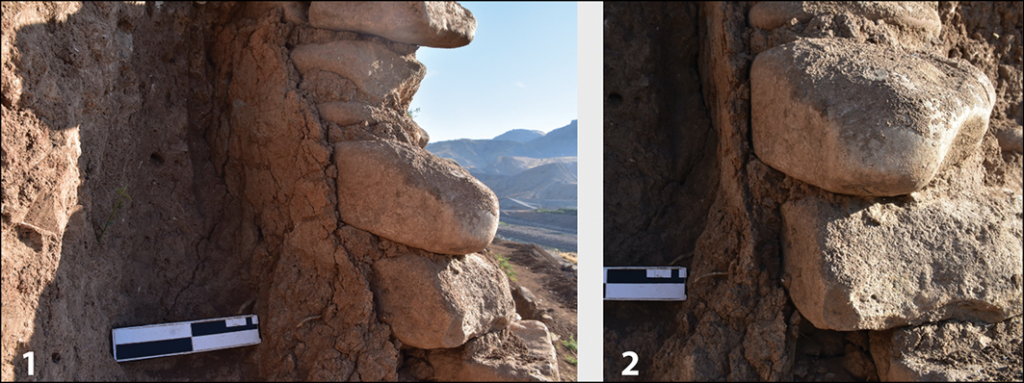
Clay was already part of the architectural world of Çemka. The researchers documented clay coatings on stone walls in several building levels and even a mudbrick from level 2. That matters because it suggests the community was not discovering clay from nothing. They already knew how it behaved as a building material before experimenting with it as a container technology.
Forty-Six Fragments, Nine Possible Vessels
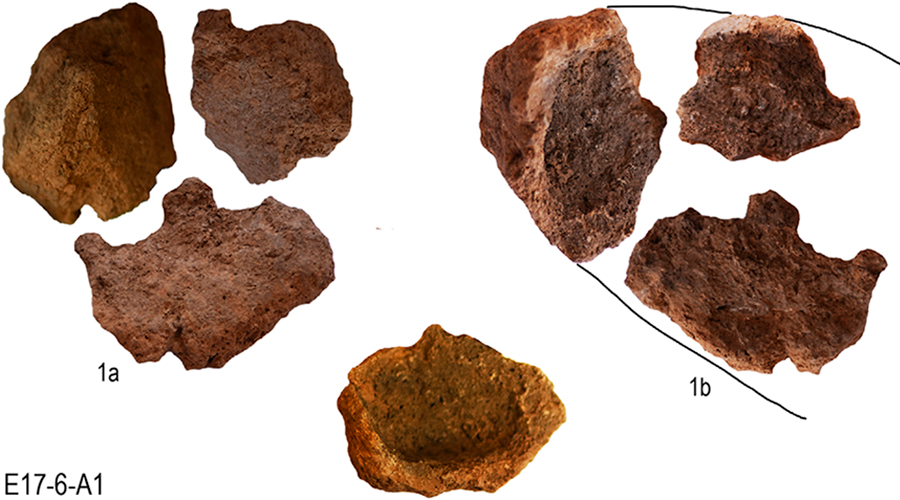
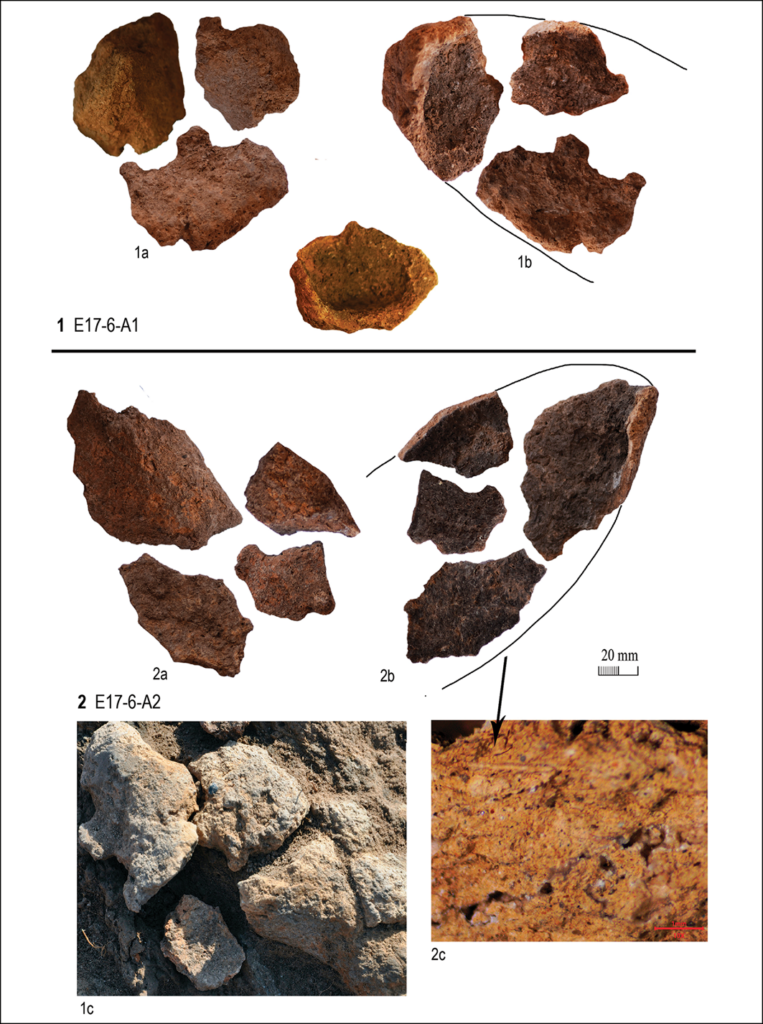
The most striking evidence comes from 46 low-fired clay fragments, probably belonging to nine different vessels or clay-based objects. These were recovered from building level 2, dated to the first half of the tenth millennium BC, around 9350 cal BC.
The fragments were not all the same. Some appear to be parts of clay vessels. Others may have been clay coatings placed over organic objects. One unusual piece may have been an added clay component attached to a container made from another material, perhaps stone, wood or another organic substance.
This variety is one of the strongest points of the study. Çemka does not show a finished pottery tradition in the later Neolithic sense. It shows experimentation. People were trying different forms, different mixtures and different ways of using clay.
Not Accidental Burning
A key question is whether the clay fragments were intentionally fired or merely exposed to fire by accident. The study argues that the evidence favours deliberate firing.
Microscopic and multispectroscopic analyses showed mineral changes in the clay. The fired samples differ from unfired clay materials from the site. Colour changes, black cores, red oxidised surfaces and mineral alteration suggest low-temperature firing, generally around 600–700°C.
The firing was not highly standardised. It was incomplete and relatively low in temperature. But that is precisely what makes the discovery important. These were early experiments, not industrial ceramics. They show a community learning how clay changed when mixed, shaped and exposed to controlled heat.
Organic Temper and Early Technical Knowledge
Some fragments contained plant remains deliberately mixed into the clay. In a few samples, researchers also detected dung spherulites, microscopic traces indicating that animal dung had been used as an organic inclusion.
This was not a decorative detail. Organic temper could change how the clay behaved during drying and firing. When plant material or dung burned away, it created channels and pores inside the vessel wall. Such porosity may have affected weight, strength and thermal performance.
The vessels were often made with slab-building techniques. In other words, the makers shaped the clay in layers or sections rather than simply pressing a lump of clay into form. Some surfaces were smoothed by hand, while others preserved rougher coatings or manufacturing marks.
This gives the finds a more human quality. These were not anonymous fragments of mud. They preserve decisions: what to mix into the clay, how thick to make the wall, how to build the body, how much heat to apply.
A Bridge Between Old Materials and New Technology
One of the most interesting objects from Çemka may not be a vessel in the usual sense. The study describes a clay additive that may once have been attached to a container made from another material. It had pierced holes, perhaps for threading or fastening, and may have helped expand the capacity of a stone or organic vessel.
That detail is valuable for the story of pottery because it suggests a transitional stage. Before people made fully independent ceramic containers, they may have modified older technologies with clay. A stone vessel, a wooden object or an organic container could be adapted with a fired clay component.
The same applies to clay coatings on organic objects. These fragments may represent attempts to protect, strengthen or heat-proof materials that normally do not survive archaeologically. Pottery may have grown out of such practical experiments rather than appearing as a fully formed invention.
Earlier Than the Pottery Neolithic
In South-west Asia, pottery became widespread around the seventh millennium BC. Çemka’s evidence is much earlier. The authors place the finds among the earliest known examples of pottery or fired clay container technology in the region.
The site is also part of a wider pattern. Early clay and earthenware vessels are known from places such as Çayönü, Nevali Çori, Boncuklu Höyük, Demirköy, Ganj Dareh, Jericho, Mureybet and Beidha. But Çemka adds an important early case from southeastern Türkiye, with clear signs of low-fired, experimentally made containers.
The implication is subtle but important: pottery was not born in a single moment. It emerged through repeated trials in different communities, shaped by local needs, available materials and existing habits.
Clay, Fire, and a Changing Way of Life
The Çemka Höyük finds sit at the intersection of architecture, food storage, heating, cooking and social practice. The settlement was changing. Its buildings were becoming more substantial. Clay was being used in walls and structures. At the same time, people began testing whether the same material could hold, cover, extend or transform containers.
The study does not claim that Çemka produced the world’s first pottery. East Asia has much older pottery traditions. But for South-west Asia, the evidence is significant because it pushes attention back to an earlier and more experimental phase.
Çemka Höyük shows that the road to pottery was not a straight line. It passed through damaged fragments, low fires, plant-tempered clay, hybrid containers and communities willing to test a material they already knew in new ways.
Nearly 12,000 years later, those rough pieces of fired clay now point to one of the quieter turning points in human technology: the moment when earth, water and fire began to become vessels.
Kodaş, E., Petrova, N., Daghmehchi, M., & Özbal, R. (2026). Understanding a first attempt at pottery: early fired containers at Çemka Höyük. Antiquity, 1–19. doi:10.15184/aqy.2026.10371
Cover Image Credit: Kodaş, E., et. al., 2026
