9 January 2026 The Future is the Product of the Past

12 tombs with Beautiful Decorations and Carved Bricks from the period of Kublai Khan, the grandson of Genghis Khan, found in China

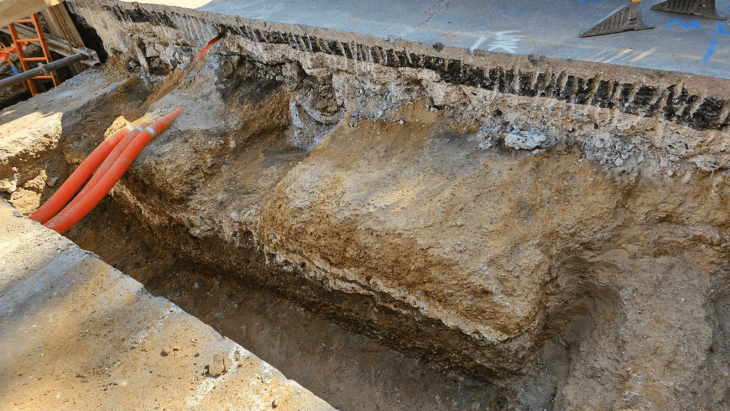
China has a rich history. In addition to the fossil records from the Paleolithic Period, the country has witnessed the rise and fall of several empires and dynasties. Recently, archaeologists excavating in Shandong, China, have unearthed 12 incredible tombs estimated to be around 700 years old.

Archaeologists have excavated 12 ancient tombs dating back to the Yuan Dynasty (1271-1368) in Jinan, in east China’s Shandong Province, the local archeology institute said Wednesday. This is one of the most important finds ever made in the eastern Chinese province.

The Yuan dynasty was founded by conqueror Genghis Khan’s grandson, Kublai Khan. Based on an inscription discovered at the burial complex, the tombs belong to a family called Guo.

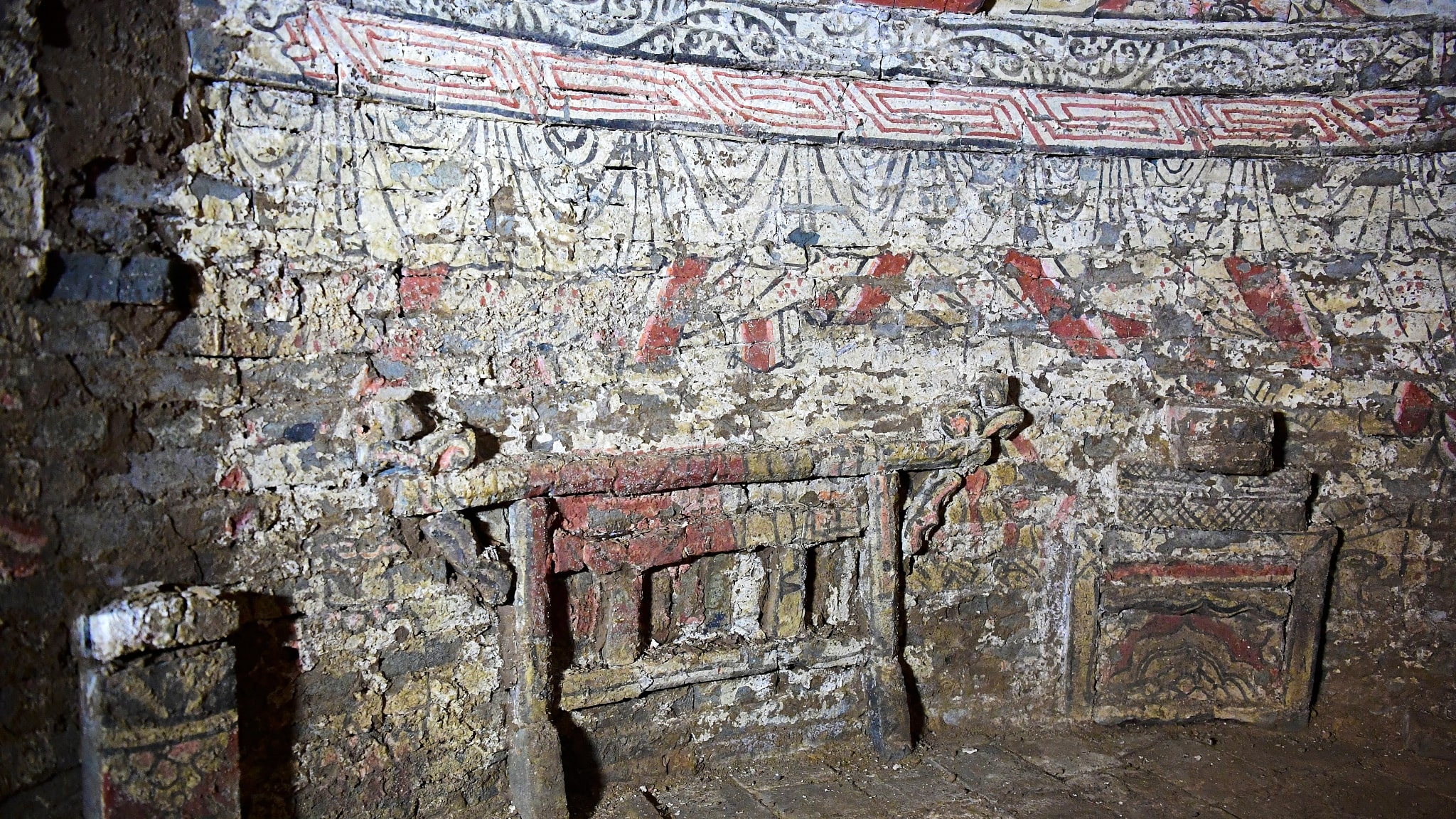
Murals in one of the Yuan Dynasty tombs with two burial chambers were comparatively well preserved. The carved brick murals were created using chisels and wooden hammers to make patterns in the bricks. The magpies and branches on the murals were a classic Chinese design for good fortune.
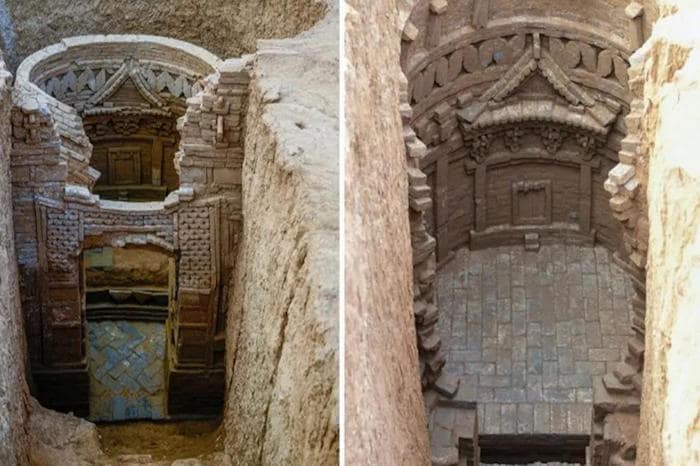
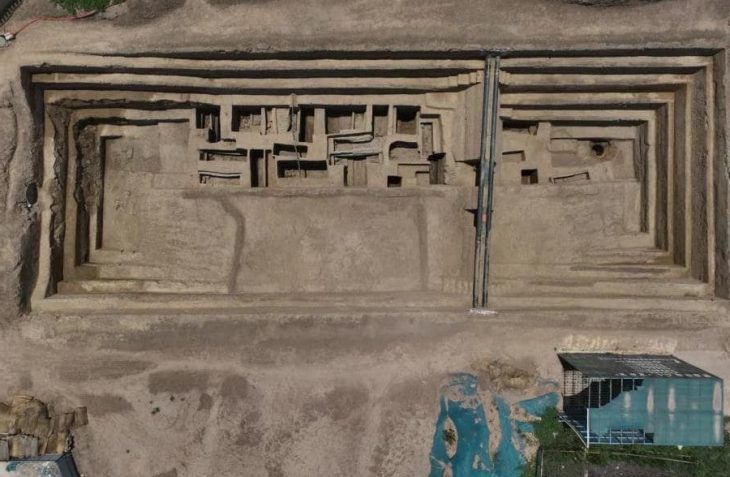
A view of the tomb cluster. /CFP

According to the institute’s director Li Ming, this was the largest cluster of Yuan Dynasty brick mural tombs unearthed in the province.


📣 Our WhatsApp channel is now LIVE! Stay up-to-date with the latest news and updates, just click here to follow us on WhatsApp and never miss a thing!!


“The tombs were arranged in an orderly and apparently planned way, and some of the owners were related by blood, providing new material for the study of the arrangement of family cemeteries in the Yuan Dynasty,” Li said.

The excavation, which started on April 23, turned up more than 60 pieces of pottery and porcelain ware, bronze mirrors, copper coins, and other cultural artifacts. The results will aid in the study of porcelain produced in the region and its environs during the Yuan Dynasty.

Kublai Khan, the fifth Khagan emperor of the Mongol Empire and a member of the Borjigin family reigned it from 1271 until 1368.
Related Articles

People may have been cooking curries in South-East Asia for at least 2000 years

22 July 2023

22 July 2023

Archaeologists have found remnants of eight spices on a sandstone slab from an archaeological site in Vietnam, showing the early...

Evidence of textile manufacture dating back millennia was found in an area famous for the Witney Blanket

12 June 2023

12 June 2023

Archaeological excavations at the site of Oxfordshire County Council’s project to build the A40 Science Transit Park and Ride at...

Archaeologists found 5 unique sculptures representing the Kakatiya art style in Siddipet

19 July 2021

19 July 2021

13th-century statues were found near a temple tank in the Siddipet district in the northern province of Telangana, India. On...

Archaeologists find the earliest evidence Maya sacred calendar in the Guatemalan pyramid

14 April 2022

14 April 2022

Archaeologists identified two plaster fragments depicting a date that the Maya civilization called ‘7 deer’ and was part of the...

8,000-year-old Musical Instrument found in northwest Turkey

4 July 2021

4 July 2021

Archaeologists in northwestern Turkey’s Bilecik on Tuesday discovered a musical instrument that dates back to an estimated 8,000 years. During...

Archaeologists find 4,000-year-old Sanctuary in Netherlands

22 June 2023

22 June 2023

Archaeologists discovered a 4,000-year-old sanctuary during excavations of the model industrial estate in the town of Tiel, located 72 kilometers...

Analysis of Butchered Bones, Somerset Pit Reveals Bronze Age Cannibalism

17 December 2024

17 December 2024

Archaeologists have uncovered the bloodiest massacre in early Bronze Age Britain and evidence of Bronze Age cannibalism. It is the...

Face of the Picts? Rare Carved Stone Discovered at Scottish Hillfort

19 September 2025

19 September 2025

A remarkable discovery at a hillfort in Fife has brought archaeologists face-to-face with Scotland’s enigmatic Pictish past. A carved stone,...

New Research Links Climate Crisis to the Fall of the Roman Empire

11 April 2025

11 April 2025

A study led by scientists at the University of Southampton, in collaboration with Queen’s University Canada and the Chinese Academy...

Huge funerary building and Fayoum portraits discovered in Egypt Fayoum

4 December 2022

4 December 2022

The Egyptian archaeological mission working in the Gerza archaeological site in Fayoum revealed a huge funerary building from the Ptolemaic...

A Roman bridge from the Republican era was discovered on Via Tiburtina

27 February 2022

27 February 2022

The remains of a rare Republican-era bridge have been discovered on the 12th kilometer of the Via Tiburtina, the ancient...

Papal bull discovered in a former cemetery dated to the 14th century

10 May 2023

10 May 2023

A medieval bull found in 2021 in Budzistów village (Kołobrzeg district), Poland has been restored and placed on display in...

New discoveries announced at Sanxingdui Ruins

20 March 2021

20 March 2021

Chinese archaeologists announced on Saturday that some new major discoveries have been made at the legendary Sanxingdui site in southwestern...

Minoan civilization may have used celestial navigation techniques

3 March 2023

3 March 2023

According to a study done by an American researcher at the University of Wales, ancient civilizations may have used celestial...

An Unprecedented Discovery: Archaeologists Found a Viking Age Vulva Stone -A Counterpart to Phallic Symbols?

25 September 2025

25 September 2025

Archaeologists in Norway may have uncovered the first known vulva stone from the Viking Age. The find could reshape our...