
18 January 2026 The Future is the Product of the Past

Archaeologists Uncover Early Bronze Age Ceremonial Complex in Murayghat, Jordan

Archaeologists have uncovered striking evidence of an ancient ceremonial complex in Murayghat, Jordan, that could rewrite what we know about Early Bronze Age ritual life in the southern Levant.

Nestled in the hills southwest of Madaba, Murayghat features a sprawling field of dolmens—stone burial chambers—surrounded by enigmatic standing stones and non-domestic architecture. The research, led by Associate Professor Dr. Susanne Kerner from the University of Copenhagen, suggests that the site may have served as a cultic gathering place during a time of societal upheaval over 5,000 years ago.

Stone Clues to a Disrupted Civilization

The site dates back to the Early Bronze Age IA (around 3600–3300 BCE), a period that followed the decline of the Chalcolithic culture. According to Kerner’s study, the disappearance of copper prestige items, changing climate conditions, and a breakdown of socio-political structures likely triggered a civilizational crisis.

“In a world where temples vanished and the old social order collapsed, people still needed to communicate, organize, and remember,” Kerner writes. “Murayghat may have been one of the places where new forms of identity and belief were forged.”
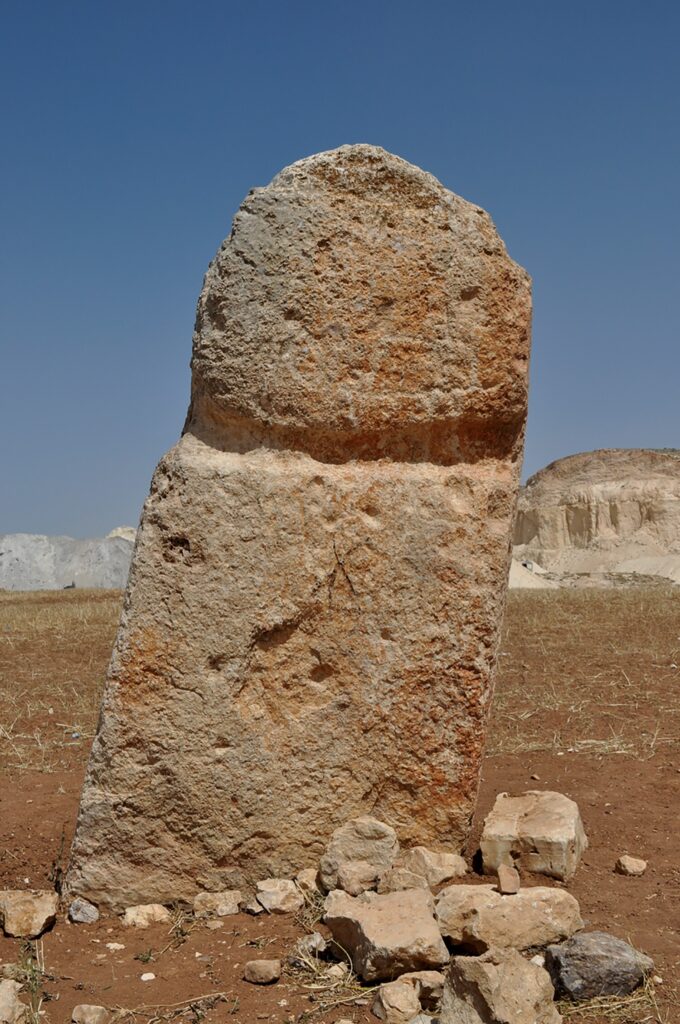
Hadjar al-Mansub, the largest of the single standing stones. Image Credit: The Ritual Landscapes of Murayghat Project / Susanne Kerner

A Ritual Landscape

Murayghat’s centerpiece is a central knoll flanked by terraced hills, each dotted with collapsed and intact dolmens. These burial structures, some reaching over 4 meters in length, were carefully positioned with sight lines to the knoll and to each other, indicating a coordinated effort in planning.


📣 Our WhatsApp channel is now LIVE! Stay up-to-date with the latest news and updates, just click here to follow us on WhatsApp and never miss a thing!!


Excavations revealed multiple construction phases and a variety of architectural styles. Lines of orthostats—large upright stone slabs—form partial enclosures, while circular and horseshoe-shaped features suggest communal or ritual use. One striking feature is a large, free-standing monolith known as Hadjar al-Mansub, which stands 2.4 meters tall and faces away from the central site toward the valley—perhaps marking a processional path or ritual axis.

Burial, Feasting, and Memory

Artifacts found at the site include flint tools, copper objects, horn cores (from goats and gazelles), and unusually large ceramic bowls capable of holding up to 27 liters of food. These “Murayghat bowls” hint at communal feasting rituals—perhaps tied to honoring ancestors or negotiating group identities.

Dolmen fields across the Levant often lie near Early Bronze Age settlements. However, Murayghat lacks clear domestic structures or hearths, reinforcing the theory that this was a special-purpose site. “The architecture is too complex for a residential village,” Kerner asserts. “It’s more plausible that Murayghat functioned as a regional meeting ground—maybe even a sanctuary.”
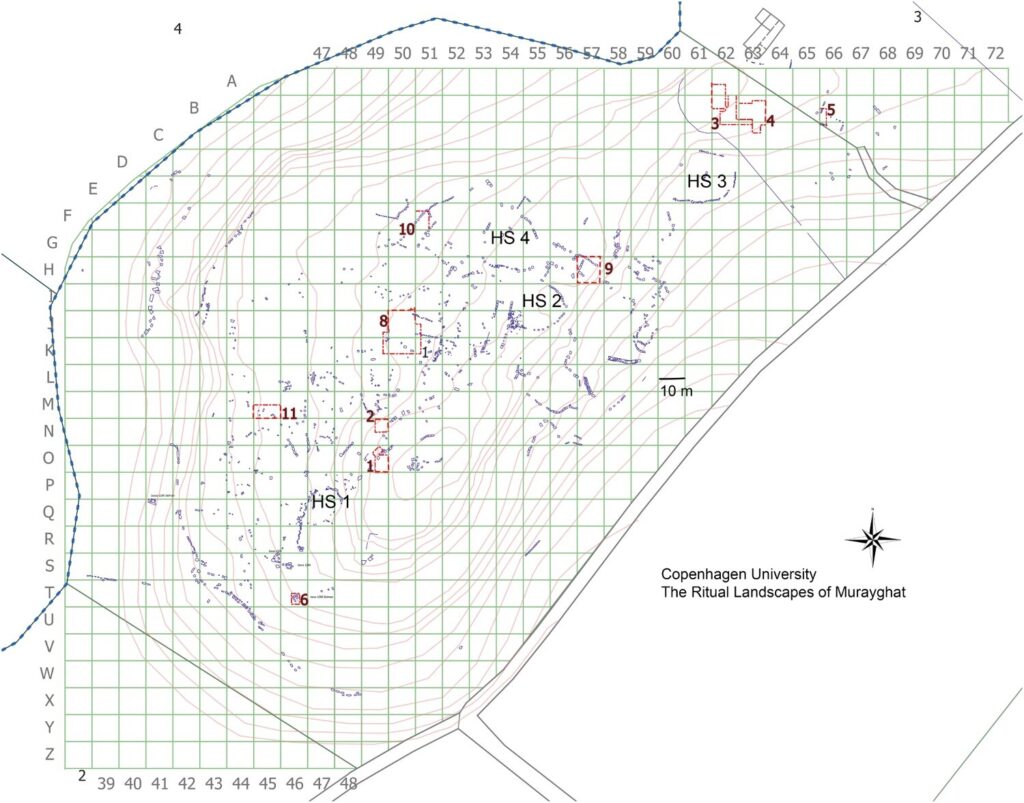
Plan of Area 1 (central knoll) showing horse-shoe-shaped standing stone features and trenches. Other lines are other stone structures on the surface. Image Credit: The Ritual Landscapes of Murayghat Project / Susanne Kerner

Reimagining the Bronze Age

Murayghat offers rare insight into how ancient communities responded to crisis. With traditional religious centers in ruins and elite symbols obsolete, people turned to the land—building visible monuments to remember their dead, claim territory, and reconnect with others.

Archaeologists believe Murayghat’s dolmens and standing stones are more than burial markers; they are enduring symbols of a society in transition. The use of local limestone, shaped by hand and placed with intention, speaks to a community trying to make sense of a changing world.

A Site for the Ages

The findings challenge earlier assumptions that dolmen fields were solely nomadic or tribal burial grounds. Instead, they appear to be part of a larger socio-political adaptation—a way for pre-urban societies to stay connected and re-establish order in uncertain times.

As climate shifts and societal stresses mount today, Murayghat reminds us of humanity’s enduring need to adapt, communicate, and commemorate.
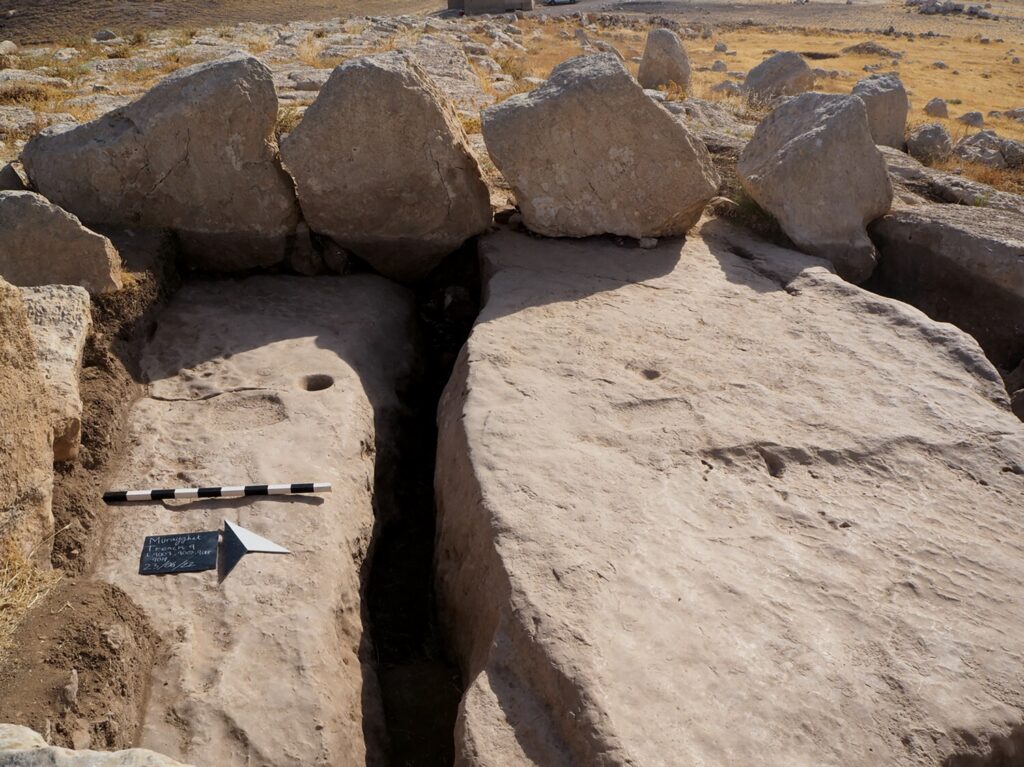
Trench 9 showing Room 1 with wall L.9000 in the background. The cup-marks with adjacent small rectangular depression are left and right of the bedrock cut. The large depression is visible in the right, lower half. Image Credit: The Ritual Landscapes of Murayghat Project / Susanne Kerner

The site remains under excavation, but its story—carved in stone—continues to fascinate archaeologists and inspire new questions about the deep roots of belief, memory, and resilience.

Kerner, S. (2025). Dolmens, standing stones and ritual in Murayghat. Levant, 1–16. https://doi.org/10.1080/00758914.2025.2513829

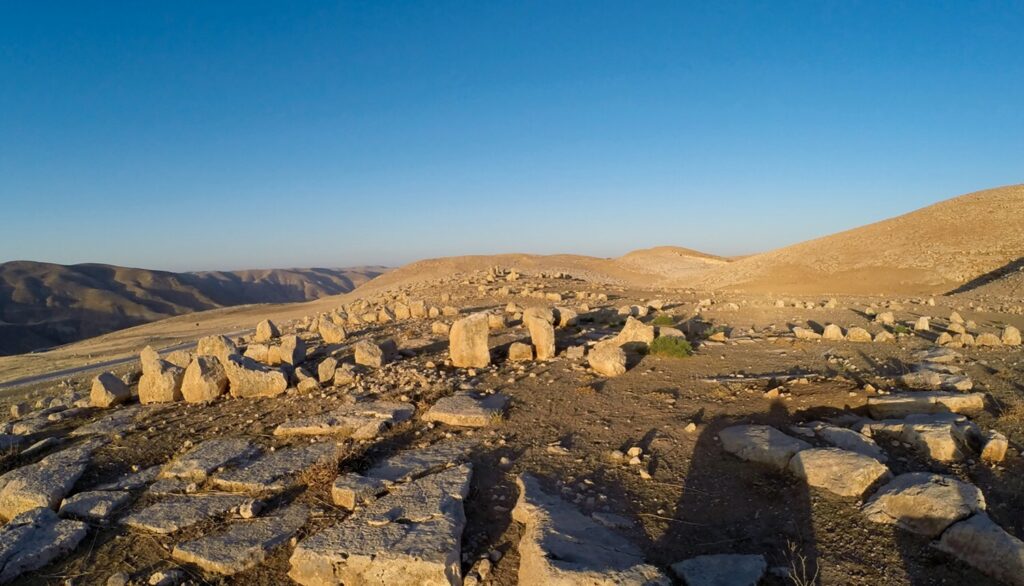
Cover Image Credit: View of the central knoll (Area 1) from the north, highlighting multiple alignments of standing stones. Image: The Ritual Landscapes of Murayghat Project / Susanne Kerner

Related Articles

Derinkuyu: A Subterranean Marvel of Ancient Engineering with 18 Levels and Capacity for 20,000 Inhabitants

2 May 2025

2 May 2025

Beneath the sun-drenched plains of Cappadocia, where otherworldly “fairy chimney” rock formations pierce the sky, lies a secret world carved...

Unique 2700-year-old mosaics unearthed in illegal excavations

17 November 2021

17 November 2021

Two 2700-year-old mosaics, which are thought to belong to a Roman rich man and symbolize magnificence, were found in a...

Burial Cave in Israel May Belong to Herodian Princess Salome: From Royal Tomb to Christian and Islamic Pilgrimage Site

6 July 2025

6 July 2025

A recently reexamined Second Temple-period burial cave in southern Israel—long revered as the resting place of a Christian saint—may actually...

A Sunken Port Beneath the Red Sea May Have Reshaped the Map of Human Migration Out of Africa 20,000 Years Ago

26 July 2025

26 July 2025

New research suggests an ancient trade hub lies beneath Egypt’s Red Sea coast—offering clues to how early civilizations connected Africa...

A Roman Votive Monument Discovered During Excavations at the Roman Open-Air Museum Hechingen-Stein

1 November 2024

1 November 2024

During recent excavations by the State Office for Monument Preservation (LAD) in the Stuttgart Regional Council and the Association for...

Archaeologists Discover Ancient Horse-Bone Skates

27 December 2025

27 December 2025

Archaeologists working on the Taman Peninsula in Russia’s Krasnodar Region have uncovered a remarkable example of ancient ingenuity: bone skates...

Two statuettes of Demeter discovered in Aigai, the ‘city of goats’ of the Aeolians in western Türkiye

20 November 2023

20 November 2023

Two statuettes of Demeter, the Greek goddess of earth and fertility, were discovered in a cistern in the ancient city...

Researchers reveal the 4,500-year-old network of funerary avenues in Arabian Peninsula

15 January 2022

15 January 2022

Archaeologists from the University of Western Australia (UWA) have determined that people living in ancient northwest Arabia built long-distance “funerary...

‘Bakery Prison’ found in Ancient Rome’s Pompeii

12 December 2023

12 December 2023

Archaeologists working on the ongoing excavations in Region IX, Insula 10, near the slopes of the ancient city of Pompeii,...

A Sacred Area from the Copper Age and 5000-years-old A Stele Decorated Discovered in Italy

24 August 2024

24 August 2024

The remains of a sacred area that dates back at least four thousand years have been discovered during excavations for...

Archaeologists unearthed a pot of copper coins in first major discovery at Mohenjo Daro in Pakistan, in 93 years

18 November 2023

18 November 2023

A pot full of copper coins was discovered from a stupa (a dome-shaped building erected as a Buddhist shrine) at...

A woman in the Czech Republic found a medieval jackpot during a walk

29 May 2024

29 May 2024

A woman walking in the town of Kutná Hora in the Central Bohemian Region of the Czech Republic found a...

Earliest evidence for intestinal parasites in the UK came from Stonehenge

20 May 2022

20 May 2022

Researchers think they have discovered the earliest evidence for intestinal parasites in the UK. Ancient poop found at the site...

Alexander the Great’s Bathroom Discovered at Greece’s Aigai Palace

11 May 2024

11 May 2024

Archaeologists say to have unearthed Alexander the Great’s bathroom at the Aigai Palace in northern Greece. The vast Aigai palace,...

Scientists Ancient Landscape Not Seen For 14 Million Years Discovered Beneath Antarctic Ice

26 October 2023

26 October 2023

Researchers have uncovered an ancient landscape that remained hidden beneath the East Antarctic Ice Sheet (EAIS) for at least 14...