
12 December 2025 The Future is the Product of the Past

Second Rare Inscription Honoring Justinian and Theodora Unearthed in Kosovo’s Ancient City of Ulpiana

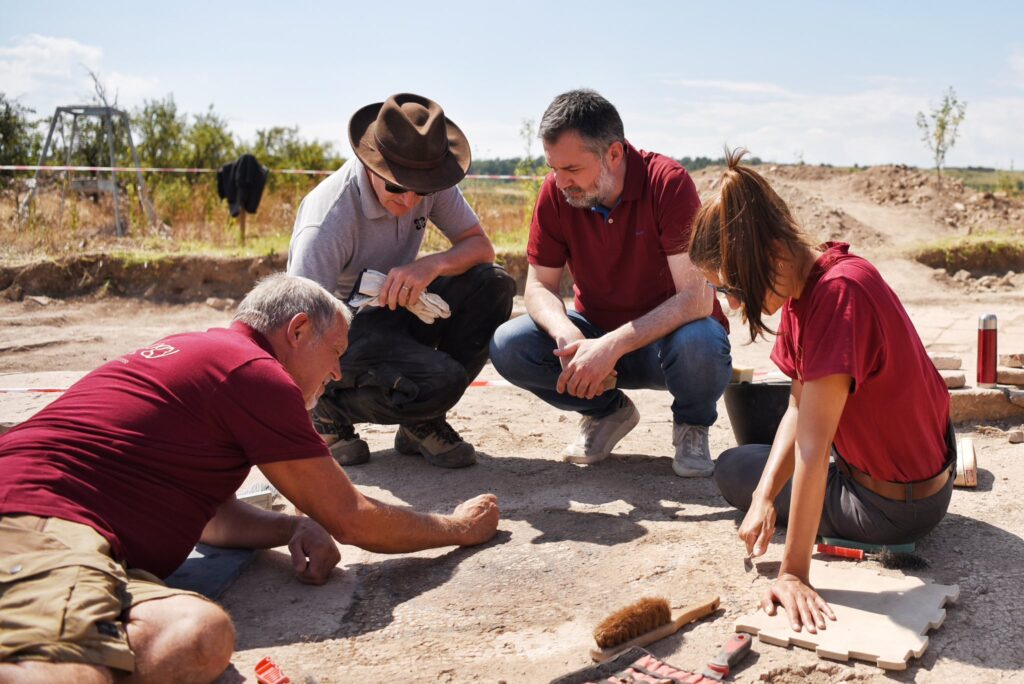
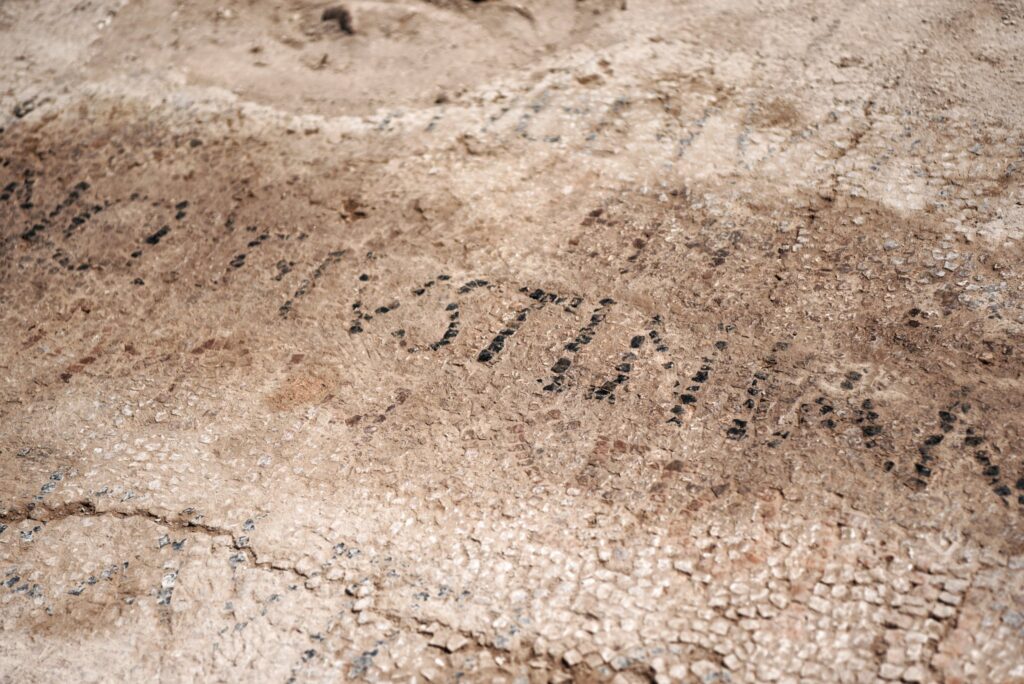
In a discovery that sheds new light on Kosovo’s ancient roots, the country’s Minister of Culture, Hajrulla Çeku, announced via his official Facebook page the unearthing of a rare Byzantine-era inscription at the Ulpiana archaeological site — a dedication to Emperor Justinian and Empress Theodora, and the second of its kind ever found.

The inscription, dedicated to Emperor Justinian and his wife, Empress Theodora, marks a significant milestone in the ongoing exploration of Kosovo’s rich cultural heritage.

Minister Çeku shared the news through a Facebook post, stating:

“The first inscription mentioned the founding of the city of Iustiniana Secunda as a Dardanian city. The second one shows the construction of the episcopal basilica. These are the only known dedications of Justinian, the emperor with origins from this region.”

The newly discovered inscription sheds light on the religious and architectural history of Ulpiana, a once-thriving Roman and Byzantine city located near present-day Gračanica. According to Çeku, this is the only known basilica construction inscription directly linked to Justinian in this area, further strengthening the city’s historical connection to the famed emperor.


📣 Our WhatsApp channel is now LIVE! Stay up-to-date with the latest news and updates, just click here to follow us on WhatsApp and never miss a thing!!


Inscription honoring Justinian and Theodora unearthed at Ulpiana, shedding light on Kosovo’s Byzantine era. Credit: Hajrulla Çeku - Facebook
Inscription honoring Justinian and Theodora unearthed at Ulpiana, shedding light on Kosovo’s Byzantine era. Credit: Hajrulla Çeku – Facebook

Ulpiana: Jewel of Dardania

Ulpiana, often referred to as “Justiniana Secunda,” was one of the most important urban centers in the Roman province of Dardania. Flourishing from the 1st to the 6th century AD, the city played a strategic and administrative role in the region.

After a devastating earthquake in the early 6th century, Ulpiana was rebuilt under the orders of Emperor Justinian I (r. 527–565), who sought to restore and fortify key settlements across the empire. The first inscription discovered previously confirmed Justinian’s efforts in refounding the city, naming it “Iustiniana Secunda” — a name that reflects its renewed status under imperial patronage.

This second inscription provides fresh evidence of the emperor’s commitment not only to civic reconstruction but also to religious and spiritual infrastructure, notably the construction of an episcopal basilica. Its dedication to both Justinian and Theodora also highlights the couple’s joint legacy and influence in the region’s religious life.
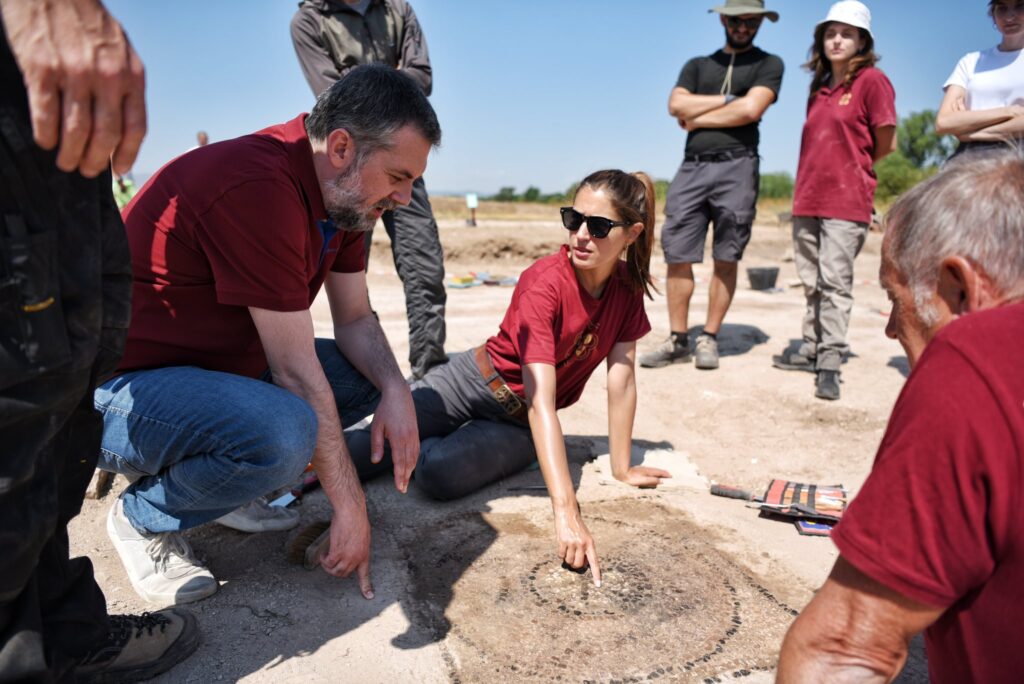
This second inscription provides fresh evidence of the emperor’s commitment not only to civic reconstruction but also to religious and spiritual infrastructure, notably the construction of an episcopal basilica. Credit: Hajrulla Çeku - Facebook
This second inscription provides fresh evidence of the emperor’s commitment not only to civic reconstruction but also to religious and spiritual infrastructure, notably the construction of an episcopal basilica. Credit: Hajrulla Çeku – Facebook

Significance of the Discovery

These inscriptions are not just archaeological curiosities; they are rare primary sources that connect Kosovo’s modern identity with its ancient Dardanian roots. Emperor Justinian, best known for codifying Roman law (Corpus Juris Civilis) and commissioning the Hagia Sophia, was himself of Illyrian—or possibly Dardanian—origin, making the findings in Ulpiana personally and politically symbolic.

Archaeologists working on-site emphasize that no other dedications of this kind have been discovered elsewhere, making these inscriptions uniquely significant. They not only confirm Justinian’s direct involvement in the city’s development but also place Ulpiana on the historical map as a key center of early Christian life in the Balkans.
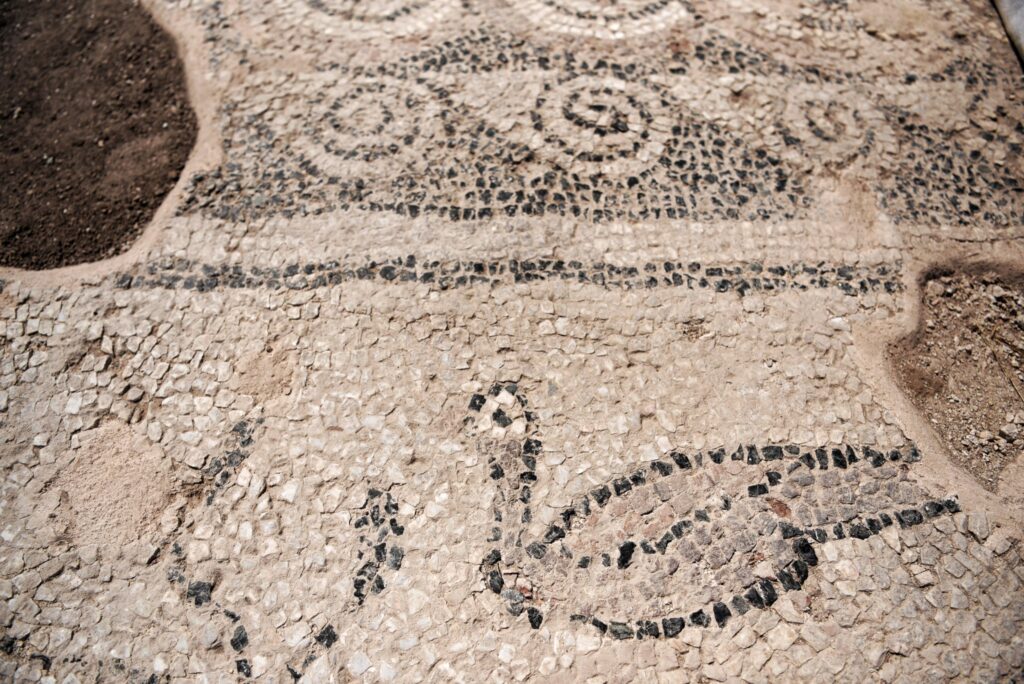
Credit: Hajrulla Çeku - Facebook
Credit: Hajrulla Çeku – Facebook

Preservation and Future Research

Minister Çeku highlighted the government’s serious commitment to preserving cultural heritage. “The preservation and protection of archaeological heritage has never been treated with this seriousness,” he noted.

Recent expropriations of public property have enabled uninterrupted excavation in Ulpiana and the nearby site of Dresnik. Conservation efforts are underway, supported by international collaborations and capacity-building initiatives. These include detailed site management plans, academic research, and future publications aimed at documenting Kosovo’s archaeological legacy.

“The work being done here is not just about unearthing stones,” Çeku wrote. “It is about uncovering our story — and making sure it endures.”

The discovery of the second inscription in Ulpiana is more than a historic footnote — it is a bridge between past and present, shedding light on Kosovo’s ancient heritage and reaffirming its cultural significance on the global stage.

As archaeological efforts intensify, Ulpiana is poised to become a cornerstone in the study of Late Antiquity in the Balkans, offering invaluable insight into the lives of emperors, cities, and civilizations long past.

Cover Image Credit: Hajrulla Çeku – Facebook

Related Articles

A 4,000-year-old treasure map of France’s

17 October 2023

17 October 2023 1

Overlooked for millennia, a rock fragment adorned with enigmatic inscriptions has emerged as a valuable “treasure map” for archaeologists. After...

One of the Largest Early Medieval Silver Hoards Ever Found in Sweden Unearthed Near Stockholm

13 October 2025

13 October 2025

In an astonishing find that could reshape our understanding of early medieval Scandinavian wealth, a private individual digging for earthworms...

Archaeologists found 5 unique sculptures representing the Kakatiya art style in Siddipet

19 July 2021

19 July 2021

13th-century statues were found near a temple tank in the Siddipet district in the northern province of Telangana, India. On...

Four 1,900-year-old Roman swords found in Judean Desert

6 September 2023

6 September 2023

The Israel Antiquities Authority (IAA) announced the discovery of four extremely well-preserved Roman swords hidden in a cave in the...

Ruins of China’s earliest state academy found in east China

21 February 2022

21 February 2022

The ruins of ancient China‘s first government-run institution of higher learning, built in 374 BC, have been discovered in the...

Egypt discovers five 4,000-year-old ancient tombs in Saqqara necropolis

19 March 2022

19 March 2022

The Egyptian Ministry of Tourism and Antiquities announced recently the discovery of five 4,000-year-old ancient tombs in the Saqqara archaeological...

Are the skeletons found in the restoration of the Bukoleon Palace the victims of the Crusader army massacre in Constantinople?

29 November 2021

29 November 2021

It is thought that the 7 skeletons messy found in the Bukoleon Palace excavations may be the victims of the...

New finds in ancient Rome’s Pompeii show ‘conditions of precarity and poor hygiene, in which people of lower status lived during that time

20 August 2023

20 August 2023

Archaeologists have discovered a small bedroom in Civita Giuliana villa near Pompeii that was almost certainly used by slaves, throwing...

Exceptional Iron Age Artifacts Discovered at Celtic Necropolis in France

18 April 2025

18 April 2025

An archaeological excavation in Creuzier-le-Neuf, a small town located six miles north of Vichy, has unveiled a remarkable Celtic necropolis,...

A long-lost branch of the Nile helped in building Egypt’s pyramids – Scientists Say

1 September 2022

1 September 2022

The Giza Pyramids are one of the world’s most iconic cultural landscapes, and they have fascinated humans for thousands of...

Archaeologists opened an untouched Etruscan tomb

31 October 2023

31 October 2023

In Vulci Archaeological Park, central Italy, a 2,600-year-old intact double-chambered Etruscan tomb that was discovered in April and had remained...

1,500-Year-Old Roman Mosaic Unearthed in Mardin: Hidden Masterpiece Rescued from Smugglers

24 October 2025

24 October 2025

A 1,500-year-old mosaic depicting vivid animal figures has been recovered during an anti-smuggling operation in southeastern Türkiye’s Mardin province. Buried...

The 5,000-Year-Old Beaded Burials that Reveal Women’s Power in Copper Age Iberia: Over 270,000 Beads

6 February 2025

6 February 2025

Archaeologists investigating the Montelirio tholos burial site in southwestern Spain, dating back approximately 5,000 years, have uncovered that the women...

Japan’s Ancient Practice Of Cranial Modification: Hirota people in Tanegashima

21 August 2023

21 August 2023

A team of researchers from Kyushu University and the University of Montana has found evidence suggesting that the Hirota community,...

Spectacular 222-gram Gold Necklace Unearthed in Poland, Possibly of Goth Origin

10 August 2025

10 August 2025

A spectacular archaeological find has emerged from the forests near Kalisz, Poland — a massive bent gold necklace weighing an...