
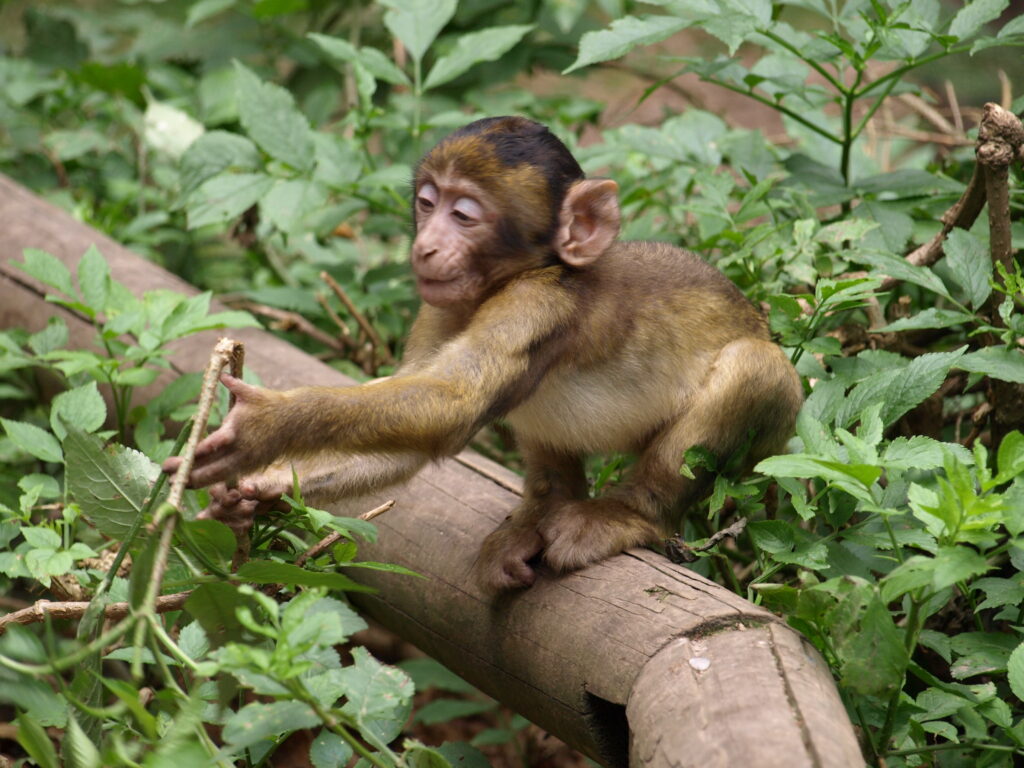
The 1,800-year-old skull is the first macaque specimen from Türkiye’s archaeological record to undergo a detailed osteological examination. Its presence beside human burials and a complete dog skeleton raises the possibility that it was an exotic pet.
A young macaque found in a Roman-period tomb at ancient Attaleia, beneath modern Antalya in southern Türkiye, may once have belonged to one of the city’s wealthy residents.
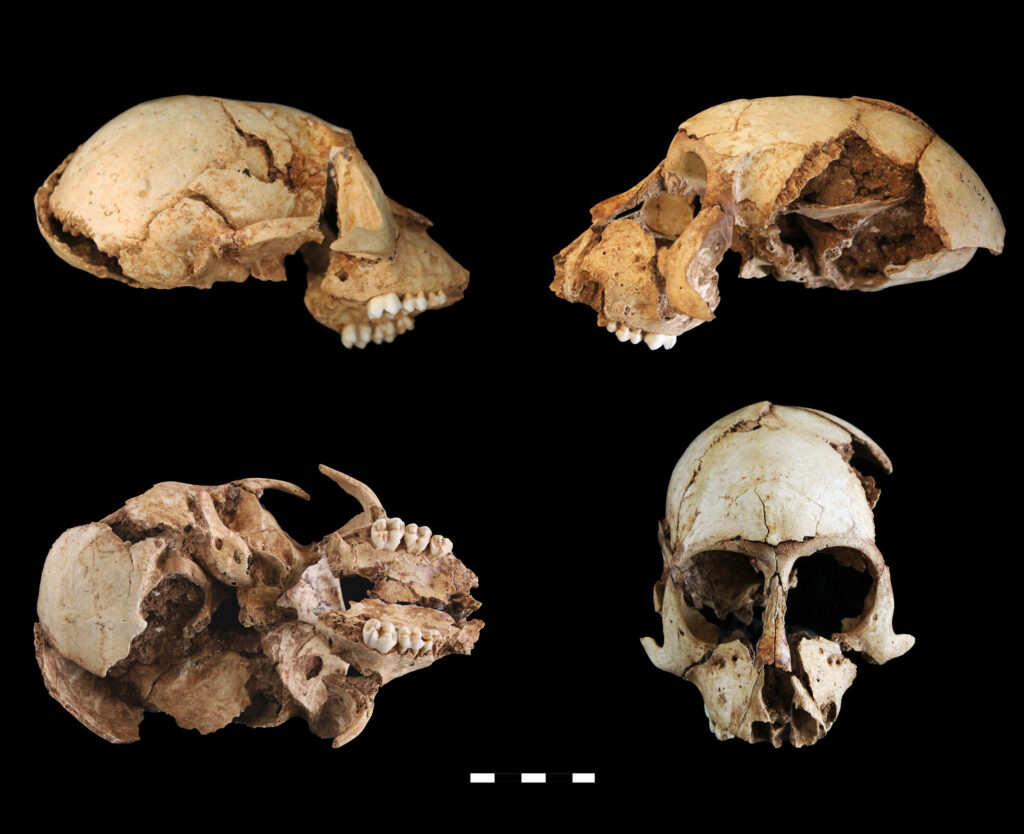
The animal was only about two years old when it died. Its nearly complete skull was recovered from a chamber tomb containing the remains of 22 people, grave goods, scattered animal bones and the complete skeleton of a dog.
The study, conducted by anthropologists Ahmet İhsan Aytek and Alper Yener Yavuz of Burdur Mehmet Akif Ersoy University, presents the first detailed osteological examination of a macaque discovered in an archaeological context in Türkiye. Their findings were published in the International Journal of Osteoarchaeology.
Researchers believe the monkey may have been a valued household animal, a trained performer or a symbol of status. The evidence, however, does not establish with certainty why it was placed in the tomb.
A skull recognized after the excavation
The skull came from Attaleia’s ancient necropolis, excavated between 2008 and 2010. Archaeologists uncovered 840 burials there, including cist graves, chamber tombs, sarcophagi, rock-cut graves and cremations.
The macaque was recovered in 2010 from M267, a chamber tomb originally built during the Hellenistic period. The structure was later altered and reused between the late second and early third centuries CE.
Inside were the remains of 22 people, fragments of small perfume or oil vessels, a jug known as an olpe, a bronze strigil used for scraping the skin, and numerous animal bones. A complete dog skeleton was also found in the chamber.
The monkey skull was not immediately identified in the field. After the skeletal material was transferred to Burdur Mehmet Akif Ersoy University, researchers noticed the soil-covered cranium during laboratory cleaning. It was then restored and examined in detail.
Its exact position inside the tomb had not been recorded. This missing information prevents researchers from determining whether the animal had been deliberately placed beside a particular person or deposited during one of the tomb’s later phases of use.
Türkiye’s first detailed archaeological macaque study
Primate remains are extremely uncommon in zooarchaeological assemblages. In Türkiye, the only previously reported examples came from Byzantine-period deposits uncovered during the Yenikapı excavations in Istanbul.
Those finds included the skull and lower jaw of a juvenile macaque, but they were not published with sufficient photographs, measurements or anatomical descriptions to permit a detailed comparison.
The Attaleia skull therefore represents the first archaeological macaque specimen from Türkiye to be examined through an extensive combination of dental measurements, morphological observations and statistical comparison.
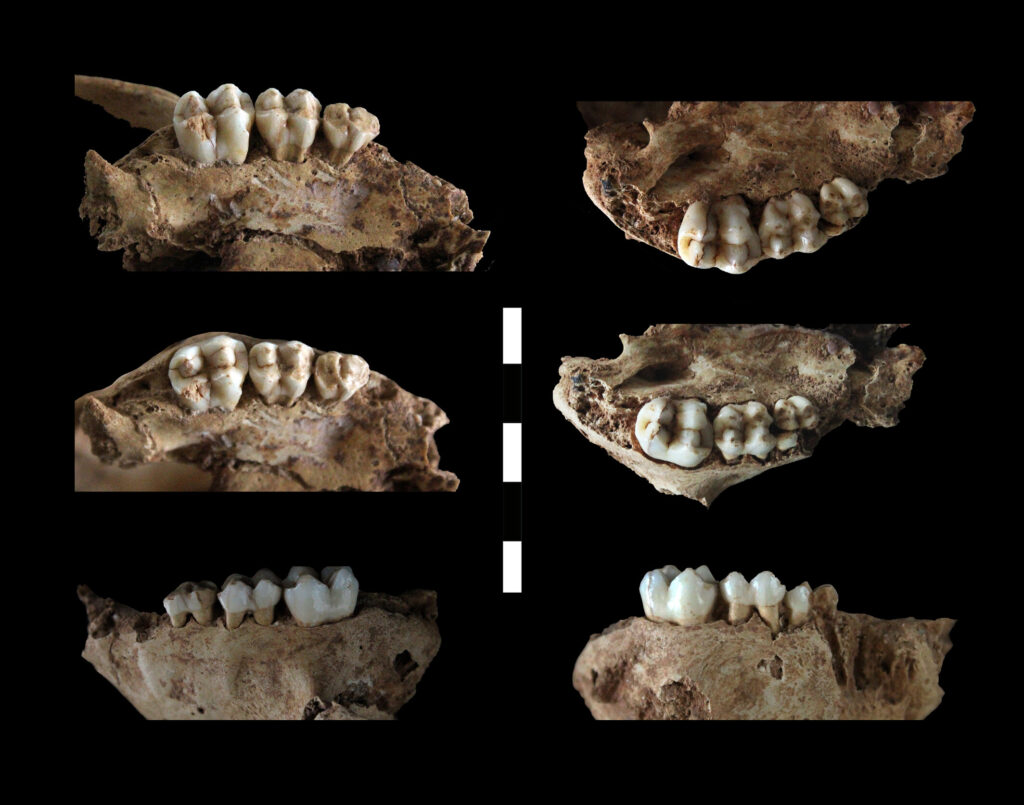
Although pressure from the surrounding sediment had distorted parts of the skull, the upper jaw preserved several deciduous premolars and permanent first molars. Researchers recorded eight measurements from the teeth and compared them with a large dataset of modern primates.
The results placed the animal securely within the genus Macaca. Its measurements were closest to those of the Barbary macaque, Macaca sylvanus, although the rhesus macaque, Macaca mulatta, could not be completely excluded.
Without ancient DNA, the species identification remains provisional. The researchers therefore describe the animal as most probably a Barbary macaque rather than presenting the classification as certain.
The monkey was less than two years old
Dental development provided the clearest evidence for the animal’s age.
Its permanent first molars had erupted but showed very little wear, while one lateral incisor remained inside its socket. Comparisons with tooth eruption sequences in other macaque species placed the animal’s age at approximately 20 to 24 months.
At that stage of development, it may have weighed between six and eight kilograms.
The dimensions of the first molars were closer to average male measurements, leading the researchers to propose that the monkey was probably male. Because the skull lacked the canine teeth normally used to distinguish males from females, the sex assessment remains uncertain.
No pathological lesions, cut marks or other signs of human modification were identified on the skull. The surviving bones therefore provide no clear evidence of disease, physical mistreatment, butchery or the animal’s cause of death.
An exotic animal brought across the Mediterranean
If the identification as a Barbary macaque is correct, the monkey was probably brought to Attaleia from North Africa.
Today, wild Barbary macaques survive mainly in Morocco and Algeria, with another population in Gibraltar. During the Roman period, animals from North Africa moved through extensive maritime trade networks alongside grain, olive oil, ceramics and other commodities.
Roman ships also transported lions, leopards, elephants, gazelles, hyenas and monkeys for public spectacles, private collections and elite households.
Macaques were especially suited to close contact with people. Their intelligence, flexible diet and ability to adapt to human environments made them easier to transport and train than many other exotic species. Across the Roman world, they could serve as pets, entertainers or military mascots.
Their rarity also made them expensive. Owning a monkey could advertise a person’s wealth and access to long-distance trading networks.
Attaleia was built around a Mediterranean harbor
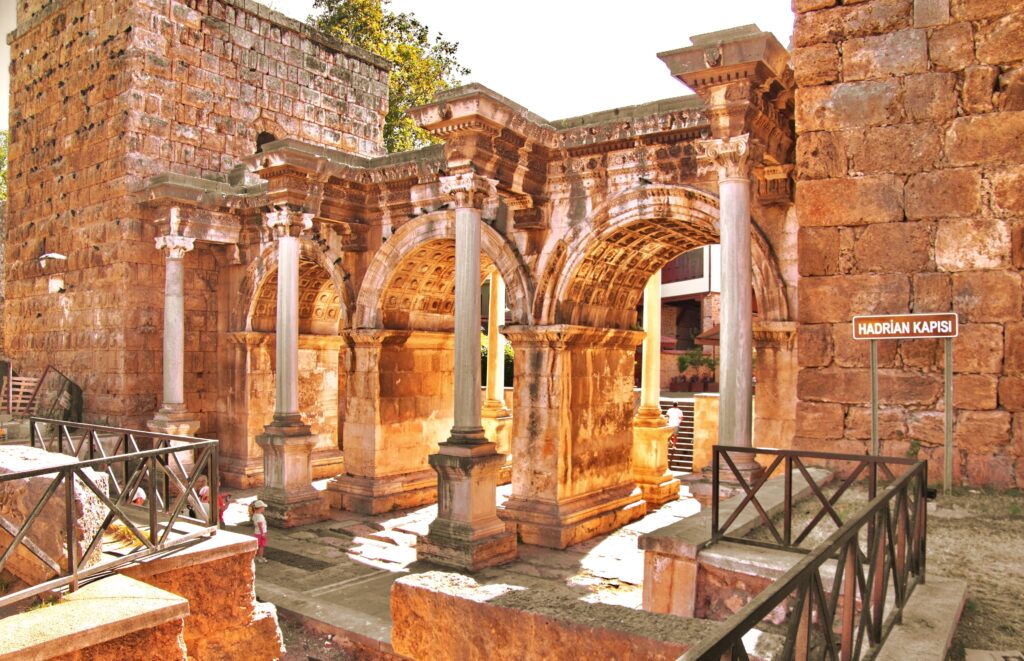
Ancient Attaleia occupied the natural harbor now surrounded by Antalya’s historic Kaleiçi district. The city was traditionally associated with King Attalus II of Pergamon, from whom it took its name during the second century BCE.
After the end of the Pergamene kingdom, Attaleia passed through a period of instability before coming under Roman control. Its sheltered harbor helped it develop into an important port on the coast of Pamphylia. Emperor Hadrian visited the city in 130 CE, close to the period when the tomb containing the macaque was reused.
Much of ancient Attaleia now lies beneath the modern city, making its early layout difficult to reconstruct. Archaeological discoveries from Kaleiçi, the harbor area and the surrounding necropolises nevertheless show that the settlement was connected to maritime routes running across the eastern Mediterranean.
For a young North African monkey, the harbor would have provided a direct route into the city.
Pet, performer or funerary symbol?
The presence of the skull in a human tomb is central to the interpretation, but it does not provide a definitive answer.
Monkeys were sometimes buried with their owners in the Roman world, apparently reflecting relationships that went beyond simple ownership. Other archaeological examples indicate that exotic animals could be treated as members of a household and given formal burials after death.
The complete dog skeleton in M267 strengthens the possibility that animals held personal importance for those using the chamber. The macaque could have belonged to a wealthy resident of Attaleia, while another possibility is that it was a trained animal associated with a performer.
Yet the skull’s original placement is unknown, and no body bones can be securely connected to it. Researchers cannot determine whether the monkey was buried intact, placed as an offering or introduced into the chamber in another way.
What the study establishes is more limited but still unusual: a juvenile macaque lived in Roman Attaleia, far from the natural range of the species it most closely resembles. Its short life in the Mediterranean port may reflect the ancient trade in exotic animals—and the close, sometimes emotional relationships that could develop between those animals and the people who acquired them.
Aytek, A. İ., and A. Y. Yavuz. 2026. “ First Detailed Examination of Macaca (Primates, Cercopithecidae) Remains From Roman Anatolia.” International Journal of Osteoarchaeology 1–10. https://doi.org/10.1002/oa.70148.
Credit: Public Domain
