

When archaeologists uncovered the grave of a heavily armed man at North Bersted in West Sussex, they found the equipment expected of an elite Iron Age warrior: a sword, spear and shield. But one object complicated the picture — an unusual helmet whose form and decoration seemed to connect Britain with military traditions across the Channel.
The burial, discovered in 2008 and dated to around the middle of the first century BC, belonged to a man who was clearly no ordinary fighter. His weapons and carefully furnished grave point to high status, yet the helmet has made his identity much harder to define.
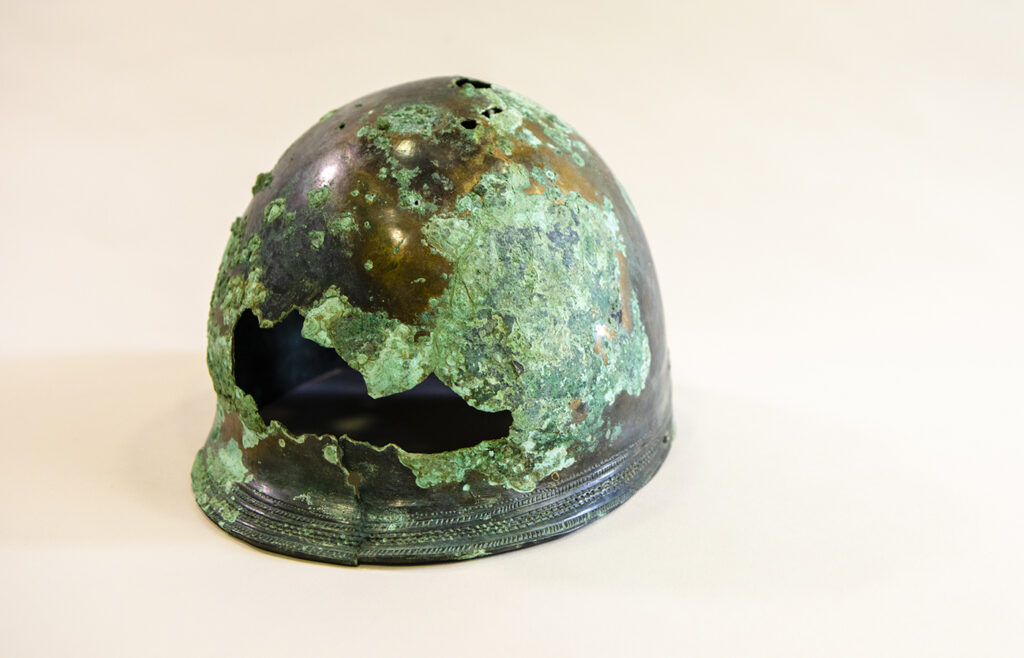
A helmet between Celtic and Roman worlds
The helmet has often been described as Roman, but the reality is less straightforward. Its basic form belongs to a family of helmets generally associated with the Coolus tradition, designs that circulated across Gaul and the Mediterranean world during the late Iron Age.
Such helmets do not fit neatly into modern categories of “Roman” or “Celtic.” Military equipment moved with soldiers, traders and mercenaries, and similar forms could be adopted on both sides of cultural and political frontiers.
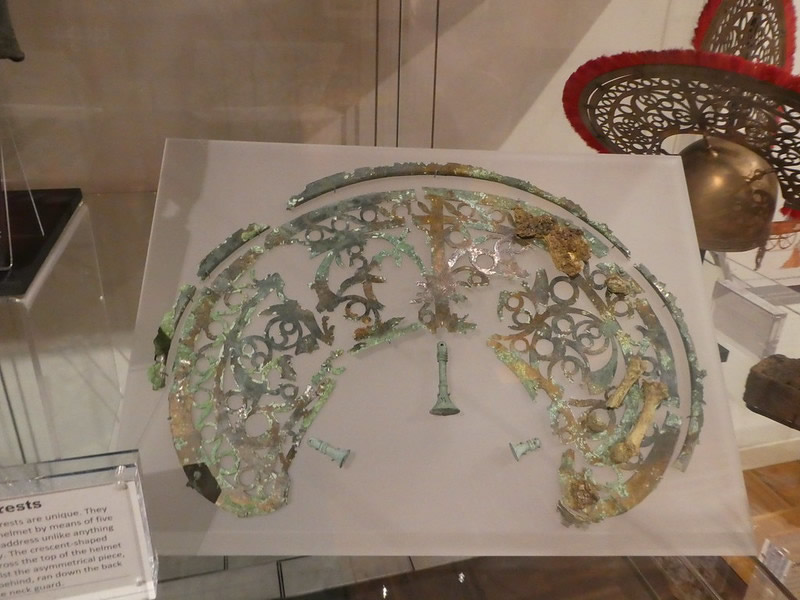
What makes the North Bersted example particularly striking is its elaborate bronze openwork decoration. The ornamental pieces, originally attached to the helmet, transformed a practical piece of protective equipment into an object that also signaled status and identity.
For archaeologists, that decoration may be just as important as the helmet itself. It suggests that its owner wanted to be seen, not merely protected.
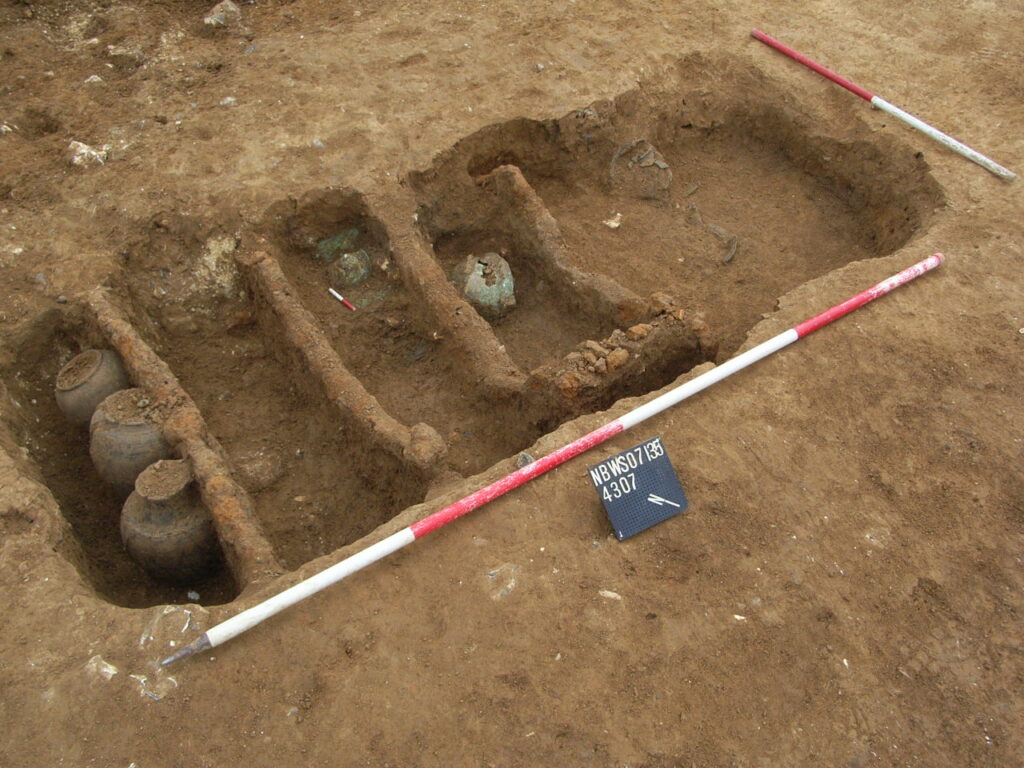
Who was the man beneath it?
The question is whether the warrior was a Briton who acquired continental military equipment or a man who had crossed the English Channel from Gaul.
Southern Britain was not isolated from continental Europe before the Roman conquest of AD 43. Communities on both sides of the Channel traded goods, exchanged ideas, and maintained political relationships, while warriors could travel far beyond their places of birth.
That makes several interpretations possible. The North Bersted man may have been a local elite with access to prestigious imported equipment. He may also have been a Gallic warrior who settled or died in Britain. Military service, alliances and mercenary activity offer further possibilities.
None of these explanations can yet be proved.
A mystery the helmet cannot solve
The temptation is to see the helmet as evidence that the man fought either for Rome or against it, particularly during the turbulent decades surrounding Julius Caesar’s campaigns in Gaul and Britain. The burial, however, does not reveal which side he supported —or whether such a simple division even applied to his life.
That uncertainty is what makes the North Bersted helmet important. Rather than marking a clear boundary between Roman and Celtic worlds, it reflects a period when weapons, people and ideas were already moving between them.
The warrior’s name has disappeared, but the helmet buried with him still preserves the ambiguity of the world he inhabited.
