
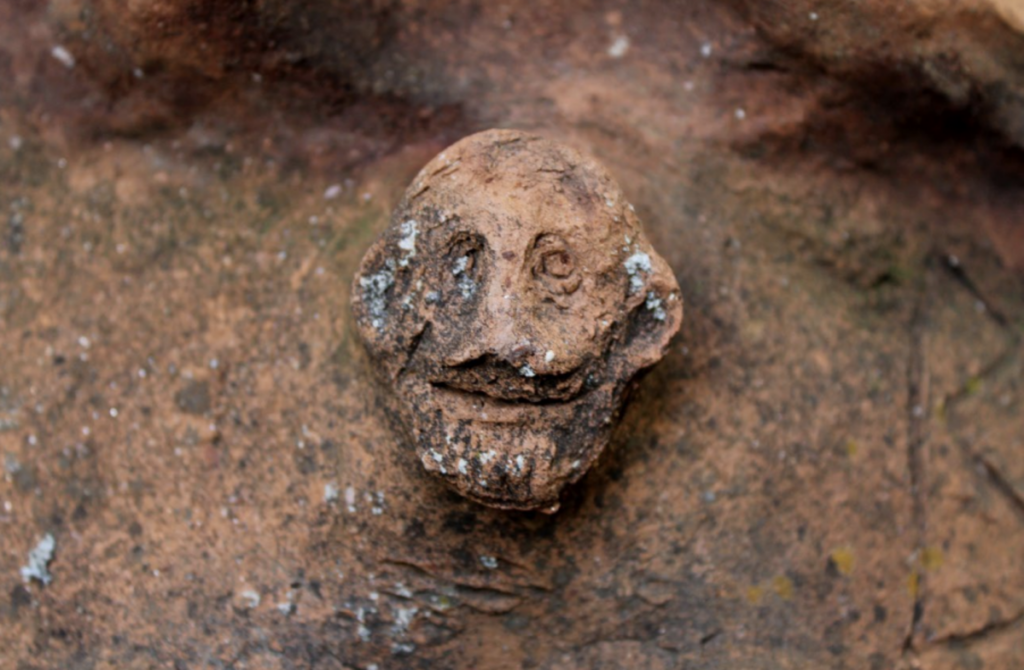
A Roman-era terracotta sarcophagus found in the ancient city of Attouda in western Türkiye bears an unusual image of Silenus, a mythological figure associated with Dionysus. A new archaeological study suggests that the relief, unmatched among known cylindrical terracotta sarcophagi in Anatolia, may have served as a symbolic guardian of the dead.
Identified during archaeological surveys at Attouda in Denizli Province, the fragmented sarcophagus dates tentatively to the first or second century AD. Its most remarkable feature is a sculpted head identified as Silenus, an elderly figure associated with Dionysus, the Greek god of wine, fertility, and religious ecstasy.
Associate Professor Bilge Yılmaz Kolancı of Pamukkale University examined the find in a study published in the peer-reviewed journal Cedrus. Her research identifies the decoration as an exceptional example of regional funerary art, combining a locally produced burial container with religious imagery more commonly associated with other types of tomb monuments.
An Unusual Discovery in Attouda’s Necropolis
The sarcophagus fragments were recorded during archaeological surveys in 2023 at Musalla, an agricultural area south of ancient Attouda. The city occupied a strategically positioned hill near the historical boundaries of Caria, Phrygia, and Lydia and experienced considerable prosperity under Roman rule.
Among the remains scattered across a field, archaeologists identified six fragments belonging to a cylindrical terracotta sarcophagus. Agricultural activities had damaged the burial container, and its surviving pieces had been moved to the edge of the cultivated land. The fragments, including sections of the cylindrical body and its lid, were later transferred to the Denizli Museum.
The sarcophagus was made from reddish clay containing mica and limestone particles, with an estimated original diameter of 55–60 centimeters. Raised bands and horizontal handles resemble features found on other terracotta sarcophagi from nearby ancient cities, including Laodikeia, Hierapolis, and Trapezopolis. Such containers were probably manufactured in regional workshops, since transporting large, fragile ceramic burial vessels over considerable distances would have been difficult.
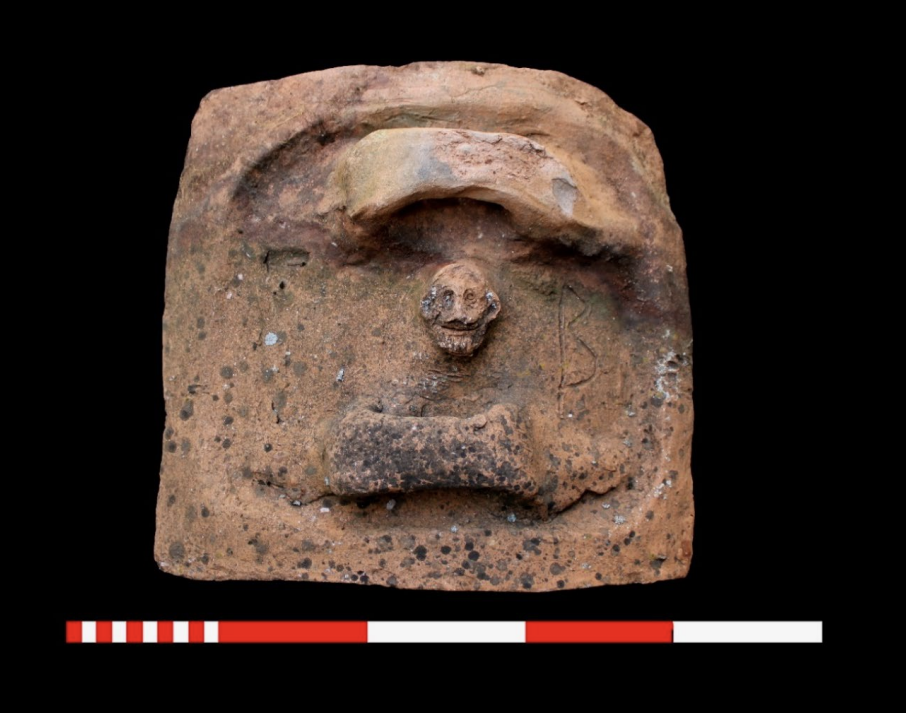
One surviving lid, measuring approximately 33 by 30.5 centimeters, differs significantly from the other fragments. It was a small sculpted human face, its unusually vivid expression unlike the simpler decoration generally associated with these burial containers.
Silenus and the Beliefs Surrounding Death
In Greek mythology, Silenus was hardly the kind of figure one might expect to find guarding a grave. Often portrayed as an elderly, bearded man with a fondness for wine, he was known as the companion and teacher of Dionysus, the god of wine, celebration, and religious ecstasy. Yet behind this lively character lay a deeper connection to ancient beliefs about death and the afterlife.
Dionysus and his companions appeared not only in scenes of feasting and celebration but also in funerary art, where their imagery could evoke renewal and the possibility of life beyond death. Silenus, with his exaggerated facial features and sometimes unsettling appearance, could also take on a protective role. Such faces were believed to have the power to frighten away harmful forces.
This may explain his unusual presence on the Attouda sarcophagus. The sculpted head measures only 4.8 centimeters high, yet its features are striking. A bald forehead, prominent circular eyes, a broad nose, deeply carved lips, and a short beard give the tiny face an unusually expressive appearance. Its exaggerated features resemble masks depicting Silenus in ancient Greek and Roman art.
Yılmaz Kolancı suggests that the relief served a protective purpose, perhaps guarding the person buried inside. Its possible position above the deceased’s head adds another dimension to that interpretation, although the damaged condition of the sarcophagus prevents researchers from establishing its original arrangement with certainty.
A Greek Letter Adds Another Clue
The Silenus relief is not the only unusual detail on the lid. Beside the little face, someone carefully carved the Greek letter Beta (Β) into the clay, leaving a mark approximately seven centimeters high. Its meaning remains uncertain, but Yılmaz Kolancı considers the possibility that it identified the workshop or craftsperson responsible for producing the sarcophagus.
Similar markings are known from other burial containers in the region. A cylindrical terracotta sarcophagus from Laodikeia, for instance, carries several incised letters that have been interpreted as workshop marks.
The combination of the Silenus image and the Beta inscription nevertheless distinguishes the Attouda lid from other known examples. While cylindrical terracotta sarcophagi commonly feature raised bands, handles, and occasionally geometric or symbolic decorations, the researcher found no comparable Silenus-head relief among the known Anatolian examples.
Dionysus Had a Place in Attouda’s Religious Life
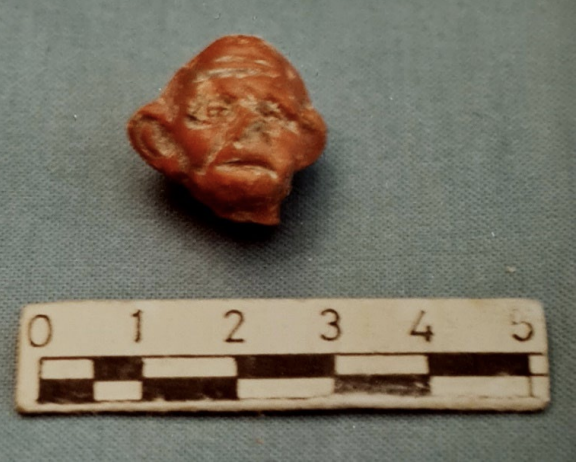
The appearance of Silenus at Attouda may seem unexpected, but the city’s archaeological record offers reasons to believe that its inhabitants would have recognized the figure. An additional terracotta head, identified as Silenus, had previously been recovered from a tomb in the city’s necropolis. Its presence suggests that imagery associated with Dionysus was not restricted to a single burial monument.
Dionysus himself also appeared in the city’s public and religious life. Roman-period coins from Attouda depict the god with familiar attributes, including his staff and drinking vessel, sometimes accompanied by a panther. Inscriptions provide further evidence of religious and cultural associations connected with his worship.
These discoveries suggest that the figure decorating the sarcophagus belonged to a well-established visual tradition rather than being an isolated artistic choice. For people familiar with Dionysian imagery, Silenus could have carried associations extending beyond drinking and celebration to renewal, protection, and hopes for existence after death.
The Attouda relief may therefore represent a local adaptation of beliefs and images that circulated throughout the Greek and Roman world. A craftsperson working with an ordinary terracotta burial container could have given it a more personal meaning by adding the face of a mythological guardian.
A Rare Example of Roman Funerary Art
Although the sarcophagus offers valuable evidence of local burial traditions, its precise date remains uncertain. The original burial context was disturbed, and archaeologists recovered neither grave goods nor associated material suitable for independent dating. Comparisons with similar regional sarcophagi suggest production during the first or second century AD.
Yet the significance of the find does not depend on identifying its former occupant. The little Silenus face, together with the possible workshop mark, reveals how even relatively modest burial containers could carry imagery reflecting religious beliefs and local artistic choices.
For Attouda, the discovery adds another piece to the picture of a city where traditional Greek mythology remained part of life under Roman rule. And for the study of ancient Anatolian burial practices, the sarcophagus offers something particularly valuable: an unusual example of how a familiar mythological character found a place on an otherwise conventional terracotta tomb.
Yılmaz Kolancı, B. (2026). Terracotta Cylindrical Sarcophagus with a Silenos Head Relief from the Necropolis of Attouda. Cedrus, 14, 309-322. https://doi.org/10.5281/zenodo.22305506
