
10 November 2025 The Future is the Product of the Past

Three New Domus de Janas Unearthed in Sardinia: 5,000-Year-Old “Fairy Houses” Discovered

Hidden beneath the rugged landscapes of Sardinia lie the silent dwellings of an ancient world — the Domus de Janas, or “Fairy Houses.” Carved into rock over five millennia ago, these mysterious tombs blur the line between myth and history. Neither mere legend nor simple graves, they represent a unique fusion of ritual, belief, and artistry. Now, the recent discovery of three new Domus de Janas at the Sant’Andrea Priu archaeological complex adds yet another chapter to the enduring enigma of Sardinia’s prehistoric past.

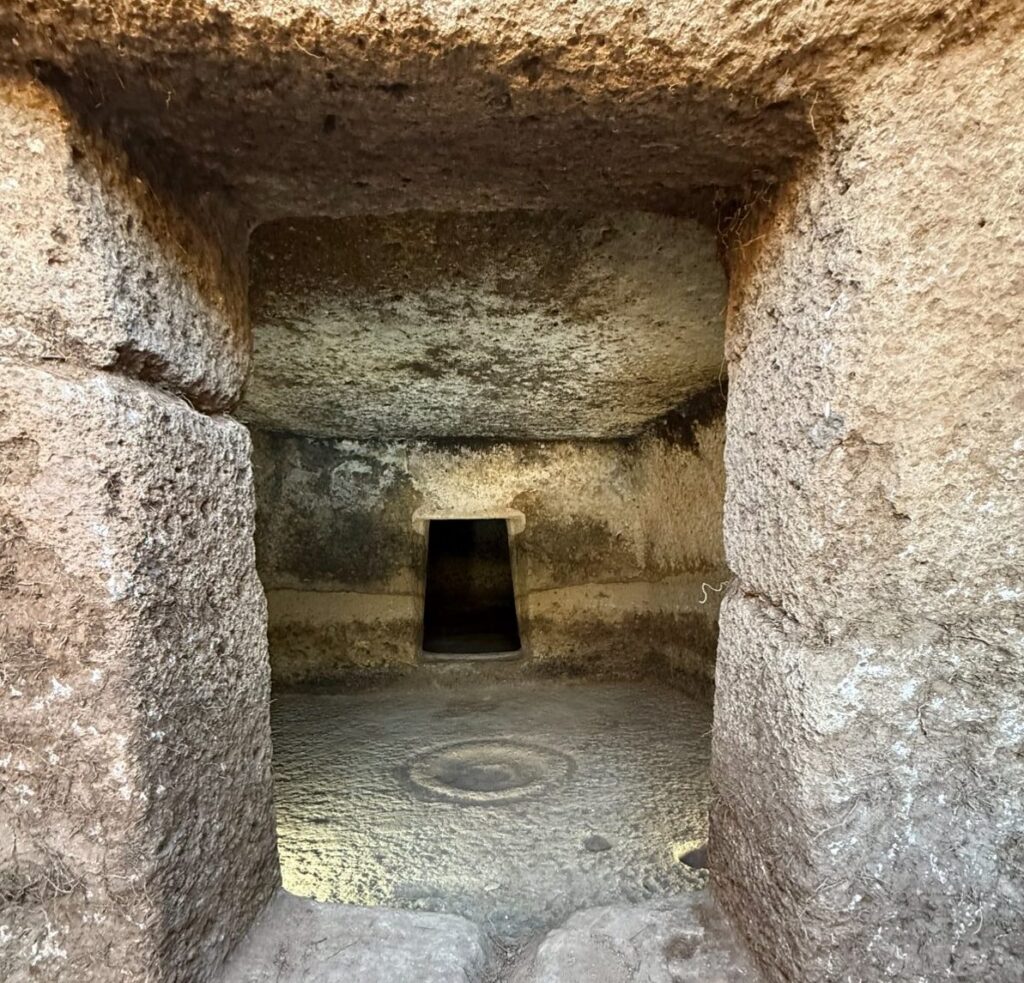
In a significant archaeological development, three new Domus de Janas have been discovered at the Archaeological Complex of Sant’Andrea Priu in Bonorva, Sardinia, bringing the total number of known hypogea at the site to 20. These underground tombs, dating back to prehistoric times, were unearthed during a cultural heritage project promoted by Italy’s Ministry of Culture aimed at excavation, conservation, and site enhancement across the Meilogu region.

The newly found tombs—designated as Tombs XVIII, XIX, and XX—were located near the so-called “Tomb of the Hearth,” situated on a plateau dominated by a distinctive rock formation known as the “Bell Tower” or “Bull.”
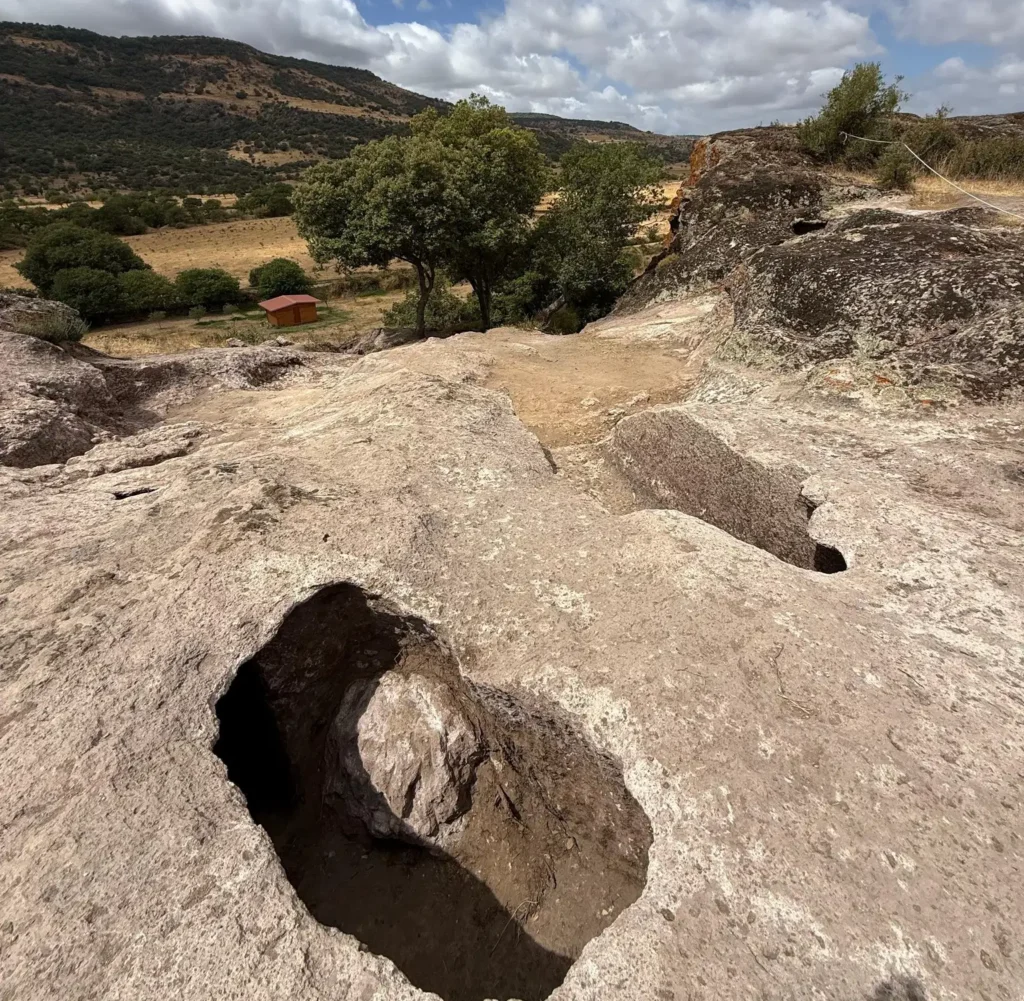
Three new Domus de Janas were discovered. Credit: Patrizia Luciana Tomassetti and Nadia Canu

Each tomb offers unique architectural and cultural features:

Tomb XVIII features a dromos (corridor) and a central quadrangular chamber with a carved hearth. Artifacts include obsidian fragments, a spindle, a greenstone axe, and pickaxes.

Tomb XIX, a smaller structure, contains a pavilion-like entrance leading to two interior chambers. Finds include ceramic fragments and a miniature jar.


📣 Our WhatsApp channel is now LIVE! Stay up-to-date with the latest news and updates, just click here to follow us on WhatsApp and never miss a thing!!


Tomb XX, the most elaborate, contains seven rooms accessed through side corridors branching from an entry cell. A painted decorative band still survives in one of the chambers. Over 30 Roman-era ceramic vessels were discovered here, earning it the nickname “Tomb of the Roman Vases.”

All recovered artifacts will undergo restoration at the Restoration and Conservation Center of Li Punti and will be analyzed to further uncover the cultural and historical context of the site.
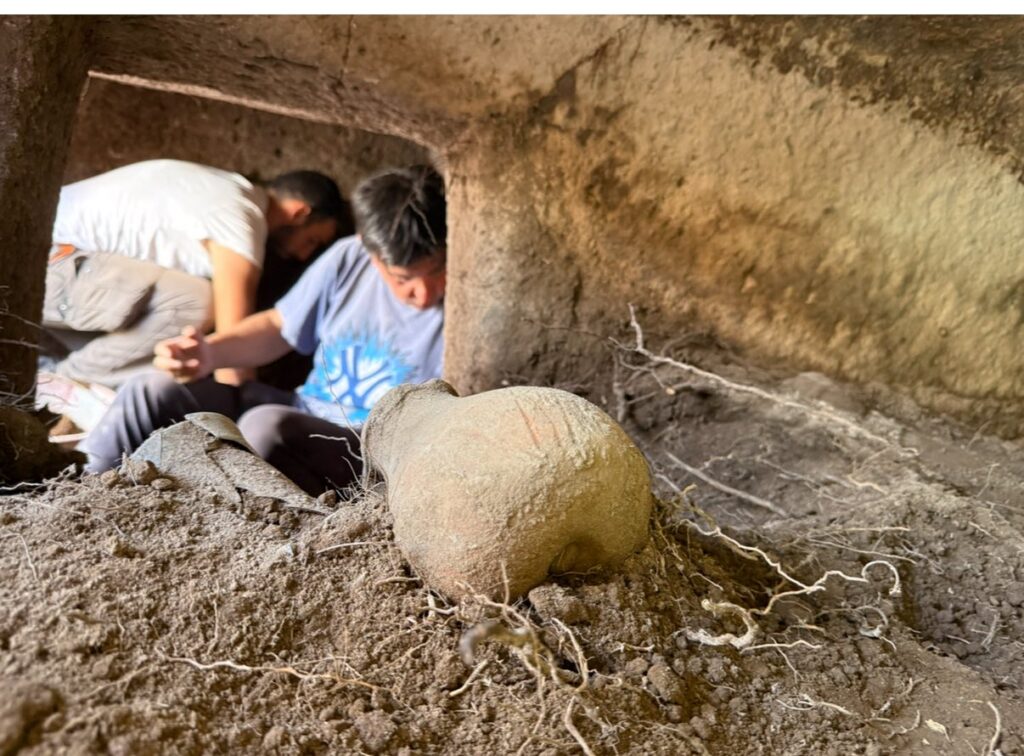
Three new Domus de Janas were discovered. Credit: Patrizia Luciana Tomassetti and Nadia Canu

What Are Domus de Janas?

Domus de Janas, meaning “House of the Fairies” or “House of the Witches” in Sardinian, are prehistoric chamber tombs carved into rock between 3400 and 2700 BCE. These tombs reflect the religious and ritual beliefs of Neolithic Sardinian communities and often mimic the layout of contemporary houses, suggesting a belief in an afterlife similar to earthly existence. They are often decorated with symbolic motifs such as spirals, bulls’ horns, and false doors.

About the Sant’Andrea Priu Archaeological Complex

The Sant’Andrea Priu complex is one of the most important prehistoric necropolises in Sardinia. Located on the slopes of the Meilogu plateau, it features a series of well-preserved hypogea carved into volcanic rock. In addition to Neolithic tombs, the site includes evidence of use during the Roman and early medieval periods, indicating a long and layered history of human activity.

The site is part of a serial site recently inscribed as a UNESCO World Heritage Site, highlighting its outstanding universal value.
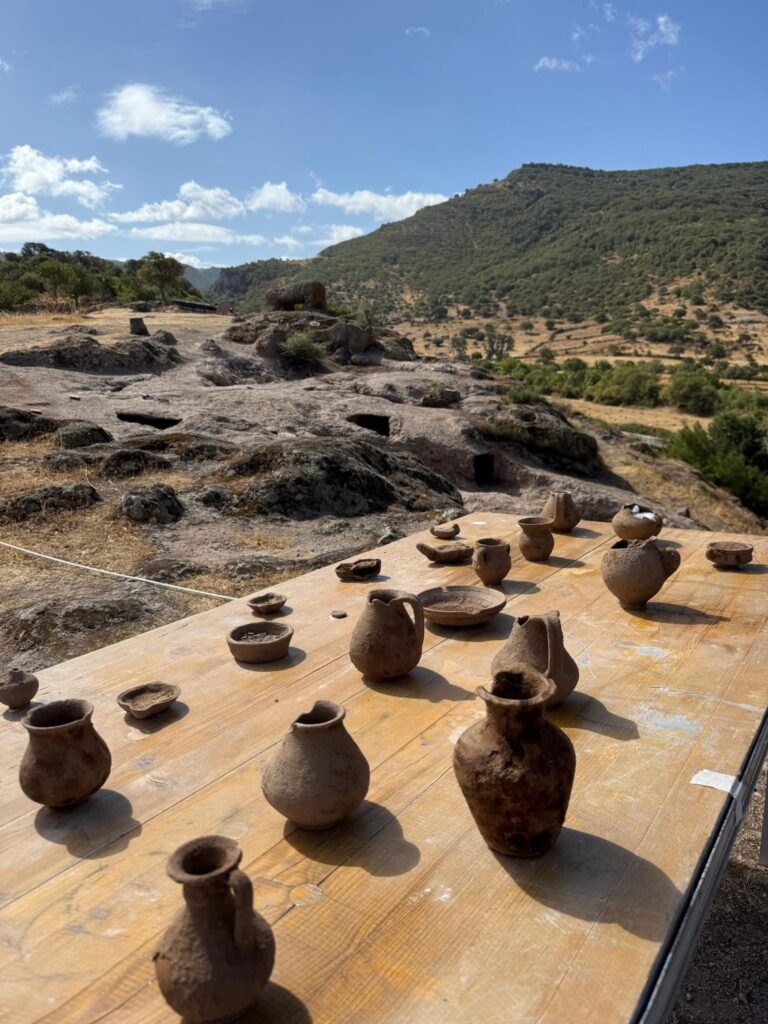
Findings. Credit: Patrizia Luciana Tomassetti and Nadia Canu

Future Excavations and Public Access

Excavations will continue in the lower area of the site, where signs of Roman and early medieval settlements have already surfaced. In the meantime, the newly discovered tombs will be open to the public, enhancing the site’s cultural tourism potential.

This discovery is part of a broader cultural investment by the Ministry of Culture, which includes excavations at other nearby archaeological landmarks such as Nuraghe Oes and Nuraghe Santu Antine, with a total budget of approximately €2 million.

The discovery of three new Domus de Janas at Sant’Andrea Priu not only adds to the historical richness of Sardinia but also opens new doors to understanding the island’s ancient burial traditions and cultural evolution. As research and conservation continue, the site promises to remain a focal point for both scholars and visitors interested in the deep roots of Mediterranean civilization.

Soprintendenza Sassari e Nuoro

Cover Image Credit: Patrizia Luciana Tomassetti and Nadia Canu

Related Articles

45,000 years ago, Neanderthals in the Swabian Jura used complex tool-making techniques

13 September 2021

13 September 2021

Findings that will change our perception of Neanderthals’ sophistication A team from the University of Tübingen have proved that Middle...

Vast Lost Maya Ritual Complex Reveals a Civilization Built Without Kings

9 November 2025

9 November 2025

Hidden for more than 3,000 years in the lowlands of Tabasco, the vast lost Maya ritual complex of Aguada Fénix...

Game Bone Stones from a Roman Military Strategy Game Found in Hadrianopolis Ancient City, Türkiye

10 January 2025

10 January 2025

During the excavations in Hadrianopolis Ancient City in Eskipazar district of Karabük, 2 bone game stones belonging to the military...

Rare Fresco of Fire-Worship Ritual Discovered in Ancient Sogdian Palace in Tajikistan

6 September 2025

6 September 2025

Archaeologists in Tajikistan have unearthed an exceptionally rare fresco depicting priests performing a fire-worship ritual at the palace of Sanjar-Shah,...

Researchers measure the impact of Population Pressure on Prehistoric Violence in Japan’s Yayoi Period

23 August 2021

23 August 2021

Are wars part of human nature? Do people tend to fight instinctively or do they war as a result of...

The earliest known depiction of biblical heroines Jael and Deborah was discovered at a Jewish synagogue in Israel

8 August 2022

8 August 2022

The earliest known depiction of biblical heroines Jael and Deborah was discovered at a Jewish synagogue at Huqoq in Israel,...

Thracian Horseman Votive Tablet Discovered in Bulgaria

28 July 2023

28 July 2023

A stone votive relief depicting a Thracian horseman was found during excavations at the ancient city of Heraclea Sintica, located...

Researchers found similar descriptions in the Book of Revelation and ancient curse tablets

10 February 2023

10 February 2023

A research project headed by Dr. Michael Hölscher of Johannes Gutenberg University Mainz (JGU), has uncovered that the book of...

With the withdrawal of Lake Van, the Urartian road to Çarpanak Island emerged

18 May 2022

18 May 2022

In Lake Van in eastern Turkey, the water level fell due to global warming, and a one-kilometer Urartian road connecting...

Unprecedented Large Burial Urns in the Amazon May Reveal a Previously Unknown Indigenous Tradition

21 June 2025

21 June 2025

A remarkable archaeological discovery in the heart of the Amazon—seven giant funerary urns buried beneath a fallen tree—is offering fresh...

Philippines Cagayan Cave Art 3500 Years Old

29 June 2021

29 June 2021

A depiction depicting a human-like figure on a cave wall in Penablanca town, Cagayan province, is Southeast Asia’s first directly...

Earliest Evidence of Bronze Production in the Southern Levant Unearthed at Site of El-Ahwat

11 August 2025

11 August 2025

Archaeologists working at the site of El-Ahwat in northern Israel have uncovered the earliest known evidence of on-site bronze production...

Pictish ring believed to be more than 1,000-years-old found during Burghead fort dig in Scotland

5 September 2024

5 September 2024

A “remarkable” Pictish ring thought to be more than 1,000 years old has been unearthed by an amateur archaeologist on...

A very Rare Medieval Pocket Sundial Discovered in Germany

31 July 2023

31 July 2023

A rare Medieval sundial, which is approximately the size of a matchbox was discovered in the old town of Marburg,...

Archaeologists discover secondary gate of old Bazira city in Pakistan

26 March 2022

26 March 2022

Archaeologists claimed to have discovered the secondary gate of the city of Bazira during new excavations at Barikot in Pakistan’s...