
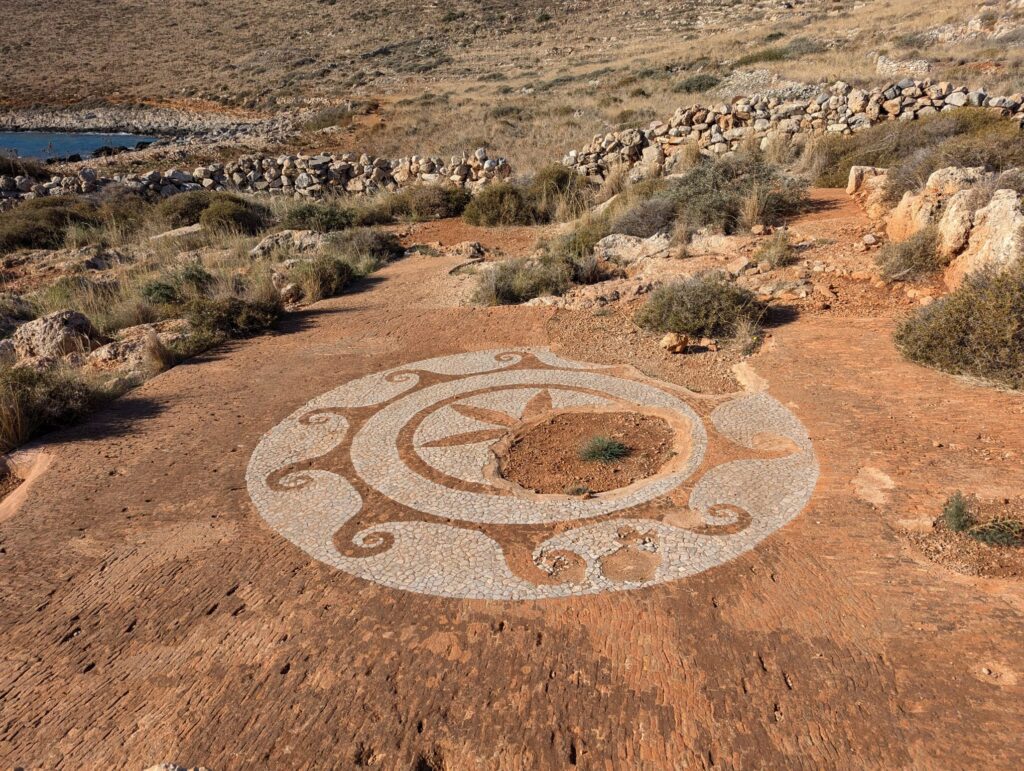
A new Oxford-led DNA study reveals that the isolated Deep Mani Greeks preserved ancient Hellenic ancestry and continued pagan Olympian traditions centuries into the medieval period, offering rare evidence of cultural and genetic continuity in Europe.
In most of medieval Europe, the worship of ancient gods had already faded beneath the spread of Christianity. Yet historical records describe a remote community in southern Greece that continued honoring the Olympian pantheon centuries after the Roman Empire officially adopted Christianity.
Today, new genetic research suggests that this extraordinary historical account may reflect biological reality.
A major international study led by the University of Oxford has revealed that the inhabitants of Deep Mani, a rugged peninsula at the southernmost tip of mainland Greece, represent one of Europe’s most genetically distinctive populations. The findings suggest that many families in this isolated region preserve ancestry tracing back to Bronze Age, Iron Age, and Roman-era Greek populations, offering rare evidence of long-term cultural and biological continuity.
A Byzantine Clue That Puzzled Historians for Centuries
The mystery surrounding Deep Mani dates back more than a thousand years. Byzantine Emperor Constantine VII Porphyrogenitus described the people of the region in unusually striking terms. According to his writings, the inhabitants were “not of the lineage of the Slavs, but of the Romans of old who were called Hellenes.”
Even more remarkable, the emperor recorded that Deep Mani communities continued worshipping the Olympian gods well into the 9th century—long after Christianity had become firmly established across the empire.
For generations, historians debated whether these accounts were exaggerated folklore or reflections of genuine cultural survival. The new genetic evidence now provides the strongest scientific support yet that Deep Mani followed a demographic and cultural path unlike most of the Balkans.
A Natural Fortress at the Edge of Greece
Deep Mani occupies one of the most geographically isolated landscapes in southern Europe. Jagged mountains, narrow coastal plains, and limited access routes historically turned the peninsula into a natural stronghold. Stone tower houses and fortified settlements further reinforced its defensive character.
This isolation appears to have protected the population from waves of migration that reshaped southeastern Europe after the fall of the Roman Empire. While much of mainland Greece absorbed influences from Slavic migrations and later demographic movements, Deep Mani remained largely insulated.
Researchers analyzed genetic material from 102 individuals with confirmed Deep Mani ancestry. By comparing paternal Y-chromosome markers and maternal mitochondrial DNA with ancient and modern datasets, scientists uncovered patterns rarely seen in mainland European populations.
Bronze Age Roots Still Visible in Modern DNA
The study revealed that over 80 percent of Deep Mani male lineages belong to a single genetic branch known as haplogroup J-M172. This lineage appears only in limited frequencies across mainland Greece but dominates in Deep Mani.
Several sub-branches of this lineage were directly linked to populations living in Greece during the Bronze Age and Iron Age. Researchers also found evidence that more than half of present-day Deep Mani men descend from a single male ancestor who lived around the 7th century CE.
Such an extreme concentration of ancestry suggests that the region experienced a severe population bottleneck, possibly caused by warfare, epidemics, or political instability. After this crisis, a small number of surviving families expanded and shaped the modern population.
Scientists believe that centuries of geographic and social isolation allowed these ancient genetic signatures to survive largely unchanged.
Survival Through an Age of Crisis
The genetic timeline identified by researchers corresponds to one of the most turbulent eras in Mediterranean history. Between the 4th and 8th centuries CE, the region endured devastating plague outbreaks, Slavic migrations into Greece, and repeated maritime raids along the coastline.
During this period, historical records concerning Deep Mani virtually disappear for several centuries. Genetic evidence suggests that this silence may reflect a time when the population retreated into isolation, developing a distinct identity that combined cultural resilience with biological continuity.
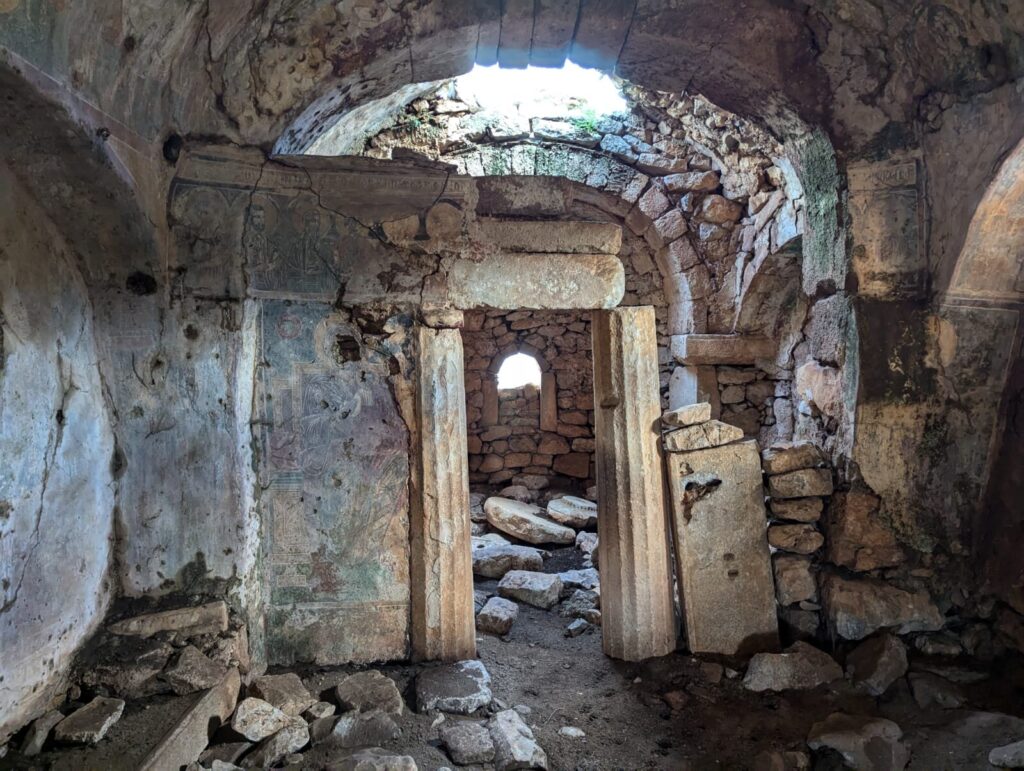
One of the most striking discoveries of the study involves the relationship between genetics and architecture. The geographic distribution of Deep Mani’s unique megalithic stone buildings closely mirrors the spread of dominant paternal lineages, suggesting that modern inhabitants may descend from the very communities that constructed these structures over a millennium ago.
Women’s Ancestry Reveals Wider Connections
While male ancestry in Deep Mani shows remarkable continuity, maternal DNA tells a more complex story. Scientists identified at least thirty different maternal lineages among Deep Mani families, reflecting occasional contact with surrounding regions.
These female ancestral lines connect Deep Mani to populations across the eastern Mediterranean, the Caucasus, western Europe, and even North Africa. Researchers interpret this pattern as evidence of a historically patriarchal society, where male family lines remained deeply rooted while a smaller number of women entered the population through marriage or migration.
The genetic data also sheds new light on the region’s famous clan system. Evidence suggests that many modern Deep Mani clans originated between the 14th and 16th centuries, earlier than historians previously believed.
Legends, Identity, and Genetic Reality
Deep Mani oral traditions often claim descent from Byzantine nobles, Crusaders, or imperial officials. However, genetic analysis indicates that many of these stories reflect symbolic cultural identity rather than biological origins.
Instead, the data strongly supports the idea that Deep Mani represents a rare case of local population continuity stretching back to Late Antiquity. The community appears to have maintained a distinct social structure, linguistic identity, and cultural traditions while remaining genetically separate from neighboring populations.
Europe’s Living Genetic Time Capsule
Comparisons with global genetic databases revealed almost no close matches between Deep Mani lineages and other populations. Researchers describe the region as a “genetic island” that preserved ancestral Mediterranean diversity while acting as a source—rather than a destination—for later migration.
Scientists emphasize that isolated communities such as Deep Mani provide invaluable insights into human history. They allow researchers to study how populations survived major historical transformations, including the collapse of the Roman world and the demographic upheavals that followed.
Future studies using ancient DNA from archaeological remains in Mani may further clarify whether the region’s inhabitants descend directly from ancient local populations or from refugees who sought shelter there during times of crisis.
For now, Deep Mani stands as one of Europe’s most remarkable examples of cultural and biological endurance—where echoes of ancient Greece appear to survive not only in myth and architecture, but within the DNA of the people themselves.
University of Oxford
Davranoglou, LR., Kofinakos, A.P., Mariolis, A.D. et al. Uniparental analysis of Deep Maniot Greeks reveals genetic continuity from the pre-Medieval era. Commun Biol 9, 157 (2026). https://doi.org/10.1038/s42003-026-09597-9
Cover ıMAGE credit: Roman mosaic at Cape Matapan, ancient Cape Tainaron, likely part of a bathhouse floor. The remains highlight Deep Mani’s importance as a thriving Roman-era center that drew populations from across the Mediterranean world. Leonidas-Romanos Davranoglou
