
The burial place of Queen Tamar, the most celebrated ruler of medieval Georgia, has never been settled with certainty. For generations, the search has moved between royal monastery tradition, Georgian memory, Jerusalem legends, and scattered local accounts along the old borderlands of the Caucasus.
Now one of those local accounts points to Posof, a district in Ardahan Province in northeastern Türkiye, close to the modern Georgian border. The claim is not that archaeologists have found Queen Tamar’s tomb. They have not. The more careful question is different: why has a rocky medieval landscape at Kesikkayalar become part of the wider discussion around one of Georgia’s most elusive royal burials?
Who Was Queen Tamar?
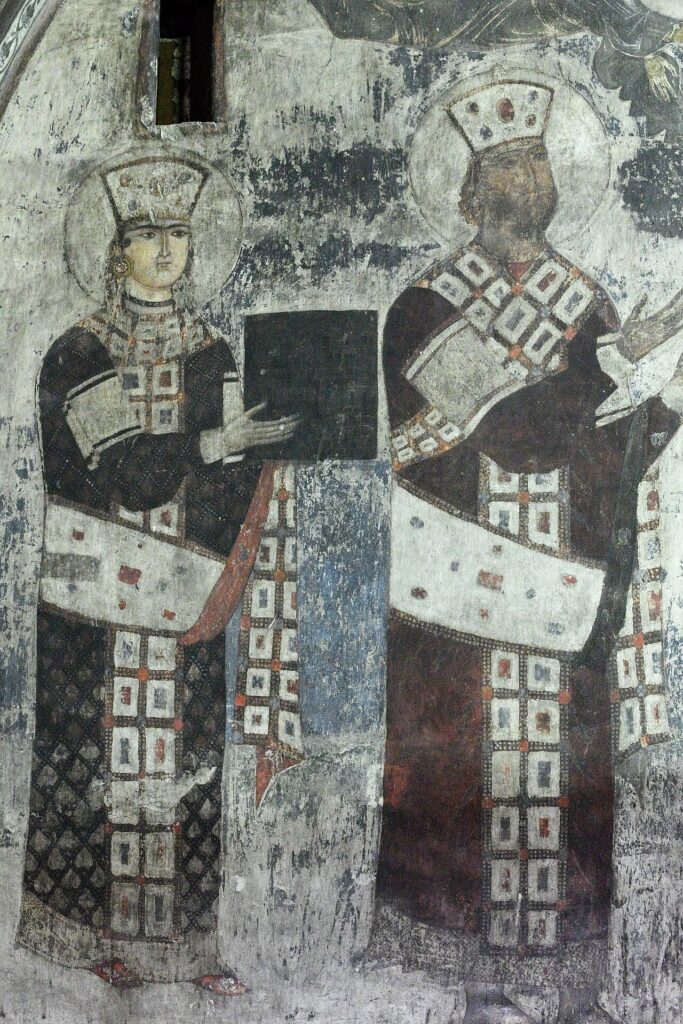
Queen Tamar ruled Georgia from 1184 to 1213, a period often described as the high point of the Georgian Golden Age. She was the daughter of King George III and was crowned co-ruler in 1178 before becoming sole ruler after her father’s death. Her reign saw Georgia reach its greatest territorial expansion, while Georgian literature, church architecture, monastic patronage, and court culture flourished.
In Georgian memory, Tamar was more than a successful monarch. Medieval sources and later tradition often treated her as a ruler with a sacred aura, and Georgian usage famously gave her the title mepe, “king,” emphasizing sovereign authority rather than consort status. Her reign was linked with military campaigns, diplomatic reach, and support for monasteries not only in Georgia but also in places such as Palestine, Sinai, Mount Athos, and Constantinople.
That larger world matters for the burial question. Tamar’s life was tied not only to Georgia’s royal centers, but also to a wider Christian geography stretching across the eastern Mediterranean. This is one reason why her lost grave has never belonged to a single simple tradition.
Where Is Queen Tamar Believed to Be Buried?
The strongest traditional candidate is Gelati Monastery near Kutaisi in western Georgia. Founded by David IV “the Builder” in 1106, Gelati became one of medieval Georgia’s great religious and intellectual centers. It also served as a burial place for the Bagrationi royal dynasty, making it the natural place to look for Tamar’s tomb.
But Gelati has not solved the mystery. The tradition that Tamar was buried there has long existed, yet the exact grave has not been securely identified. A second tradition places her relics in Jerusalem, at the Monastery of the Holy Cross. Orthodox sources summarize the uncertainty directly: some accounts point to Gelati, while others argue that Tamar’s relics were preserved in a vault at the Holy Cross Monastery in Jerusalem.
Posof enters this picture as a much more local and less established claim. It does not replace Gelati or Jerusalem. It adds another layer: a borderland memory attached to caves, rock-cut spaces, and a medieval landscape that has only recently begun to receive systematic archaeological documentation.
Why Posof?
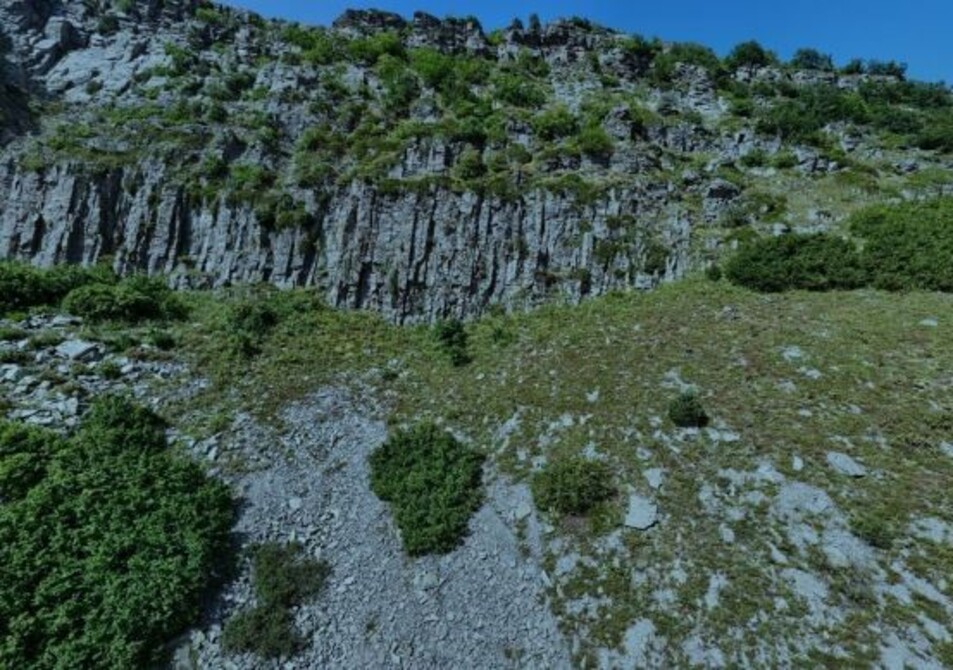
The Posof claim comes from Yolağzı village, where local headman Fehim Gündüz says earlier Georgian research and regional tradition have placed Tamar’s grave not in the commonly cited Georgian locations, but somewhere around Posof or the Artvin side facing Posof. In his account, Kesikkayalar is the key location. Local tradition speaks of a large rock formation, guard caves, and a hidden settlement said to contain 205 rooms.
This is not academic proof. The “Georgian research” mentioned in the local report is not clearly identified, and the figure of 205 rooms belongs to oral tradition rather than to a published excavation record. Still, such claims are not meaningless in historical landscapes. Local memory often preserves distorted traces of older routes, abandoned structures, caves, sacred places, or dangerous terrain. The task is not to believe the story as stated, but to ask whether the landscape behind it contains material evidence worth studying.
Ardahan Provincial Culture and Tourism Director Uğur Dede has also referred to traditions connecting Tamar with the Kesikkayalar area, including a story that she passed through the region while being pursued and that a tunnel was closed. More importantly, he noted that fieldwork carried out with Ardahan University in 2024 documented significant medieval remains in the area.
What Did the Archaeological Survey Find?
The most important published source is İsaf Bozoğlu Bay’s 2026 article on the 2024 season of the Posof Medieval Archaeological Survey. The study describes Posof as a district on the Türkiye–Georgia border, located on one of the main routes between Anatolia and the Caucasus. Its geography made it a zone of movement, defense, and cultural contact through the medieval period.
The survey examined more than 60 sites across 15 villages and documented castles, churches, inscriptions, tunnels, rock-cut spaces, and reused architectural fragments. According to the study, these finds point to a medieval settlement and defense network controlling valleys and passes in the Posof basin.
At Yolağzı village, researchers examined six locations: Avazarlar, Kiliseler, Ambarkaya, Terekli Kaya, Kesikkayalar, and Gora. Only Avazarlar and Kesikkayalar produced finds that could be considered cultural heritage. At Avazarlar, the team recorded a stone-paved route, though the evidence was not enough to prove that it was an ancient or medieval main road.
Kesikkayalar is more relevant to the current claim. The survey focused on a natural cave known locally as the “First Guard Cave.” The cave lies in a steep, fragmented rock mass and has a controlled, difficult approach. Inside, researchers recorded worked stone blocks that differ from the natural rock of the cave. Some blocks include carved frames, dowel holes, and features that could belong to a door, threshold, jamb, or similar architectural arrangement.
The team also found six pottery sherds near the entrance. These small finds suggest that the cave was used by people at some point, possibly for shelter, hiding, or temporary occupation. But the pottery is too limited to establish a firm date. The study also notes that local claims about lower passages and a hidden settlement could not be verified because the narrow routes were blocked by rubble.
Does This Support the Queen Tamar Claim?
Not directly.
The survey supports the existence of medieval activity at Kesikkayalar and confirms that the cave is not just an empty natural formation without archaeological interest. It does not identify a royal burial, a funerary chamber, an inscription naming Tamar, or any object that can be connected to the Georgian queen.
That is where the story should remain careful. Posof is not “the place where Queen Tamar’s tomb was found.” It is a historically plausible borderland with medieval remains, local traditions, and a newly documented cave complex that deserves further study.
What would change the picture? Controlled excavation, architectural recording, ceramic analysis, dating evidence, and inscriptions would be necessary. Without those, the Posof claim remains a local tradition attached to a real medieval site.
A Borderland Memory, Not a Proven Tomb
The value of the Posof claim is not that it solves the mystery. It shows how Queen Tamar’s memory still moves across the landscapes once connected to medieval Georgian power and culture.
Gelati remains the strongest traditional candidate because of its role as a Bagrationi royal burial site. Jerusalem remains part of the story because of the tradition linking Tamar’s relics to the Holy Cross Monastery. Posof is different: it belongs to the borderland, to oral memory, and now to a growing archaeological record that shows the region was more active in the Middle Ages than many modern readers might assume.
For now, Kesikkayalar should be treated neither as fantasy nor as proof. It is a site where local tradition and archaeology have begun to overlap. Whether that overlap leads anywhere near Queen Tamar’s lost tomb is still an open question.
Bozoğlu Bay, İ. (2026). Posof Havzası’nda Orta Çağ arkeolojik yüzey araştırması: 2024 sezonu bulguları ve ilk değerlendirmeler. ARÜ Sanat Tarihi Araştırmaları, 1(1), 11–57. https://izlik.org/JA77PP62SL
