
16 January 2026 The Future is the Product of the Past

The Largest Medieval Coins Treasure found in Recent Decades discovered in Germany

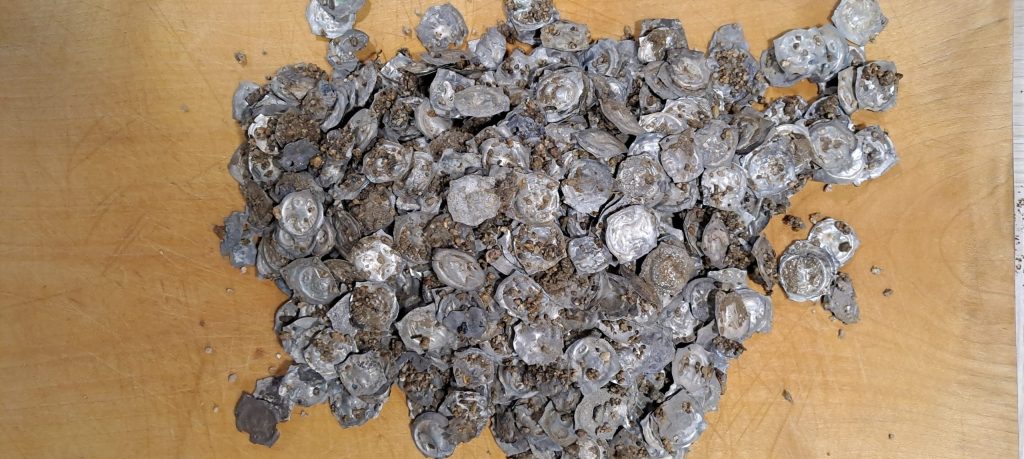
Archaeologists have unearthed one of the largest medieval coin hoards, consisting of approximately 1,600 coins, in recent years in the village of Glottertal in the Breisgau-Hochschwarzwald region of Germany.

This remarkable discovery provides a unique window into the economic activities of Europe in the fourteenth century and illuminates the minting industry, silver trade, and wider circulation of money in Breisgau.

According to a press statement issued by the State Office for Monument Preservation in the Stuttgart Regional Council, the hoard was unearthed during construction works while excavating a trench.

The treasure was discovered by Claus Völker, a local citizen who was assisting with the laying of a pipeline near the village swimming pool in early May 2024, records a press release.
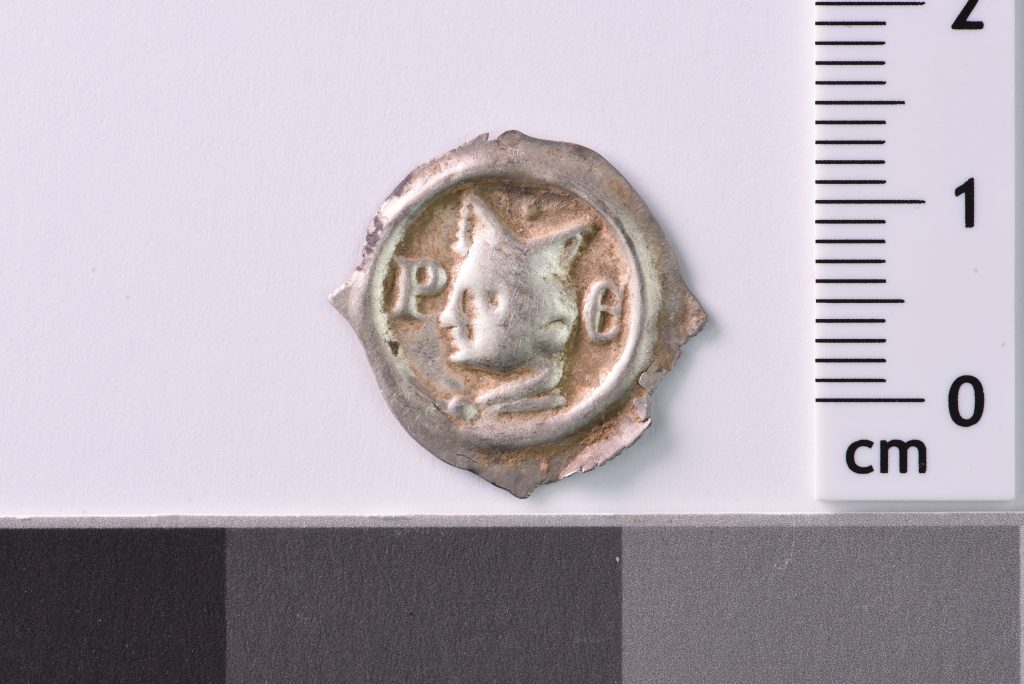
Most of the coins were minted around 1320. Type Breisach coins. Photo: State Office for Monument Preservation in the Stuttgart Regional Council

Völker caught sight of what he initially described as “small metal plates” within the excavation. He reported the discovery to the Stuttgart Regional Council’s State Office for Monument Preservation (LAD) as soon as he realized the objects’ possible significance. The same day, Völker and LAD archaeologists visited the site the same day to recover the coins and discovered a whopping 1000 coins.


📣 Our WhatsApp channel is now LIVE! Stay up-to-date with the latest news and updates, just click here to follow us on WhatsApp and never miss a thing!!


At the same time, three detectors certified by the LAD were assigned to search for the loot. The interior of the trench became a knee-deep quagmire due to bad weather, but the determined researchers managed to find an additional 600 coins in the small window that was open to them.

Initial examination and cleaning of the coins indicated where they came from. The bulk of the coins, according to LAD archaeologist Andreas Haasis-Berner, were struck circa 1320 and originated from a number of well-known mints, including Breisach, Zofingen, and Freiburg. There were also coins from Colmar, Laufenburg, Zurich, Basel, and St. Gallen.
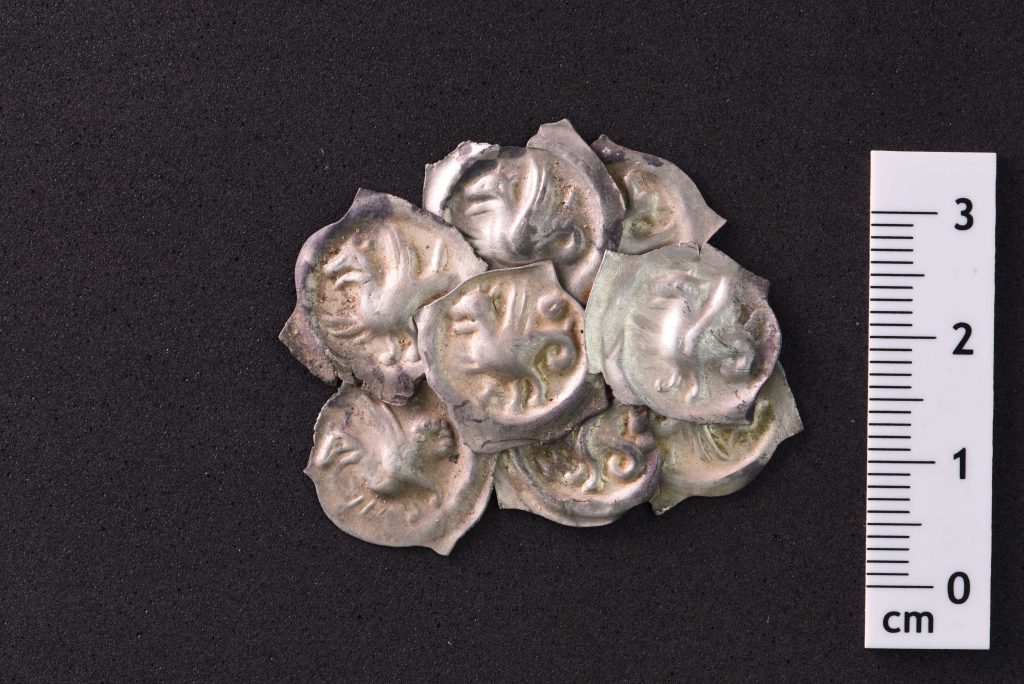
The coins came from a wide variety of sources in the region. Type Zofingen coins. Photo: State Office for Monument Preservation in the Stuttgart Regional Council

Commenting on the significance of the find, Haasis-Berner explained: ‘Analysing this coin hoard will provide information about the circulation of coins in Breisgau, the minting activity in the mints, the silver trade and also mining in the Glottertal valley.’ When asked whether the treasure was very valuable at the time, the archaeologist said: ‘You could have bought around 150 sheep with the coins.’

This wide variety of coins bears witness to the wide-ranging commerce networks and currency exchange that existed in the area in the early 14th century. Because of the wealth and power of the cities that produced them, every coin tells a tale about the political and economic environments of medieval Europe.

Officials described the artifacts as one of the largest coin treasures found in recent decades. Of course, this description is a small number compared to the more than 100,000,000 coins in Japan on 4 November 2023, some of which are more than 2000 thousand years old.

Stuttgart Regional Council

Cover Image: State Office for Monument Preservation in the Stuttgart Regional Council

Related Articles

Archaeological Finding Traces Chinese Tea Culture Back To 400 BC

7 February 2022

7 February 2022

An archaeological team from Shandong University, east China’s Shandong Province, has found the earliest known tea remains in the world...

A ‘Talismanic Grave Tablet’ Believed to Protect From Evil Found in Silifke Castle

3 September 2024

3 September 2024

During excavations in the Silifke castle located on lies on a hill in the town with the same name in...

Fingerprints Found on Orkney Pottery Belong to Young Men

14 June 2021

14 June 2021

Details of the two young guys whose fingerprints were discovered on a fragment of a clay pot dating back over...

Surprising Genetic Findings from Early Middle Ages Burial Sites in Austria

22 January 2025

22 January 2025

In a groundbreaking archeogenetic study, researchers from the Max Planck Institute for Evolutionary Anthropology, in collaboration with an international team,...

1700 years ago the Korean peninsula had more genetic diversity than in our time, “Facial reconstruction possible through DNA analyses”

22 June 2022

22 June 2022

An international team led by The University of Vienna and the Ulsan National Institute of Science and Technology in collaboration...

3,000-year-old ‘charioteer belt’ discovered in Siberia

21 July 2023

21 July 2023

Russian archaeologists uncovered the grave of a Late Bronze Age man buried wearing a “charioteer’s belt”, a flat bronze plate...

In Parion, one of the most important cities of the Troas region, 2,000-year-old mother-child graves were unearthed

1 November 2022

1 November 2022

Archaeological excavations in the ancient city of Parion, the most important harbor city in the Hellenistic era, have uncovered  2,000-year-old...

Great Wall Castle Remains Found in China’s Shaanxi

8 June 2021

8 June 2021

The remains of a Great Wall castle dating back to the Ming Dynasty (1368-1644) were discovered in northwest China’s Shaanxi...

New Research Links Climate Crisis to the Fall of the Roman Empire

11 April 2025

11 April 2025

A study led by scientists at the University of Southampton, in collaboration with Queen’s University Canada and the Chinese Academy...

Archaeologists unearth 600,000-year-old evidence of Britain’s early inhabitants

22 June 2022

22 June 2022

New finds have indicated that some of Britain’s earliest people lived in the Canterbury suburbs. According to the research, led...

Using 3D scanners, archaeologists have identified the person who carved Jelling Stone Runes

29 September 2023

29 September 2023

Researchers at the National Museum of Denmark using 3D scans have identified who carved the Jelling Stone Runes, located in...

Archaeologists Uncovered a Terracotta Commander and Warriors at the Mausoleum of China’s First Emperor

12 January 2025

12 January 2025

Archaeologists have unearthed a rare 2,000-year-old statue depicting a high-ranking military commander at the famous Terracotta Army site in China:...

A First! This Study on Pregnancy in the Viking Age Illuminates Warrior Women and the Fate of Babies

14 May 2025

14 May 2025

A groundbreaking interdisciplinary study by Viking experts from the Universities of Nottingham and Leicester has shed new light on the...

New Study Disproves Roman Massacre at Maiden Castle, Revealing Complex Iron Age Conflicts

30 May 2025

30 May 2025

Bournemouth University Archaeologists Challenge 90-Year-Old Roman Conquest Narrative at Maiden Castle with Fresh Forensic and Radiocarbon Analysis A landmark study...

First direct evidence of drug use as part of Bronze Age ritual ceremonies in Europe

6 April 2023

6 April 2023

An analysis of human hair strands recovered from a burial site in Menorca, Spain, reveals that ancient human civilizations used...