19 March 2026 The Future is the Product of the Past

The Golden Helmet of Leiro: A Bronze Age Masterpiece Hidden for Millennia on Spain’s Atlantic Coast

On a rugged stretch of Galicia’s Atlantic coastline, where waves carve stories into stone, an extraordinary object once lay hidden beneath earth and thorn. Known today as the Casco de Leiro, this remarkable gold artifact has become one of the most intriguing archaeological discoveries in Spain—an object that continues to captivate historians, researchers, and cultural enthusiasts alike.

Discovered by chance on April 7, 1976, in the coastal parish of Leiro, within the municipality of Rianxo (A Coruña)—with its 50th anniversary being marked this year—the piece dates back to the Late Bronze Age, around 1000–800 BCE. Weighing approximately 270 grams, the artifact was unearthed by local resident José María Vicente while he was excavating land near the Ulla River to build a modest shed. What initially appeared to be little more than a curious metallic object would soon reveal itself as a priceless link to prehistoric Europe.

The Casco de Leiro is often referred to as a “helmet,” yet experts now believe it was not designed for warfare. Instead, its delicate craftsmanship and symbolic form suggest a ceremonial or ritual purpose. Made entirely of gold, the piece was discovered alongside fragments of a clay vessel in which it had been intentionally buried—possibly as an offering or part of a sacred deposit. This context adds a layer of mystery, pointing to spiritual or social practices of Bronze Age communities in the Iberian Peninsula.

What makes this artifact particularly compelling is not only its age or material, but its rarity. Gold objects from this period are scarce, and those that do survive often lack clear provenance. The Casco de Leiro, however, offers both physical integrity and contextual richness. Its discovery in Galicia strengthens the theory that this region was far more connected to broader Atlantic trade networks than previously believed. Similar gold artifacts have been found in Ireland and Britain, hinting at a shared cultural or symbolic language across prehistoric Europe.
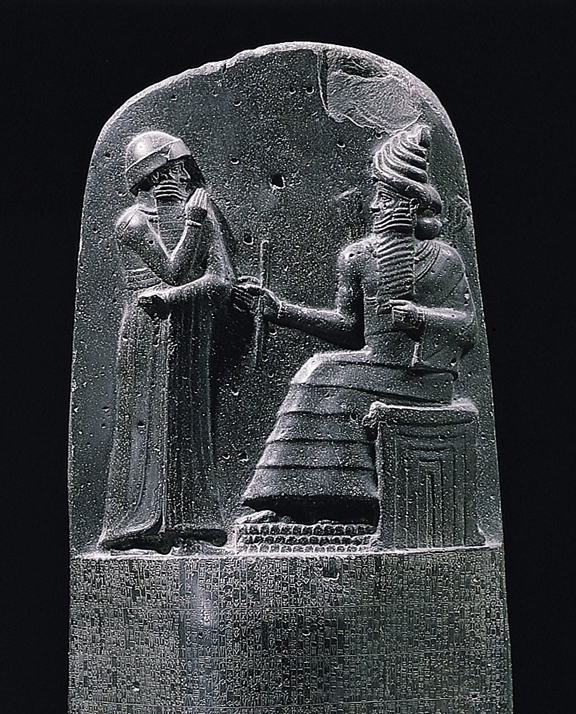
Upper section of the stele depicting Hammurabi’s Stele: a seated king, representing Hammurabi, is shown in conversation with a figure standing before him—likely an attendant or divine intermediary—who wears a helmet-like headdress. Credit: Public Domain

Yet, beyond its archaeological significance, the human story behind the find is equally powerful. According to El Correo Gallego, José María Vicente did not immediately grasp the value of what he had uncovered. After briefly setting the object aside and continuing his work, it was a neighbor who recognized its golden sheen. Word spread quickly through the village, and soon the artifact became the center of attention.


📣 Our WhatsApp channel is now LIVE! Stay up-to-date with the latest news and updates, just click here to follow us on WhatsApp and never miss a thing!!


Despite opportunities to sell the piece privately, Vicente chose a different path. He safeguarded the object, eventually handing it over to authorities, ensuring its preservation for public heritage. For several days, the gold piece was kept under watch, even causing concern among local law enforcement due to its value. Ultimately, it was transferred to the Museo Arqueolóxico e Histórico do Castelo de San Antón in A Coruña, where it remains today as a centerpiece of Bronze Age collection.

Vicente’s decision not to sell the artifact on the black market proved crucial. At a time when such discoveries could easily disappear into private collections or be melted down, his choice preserved an irreplaceable piece of history. In recognition, he received financial compensation, though modest compared to the artifact’s cultural worth.

Over the decades, the Casco de Leiro has grown into more than an archaeological object—it has become a symbol of local identity and pride. Recently, to commemorate the enduring legacy of the discovery, a time capsule was placed at the original site. Without disturbing the protected ground, the capsule serves as a bridge between past and present, honoring both the ancient creators of the artifact and the modern-day community that cherishes it.

José María Vicente standing before the Golden Helmet, on display at the Archaeological and Historical Museum of San Antón Castle.

Today, the golden piece continues to raise questions. Who created it? What rituals did it serve? And why was it buried so carefully, only to remain hidden for nearly three millennia?

In the silent glow of its surface, the Casco de Leiro offers no direct answers—only reflections of a distant world, waiting to be understood.

Cover Image Credit: The Casco de Leiro, on display at the Archaeological and Historical Museum of San Antón Castle in A Coruña. Carlos de Paz – Public Domain

Related Articles

A new temple was discovered in the ancient Thracian city of Perperikon

17 August 2022

17 August 2022

Bulgarian News Agency (BTA) reports that archaeologists have discovered a new temple at Perperikon. Perperikon, an archaeological complex located at...

A First in Anatolia: Rare Egyptian God Statue Unearthed in Commagene’s ‘Stairway to Eternity’ Tomb

1 September 2025

1 September 2025

In the ancient city of Perre, once a flourishing capital of the Commagene Kingdom in southeastern Türkiye, archaeologists have uncovered...

Marble inlay floors found in a Sunken Roman villa in Baia, the Las Vegas of the ancient world

9 April 2023

9 April 2023

Expansion of research activities in the Terme del Lacus area in the sunken Baia park, known as the ‘Las Vegas’...

Smoke archeology finds evidence Humans visited Nerja Cave for 40,000 Years

26 April 2023

26 April 2023

A new study by a team from the University of Córdoba reveals that Nerja is the European cave with the...

Sicilian Seas Yield Rare Roman Helmet from 241 BC Naval Clash

5 September 2025

5 September 2025

In a remarkable underwater archaeological recovery that highlights Sicily’s rich cultural heritage, a bronze Montefortino‐type helmet was retrieved from the...

Archaeologists discovered an enigmatic complex of rooms, interiors of which covered with figural scenes unique to Christian art

7 April 2023

7 April 2023

Archaeologists of the Polish Center of Mediterranean Archaeology at the University of Warsaw discovered an enigmatic complex of rooms made...

2500-year-old Aphrodite Temple Discovered

4 February 2021

4 February 2021

Archaeologists have discovered a 2500-year-old temple built in the name of Goddess Aphrodite around Çeşme and Urla districts of Izmir...

A 4,200-Year-Old Silver Goblet May Depict the Creation of the Universe

22 January 2026

22 January 2026

A small silver vessel discovered more than half a century ago in the Judean Hills has once again become the...

Archaeologists 3D map Red Lily Lagoon, the hidden Northern Territory landscape where first Australians lived more than 60,000 years ago

10 May 2023

10 May 2023

Archaeologists map Red Lily Lagoon, a hidden landscape in the Northern Territory where the first Australians lived more than 60,000...

A Trove of ‘Exceptional’ stunningly preserved bronze statues found at an Ancient Thermal Spa in Tuscany, Italy

10 November 2022

10 November 2022

A group of Italian archaeologists made the discovery of 24 well-preserved bronze statues from an ancient thermal spring in Tuscany....

5000-year-old fingerprint found in Orkney pottery

23 April 2021

23 April 2021

Fingerprints were found on a pottery dating back 5,000 years in the Orkney archipelago, located in the northern region of...

Scotland’s oldest tartan discovered in Highlands bog

1 April 2023

1 April 2023

According to new research, a piece of fabric discovered in a bog in the Scottish Highlands may be the oldest...

Historic Discovery in Karahantepe: The First T-Shaped Pillar with a Human Face Unearthed

6 October 2025

6 October 2025

Archaeologists working under the Taş Tepeler Project, led by Turkey’s Ministry of Culture and Tourism, have made a groundbreaking discovery...

Ancient city “Germanicia” lost in 73 years

8 July 2021

8 July 2021

The presence of the ancient city of Germanicia, discovered during an illegal excavation in the southeast Turkish province of Kahramanmaraş...

42,000-year-old Shell Jewellery Workshop Discovered – The Oldest in Western Europe

27 September 2025

27 September 2025

Archaeologists have made a groundbreaking discovery in Saint-Césaire, Charente-Maritime, uncovering what is now considered the oldest shell jewellery workshop in...

Comments
Leave a Reply

Your email address will not be published. Required fields are marked *