

When did New Zealand’s early Māori communities begin moving away from hunting giant moa birds and toward a greater reliance on fishing and coastal resources? New research into an ancient settlement suggests that this transformation unfolded gradually over several generations, challenging earlier assumptions about the pace of change in early Māori society.
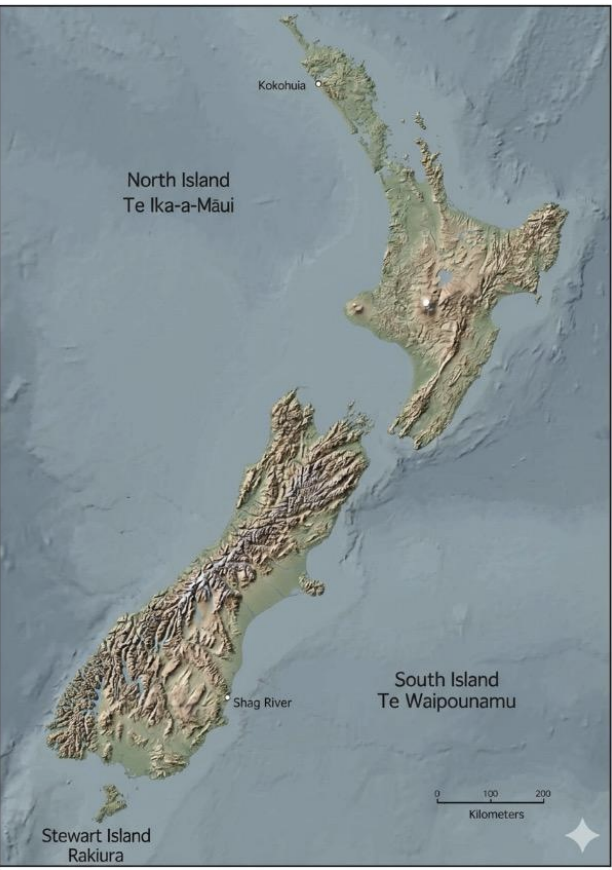
At Shag River Mouth, also known as Waihemo, on New Zealand’s South Island, archaeologists have traced a shift from the butchery of moa and seals to increased fishing and shellfish gathering. High-precision radiocarbon dating indicates that activities once thought to span just 20 to 50 years actually extended across approximately 70 to 110 years, revealing a longer and more complex period of economic adaptation.
The findings come from a study led by Fiona Petchey of the University of Waikato and published in the Journal of Pacific Archaeology. The researchers also reexamined Kokohuia, a second early Māori settlement on the North Island, where revised dates distinguish early human activity from later fishing and food preparation. Together, the two sites offer a clearer view of the centuries during which early Polynesian settlement developed into later Māori society.
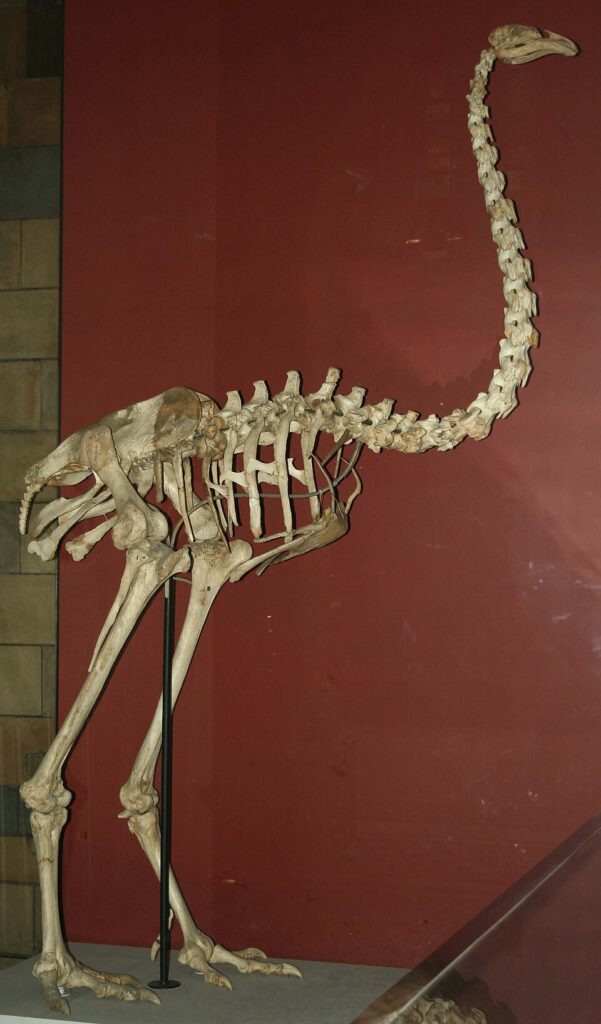
Moa Hunting and the Changing Māori Diet
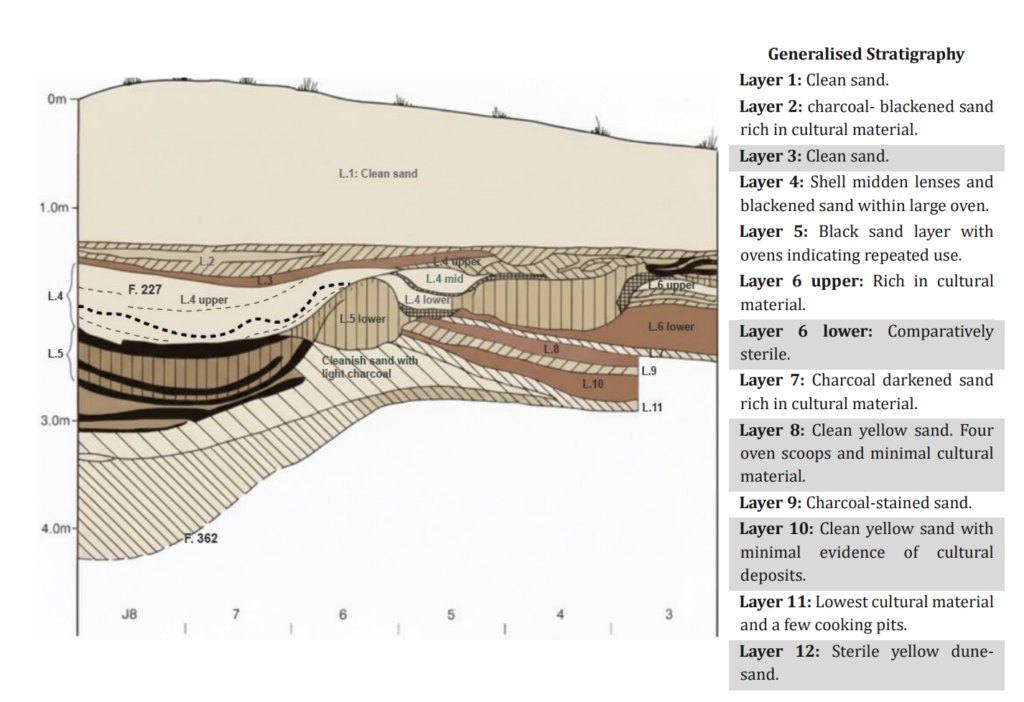
Shag River Mouth lies on the eastern coast of the South Island, where early Māori communities established settlements near productive marine and terrestrial environments. Archaeological excavations uncovered cooking ovens, animal bones, shell deposits, and successive layers of human activity within a coastal dune.
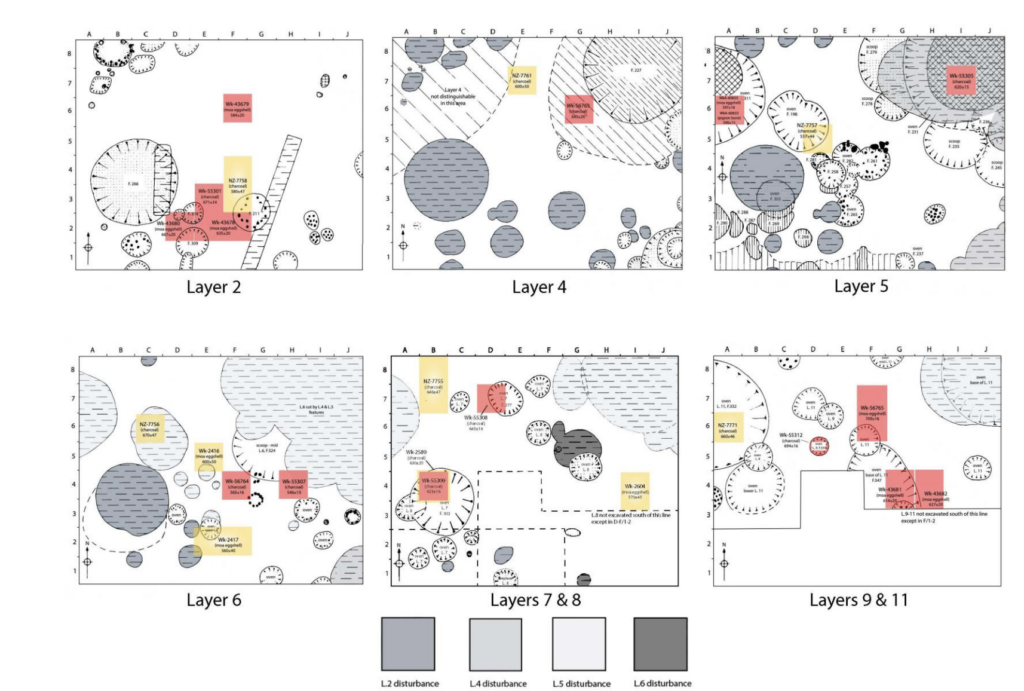
Earlier interpretations suggested that people used the settlement for only a relatively short period during the 14th century. However, the new analysis identifies several phases of activity extending into the early 15th century, with intervening sand layers indicating pauses or changes in how people used the excavated area.
The earliest occupation layers, dating approximately from AD 1320 to 1410, contain substantial evidence of moa and seal butchery. Moa were large, flightless birds native to New Zealand, and their remains demonstrate the importance of hunting and processing large animals during the settlement’s earlier phases.
Later deposits reveal a changing pattern. Between approximately AD 1400 and 1440, the archaeological record shows a greater emphasis on fish, shellfish, dogs, and birds from open landscapes. Archaeologists also identified a large cooking oven associated with these later activities, when evidence of large-animal processing became less prominent.
The changing composition of animal remains suggests that the community diversified its food sources over time. Rather than documenting a sudden end to moa hunting, the revised chronology reveals an economic transition that developed across several generations.
This longer sequence also helps resolve an earlier archaeological puzzle. Researchers had found objects associated with both early East Polynesian culture and a subsequent transitional phase at a site believed to have been occupied for only a few decades. The new chronology provides enough time for such changes in material culture to have developed gradually.
Kokohuia Offers a Second Perspective on Early Māori Life
The researchers also investigated archaeological material from Kokohuia, on the southern shore of Hokianga Harbour in New Zealand’s North Island. Previous excavations had identified a possible house, cooking areas, food-storage facilities, and deposits containing fish bones and shellfish remains.
Earlier radiocarbon studies produced conflicting interpretations of the settlement’s chronology. Some archaeologists considered the deposits evidence of relatively brief occupation, while others proposed that the site had experienced activity over a much longer period.
The new analysis places the earliest identified activity at approximately AD 1410–1440 and the end of the sequence around AD 1590–1630. Researchers estimate that the archaeological record spans 160–220 years, although this does not imply continuous occupation throughout that period.
Charred seeds from the lowest cultural layer provide evidence of early human activity. The main deposits of fish bones and shellfish accumulated later, potentially within a period shorter than 90 years. This distinction suggests that the earliest use of Kokohuia preceded its more intensive food-processing activities.
The fishing equipment provides another important clue. Archaeologists recovered numerous two-piece shell fishhooks, a one-piece hook, and fragments of fishing lures. The limited stylistic differences between hooks from the main deposits support the interpretation that these layers accumulated within a comparatively restricted period.
Researchers also identified small fragments of moa bone in the lower deposits. However, they found no clear evidence that these particular remains came from food preparation or tool production, making it impossible to establish moa hunting at Kokohuia from those fragments alone.
Unlike Waihemo, where the archaeological sequence documents changing reliance on different animal resources, Kokohuia illustrates how communities used a coastal location during separate periods. Its revised chronology also demonstrates that deposits with similar fishing equipment need not represent activity spread evenly across several centuries.
New Radiocarbon Dates Transform Older Excavation Records
The study did not depend on extensive new excavations. Instead, Petchey and her colleagues returned to archaeological samples that researchers had collected decades earlier and preserved in scientific and university collections.
The team selected short-lived charcoal, charred seeds, moa eggshell fragments, and bird bones for high-precision radiocarbon analysis. These materials offered opportunities to improve earlier estimates, which sometimes relied on samples affected by older wood, disturbance, or mixing between archaeological layers.
Researchers combined accelerator mass spectrometry measurements with Bayesian chronological modeling. The statistical approach allowed them to compare radiocarbon dates with the known sequence of archaeological deposits, narrowing the possible dates of individual activity phases.
Such precision presents particular challenges in New Zealand archaeology. Changes in atmospheric radiocarbon concentrations create fluctuations and plateaus in the calibration curve, making it difficult to distinguish events separated by decades or even longer periods.
At Waihemo, the team identified chronological differences between layers that earlier studies had struggled to distinguish. Some sand deposits probably represent temporary pauses in activity, although the researchers cannot determine whether people left the wider settlement or simply moved their activities beyond the excavated dune.
At Kokohuia, the new models helped separate the site’s earliest occupation evidence from the main accumulation of food remains. The results also show that archaeologists must consider the original context of each sample rather than relying on radiocarbon measurements alone.
A More Detailed History of Early Māori Society
Archaeologists have traditionally divided the development of Māori society into three broad periods: early East Polynesian settlement between approximately AD 1250 and 1400, a transitional phase from AD 1400 to 1600, and the later Classic Māori period extending toward European contact.
Petchey and her colleagues argue that these divisions can obscure the complexity of cultural and economic developments. At Waihemo, changes in food resources and material culture were already underway before AD 1450, challenging the assumption that major transformations belonged primarily to a later transitional period.
The researchers also suggest that some apparently sharp chronological boundaries may reflect limitations in earlier radiocarbon dating rather than sudden changes in everyday life. More precise dating can reveal developments that unfolded gradually, including changes in hunting, fishing, settlement activities, and the production of tools.
However, the two archaeological sites do not provide a complete chronology for every Māori community across New Zealand. Local environments, available resources, and settlement histories differed, and the researchers emphasize the need for additional high-resolution studies.
The findings demonstrate that the transformation of early Māori life involved a series of overlapping adaptations rather than a uniform cultural shift. At Waihemo, the changing balance between moa hunting and coastal food gathering can now be traced across generations, while Kokohuia offers a complementary view of how people repeatedly used coastal settlements as Māori society continued to develop.
Petchey, F., Anderson, A., Furey, L., Bickler, S. H., O’Regan, G., Schmidt, M., Wallace, R., & Sheppard, P. (2026). Wiggles, plateaus, and precision: High-resolution radiocarbon dating of the transition from early East Polynesian to Classic Māori society. Journal of Pacific Archaeology, 16(1), Article 7, 1–31. https://doi.org/10.70460/jpa.v16i1.412
