
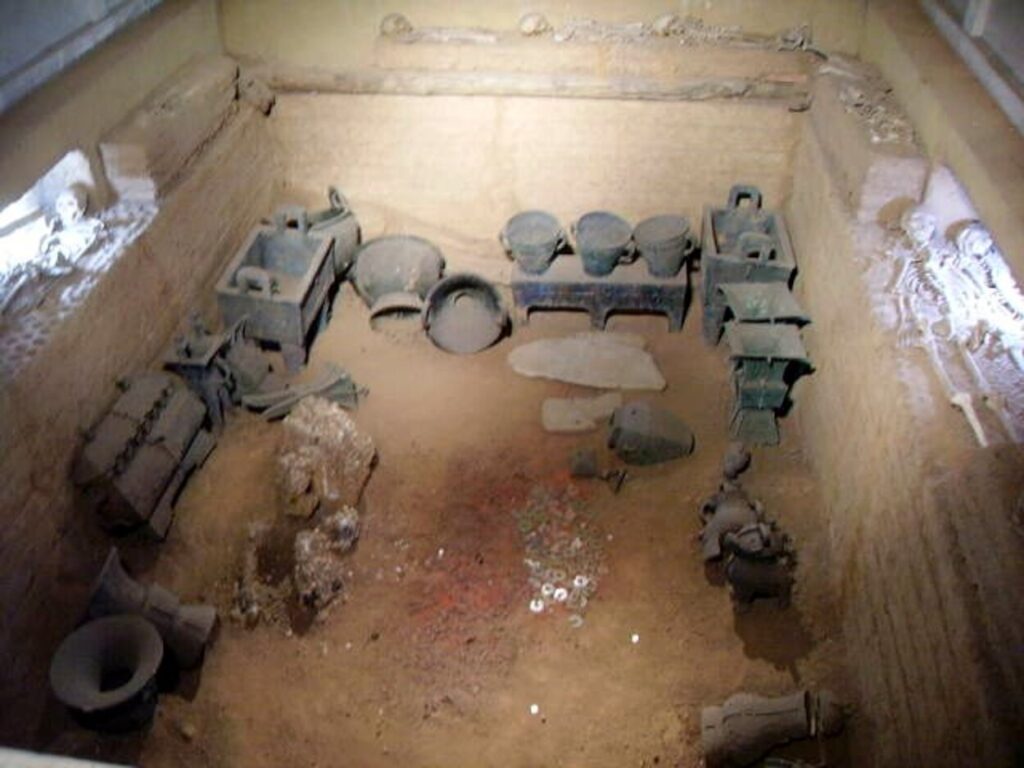
The tomb of Fu Hao, a powerful military commander of China’s Shang Dynasty, contained bronze weapons, precious jade, and the remains of 16 sacrificed people. Fifty years after its discovery, archaeologists are revisiting the extraordinary burial and the woman who commanded armies in ancient China.
A massive bronze battle axe weighing around nine kilograms lay among the treasures of a woman who commanded armies more than 3,000 years ago. Her tomb also contained hundreds of valuable objects, six sacrificed dogs and the remains of 16 people who apparently died as part of her burial ceremonies. The extraordinary discoveries reveal the power of Fu Hao, one of the most remarkable women of ancient China’s Shang Dynasty.
Archaeologists discovered her remarkably intact tomb in 1976 at Yinxu, near modern Anyang in Henan province. Now, as the discovery marks its 50th anniversary, scholars have gathered in Anyang to reassess the burial and the life of a woman who held military, royal, and religious authority in a society traditionally dominated by men.
A Bronze Axe Fit for a Military Commander
Fu Hao lived around 1200 BCE and was one of the wives of King Wu Ding, a powerful ruler of the Shang Dynasty. Ancient inscriptions identify her as a military commander who led campaigns on behalf of the royal court, making her one of the earliest documented female generals in Chinese history.
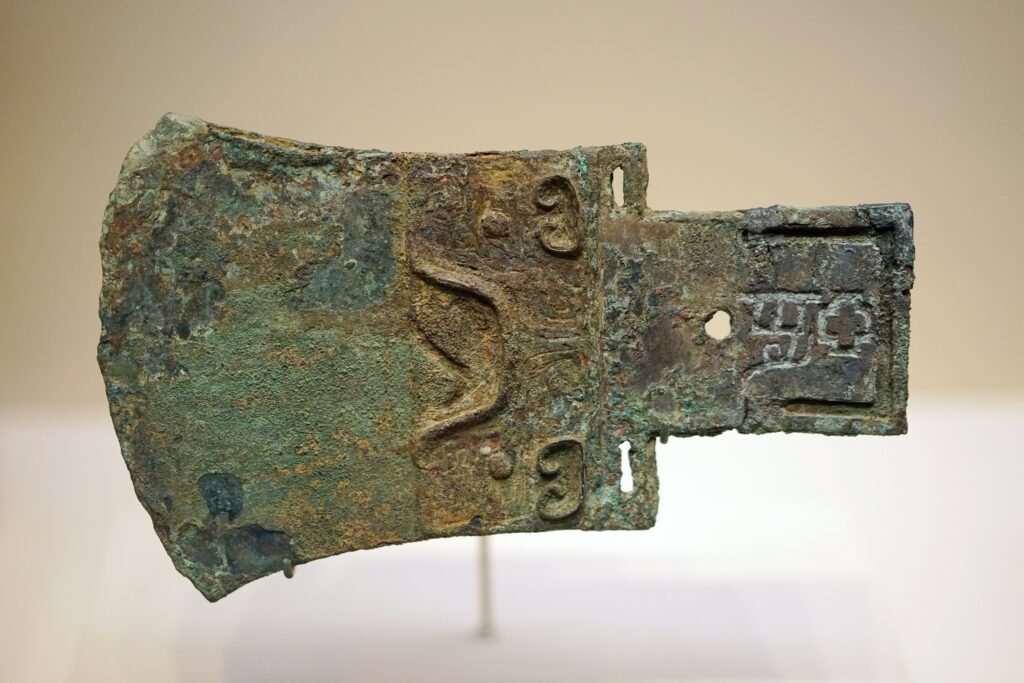
Among the tomb’s most impressive discoveries were enormous bronze yue axes, symbols of military command and royal authority. One weighed approximately nine kilograms and carried elaborate animal decorations. Such weapons represented far more than battlefield equipment; they expressed the power to lead troops and exercise authority.
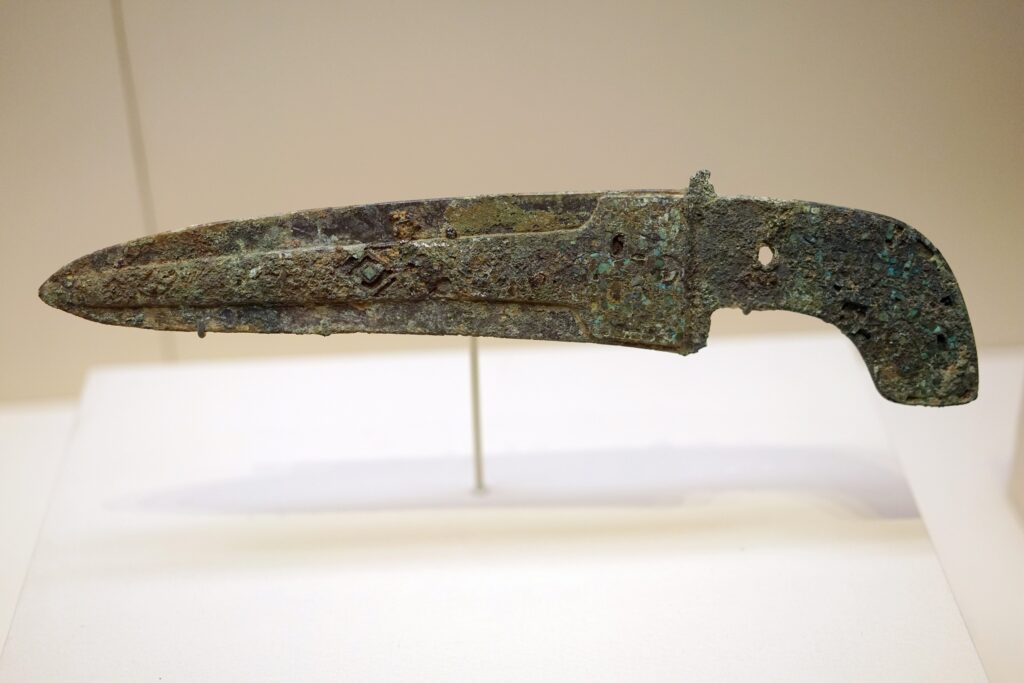
Her grave also contained around 130 bronze weapons, including axes, knives, and other military equipment. These objects reinforced what archaeologists had already learned from oracle bone inscriptions: Fu Hao was not simply a royal consort but an active participant in Shang military affairs.
Sixteen Human Victims in a Royal Tomb
The burial revealed a darker aspect of Shang royal traditions. Archaeologists discovered the remains of 16 sacrificed people positioned around the burial chamber, along with six dogs associated with funerary sacrifice.
The victims accompanied Fu Hao into death as part of rituals intended to honor the deceased and support the continuation of royal authority in the afterlife. Their presence illustrates the importance of human sacrifice in Shang elite funerary practices, where displays of wealth and power extended to the taking of human lives.
The tomb itself measured approximately 5.6 by four meters. Archaeologists identified traces of a wooden burial chamber and lacquered coffins, although the wooden structures had largely decayed during the intervening millennia.
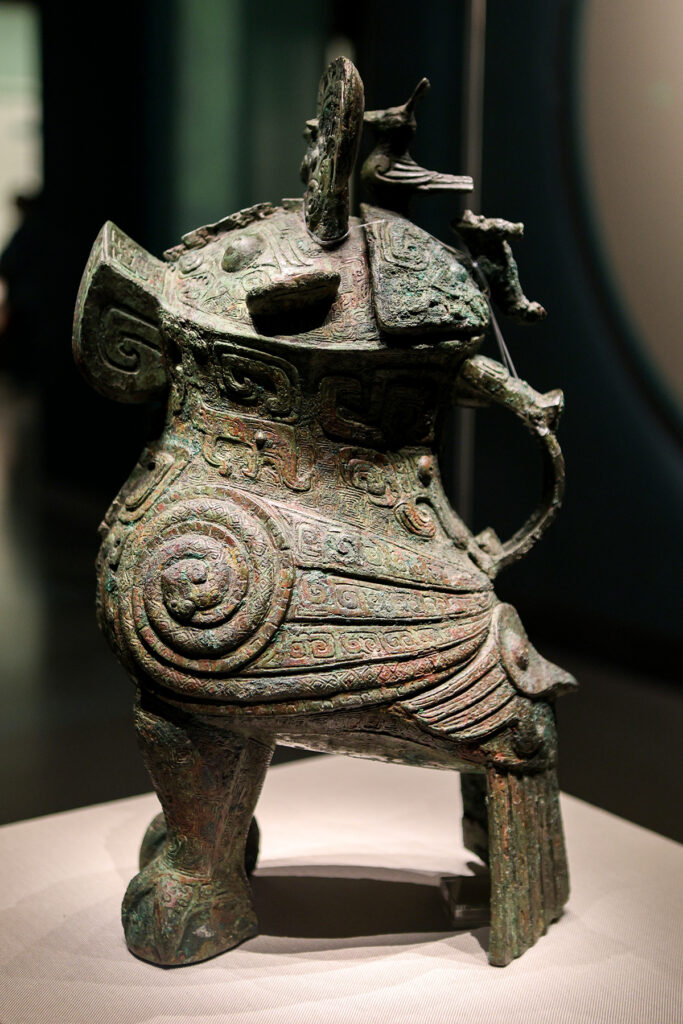
A bronze owl-shaped zun ritual vessel bearing inscriptions of Fu Hao, dating to China’s Shang Dynasty. Credit: Windmemories / Wikimedia Commons
Nearly 2,000 Treasures and a Name Preserved in Bronze
Excavators recovered 1,928 burial objects, including 468 bronze artifacts, 755 jade objects and 564 bone items. The collection also contained ivory, pottery and thousands of cowrie shells, which served as a form of currency in Shang society.
Some jade ornaments were already centuries old when they entered Fu Hao’s tomb, suggesting that the Shang elite valued objects inherited or acquired from earlier cultures. More than 200 bronze ritual vessels illustrated the ceremonial responsibilities that accompanied her royal position.
Crucially, inscriptions on many bronzes preserved Fu Hao’s name. Archaeologists compared these inscriptions with oracle bones from Yinxu, which recorded royal ceremonies, military expeditions, and other events during Wu Ding’s reign. This combination of written evidence and burial objects allowed researchers to identify the tomb’s occupant with unusual confidence.
Fifty Years Later, the Research Continues
In October 2026, Chinese and international scholars gathered at Yinxu Museum to commemorate the excavation’s 50th anniversary. Discussions focused on bronze artifacts, royal ornaments and the wider connections linking Shang society with neighboring cultures.
Researchers are increasingly examining how Fu Hao’s treasures reflect exchange networks, political authority and the lives of the Shang aristocracy. Her burial remains one of the most important archaeological discoveries from Bronze Age China, preserving a rare combination of written testimony, extraordinary wealth and evidence of royal violence.
