
15 February 2026 The Future is the Product of the Past

3,000-Year-Old ‘Wildlife Park’ Discovered at Yinxu Ruins in Henan

Archaeologists working at the Yinxu Ruins in Anyang, Central China’s Henan Province, have uncovered compelling evidence that Shang Dynasty elites curated and managed living collections of wild animals more than 3,000 years ago. The discovery, reported by the Global Times, suggests the existence of what researchers describe as an early form of a “wildlife park,” predating imperial menageries known from later Chinese history and even those of medieval Europe.

The finds come from 19 small to medium-sized sacrificial pits located in the Imperial Tombs area of Yinxu, positioned across the river from the palace complex and ancestral shrines of the late Shang capital. Radiocarbon dating and stratigraphic analysis place the pits firmly within the Shang Dynasty period, roughly between 1600 and 1046 BC.

A rare concentration of wild fauna

Excavations revealed a remarkably diverse assemblage of animal remains. Skeletal evidence includes water buffalo, deer, roe deer, wolves, tigers, leopards, foxes, serows, wild boars, porcupines, and multiple bird species. Ornithological remains span at least five genera, among them swans, cranes, geese, falcons, and eagles. The sheer variety points to deliberate acquisition rather than opportunistic hunting.

Most striking is the discovery of 29 bronze bells recovered from 13 of the 19 pits. Several bells were found still positioned near the necks or heads of animals, strongly implying that these creatures were kept alive, monitored, and possibly trained prior to their ritual use.
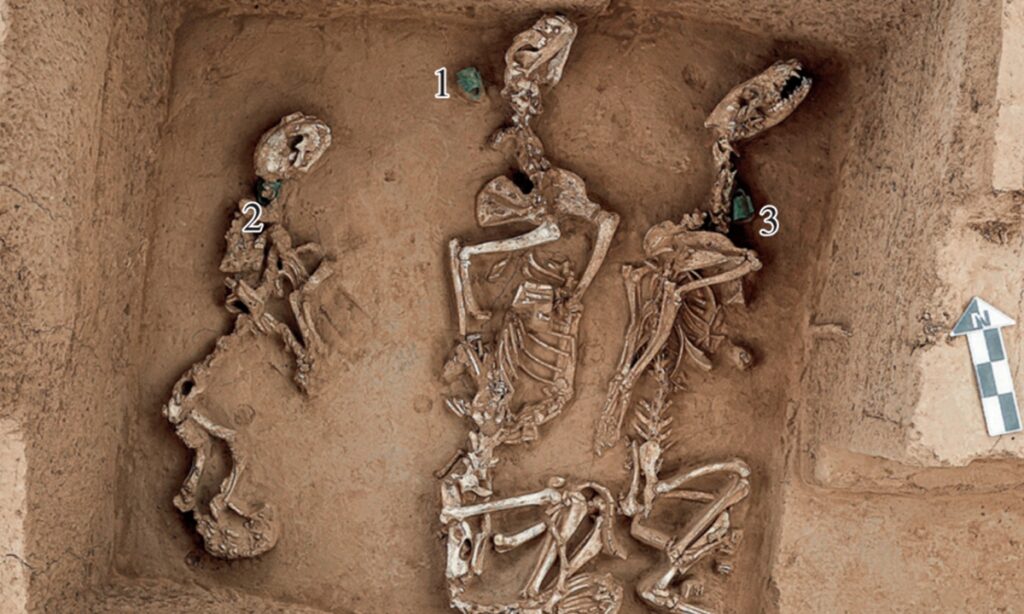
Wild animal relics discovered at the Yinxu Ruins in Anyang, Central China's Henan Province. Credit: Sina Weibo
Wild animal relics discovered at the Yinxu Ruins in Anyang, Central China’s Henan Province. Credit: Sina Weibo

Evidence of animal management

Zeng Yuli, a researcher specializing in ancient agriculture and animal husbandry, explained to the Global Times that the bells were likely tools for animal control and identification. According to Zeng, they reveal an unexpectedly sophisticated approach to animal resource management during the Shang period, including monitoring, categorization, and long-term care.


📣 Our WhatsApp channel is now LIVE! Stay up-to-date with the latest news and updates, just click here to follow us on WhatsApp and never miss a thing!!


This interpretation is supported by Li Xiaomeng, an assistant research fellow at the Chinese Academy of Social Sciences. Li noted that the animals were not acquired through temporary hunts but were probably rare or exotic species raised within controlled imperial gardens or enclosures maintained by Shang nobility.

Niu Shishan, a senior researcher at the same institute, emphasized that the standardized processing and concentrated deposition of the animals point to a comprehensive system encompassing acquisition, rearing, and ritual deployment. Together, these indicators suggest a structured institution rather than isolated ceremonial acts.

Ritual landscapes and sacrifice

Beyond wildlife remains, archaeologists also uncovered human, elephant, and horse skeletons in larger sacrificial pits nearby. The horses present a particularly intriguing pattern: their numbers were consistently even, and several skulls show depressions on the crown. Researchers interpret these features as new evidence for specific sacrificial rites practiced during state-level ceremonies.

“These discoveries give us a vivid glimpse into the scale and choreography of Shang imperial rituals,” Niu told the Global Times. “They also provide material evidence for understanding the dynasty’s religious beliefs and ceremonial systems.”
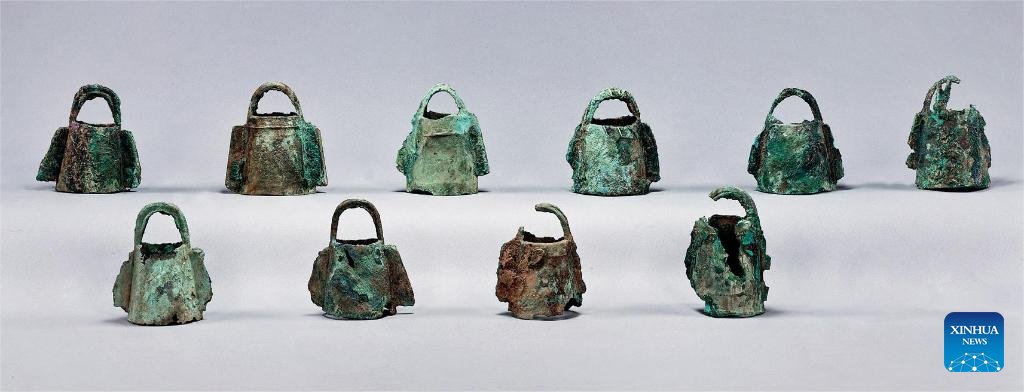
Most striking among the finds are 29 bronze bells recovered from 13 of the 19 sacrificial pits at Yinxu, believed to have been used to manage and identify animals kept by Shang Dynasty elites more than 3,000 years ago. Credit: Xinhua

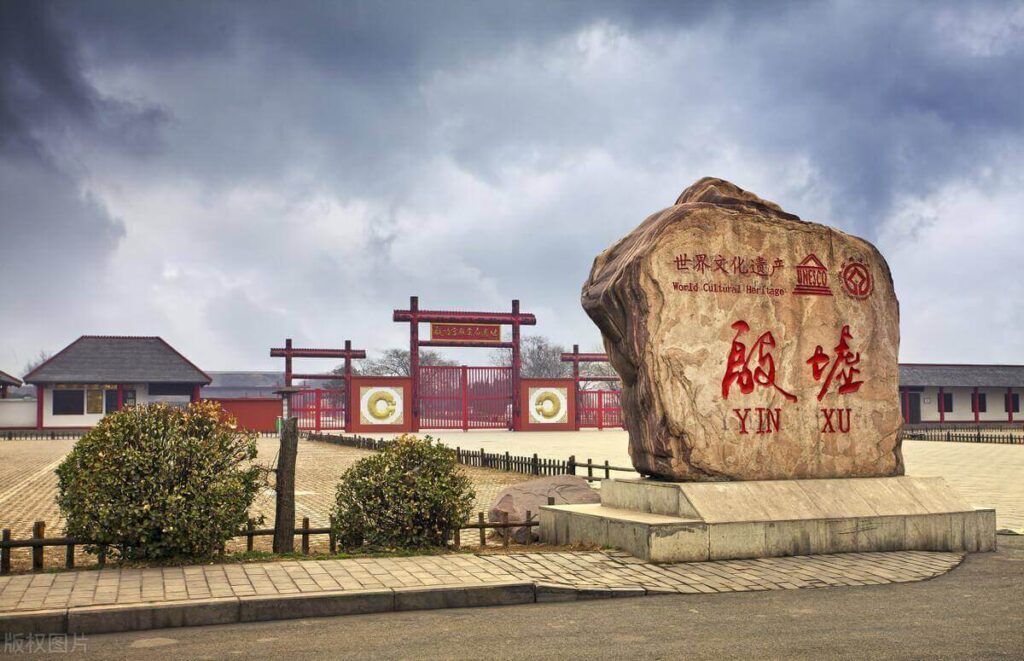
Yinxu and the capital of “Dayishang”

The Yinxu Ruins are internationally renowned as the site where oracle bone inscriptions were first unearthed, offering the earliest known corpus of Chinese writing. Identified in oracle texts as “Dayishang,” or the Great Settlement of Shang, Yinxu is the first late Shang capital confirmed through both archaeology and written records.

Recent fieldwork has expanded this picture further. Alongside the animal discoveries, archaeologists documented an extensive urban road network with three east–west and three north–south arterial roads. One north–south route extends 1.6 kilometers, making it the longest known thoroughfare from a late Shang capital.

Heritage significance

As a UNESCO World Heritage Site and the core of the Yinxu National Archaeological Site Park, the ruins are central to understanding early Chinese state formation. The newly uncovered evidence of managed wildlife adds an unexpected dimension to this narrative, highlighting elite power expressed through control over nature as well as ritual.

Together, the finds deepen our understanding of Shang society, revealing a capital where urban planning, ritual performance, and animal management were closely intertwined more than three millennia ago.

Cover Image Credit: Xinhua

Related Articles

A wash-basin decorated with 2500-year-old Mythological creatures and Chariot races was discovered in Izmir, Turkey

28 September 2022

28 September 2022

Unique ceramic figures were discovered in the excavations carried out this year in the ancient city of Klazomenai in the...

DNA from 20,000-year-old deer-tooth pendant reveals woman who wore it

4 May 2023

4 May 2023

A pendant made of a deer tooth that was exposed to DNA about 20,000 years ago has yielded clues about...

Archaeologists Reveals Rare Evidence of Early Human Presence in Tajikistan

6 November 2024

6 November 2024

Archaeologists have discovered a multi-layered archaeological site in the Zeravshan Valley of central Tajikistan that reveals early human settlement in...

4000-year-old Temple With A 2.30 Meters Central Monolith Discovered in Cyprus

9 July 2024

9 July 2024

An Italian archaeological mission, the Erimi Archaeological Project of the University of Siena, discovered a 4,000-year-old temple in Cyprus. This...

Archaeologists have unearthed an incredible hoard of over 300 Iron Age ‘potins’ in West London

17 July 2021

17 July 2021

Archaeologists at an HS2 construction site in Hillingdon, West London discovered an astonishing treasure of over 300 Iron Age ‘potins”....

China Discovers 2,200-Year-Old Imperial Road, the Ancestor of Today’s 4-lane Highways

22 December 2025

22 December 2025

Chinese archaeologists have uncovered a remarkably preserved section of an ancient imperial highway built more than 2,200 years ago—an infrastructure...

Excavations Near Stonehenge Uncover Bronze Age Barrow Cemetery

4 June 2023

4 June 2023

The Cotswold Archeology team excavating at the site of a planned housing development near Salisbury, England, has unearthed a giant...

A One-of-a-Kind Roman Tomb with Bilingual Inscription: The First Monumental Discovery in Dibra, Albania

4 September 2025

4 September 2025

Archaeologists have uncovered a monumental Roman-era tomb in Strikçan, near Bulqiza, in northern Albania’s historic Dibra region, approximately 90 kilometers...

Numerous Statue Fragments Unearthed at Lost Apollo Sanctuary in Cyprus!

29 April 2025

29 April 2025

The Sanctuary of Apollo at Frangissa, located near ancient Tamassos and lost for approximately 140 years, has been rediscovered through...

New fortifications unearthed in Porsuk Mound excavations

11 August 2021

11 August 2021

In the excavations of Porsuk Mound, which is an important Hittite settlement and where traces of settlement remains can be...

Collectors In The Prehistoric World Recycled Old Stone Tools To Preserve The Memory Of Their Ancestors

16 March 2022

16 March 2022

A first-of-its-kind study at Tel Aviv University asks what drove prehistoric humans to collect and recycle flint tools that had...

1800-year-old marble inscription found in Turkey’s Aigai excavations deciphered

2 October 2022

2 October 2022

The 1800-year-old inscription, consisting of 3 pieces of marble, found in the excavations in the ancient city of Aigai in...

Earliest Multiplication Formulas Discovered in a 2,300-Year-Old Chinese Tomb

27 December 2023

27 December 2023

Archaeologists excavating a tomb in the Qinjiazui archaeological site of Jingzhou City, Hubei Province, China, have found the earliest multiplication...

Ritualistic Dog Burials Associated with the Goddess Gula Unearthed at the Harran Archaeological Site in Southeastern Türkiye

15 December 2024

15 December 2024

Excavations at the Harran archaeological site in Şanlıurfa, one of the world’s oldest settlements and listed on UNESCO’s Temporary World...

Analysis Of Roman Coins sheds light on the Roman financial crisis

17 April 2022

17 April 2022

New scientific analysis of the composition of Roman denarii has brought fresh understanding to a financial crisis briefly mentioned by...