
19 June 2026 The Future is the Product of the Past

Storeroom and Soup Kitchen Unearthed in Ancient Timbriada: New Clues to Pisidia’s Forgotten City

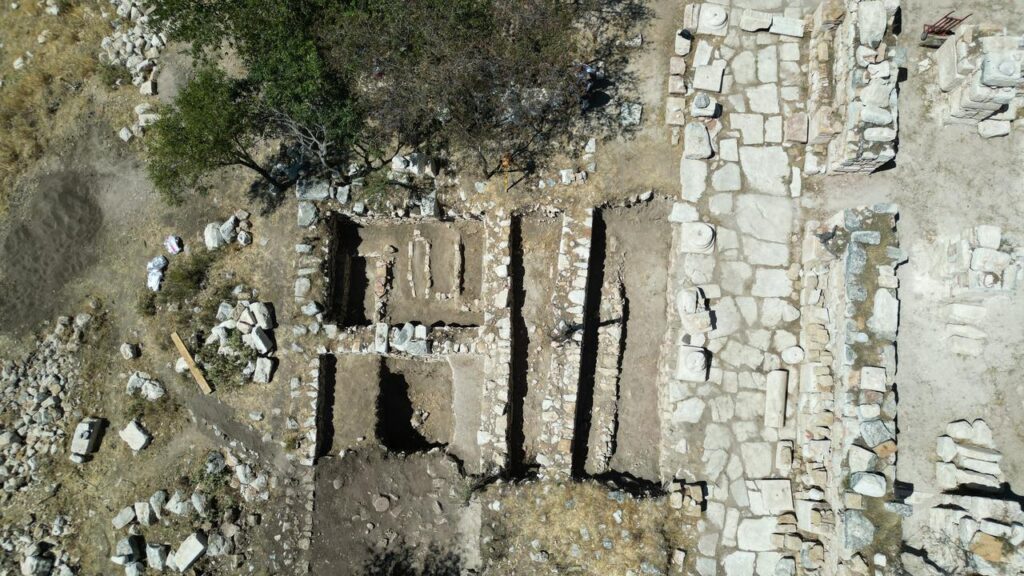
Archaeologists have uncovered a 2,200-year-old storeroom and soup kitchen in the ancient city of Timbriada, located in Isparta’s Aksu district. The discovery, made just west of the city’s central church, offers important clues about food storage, communal dining, and agricultural practices in antiquity.

The find comes from Pisidia, a rugged mountainous region of southwestern Anatolia known in antiquity for its fiercely independent cities, religious diversity, and resistance to outside control. While often overshadowed by neighboring Lycia and Pamphylia, Pisidia played a crucial role as a cultural and strategic frontier zone of the Hellenistic and Roman worlds.

A Forgotten Pisidian City Emerges

Founded in the 2nd century BCE on the slopes of Asartepe, Timbriada stretched across nearly two kilometers and was one of the key Pisidian settlements. Excavations today are directed by Professor Fikret Özcan of Süleyman Demirel University’s Archaeology Department, focusing particularly around the city’s central church.

The newly uncovered structures—part storeroom, part soup kitchen—point to the growing significance of the church during the Late Antique period. Archaeologists also recovered charred seeds and grains, offering rare evidence of the city’s food economy. Özcan emphasized that such finds are “crucial for understanding ancient dietary culture, ecological adaptation, and economic life,” while also noting their potential value for modern agricultural genetics.
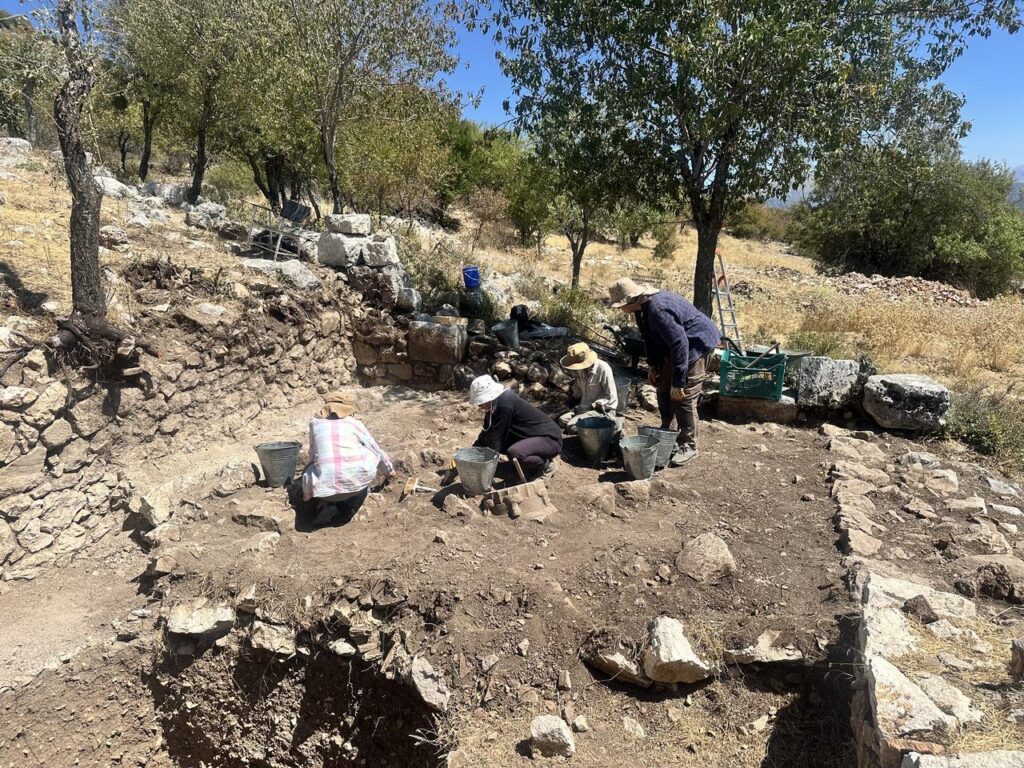
Archaeologists unearthed structures believed to have served as a storeroom and soup kitchen in the 2,200-year-old ancient city of Timbriada, located in Isparta’s Aksu district. Credit: AA

Coins, Cults, and the Panhellenion

Evidence from previous digs indicates that Timbriada began minting coins as early as the 2nd century BCE, discoveries made in front of the nearby Zindan Cave. During the Roman period, the city gained further prominence by joining the Panhellenion League, an alliance of twelve cities that included Athens and Pergamon, underscoring its political standing.


📣 Our WhatsApp channel is now LIVE! Stay up-to-date with the latest news and updates, just click here to follow us on WhatsApp and never miss a thing!!


Religion played a central role in Timbriada’s identity. The Kybele (Meter) sanctuary near Zindan Cave was among Pisidia’s most significant sacred sites. Coins minted in Timbriada depict not only Kybele but also Zeus, Dionysos, Hermes, and the Dioscuri, reflecting the city’s rich spiritual landscape and the blending of Anatolian and Greco-Roman traditions.

From Roman Stronghold to Bishopric Center

Timbriada retained its importance well into the Roman and Byzantine periods. The city is recorded as a bishopric center in the Late Antique era, highlighting its long-lasting role in regional religious networks.

Surrounded by settlements such as Tynada, Başören, Sırçalı, and Deliklitaş, Timbriada’s territory extended from Eğirdir’s Yuvalı village toward Lake Beyşehir, situating it within a dense web of Pisidian communities.

Unlocking Pisidia’s Agricultural Past

The discovery of storerooms, kitchens, and charred seeds provides archaeologists with a new lens into how Pisidian cities sustained themselves in a challenging mountainous environment. Future excavations may even reveal well-preserved ancient seeds, genetic time capsules that could bridge ancient subsistence strategies with the challenges of modern agriculture.

Cover Image Credit: AA

Related Articles

Archaeologists discover Stargazer idol fragment in Turkey’s In the ancient city of Beçin

15 December 2021

15 December 2021

During archaeological excavations in the ancient city of Beçin in the Milas district of southern Turkey’s Muğla, the head of...

Medieval ‘Testicle Dagger’ Unearthed at Swedish Fortress

19 May 2025

19 May 2025

Archaeologists in Gothenburg, southwestern Sweden, have made a rather striking discovery at the site of the ancient Gullberg Fortress: a...

5,700-Year-old Ancient “Chewing Gum” Gives Information About People and Bacteria of the Past

4 April 2021

4 April 2021

Researchers at the University of Copenhagen have successfully extracted the complete human genome from “chewing gum” thousands of years ago....

Archaeologists Reveal a Hair Style They Think Was Fashion 2000 Years Ago

19 February 2021

19 February 2021

The small 5 cm figurine found during excavations at Wimpole in Cambridgeshire surprised with its details. National Trust archaeologists and...

Archaeologists Unearthed Third Greatest Fire Temple Existing in Ancient Iran’s Sassanid Era

11 July 2022

11 July 2022

Archaeologists have unearthed ruins of what they believe to be the third-greatest fire temple in ancient Iran during the Sassanid...

3 mummified skeletons were found in Iznik, western Turkey

8 October 2021

8 October 2021

Archaeologists discovered mummified skeletons dating from the 2nd century A.D. within two sarcophagi at the Hisardere Necropolis in Bursa’s Iznik...

New Moai statue discovered on Easter Island

1 March 2023

1 March 2023

A new Moai statue has been discovered on Rapa Nui, a Chilean territory known as Easter Island. The sacred monument,...

Roman ‘ritual center’ discovered in England

12 January 2023

12 January 2023

Archaeologists from have discovered a Roman ritual centre during excavations near Northampton, England. The find was made by the Museum...

Prehistoric Cave Art Handprints With Missing Fingertips Point to Ritual Amputation

3 January 2024

3 January 2024

Researchers who examined prehistoric cave art in France and Spain, a new interpretation of Paleolithic cave art proposes that prehistoric...

Hungarian Archaeology Student Discovers Rare Bronze Figurines at Roman-Era Brigetio Site

31 July 2025

31 July 2025

A remarkable archaeological discovery emerged this July at the ancient Roman site of Brigetio in Komárom, Hungary. First-year archaeology student...

Scientists reconstruct Late Bronze and Iron Age Mediterranean silver trade

11 July 2021

11 July 2021

Scientists have recreated the Eastern Mediterranean silver trade across a time span that includes the conventional dates of the Trojan...

Who Are The Sea Peoples?

13 February 2021

13 February 2021

Who are the Sea Peoples, which are seen as the beginning of the dark age, and where did they come...

Thousands of Years Ago, People Lived Far More Luxuriously Than We Ever Imagined

16 December 2025

16 December 2025

Archaeologists in northern Israel uncover a luxurious Iron Age cremation burial, revealing elite lifestyles, long-distance trade, and Assyrian influence thousands...

Remains of 14th-century Synagogue thought to be one of largest in region discovered in Poland

14 August 2023

14 August 2023

The remains of what is thought to be a sizeable 14th-century synagogue complex, including a mikvah, have been discovered during...

New evidence for the use of lions during executions in Roman Britain

9 August 2021

9 August 2021

Archaeologists have discovered an elaborate key as proof that wild animals were employed as execution vehicles in public arena events...