
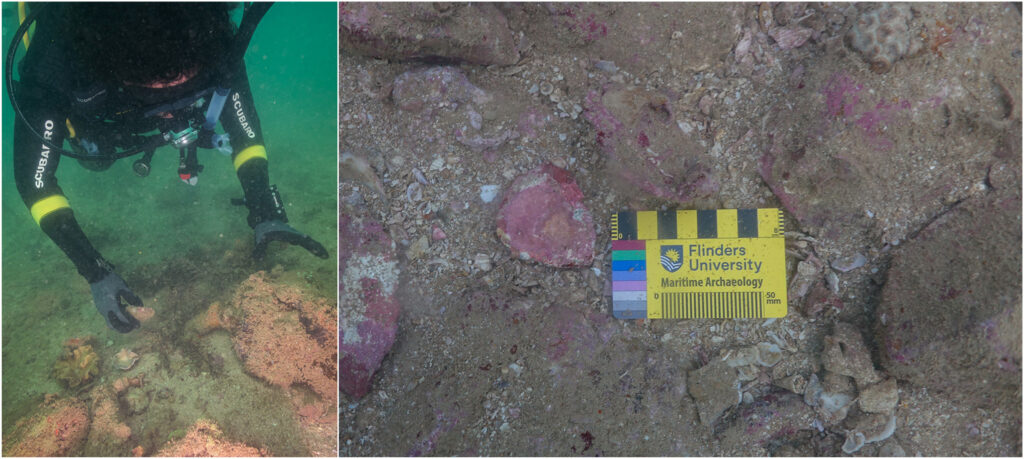
Stone tools discovered beneath the waters off Western Australia suggest that a freshwater spring may once have served as a gathering place for Aboriginal communities. The site disappeared beneath the sea at least 9,000 years ago, although the artefacts themselves could be considerably older.
The discoveries come from Murujuga, in northwestern Australia, where researchers identified 21 stone artefacts at two underwater sites. The findings, published in Quaternary Science Reviews, show that places now lying 11 to 15 metres beneath the sea once formed part of a landscape with freshwater springs, rivers and rocky hills.
More importantly, the research demonstrates that Australia’s ancient Aboriginal heritage extends well beyond its modern shoreline, with potentially much older archaeological evidence still waiting to be discovered farther offshore.
Stone Tools Found in a Landscape Lost to the Sea
During the last Ice Age, sea levels were much lower than today, exposing vast stretches of land along Australia’s coast. Aboriginal communities moved across these landscapes, using freshwater sources and collecting stone for their tools. As the Ice Age ended and sea levels rose, the ocean gradually submerged the land, leaving former rivers and freshwater springs beneath the waves.
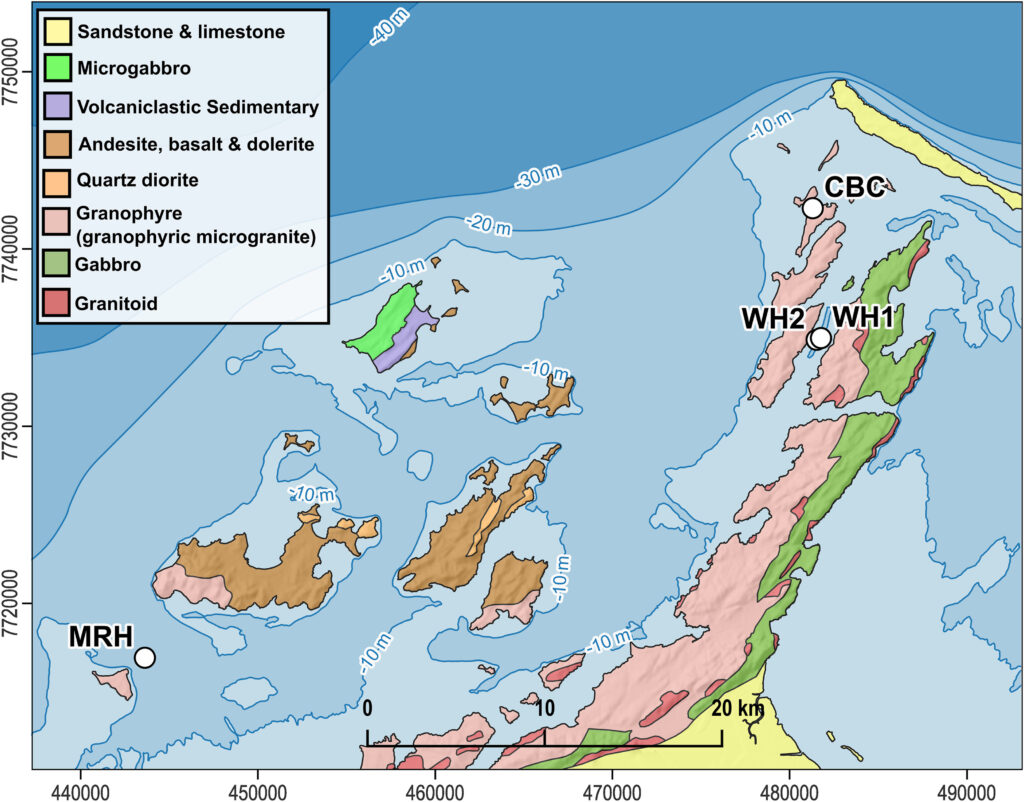
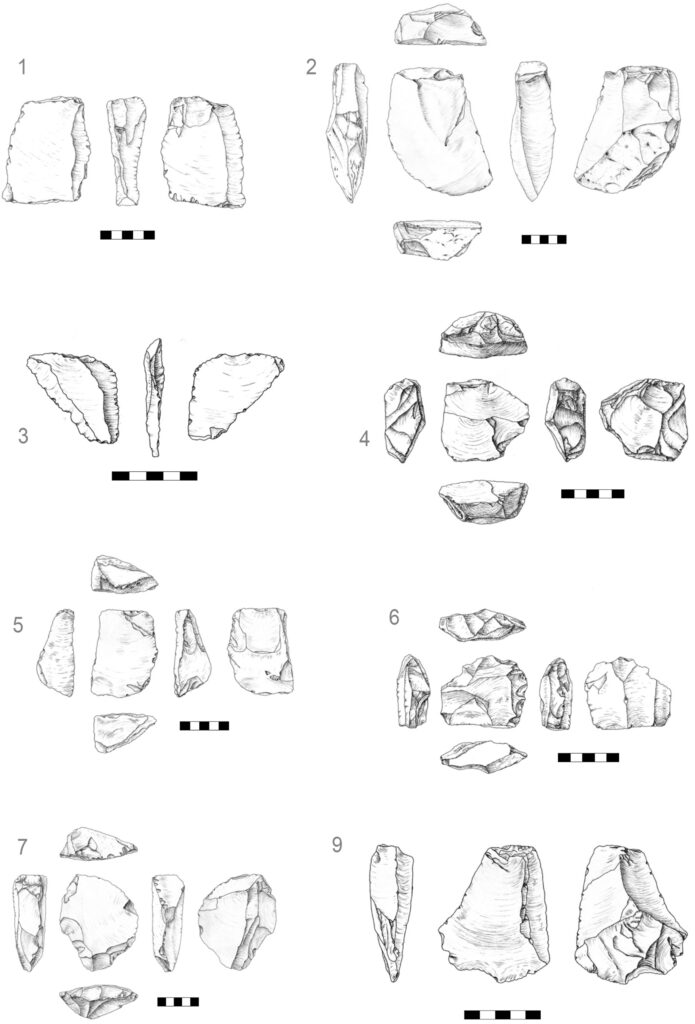
At Murujuga, researchers investigated two locations that preserve traces of this earlier environment. The first, known as WH2, lies near a submerged freshwater spring in Flying Foam Passage. Divers identified nine stone artefacts there, including pieces made from materials that originated well beyond the immediate area.
The second site, Maitland River Hummock, occupies a rocky rise beside the former course of the Maitland River. Archaeologists documented another 12 artefacts, including stone cores and flakes associated with tool production. The abundance of suitable rock suggests that people may have once visited this region to obtain raw materials and make tools.
Despite spending thousands of years underwater, the stone tools show little evidence of having been moved far by sea currents.
Stone Tools From 23 Kilometres Away
The researchers also examined where the stone used to make the tools originated. Their findings revealed an important difference between the two underwater locations.
At the former freshwater spring, four of the nine newly identified artefacts consisted of material associated with geological sources near present-day Rosemary Island, approximately 23 kilometres away. In contrast, the 12 artefacts at Maitland River Hummock came from rock types available much closer to that site.
Unlike the tools found near the ancient river, those recovered from the freshwater spring included stone brought from more distant sources.
Researchers suggest that the spring may have been a gathering place where prehistoric communities came together, while the rocky riverbank may have served as a local source of stone for toolmaking.
The study builds on earlier underwater archaeological discoveries at Murujuga, including stone artefacts reported in 2020. The latest research adds two sites and provides new evidence of how different locations within this submerged landscape may have served different purposes.
Aboriginal Cultural Heritage Beyond Australia’s Coastline
The research brought archaeologists together with the Murujuga Aboriginal Corporation and its Indigenous Rangers, Aboriginal community members who help protect and manage their ancestral lands and cultural heritage. Some of these Rangers also trained as scientific divers and took part in the underwater investigations.
Murujuga Rangers Malik Churnside and Richard Variakojis also contributed as co-authors of the study. Their involvement brought local cultural knowledge and practical experience into a project exploring places that form part of the region’s ancestral Sea Country.
For archaeologists, the findings raise a larger question about how much of Australia’s early human history remains underwater. The investigations so far have concentrated on relatively shallow areas, while much of the continental shelf remains unexplored.
During the last Ice Age, sea levels were as much as 130 metres lower than today, leaving vast areas of Australia’s continental shelf exposed. Much of that submerged landscape remains unexplored, and future underwater investigations may uncover archaeological sites that are even older than those discovered at Murujuga.
Benjamin, J., O’Leary, M., Brooke, L., Wiseman, C., Fairweather, J. H., Van Duivenvoorde, W., McCarthy, J., Reynen, W., Coker, G., Yoshida, H., Wade, V., Stevens, A., Shefi, D., Black, A., Hansen, J. E., Churnside, M., Variakojis, R., McDonald, J., Ulm, S., & Bailey, G. (2026). Underwater archaeological discoveries demonstrate raw material selection and transport of stone artefacts: New evidence from the submerged cultural landscape of Murujuga, Western Australia. Quaternary Science Reviews. https://doi.org/10.1016/j.quascirev.2026.110307
