
A small basalt tool from a rock-cut cave complex in Gran Canaria has opened a rare window into how the island’s Indigenous population harvested and processed cereal crops more than 700 years ago.
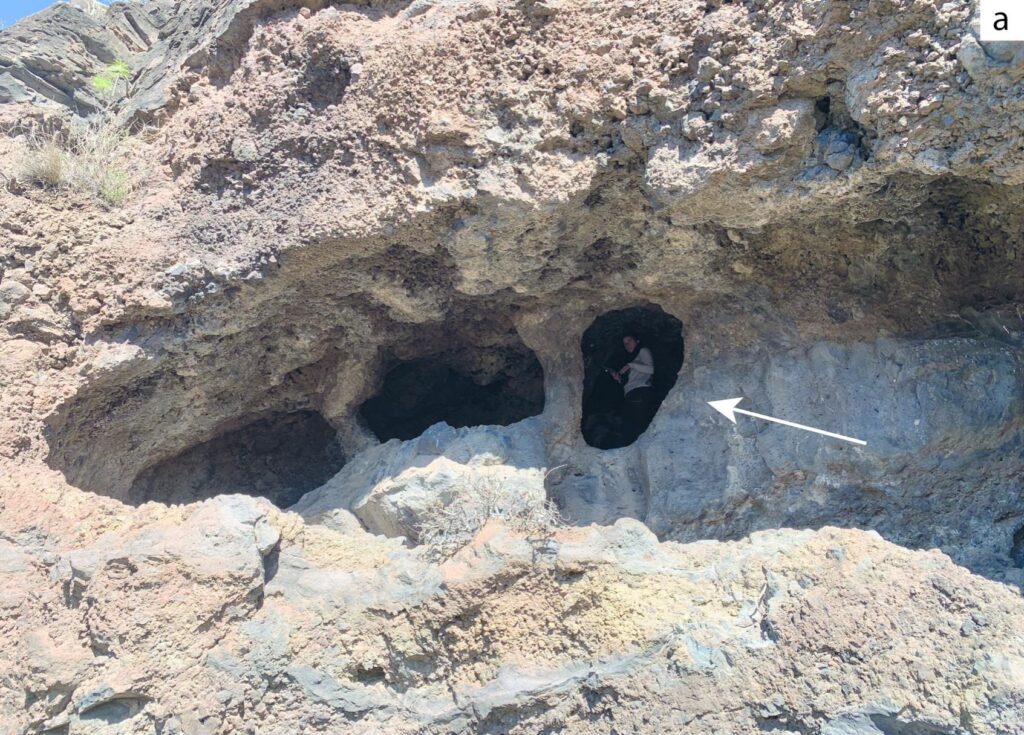
Researchers from the University of Las Palmas de Gran Canaria have identified the first direct evidence of cereal harvesting with stone tools in the Canary Islands. The discovery comes from the C008 cave complex at Roque Bentayga, one of the most emblematic archaeological landscapes in the mountainous interior of Gran Canaria.
The find may look modest at first: a retouched basalt flake recovered from an ancient cave granary. Under the microscope, however, its edge told a more detailed story. The tool carries wear marks consistent with cutting cereal plants, including edge rounding, striations, and polished surfaces produced by repeated contact with plant material.
The study, published in Journal of Archaeological Science: Reports, shows that the tool was not an isolated object in a storage cave. It belonged to a wider technological system in which stone tools were used to shape volcanic tuff walls, process plants, work leather and prepare funerary materials.
A granary carved into volcanic tuff
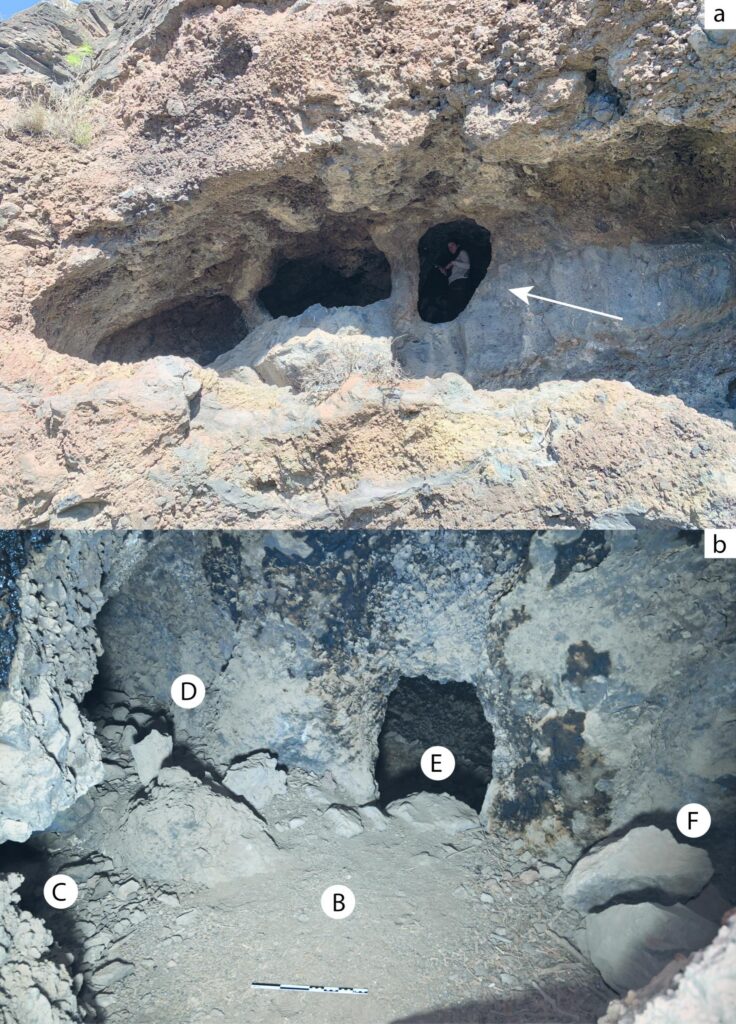
The C008 cave complex lies on the southern face of Roque Bentayga, a volcanic formation rising 1,414 meters above the Caldera de Tejeda. The wider site includes more than a hundred natural and artificial caves, with evidence for habitation, storage, livestock activity and collective burial.
C008 itself was carved into pyroclastic tuff at around 1,100 meters above sea level. Its chambers and silos formed part of a typical Indigenous Gran Canarian granary system, designed to store plant products in a dry and stable microclimate. These conditions helped preserve fragile organic remains that rarely survive elsewhere, including desiccated seeds, barley ears, cereal stems, rush mats, leather fragments and timber.
Radiocarbon evidence places the use of the cave complex between the 10th and 13th centuries CE. The site was first used as a granary and later transformed into a collective burial space, probably during the 12th and 13th centuries.
Traceology reveals what the eye cannot see
The key evidence came from traceology, also known as use-wear analysis. This discipline examines microscopic marks left on tools by repeated contact with specific materials.
The research team studied 218 lithic pieces from the site. Of these, 46 were considered potential tools suitable for functional analysis. The examined group included obsidian flakes, volcanic rock flakes, picks and scrapers.
One retouched basalt flake stood out. Its cutting edge showed a combination of wear traces associated with cereal harvesting. These included bifacial edge scarring, continuous rounding, abundant parallel striations and extensive polish. In practical terms, the tool had not simply been lying inside a storage cave. It had been used.
Idaira Brito, a predoctoral researcher at ULPGC, described the find as the most direct and oldest evidence of cereal harvesting with stone tools not only in Gran Canaria, but across the Canary archipelago.
A more complex picture of Indigenous agriculture
Until now, archaeologists had evidence that the Indigenous population of Gran Canaria cultivated and stored cereals, especially barley. Granaries across the island have produced seeds, ears and plant remains. Historical sources also suggested that cereals may often have been harvested by hand, with only the ear removed and the rest of the plant left in the field.
The new evidence complicates that picture.
The basalt tool suggests that cutting implements were also part of the harvesting or post-harvest process. The researchers note that the tool may have been used in fields below Roque Bentayga, then carried up to the granary. Another possibility is that cereal plants were uprooted elsewhere and later processed inside the cave, where ears, straw or stems could be separated with a stone edge.
This second possibility is strengthened by the organic evidence from C008. The site preserved bundles of cereal stems with clean cut marks, including barley remains. That means the cave may have functioned not only as a storage place, but also as a processing area where harvested plants were prepared before long-term storage or consumption.
Life without metal tools
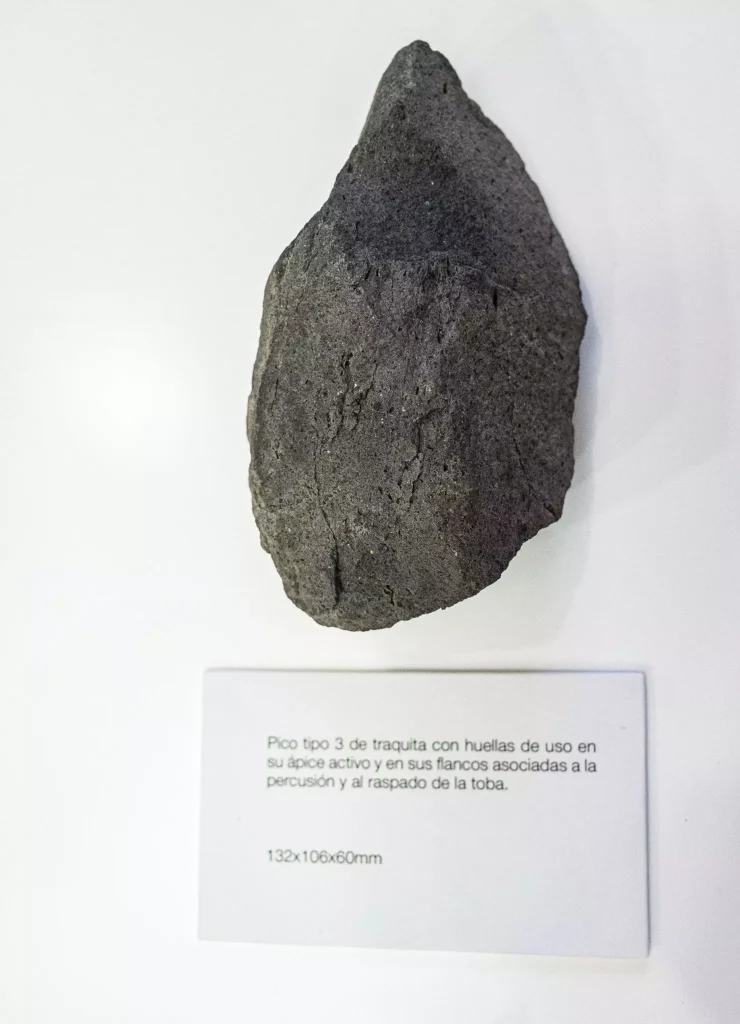
The discovery also matters because the Indigenous Canarian societies did not use metal tools before European conquest. In Gran Canaria, volcanic rocks such as basalt, trachyte and phonolite, along with obsidian, formed the basis of toolmaking.
The study shows how adaptable that technology was. Large picks and scrapers were used to modify the volcanic tuff walls of the cave. Some were likely employed to excavate or regularize the silos. Other flakes were used for working dry hide, cutting or scraping rushes, and possibly processing animal material.
One obsidian flake showed traces consistent with butchery. Several volcanic flakes carried wear marks linked to hide and plant-fiber work. These activities point to a cave complex that was more than a static storage facility. It was a working space, maintained, reused and adapted over generations.
From storage cave to burial place
The later funerary phase adds another layer to the story. The central chamber of C008 was reused for collective burial, with adult and perinatal remains placed alongside rush mats and lithic tools.
Use-wear analysis indicates that some tools from this phase were used to work dry hide and rush. The researchers suggest they may have helped prepare funerary bundles, adjusting shrouds made from animal soft tissue and plant fibers. This interpretation fits known burial practices in Indigenous Gran Canaria, where bodies could be wrapped in materials such as leather and vegetal matting.
The team remains cautious. Some tools may have been grave goods, and post-depositional disturbance cannot be completely ruled out. Yet their close association with human remains and rush mats supports the idea that they were involved in funerary preparation.
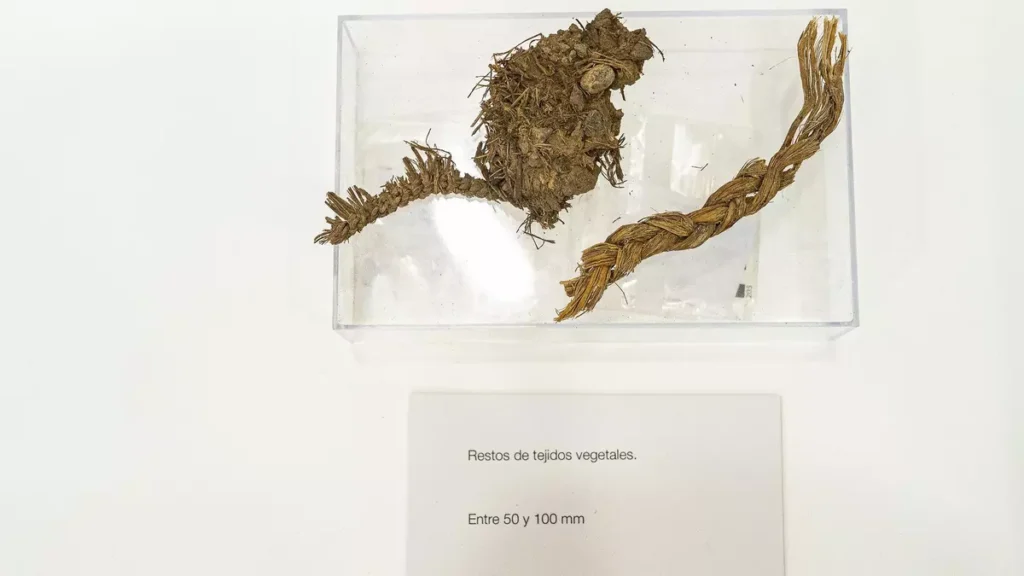
Remains of plant fibers discovered near Roque Bentayga. Credit: Brito-Abrante et al., 2026
Reconstructing an incomplete history
The work was carried out within a research agreement between the Cabildo de Gran Canaria and ULPGC to investigate the origin and development of human occupation in the Cultural Landscape of Risco Caído and the Sacred Mountains of Gran Canaria. The agreement began in 2022, was extended last year and includes a total investment of 360,000 euros.
For researchers, the discovery demonstrates how much information can still be recovered from disturbed or looted archaeological contexts when specialized methods are applied. C008 had suffered from past looting and later visits, but sealed or well-preserved areas still retained enough evidence to reconstruct two major phases of use.
The basalt harvesting tool is therefore more than a technical find. It links agriculture, storage, stone technology and daily labor in a society that developed distinctive island lifeways after its ancestors arrived from North Africa.
At Roque Bentayga, a worn stone edge has preserved something unusually direct: the mark of a harvest, and with it a clearer image of how Indigenous Gran Canarians worked, stored food and transformed their sacred mountain landscape.
Brito-Abrante, I., Santana, J., Morales, J., del Pino Curbelo, M., Martínez-Barrio, C., Campagne, J., Cancel, S., & Rodríguez-Rodríguez, A. (2026). More than storage: A functional analysis of the lithic industry associated with the C008 cave complex at Bentayga, Gran Canaria (Canary Islands, Spain). Journal of Archaeological Science: Reports, 71. https://doi.org/10.1016/j.jasrep.2026.105668
Cover Image Credit: Brito-Abrante et al., 2026
