
10 June 2026 The Future is the Product of the Past

Archaeologists Discover Complete 13th-Century Rare Benahoarit Vase in Tijarafe Funerary Cave on La Palma

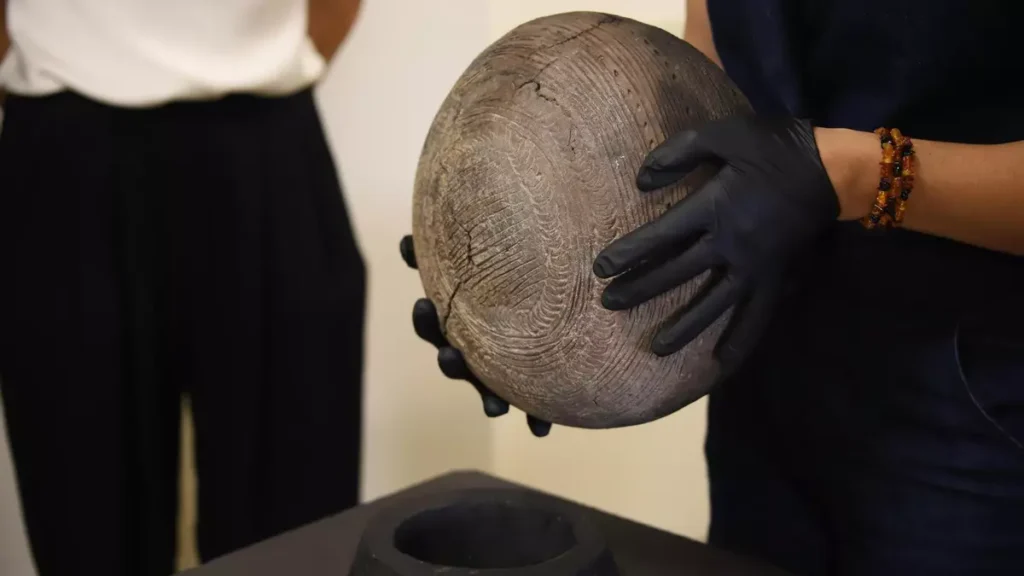
A remarkable archaeological discovery in Tijarafe, a municipality on the northwestern coast of La Palma in Spain’s Canary Islands, has captured the attention of historians and archaeologists alike. A fully intact Benahoarit ceramic vase, dating from the 13th to 15th centuries, was unearthed in a funerary cave within the Barranco de Los Gomeros, providing an unprecedented glimpse into the island’s pre-Hispanic culture.

The find was made during the ongoing Proyecto Occidente, a nine-year initiative focused on studying the northwest region of La Palma to better understand the lifestyle, rituals, and material culture of the Benahoarit people, the island’s original inhabitants. Archaeology student Lourdes Barroso discovered the vase while surveying caves and ancient spaces. Crucially, she did not handle the artifact, reporting it directly to the project’s technical co-director, archaeologist Francisco Caamaño.

“This is an extraordinary find,” Caamaño explained. “Complete ceramic vessels are extremely rare; most excavations yield only fragments. Preserving the vase in its original context allows us to study it as it was intended, offering direct insight into the practices of the Benahoarit.”

Contextual Significance

Preliminary analysis indicates the vase was placed in a funerary cave, corroborated by the presence of human remains alongside it. This context suggests that the vessel played a ceremonial or ritualistic role, potentially linked to burial practices or offerings.

According to Jorge Pais, Head of Historical Heritage at the Cabildo of La Palma, “It is extremely valuable to recover artifacts intact and in situ. Unlike the majority of pieces in the Museo Arqueológico Benahoarita, which are often removed from their original context, this vase allows us to interpret its cultural significance directly.”


📣 Our WhatsApp channel is now LIVE! Stay up-to-date with the latest news and updates, just click here to follow us on WhatsApp and never miss a thing!!


Benahoarit ceramics are recognized for their rounded bases, wide mouths, and smooth surfaces. They were both practical and symbolic, used in daily domestic life for storage and food preparation, but also in ceremonial settings, particularly in funerary practices. The Tijarafe vase exemplifies these characteristics, revealing the skill and aesthetic sensibilities of the island’s indigenous people just before European contact.
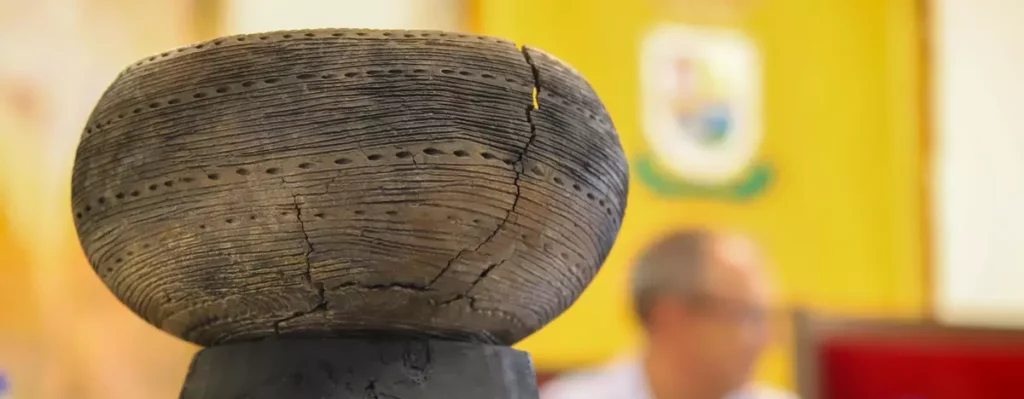
Complete Benahoarit vase found inside a narrow cave in Barranco de Los Gomeros, within the municipality of Tijarafe, during archaeological campus excavations as part of the Proyecto Occidente. EFE / LUIS G MORERA

Archaeological Process and Challenges

The discovery was made during a carefully planned survey of caves along the coast. Maintaining the integrity of the site required meticulous planning and patience.

“Finding an intact vase in a funerary cave is rare,” Caamaño noted. “It provides a snapshot of cultural practices that are otherwise difficult to reconstruct from fragmented artifacts.” The project team emphasizes that context is critical: understanding where and how objects were deposited informs both historical interpretation and conservation efforts.

Broader Implications

The intact vase adds to the understanding of Benahoarit material culture and the island’s pre-Hispanic funerary traditions. It offers researchers a tangible connection to the daily and spiritual life of a society that thrived centuries ago. Such discoveries also inform museum curation, ensuring that exhibited artifacts are contextualized, rather than isolated, enhancing public understanding of the Benahoarit heritage.

The discovery of this vase is a reminder of the richness of La Palma’s indigenous history. Each excavation contributes to a more nuanced understanding of the island’s past, revealing the sophistication of its early inhabitants. For the archaeological community, the Tijarafe vase represents not only a rare find but a vital piece of the puzzle in reconstructing Benahoarit society and cultural practices.

Cover Image Credit: EFE / LUIS G MORERA

Related Articles

Archaeology Team Uncovers Major Ancient Settlement Site on University Grounds

15 February 2026

15 February 2026

A routine construction project at Technische Universität Dortmund (TU Dortmund, Germany) has led to a remarkable archaeological discovery: traces of...

Alexander the Great’s Bathroom Discovered at Greece’s Aigai Palace

11 May 2024

11 May 2024

Archaeologists say to have unearthed Alexander the Great’s bathroom at the Aigai Palace in northern Greece. The vast Aigai palace,...

Temple of Zeus Lepsynos in Turkey regains its glory

9 May 2022

9 May 2022

The temple of Zeus in the ancient city of Euromos in southwestern Turkey regains its original splendor with the revitalization...

Croatia’s Zadar Reveals a Massive Roman Necropolis Used Continuously for 500 Years Beneath Its Streets

23 March 2026

23 March 2026

Beneath the modern urban fabric of Zadar, archaeologists are uncovering compelling new evidence that confirms the existence of a massive...

Oldest Aboriginal pottery discovered in Far North Queensland

10 April 2024

10 April 2024

More than 2000 years ago, Aboriginal Australians were producing ceramics on a secluded island about 35 kilometers off the coast...

Knife and Lost Armor: First-Ever Verified Artifacts from Emperor Nintoku’s 5th-Century Kofun Tomb Revealed

13 August 2025

13 August 2025

In a discovery that is already rewriting the history of Japan’s ancient Kofun period, researchers have confirmed the existence of...

12,000-Year-Old Rock Carvings Discovered Beneath Waters of Atatürk Dam in Türkiye

22 October 2025

22 October 2025

Archaeologists and museum officials in Adıyaman, southeastern Türkiye, have captured underwater images of rock carvings estimated to be 12,000 years...

Ancient Altai People Performed Complex Surgical Operations 2,500 Years Ago — New Discovery

17 February 2026

17 February 2026

Researchers from Novosibirsk State University (NSU) have uncovered compelling evidence of a highly sophisticated surgical procedure performed approximately 2,500 years...

New Insights From Researchers About The World’s Longest Aqueduct

11 May 2021

11 May 2021

The Roman Empire’s aqueducts are magnificent specimens of the art of architecture. Although centuries have passed since these aqueducts were...

The Golden Helmet of Leiro: A Bronze Age Masterpiece Hidden for Millennia on Spain’s Atlantic Coast

20 March 2026

20 March 2026

On a rugged stretch of Galicia’s Atlantic coastline, where waves carve stories into stone, an extraordinary object once lay hidden...

The 5,000-Year-Old Beaded Burials that Reveal Women’s Power in Copper Age Iberia: Over 270,000 Beads

6 February 2025

6 February 2025

Archaeologists investigating the Montelirio tholos burial site in southwestern Spain, dating back approximately 5,000 years, have uncovered that the women...

3,000-year-old skeletons of nine children were discovered in Qazvin province, Iran

29 April 2023

29 April 2023

Archaeologists from the University of Tehran have discovered the remains of children dating back 3,000 years during excavations in an...

7,000-Year-Old Animal-Figured Seals Found in Arslantepe, Anatolia’s First City-State

27 August 2024

27 August 2024

Archaeologists working at the Arslantepe Mound (Turkish: Arslantepe Höyük), a UNESCO World Heritage Site in Türkiye’s eastern Malatya province and...

Archaeologists have found a previously unknown Roman city with buildings of monumental proportions in Spain’s Aragon Region

17 July 2022

17 July 2022

Archaeologists from the University of Zaragoza in Spain have discovered a previously unknown Roman city with buildings of monumental proportions....

Fragments of the World’s Oldest Known Rune Stone Discovered in Norway

3 February 2025

3 February 2025

Archaeologists have found fragments of the world’s oldest known rune stone at the Svingerud burial field in Norway and fitted...