
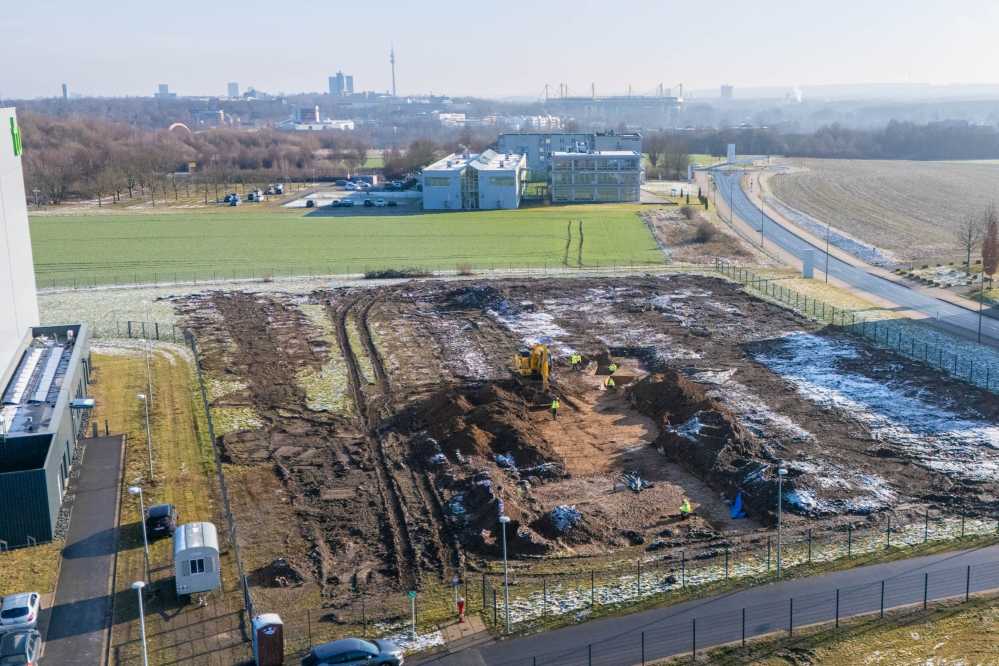
A routine construction project at Technische Universität Dortmund (TU Dortmund, Germany) has led to a remarkable archaeological discovery: traces of a long-forgotten settlement buried for millennia beneath a meadow on Emil-Figge-Straße. The site, originally designated for a new photovoltaic installation, has revealed compelling evidence of continuous human habitation stretching back thousands of years.
The discovery underscores the historical richness of the region and highlights the delicate balance between modern infrastructure development and cultural heritage preservation.
Excavations Reveal Prehistoric Structures Beneath University Grounds
The excavation began earlier this year as part of a mandatory preliminary investigation required by the City of Dortmund before construction of a planned ground-mounted photovoltaic (PV) system. Archaeologists had long suspected that the area held historical significance. Over the past five decades, isolated finds in the surrounding vicinity—including stone tools and pottery fragments—pointed to activity dating from the Neolithic period through the Iron Age, the Roman Imperial era, and even the Middle Ages.
To assess the archaeological potential of the meadow, experts employed systematic trial trenches known as “search cuts.” These machine-assisted trenches allow archaeologists to identify subsurface features, evaluate the extent of cultural remains, and understand soil stratigraphy.
It didn’t take long before the team from the contracted excavation firm EggensteinExca identified significant findings. The initial discoveries prompted an expansion of the excavation area, revealing multiple settlement-related structures.
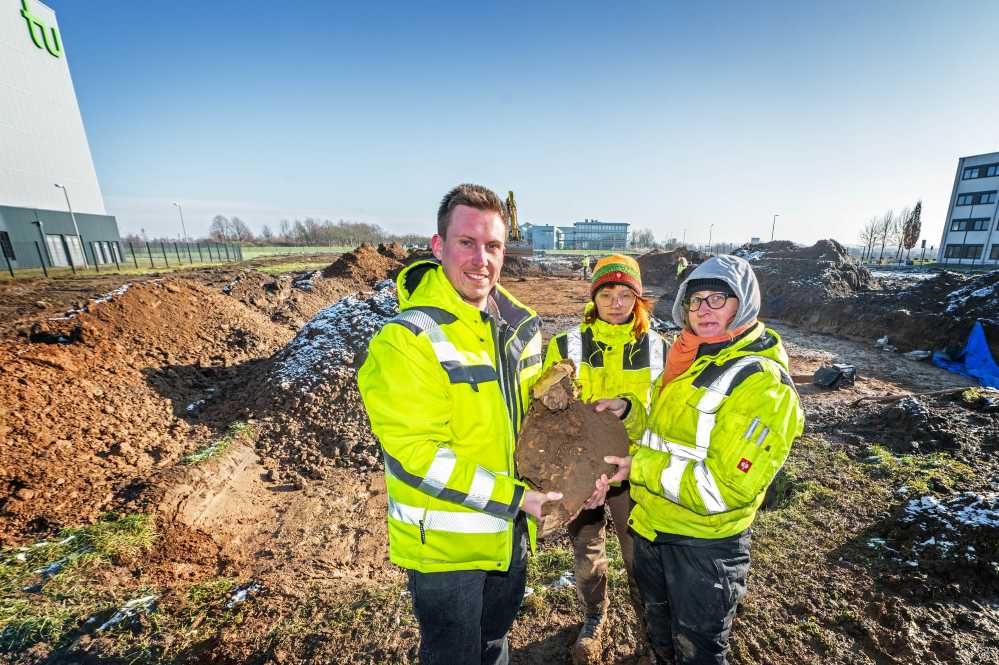
Discovery of a Pit House Offers Key Insights
Among the most significant findings is the remains of a so-called “pit house”—a semi-subterranean building type commonly associated with craft activities in prehistoric Europe. Pit houses are typically identified by soil discolorations that outline their sunken floor plans.
These structures provide valuable insights into settlement organization, economic activities, and chronological classification. The pit house discovered at the TU Dortmund site is considered a highlight of the excavation and may help researchers better understand how ancient communities functioned in the region.
In addition to structural remains such as small ditch systems and postholes indicating former building layouts, archaeologists uncovered numerous pottery shards. While the ceramics are currently categorized broadly as prehistoric, their lack of distinctive forms or decorative elements makes precise dating challenging.
Radiocarbon dating of charcoal fragments found within the archaeological contexts may soon provide a more accurate timeline. Using Carbon-14 (14C) analysis, researchers hope to narrow down the specific period during which the settlement was occupied.
Animal Skeleton Points to Later Activity
Another intriguing find was the nearly complete skeleton of a large animal, likely a horse or donkey. The well-preserved bones suggest a comparatively recent date, though further examination is required to confirm the species and age.
This discovery may point to continued or renewed use of the site in more recent historical periods, adding another layer to its complex occupational history.
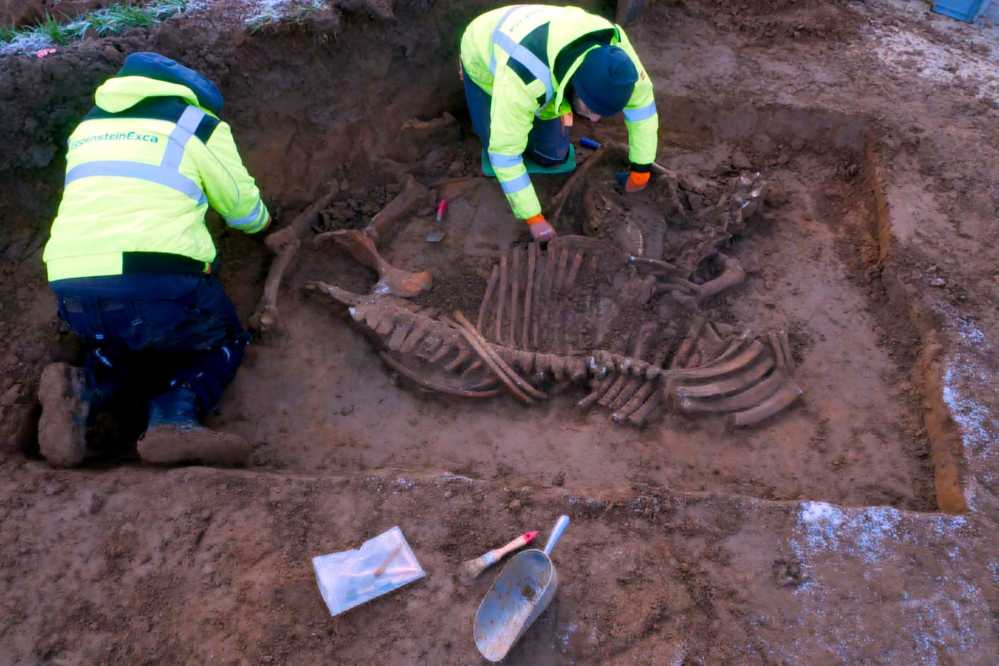
Credit: City of Dortmund / Excavation company EggensteinExca
Strategic Location Along the Historic Hellweg Trade Route
The meadow on Emil-Figge-Straße is ideally situated for prehistoric settlement. According to Jan Rosbeck of Dortmund’s Lower Heritage Authority, the site’s natural advantages made it highly attractive to early inhabitants.
The area features fertile loess soils typical of the northern slope of the Dortmund Ridge and the nearby Stockum Heights. Such soils are particularly suitable for agriculture and livestock farming. In addition, the proximity to natural springs and water-retaining soil layers would have provided a reliable water supply—an essential factor for any long-term settlement.
Equally significant is the site’s location along the ancient west-east trade corridor known as the Hellweg. This route, which has existed for thousands of years, runs along the fertile Hellweg zone and played a central role in early agricultural and commercial development. Archaeologists believe that trade networks first emerged in this densely populated area during the Neolithic period and later evolved into the historic Hellweg.
Today, much of the modern A40 motorway follows the path of this ancient trade route, illustrating the enduring geographical importance of the corridor.
Filling a Research Gap in the Hellweg Zone
Until now, archaeological evidence in this micro-region of the Hellweg zone had consisted mainly of isolated finds. The newly documented settlement area represents the first cohesive and systematically recorded section of prehistoric habitation at this specific location.
Experts believe the findings will significantly enhance understanding of settlement continuity along the Hellweg corridor. By analyzing the spatial distribution of structures and artifacts, researchers hope to reconstruct the economic practices, craft production, and social organization of the community that once thrived there.
The scientific evaluation of the recovered materials is ongoing and may close an important research gap concerning prehistoric settlement patterns in the region.
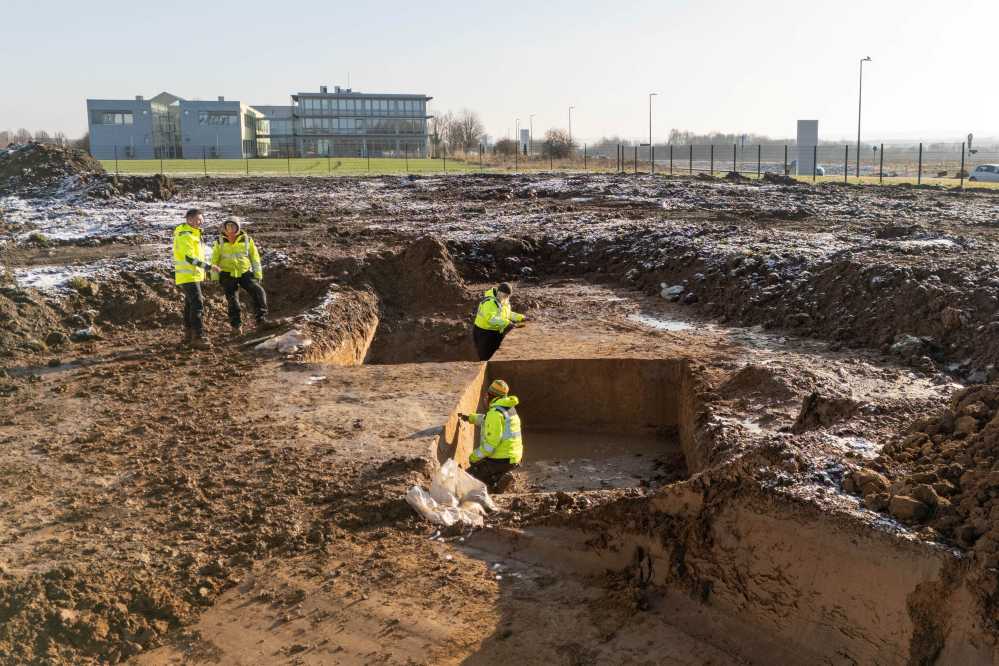
Smooth Collaboration Ensures Preservation Without Delays
The Lower Heritage Authority of Dortmund emphasized the constructive cooperation between the university, the excavation firm EggensteinExca, and municipal authorities. Early coordination allowed archaeologists to document and secure the findings professionally without delaying the construction timeline.
City archaeologist Tobias Zacharias stressed the importance of preliminary investigations in safeguarding cultural heritage. Such early assessments often represent the only opportunity to preserve prehistoric settlements before construction activities permanently alter the landscape.
The case at TU Dortmund demonstrates how infrastructure development and heritage conservation can coexist when stakeholders collaborate effectively.
TU Dortmund Advances Renewable Energy Goals
With the archaeological excavations nearing completion, TU Dortmund can now proceed with the installation of its new photovoltaic system. The planned ground-mounted PV array will cover approximately 14,000 square meters and include around 3,650 solar modules.
The installation is expected to generate approximately 1.60 megawatt-peak (MWp) and supply roughly five percent of the university’s electricity demand. According to feasibility studies, the project will amortize its costs in under six years.
Beyond this installation, TU Dortmund continues to expand renewable energy initiatives across campus, including rooftop PV systems, a new wood-pellet heating plant, and plans for a future wind turbine.
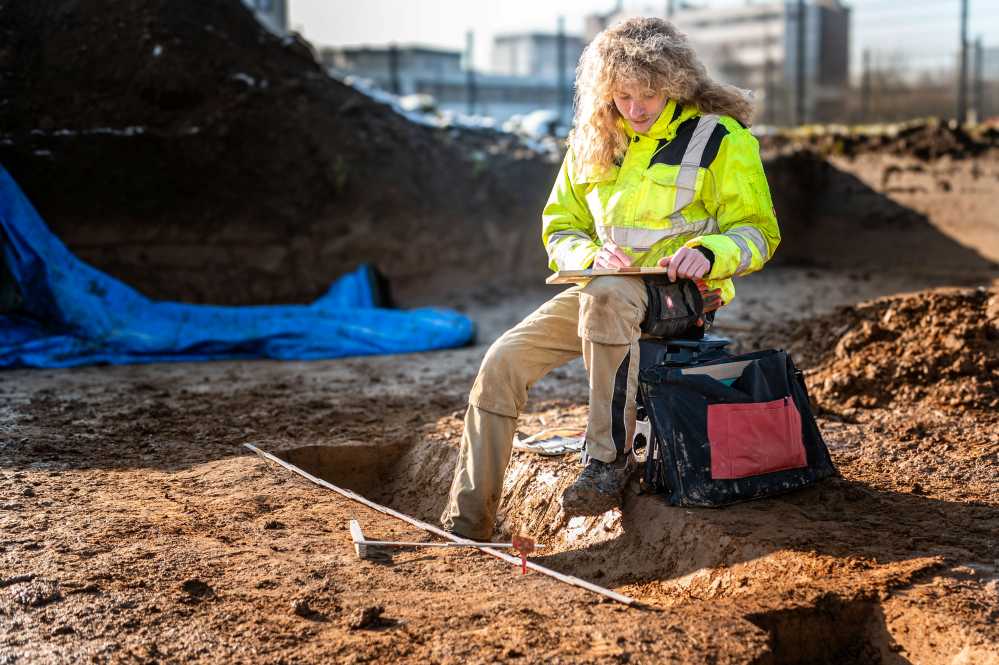
Credit: City of Dortmund / Roland Gorecki
A Powerful Example of Sustainable Progress
The discovery at Technische Universität Dortmund illustrates how modern sustainability efforts can intersect with deep historical roots. What began as preparation for a renewable energy project has uncovered a settlement that enriches our understanding of human life along the Hellweg for thousands of years.
As researchers continue to analyze the findings, the site promises to shed new light on prehistoric habitation in one of Germany’s historically significant corridors—proving that sometimes, the future of energy begins with uncovering the past.
Cover Image Credit: An archaeology team discovers a significant settlement site on the campus of TU Dortmund. Stadt Dortmund (City of Dortmund) Roland Gorecki
