
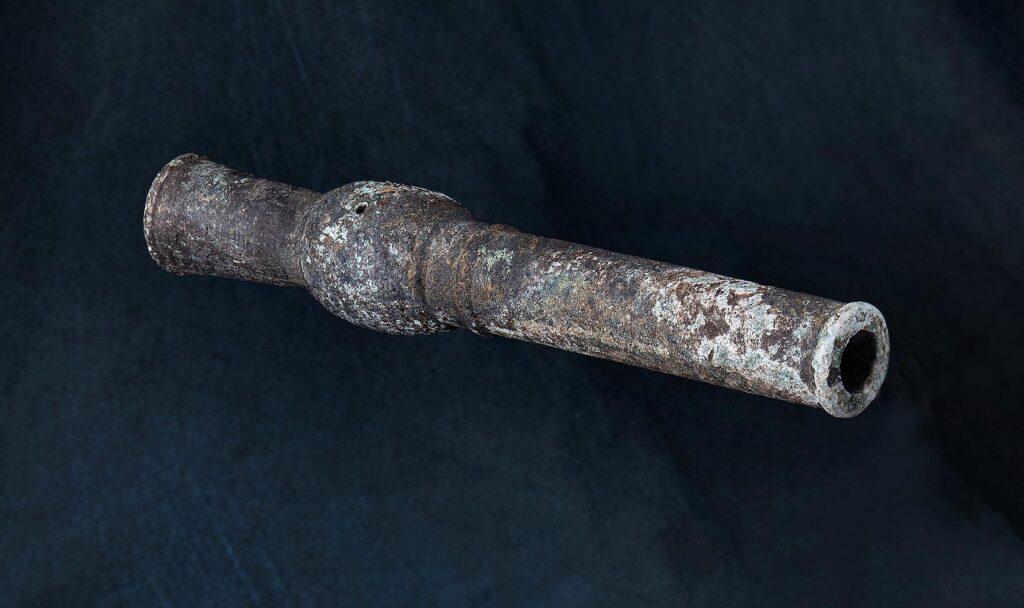
A small bronze cannon discovered on Mount Geumseong in South Korea has been identified as the country’s oldest surviving gunpowder weapon, providing rare physical evidence of military technology from the late Goryeo or early Joseon period. An inscription on its body records not only its name and weight but also the identities of the official who supervised its manufacture and the craftsman who made it.
The weapon, known as the Hwangja Hwatong (黃字火筒), was presented by the Naju National Research Institute of Cultural Heritage on September 21, 2026, following three years of scientific examination and expert review. Researchers have narrowed its manufacture to either 1377 or 1437, placing it within an important period in the development of Korean firearms.
An Unexpected Discovery on Mount Geumseong
The artifact was recovered in November 2023 during a military mine-detection operation on Mount Geumseong in Naju. Soldiers were checking an area suspected of containing landmines before construction of a hiking trail when they discovered the object approximately 10 centimeters beneath the surface.
The mountain overlooks the Yeongsan River region, historically an important strategic area in southwestern Korea. Its summit has also been used by the military, with an air-defense unit stationed there since 1966. The circumstances of the discovery are particularly unusual because the weapon was recovered during a modern safety operation rather than a conventional archaeological excavation.
The Hwangja Hwatong measures 23.75 centimeters in length, with a bore diameter of 1.66 centimeters and a weight of 1,032 grams. Its relatively small dimensions indicate that it was designed as a portable firearm rather than a large artillery piece.
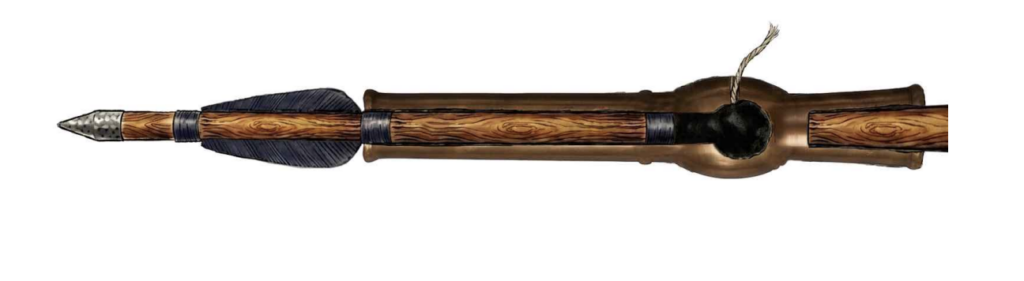
The weapon consists of three principal sections: a muzzle through which the projectile emerged, a chamber for gunpowder, and a socket intended to receive a wooden handle. According to the researchers, it represents an early type of gunpowder weapon used to discharge arrows or other projectiles.
Twenty-Eight Characters Reveal Its Medieval Origins
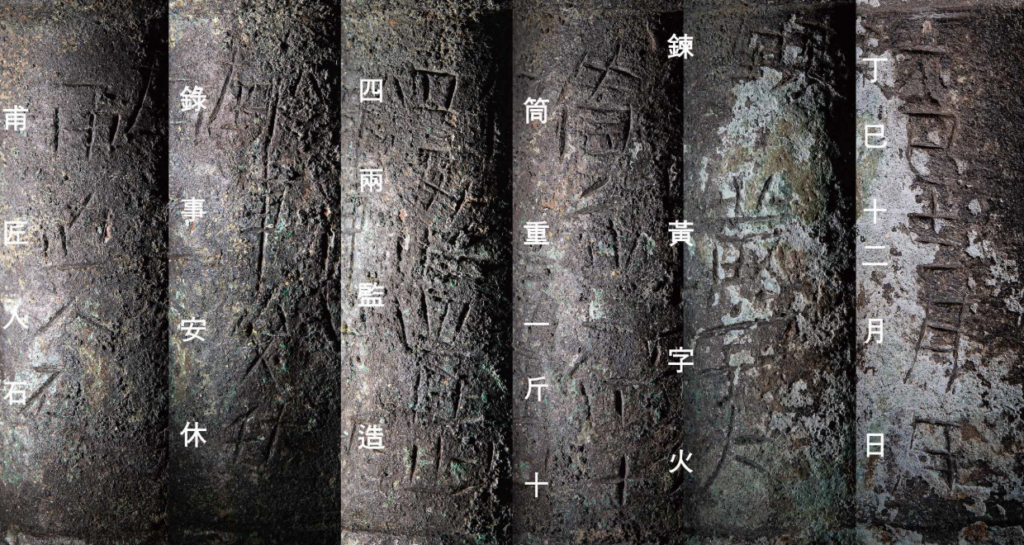
One of the discovery’s most significant features is an inscription engraved directly onto the bronze. Twenty-seven characters appear in six columns on the handle socket, while an additional character is inscribed near the muzzle.
The text identifies the object as a Hwangja Hwatong and states that it was made in the twelfth month of a Jeongsa year. It also records its original weight as one geun and fourteen nyang, traditional Korean units of measurement.
More unusually, the inscription names two individuals involved in its manufacture. The supervising official was An Hyu-bo, who held the position of noksa, while the craftsman responsible for producing the weapon was named Seok.
The term Hwangja refers to a classification system based on the order of characters in the Thousand Character Classic, a text traditionally used throughout East Asia. The character engraved near the muzzle, meaning eight, may have served as a production or inventory number.
Together, these details provide evidence that early Korean gunpowder weapons were manufactured within an organized system of official supervision. Historical records independently establish that officials holding the title noksa were involved in arms production during both the late Goryeo and Joseon periods.
Was the Cannon Made in 1377 or 1437?
The date remains the principal unresolved question. Because the inscription uses the traditional 60-year cyclical calendar, the researchers have identified two plausible production years: 1377 and 1437.
The earlier date would place the weapon in the final decades of the Goryeo Dynasty. In 1377, the government established the Hwatong Dogam, an agency responsible for manufacturing gunpowder and firearms, following the efforts of the military innovator Choe Mu-seon.
If the cannon was made in 1437, it belongs to the reign of King Sejong, when the Joseon state was actively improving its gunpowder weapons. This would still place it before the standardization of new firearm designs in 1445.
The research team cannot yet establish which date is correct because sufficiently close comparative material is lacking. Nevertheless, either date makes the Hwangja Hwatong the earliest known surviving Korean gunpowder weapon with identifiable evidence of its manufacture.
Bronze Analysis Reveals Early Firearm Engineering
The weapon’s internal construction provides further evidence of its early date. Its powder chamber has a rounded interior, a characteristic associated with earlier firearms in which the gunpowder and projectile occupied a single tube.
Later firearms developed during King Sejong’s reign incorporated wooden wads to transfer explosive pressure more efficiently to the projectile. The Hwangja Hwatong lacks the corresponding chamber configuration, suggesting that it predates those improvements.
Scientific examination also established that the weapon was cast from bronze composed primarily of copper, tin, and lead. The tin content was maintained below 10 percent by weight, a composition that researchers interpret as providing both strength and sufficient ductility to help the barrel resist the pressure of firing.
Microscopic analysis identified impurities including sulfur, silicon, and silver, consistent with the limitations of historical metal-refining techniques. Together with the inscription and the weapon’s physical design, these findings support its identification as an authentic early Korean firearm rather than a modern reproduction.
The discovery therefore offers more than an early example of gunpowder weaponry. It connects surviving technology with historical records of state-supervised arms manufacture, while preserving the names of individuals directly involved in producing a medieval weapon.
The Hwangja Hwatong will be displayed at the National Palace Museum of Korea in Seoul from September 23 to November 22, 2026, giving the public an opportunity to examine an artifact from a formative period in Korean military history.
