

A small ceramic jar buried near the Kremlin of Kolomna has yielded more than 2,600 medieval silver coins, forming what archaeologists describe as the largest complete Russian coin hoard from the first half of the 15th century available for scientific study.
The discovery came during rescue excavations in the historic center of Kolomna, southeast of Moscow, where archaeologists from the Institute of Archaeology of the Russian Academy of Sciences were working in the medieval urban settlement close to the fortified center.
What emerged from a shallow pit was remarkably compact: an elegant ceramic vessel decorated with engobe and packed with thousands of silver dengi, one of the principal monetary denominations of medieval Rus’.
Yet the importance of the find lies less in the number of coins than in the fact that the collection appears to have survived intact.
Unlike many medieval hoards that were dispersed after discovery, the Kolomna assemblage has reached researchers as a complete monetary snapshot. That gives numismatists an unusual opportunity to reconstruct which coins circulated together at a specific moment nearly six centuries ago.
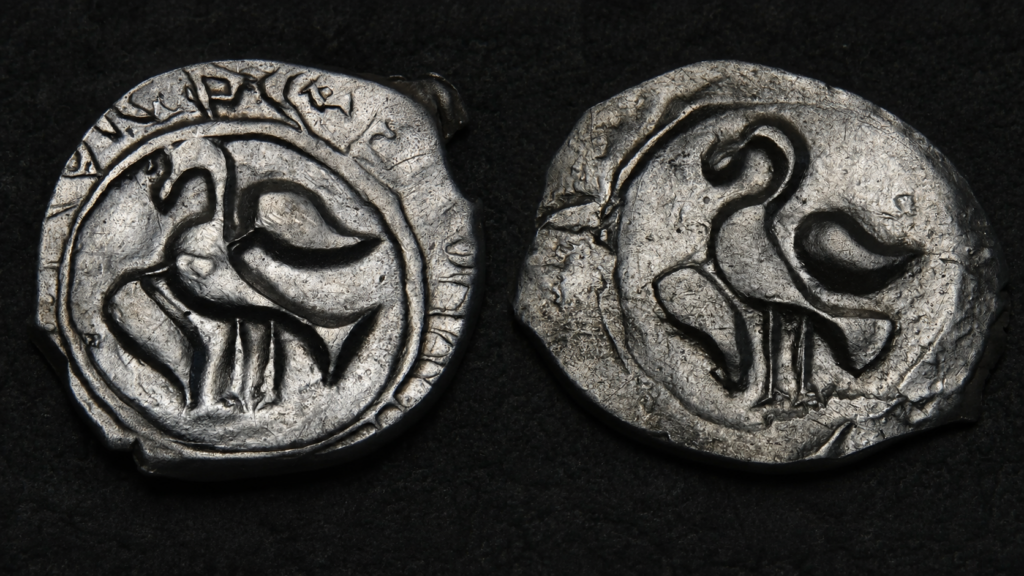
Various types of Kolomna coins from the first quarter of the 15th century. Credit: Institute of Archaeology of the Russian Academy of Sciences
A fortune hidden in a ceramic jar
Most of the coins were issued under two rulers of the Grand Principality of Moscow: Vasily I Dmitrievich, who ruled from 1389 to 1425, and his son Vasily II, later known as Vasily the Blind, whose reign began in 1425.
Grand-princely issues overwhelmingly dominate the hoard. Coins produced by the numerous appanage princes who controlled other territories are almost entirely absent. Researchers believe that imbalance reflects Kolomna’s political and economic position.
During the 14th and 15th centuries, Kolomna ranked second only to Moscow in importance within the principality and belonged directly to the grand prince. Its monetary circulation therefore appears to have been closely tied to the grand-princely economy rather than to neighboring regional centers.
The hoard also represented substantial wealth. Experts involved in its presentation estimated that its 2,600-plus dengi amounted to roughly 13 rubles at the time. Contemporary purchasing comparisons are necessarily approximate, but researchers said such a sum could have bought about two urban houses in Kolomna. That makes accidental loss highly unlikely.
The owner may have been a senior official or serviceman receiving payment from the grand prince, someone exercising administrative authority, or a prosperous merchant. Whoever accumulated the money appears to have deliberately buried a significant reserve of wealth and never recovered it.
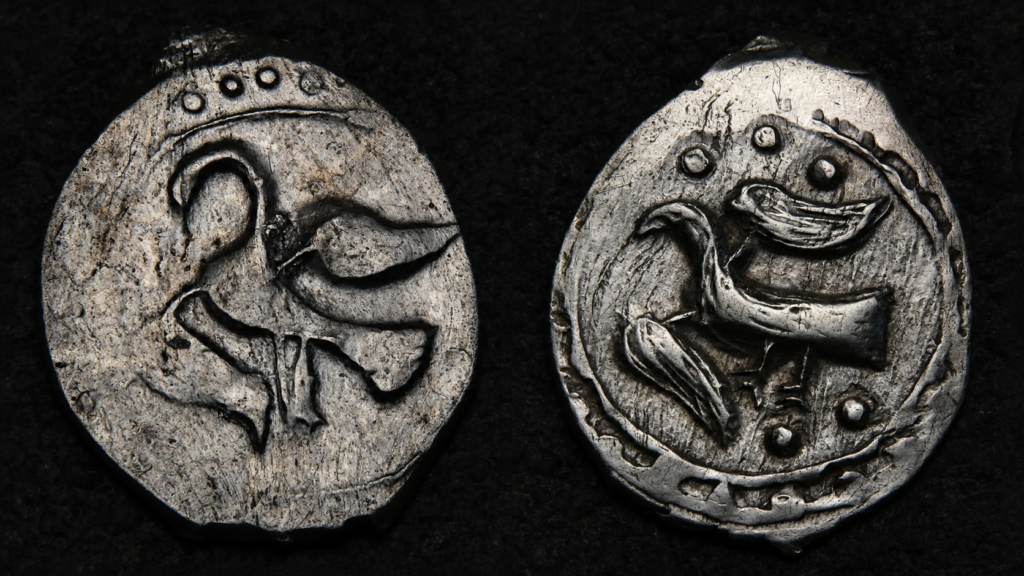
Rare bird coins point directly to Kolomna
Among the thousands of silver pieces, one group is particularly important. A substantial number were struck in Kolomna itself during the final years of Vasily I’s reign. These local coins carry a distinctive image of a flying bird and are rarely found in hoards outside the region.
Some specimens from the newly discovered collection are so rare that comparable examples are absent from the numismatic holdings of Russia’s largest museums, according to the research team.
Initial examination has already revealed previously unknown varieties of Kolomna coinage. More than 350 coins in the hoard belong to forms that researchers are now distinguishing and cataloguing in greater detail. For numismatists, the minute differences between them matter.
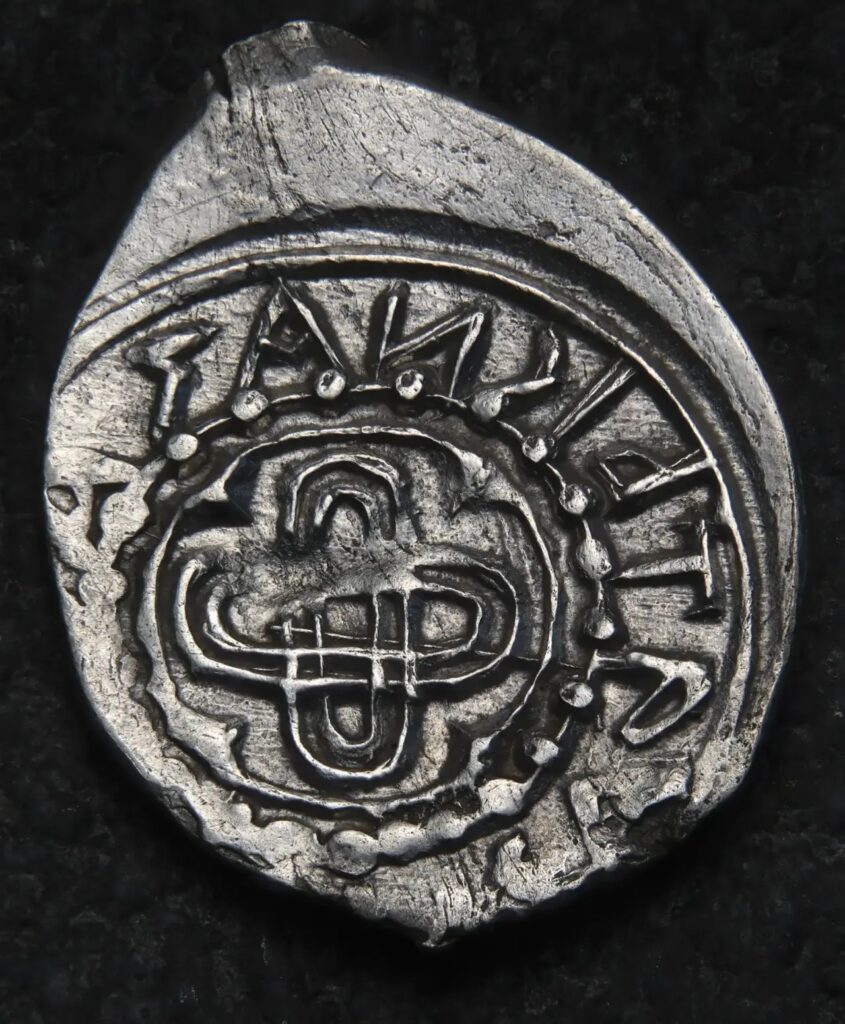
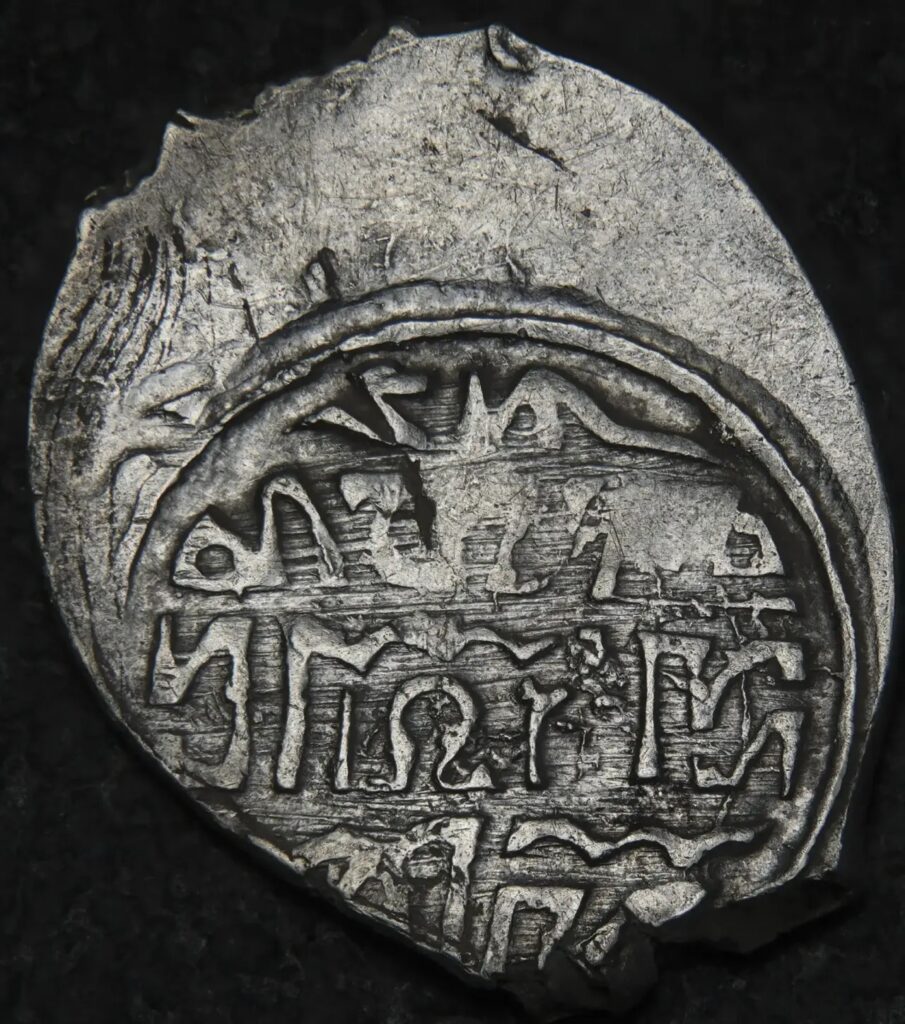
Medieval coins were struck using hand-cut dies. Small variations in the bird, lettering, lines and other details can identify which dies produced individual coins. When two coins share one die but differ in another, researchers can begin linking successive stages of production.
Because the Kolomna hoard contains coins struck from dozens of different die pairs, specialists may be able to reconstruct a technological sequence of local minting that spans at least 15 years. In practical terms, the jar may preserve something close to a production history of the Kolomna mint.
It could also help researchers identify the final bird-design issues produced during the last years of Vasily I and distinguish them from the earliest coinage associated with the reign of Vasily II. That chronological resolution is difficult to obtain from isolated finds.
More than a collection of rare coins
Large coin hoards often attract attention because of their monetary or collectible value. Archaeologically, however, an intact hoard can answer a different set of questions.
The proportions of different issues reveal which money people actually used. Die combinations can expose changes in minting. Regional coins can show how far currencies travelled. The latest coin in a closed deposit can also provide a terminus for when the entire collection was buried.
With more than 2,600 pieces from a single context, the Kolomna find offers enough material to examine those patterns statistically rather than through scattered individual examples.
Researchers believe the assemblage may therefore provide an unusually detailed picture of monetary circulation within the Kolomna territory of the Grand Principality of Moscow shortly before its concealment.
The almost complete dominance of grand-princely currency is already one important result. The unusually large concentration of locally minted bird coins is another.
Together, they may show how a major regional center operated economically while Moscow was consolidating political authority across northeastern Rus’.
Why did the owner never come back?
The youngest coins provide the final clue. They belong to Vasily II and were struck during the second half of the 1420s. Archaeologists therefore place the burial of the hoard around that period. The date raises an intriguing possibility.
The Institute of Archaeology notes that waves of epidemic disease passed through cities of Rus’ between 1425 and 1427. Researchers suggest that the owner of the money may have died during one of those outbreaks, which could explain why such a substantial fortune remained underground.
There is no direct evidence linking the individual who buried the jar to an epidemic, however. The timing merely makes it one plausible explanation among several for why the money was never retrieved.
What is considerably clearer is the scientific value of what remained behind. One person’s hidden wealth has survived as an undisturbed record of money moving through one of medieval Moscow’s most important cities. With thousands of coins still to be classified and their dies compared, the jar from Kolomna may ultimately reveal far more about early 15th-century minting and commerce than its owner could ever have intended.
