
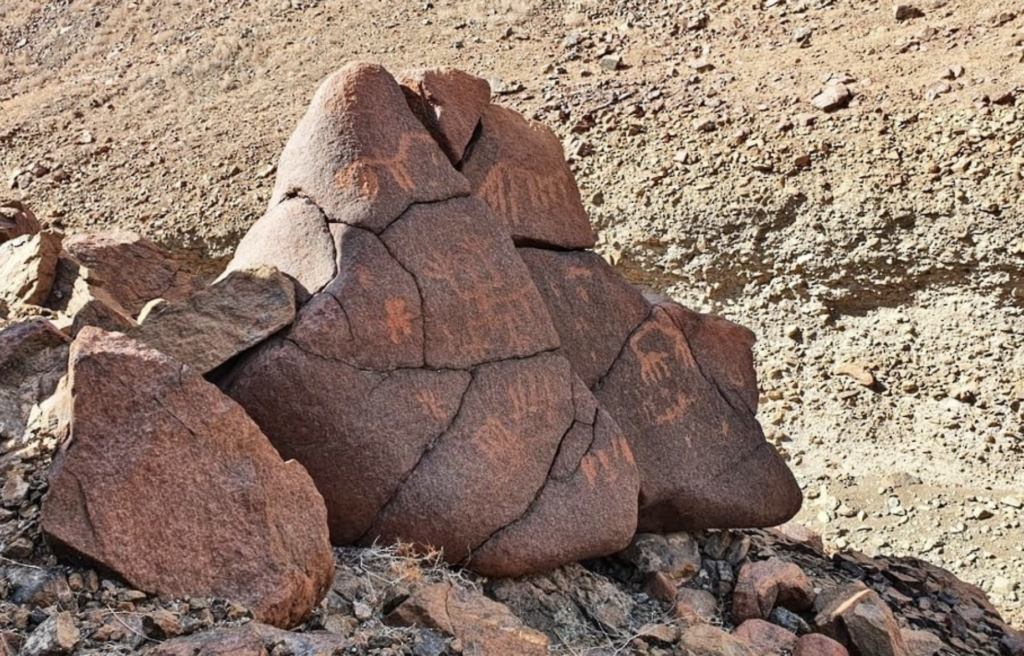
A newly recorded rock art site in northern Oman is drawing attention to one of the Arabian Peninsula’s oldest forms of visual expression: images cut directly into stone.
Oman’s Ministry of Heritage and Tourism has announced the survey and registration of an archaeological site at Hajar Al Sinanat, in the Wilayat of Al Khaboura, North Al Batinah Governorate, where a cluster of rare rock inscriptions and drawings has been documented.
Ancient figures carved into the rock
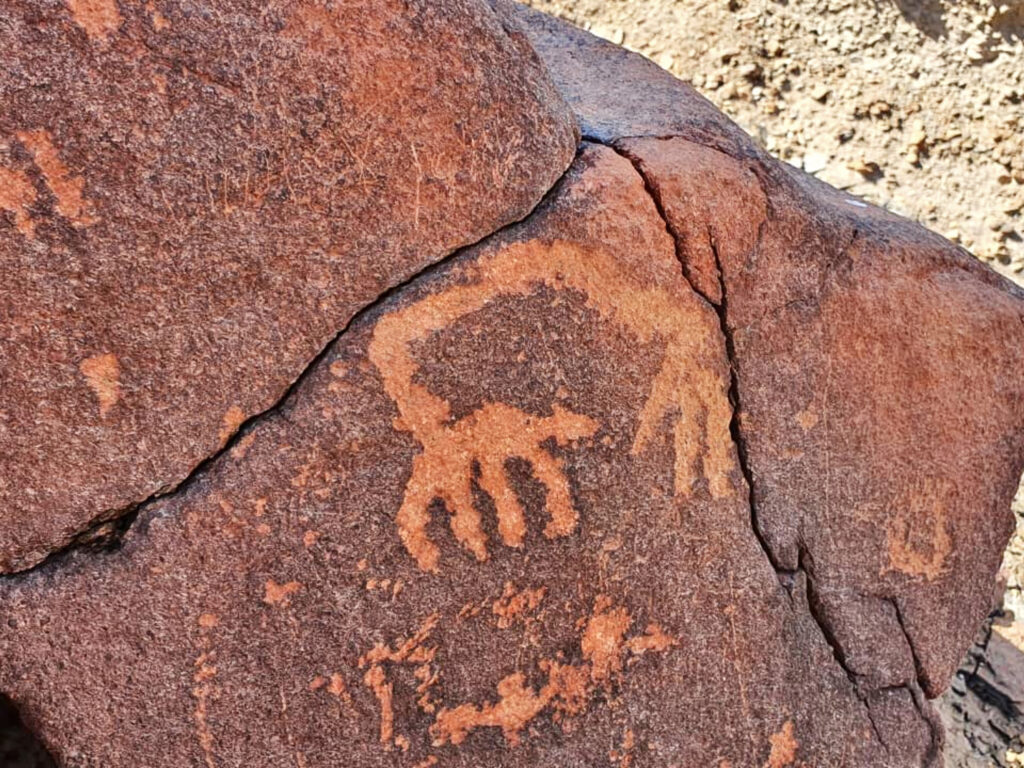
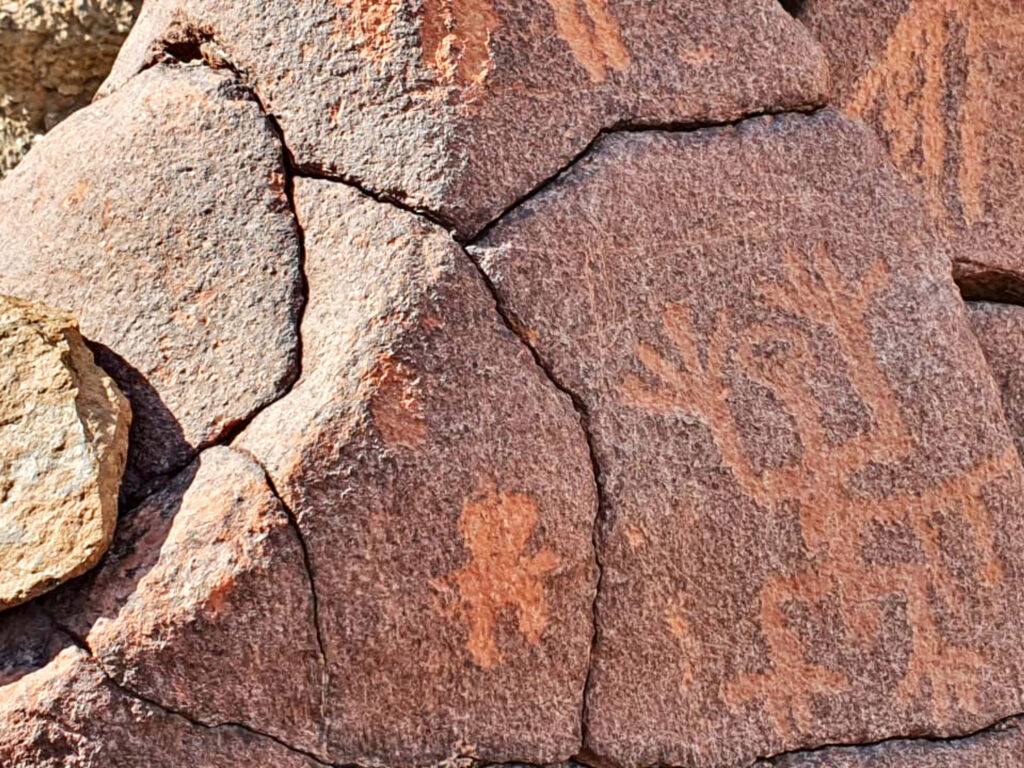
The discovery centers on a main rock surface covered with engravings made by pecking the stone. The motifs include animal figures, human-like symbols, and geometric forms. For archaeologists, such marks are more than decoration. They are evidence of how ancient communities in Oman observed the world around them, organized symbolic ideas, and left visual traces of their relationship with the landscape.
The ministry has not yet announced a precise date for the engravings. Its statement describes them as belonging to ancient historical periods, while further archaeological and technical studies are still under way. That caution matters. Rock art sites can accumulate images over long spans of time, and different motifs on the same stone surface may not all belong to a single moment. Detailed recording, comparison, and conservation work will be needed before the site can be placed more securely within Oman’s archaeological sequence.
A Rock Art Find Between the Hajar Mountains and the Gulf of Oman
Hajar Al Sinanat’s location adds to the importance of the find. Al Khaboura lies within North Al Batinah, a governorate where the Hajar Mountains descend toward the Gulf of Oman and where coastal settlements, wadis, agriculture, and inland routes have shaped human movement for centuries. The wider region is known for forts, markets, and historic towns, including Sohar, whose maritime heritage reflects Oman’s long engagement with sea routes and regional exchange.
Against that background, the newly registered rock art site offers a different kind of evidence. It does not speak through monumental architecture or written chronicles. Instead, it preserves gestures: repeated impacts on stone, carefully placed lines, figures, and signs. Animal forms may point to local ecology, hunting knowledge, or symbolic associations. Human and geometric motifs may reflect identity, ritual, territorial memory, or social communication. At this stage, these meanings remain open to study, but the visual density of the rock suggests that the place held significance for the people who marked it.
A fragile visual record
The ministry said the site forms part of ongoing national efforts to identify, document, and protect archaeological locations across Oman. Conservation will be essential, because rock art is especially vulnerable to erosion, uncontrolled visitation, and accidental damage. Proper documentation can also strengthen the site’s cultural and tourism value without exposing it to unnecessary risk.
For Oman, Hajar Al Sinanat is not merely another entry in an archaeological register. It is a reminder that the country’s heritage is written not only in forts and ports, but also on exposed stone surfaces in the landscape. Each mark adds a fragment to the long human story of North Al Batinah, a region where mountains, sea, and settlement have met for generations.
Oman’s Ministry of Heritage and Tourism
Cover Image Credit: Oman’s Ministry of Heritage and Tourism
