
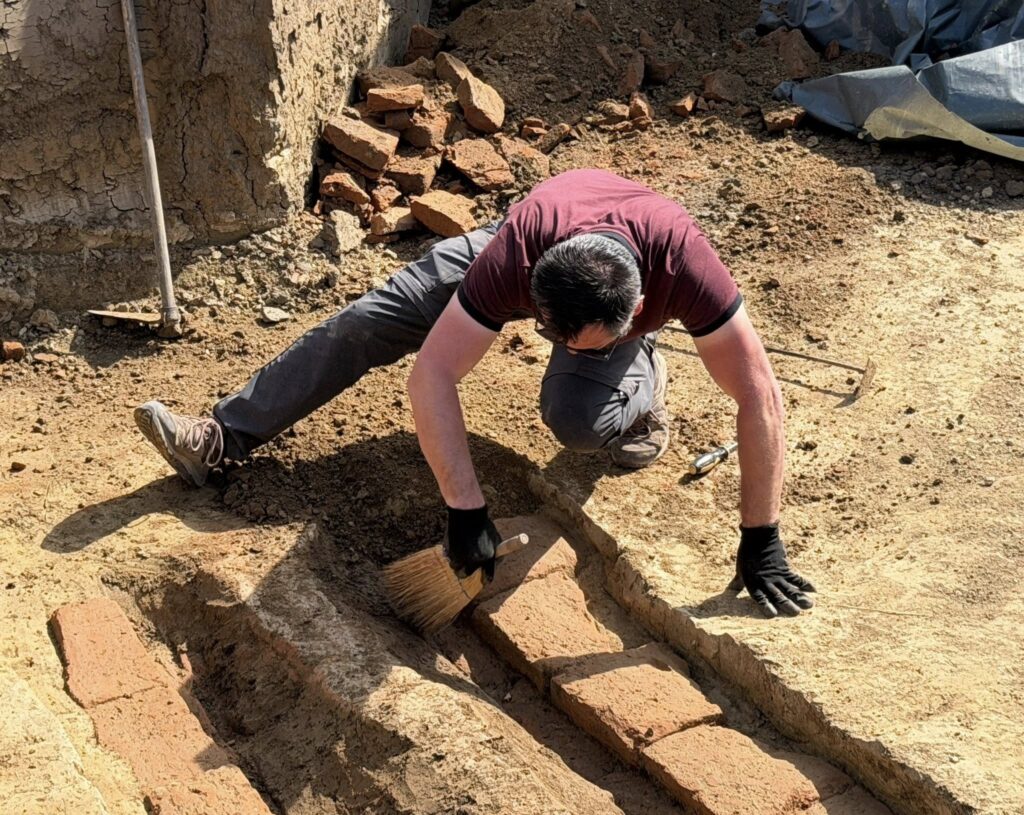
A rare intact Roman grave in Vinkovci has turned a modern market reconstruction project in eastern Croatia into a direct encounter with the ancient city of Cibalae, one of the most important Roman centers in southern Pannonia.
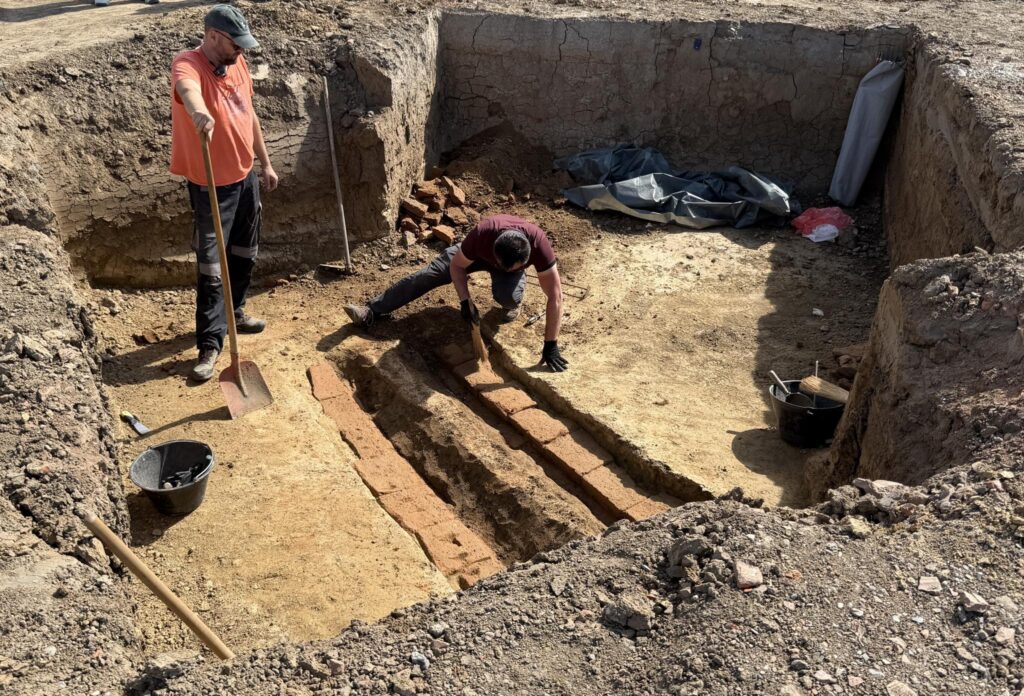
Archaeologists working ahead of the €3.8 million reconstruction of Vinkovci’s open-air city market have identified 44 Roman graves at the site. Local officials said 19 had been investigated by early May, while archaeologists were examining a brick-built structure that appeared to be fully preserved. The city market project will create a covered, modern and environmentally adapted market, but the work has also exposed part of Vinkovci’s long-buried Roman landscape.
An undisturbed Roman grave beneath the market
The most important find so far is a closed, unlooted brick-built Roman grave containing the remains of a male individual. According to Vinkovci City Museum director Hrvoje Vulić, the man was provisionally estimated to have been around 40 to 45 years old at the time of death. The skeleton appears to be in relatively good condition, an important detail because future analysis may reveal information about health, diet, physical stress and burial practice.
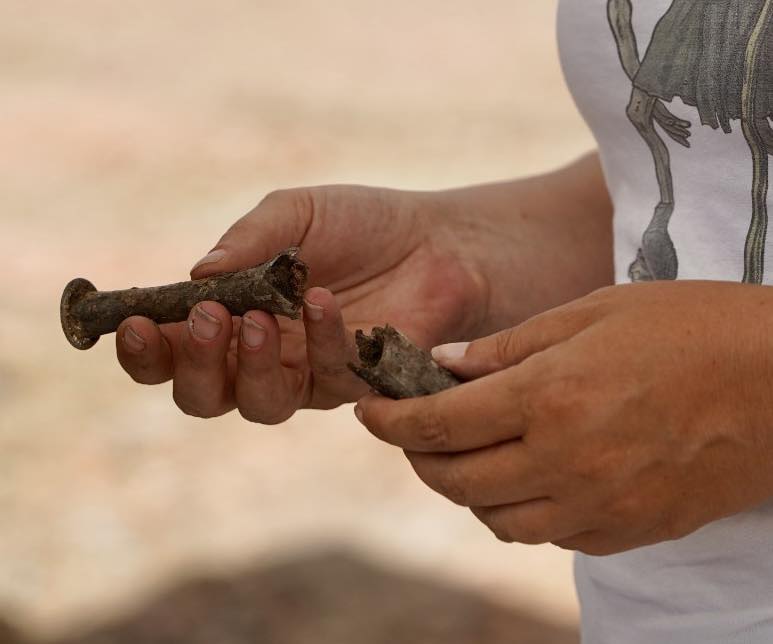
The grave did not contain a rich collection of objects. Archaeologists documented an iron object near the right foot and a bronze fragment near the right shoulder. That modest assemblage may disappoint treasure hunters, but for archaeologists the value lies elsewhere. An intact grave preserves relationships between the body, the architecture and the objects placed inside it. Once disturbed by looters, much of that evidence is lost forever.
Why brick-built Roman graves are so rare intact
Vulić emphasized that closed, unlooted brick-built graves are extremely rare in Vinkovci. Out of more than 200 brick-built Roman graves examined so far, only two have been found unlooted. That makes the newly opened grave especially valuable, even with few grave goods.
Brick-built graves were a durable and visible form of burial architecture in the Roman world. Unlike simple earth burials, they required more labor and material, often using bricks or tiles to create a protective chamber around the deceased. Their solidity, however, could also make them targets. In many Roman necropolises, graves with clear architectural features were reopened in antiquity or later periods, especially when people expected jewelry, coins, vessels or personal ornaments inside.
At the Vinkovci market site, other graves have produced more typical Roman-period finds, including glass vessels described locally as lacrimaria, fibulae or brooches, and other small objects associated with burial customs. Earlier reports from the same market project noted that the first 22 graves were believed to date mainly to the 2nd and 3rd centuries AD.
Cibalae’s northern necropolis comes back into view
The excavation area lies within the northern necropolis of Roman Cibalae. Present-day Vinkovci stands directly above the ancient settlement, meaning urban development often intersects with archaeology. A 2022 report on a Roman sarcophagus found in Vinkovci noted that the northern necropolis stretched from Jurja Dalmatinca Street toward the railway station and that roughly 300 Roman graves had been recorded in the area since the late 19th century.
Cibalae owed much of its importance to geography. Archaeological research describes the Roman town as a settlement in north-eastern Croatia, in the south-eastern part of the province of Pannonia. Its position near the Bosut River and between the Sava, Drava and Danube river systems helped it develop strategic and economic importance.
The Roman town later became Colonia Aurelia Cibalae. It was also connected to major imperial history. Vinkovci is known as the birthplace of the Roman emperors Valentinian I and his younger brother Valens, who ruled the western and eastern parts of the empire respectively in the 4th century.
A modern project in one of Croatia’s deepest archaeological cities
For Vinkovci, the discovery carries symbolic weight. The city promotes itself as one of Europe’s oldest continuously inhabited urban areas, with local officials pointing to a history stretching back more than 8,000 years. The newly exposed graves add another layer to that identity, linking the present-day market square with the Roman population that once lived, worked and buried its dead in Cibalae.
The excavation also shows why rescue archaeology matters in historic cities. Before new infrastructure can rise, archaeologists often have a short window to document what lies beneath. In Vinkovci, that process has revealed not just isolated burials, but a wider funerary zone belonging to a Roman city with military, commercial and imperial significance.
The intact grave may not have yielded spectacular gold or luxury goods. Its importance is quieter, but perhaps more lasting. It preserves a rare sealed moment from Roman Cibalae, offering researchers a chance to study an individual life, a burial tradition and an ancient urban necropolis beneath the streets of modern eastern Croatia.
Grad Vinkovci Službena stranica
Cover Image Credit: Grad Vinkovci/Josip Romić
