
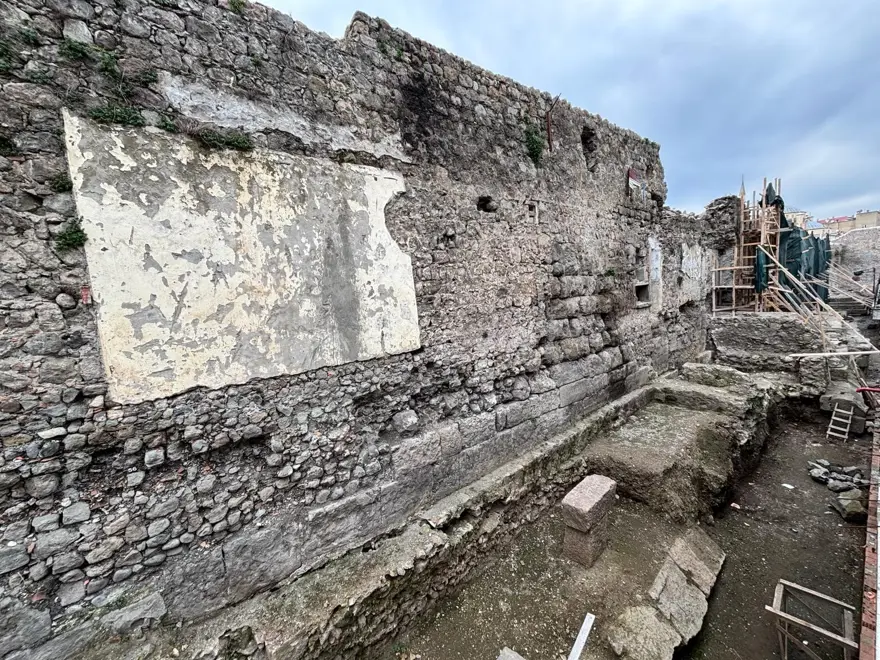
Archaeologists working in the historic city of Trabzon on Türkiye’s Black Sea coast have identified an extraordinary archaeological find: an ancient river port linked to the Kuzgundere Stream, now recognized as the three known river harbor in the world. Buried nearly eight meters beneath the modern city, the structure represents a type of inland harbor system considered exceptionally rare in the ancient world, elevating the discovery to global archaeological significance.
A Rare River Port Linked to Kuzgundere Stream
Archaeologists have identified the structure as a “river port” (stream harbor) connected to the Kuzgundere Stream, a feature extremely rare in the ancient world. Experts state that only two such river ports are known globally, making the Trabzon discovery one of exceptional archaeological value. Unlike traditional sea harbors, river ports allowed goods to be transferred between inland routes and maritime trade lines, highlighting a sophisticated logistics system in ancient Trabzon.
Further studies led by archaeologist Vedat Keleş and conservation specialist Yaşar Selçuk Şener have determined that the structure, connected to the Kuzgundere Stream, is one of only three known river ports in the world.
Based on architectural analysis, the quay dates to between the 1st century BCE and the 1st century CE, corresponding to the Roman period. However, archaeological layers and construction modifications show that the port remained in use for centuries.
Used by Four Civilizations Across Two Millennia
Archaeological evidence indicates that the river port remained in use, with various modifications, from the Roman period through the Byzantine, Ottoman, and early Republican eras.
Each period left distinct architectural and material traces. Roman-era stonework forms the core of the quay wall, while Byzantine ceramics and repairs indicate later use. During the Ottoman period, the structure appears to have been adapted for storage and trade, and even in the early Republican era, parts of the area were reused or built over—eventually disappearing beneath modern urban development.
This long continuity demonstrates that the site was not a short-lived harbor but a vital commercial asset shaped and reshaped by changing empires.
Massive Quay Wall Unearthed
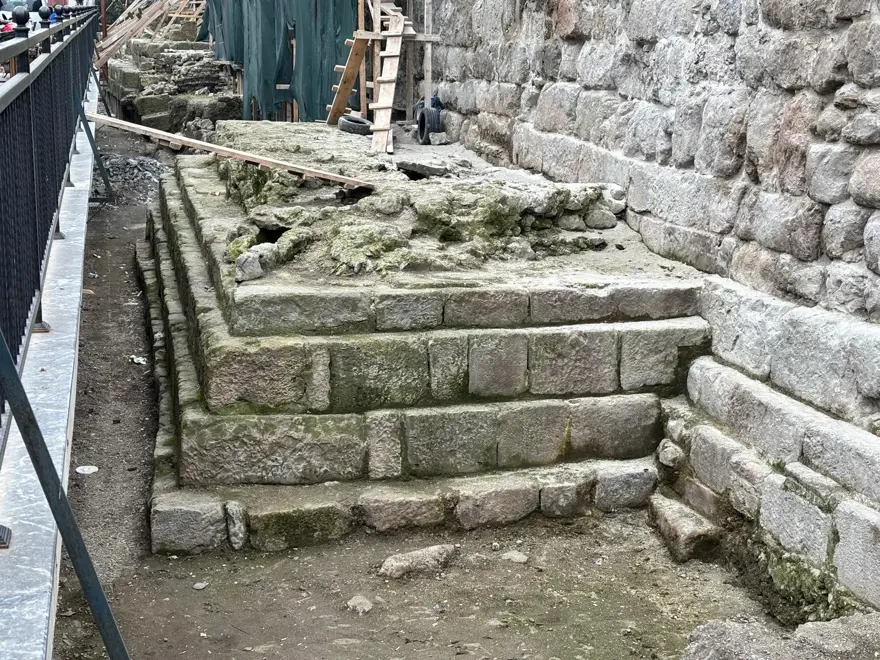
Excavations intensified in 2024 after preliminary digs revealed that the wall extended much deeper than initially expected. Archaeologists uncovered a quay wall measuring approximately 135 meters in length and 2 meters in thickness, buried between 6 and 8 meters underground.
The wall includes traces of two large gates, one arched and one older opening believed to predate it. Researchers suggest these gates were used for the movement of goods between the port and adjacent storage or market areas. Additional perpendicular walls discovered at lower levels are thought to be remnants of warehouses or commercial shops, reinforcing the theory that the port functioned as a bustling trade zone.
Artifacts Prove International Trade Connections
Numerous archaeological finds recovered during the excavation further underline Trabzon’s importance in international commerce. Among the most significant discoveries is a Crimean-made oil lamp, found near the front section of the quay. Experts believe this artifact provides concrete evidence of trade relations between Trabzon and Crimea, a key partner in Black Sea commerce.
In addition, Byzantine-era pottery fragments, ceramic vessels, and everyday trade objects were unearthed. These items collectively prove that Trabzon’s commercial history extends back before the Common Era, far earlier than many written sources suggest.
Careful Restoration with Modern Techniques
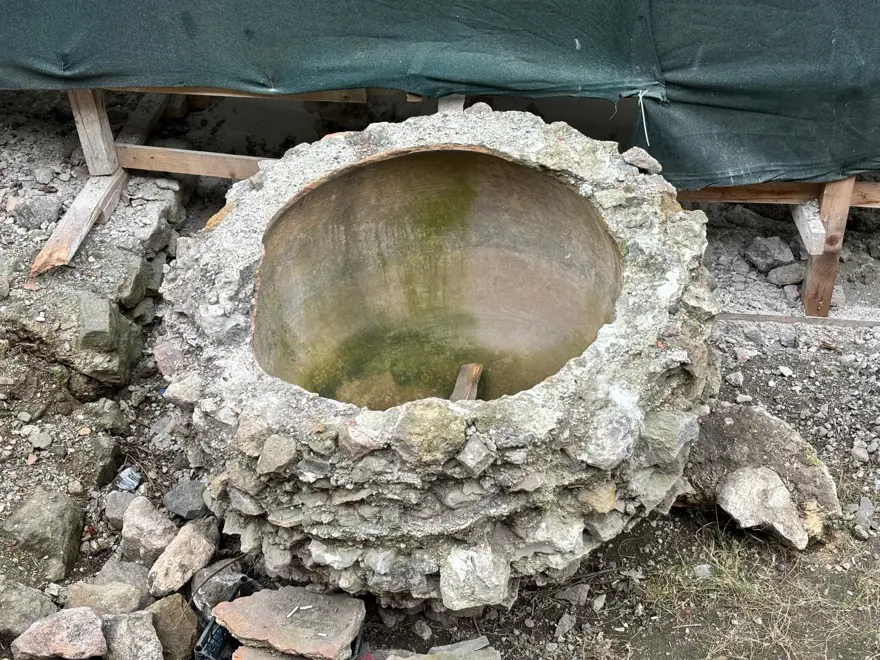
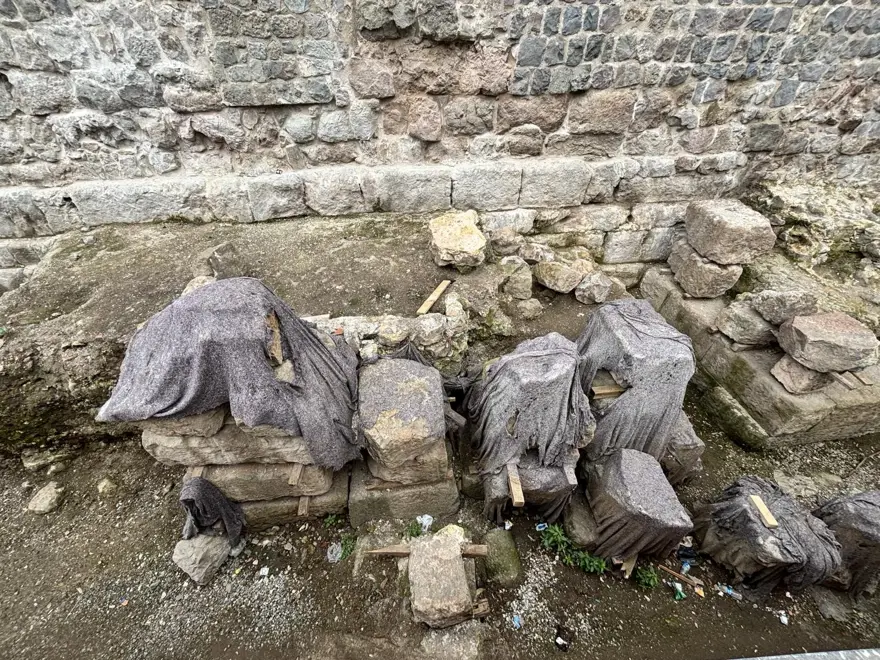
The quay wall had suffered significant damage over centuries, especially due to inappropriate cement-based repairs carried out in modern times. Restoration teams are now removing these materials and applying historically compatible techniques, including lime-based mortar and hydraulic lime injection to stabilize internal voids.
Once structural reinforcement is completed, the wall undergoes joint repairs and is sealed with a protective capping system to prevent water infiltration and future deterioration. Experts emphasize that these measures are essential to preserve the structure for future generations without compromising its original fabric.
Trabzon’s Strategic Role Through History
Founded as Trapezus in antiquity, Trabzon has long served as a gateway between Anatolia, the Caucasus, Persia, and the Black Sea. During the Roman and Byzantine eras, it was a key military and commercial outpost. Later, under the Ottomans, the city remained an important regional port linking inland Anatolia to international markets.
The discovery of an inland river port confirms that Trabzon’s economy relied not only on open-sea trade but also on complex internal harbor systems, allowing goods to flow efficiently between land and sea routes.
A Discovery That Redefines Black Sea Trade History
Archaeologists believe the Pazarkapı river port will significantly contribute to global understanding of ancient logistics and urban planning. As excavations continue, researchers hope to uncover more details about how the port functioned across different eras.
The find stands as one of the most important archaeological discoveries in the Black Sea region in recent years—proving that beneath modern Trabzon lies a hidden maritime heritage shaped by four civilizations and two thousand years of uninterrupted trade.
Cover Image Credit: İHA
