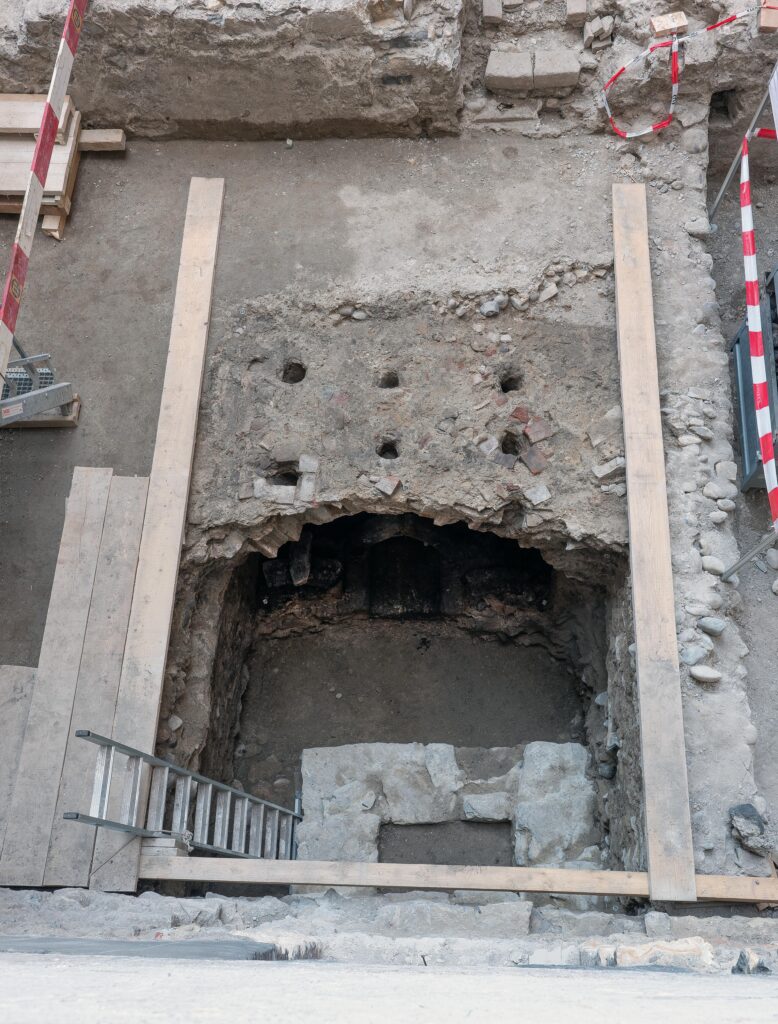
A medieval heating system hidden beneath a former convent in Basel, Switzerland, has emerged from centuries of burial with much of its original structure intact. The remarkable discovery includes a stone-filled heating chamber, two Gothic arches, and eight openings that once carried warm air into the nuns’ dining hall.
Archaeologists uncovered the installation during renovations at Petersgraben 52, the site of the former Gnadental Convent. According to the Archaeological Service of Basel-Stadt, the 13th- to 14th-century structure is unique in Switzerland because of its exceptional preservation and ranks among the most significant surviving examples of its kind in Europe.
Eight Openings, Two Gothic Arches, and an Underground Furnace
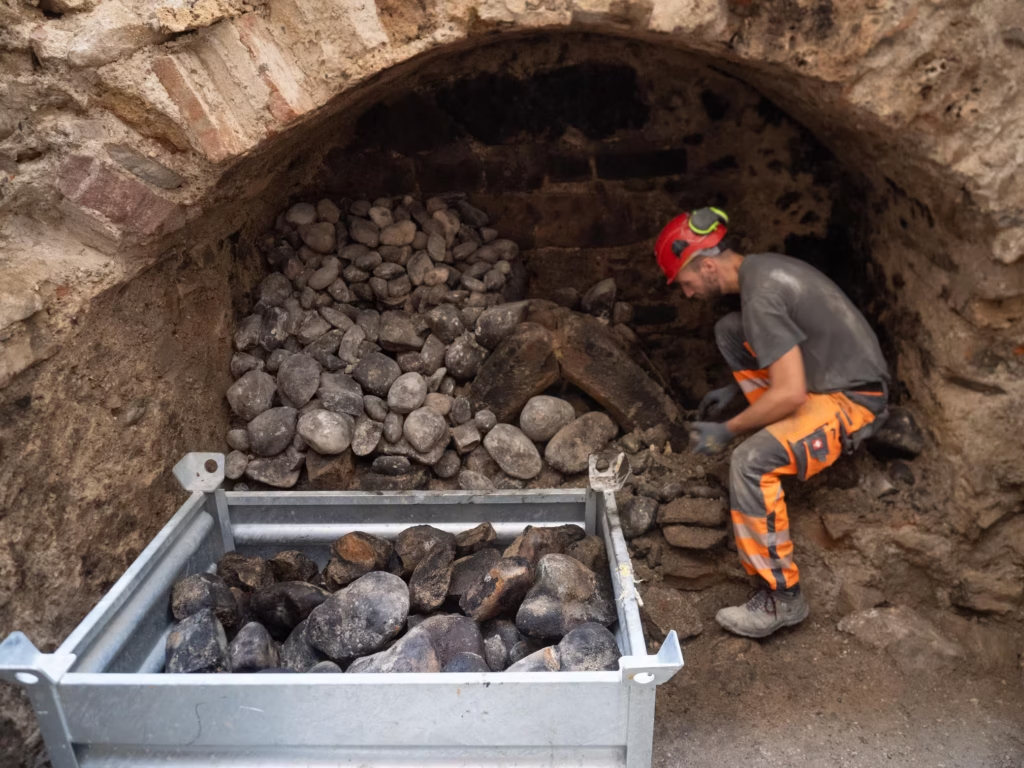
The discovery offers an unusually complete picture of how a medieval religious community heated one of its most important shared spaces. Beneath the convent’s mortar floor, archaeologists found a chamber filled with fieldstones that acted as a thermal reservoir, absorbing heat from a fire and releasing it into the room above.
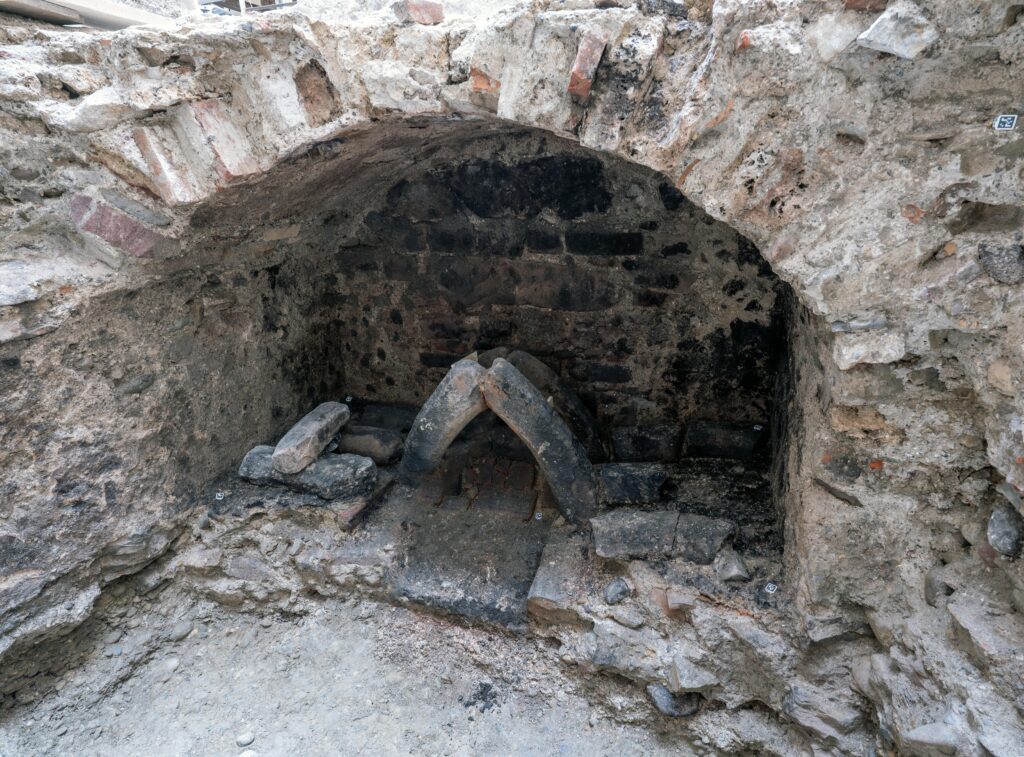
The system relied on a firebox channel constructed from dressed stone blocks and bricks. Once researchers removed the stone filling, they uncovered two pointed arches still standing in their original positions. These architectural elements, rarely preserved together with an entire heating installation, provide valuable evidence of its original construction.
The process was more sophisticated than simply lighting a fire beneath the floor. Flames and hot combustion gases heated the surrounding stones, while sloping stones directed warm air into the chamber. After the smoke had cleared, the occupants could open eight closable vents in the vaulted ceiling, allowing the accumulated heat to rise into the dining hall.
This arrangement enabled the community to warm an enclosed room without maintaining an open fire inside it. The discovery preserves not only the heating chamber but also the connection between the underground installation and the living space it served.
One of the Few Heated Rooms in a Medieval Convent
The heating system occupied the eastern wing of Gnadental Convent, directly beneath what archaeologists believe was its refectory, the communal dining hall. The room may have been one of only a handful of heated spaces in the complex, or possibly the only one.
That distinction helps explain the installation’s importance. Medieval convents did not necessarily heat every room, making access to a warm communal space particularly valuable during colder months. The Basel discovery reveals how the community invested in a substantial underground structure to provide that comfort.
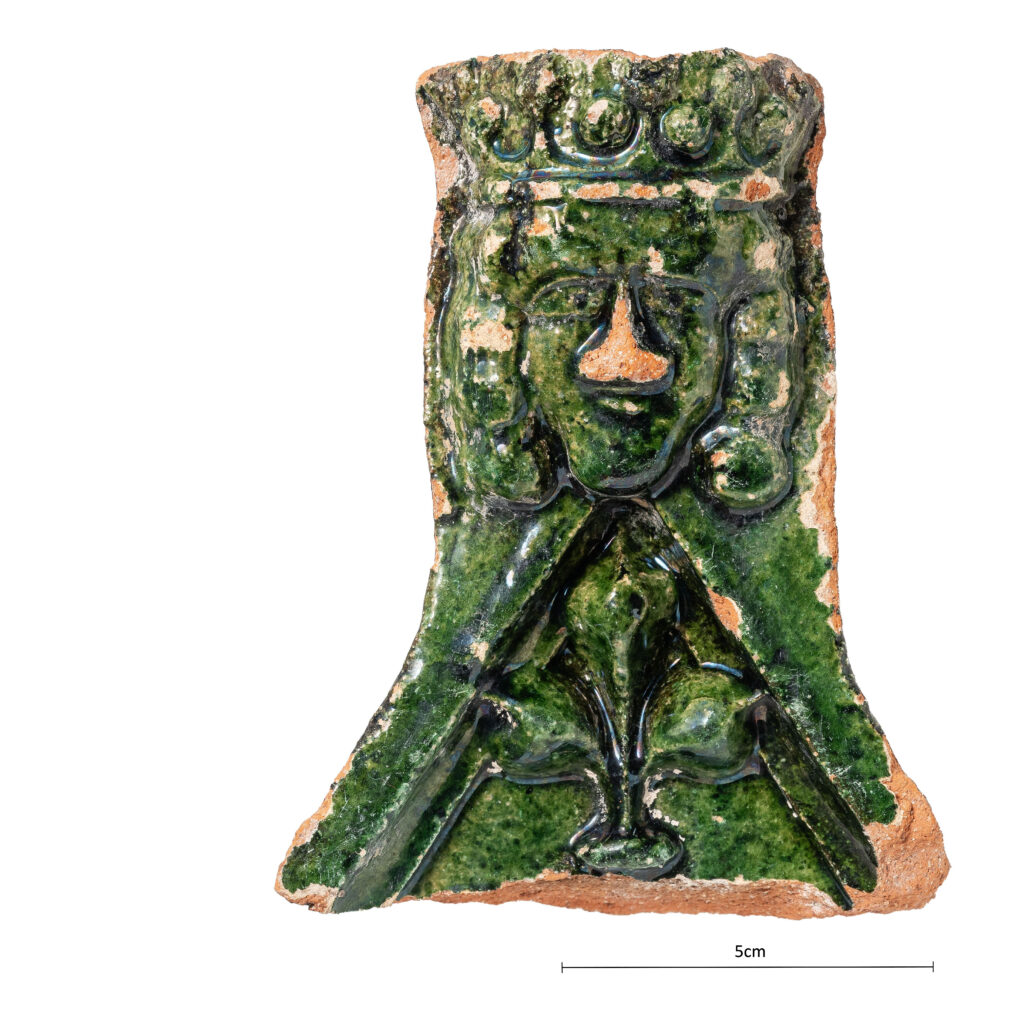
Another object recovered from the convent offers a different glimpse of medieval heating technology. Archaeologists documented a green-glazed stove tile, probably a decorative crowning element from a stove dating to the 14th or 15th century.
Such tiles formed the ornamental upper sections of tiled stoves, combining practical heating equipment with decorative craftsmanship. Although the tile does not establish a direct connection with the newly discovered underground installation, it adds another dimension to the history of heating at Gnadental.
The precise construction date of the hot-air system remains uncertain. Archaeologists currently place it between the 13th and 14th centuries based on architectural and historical evidence rather than a confirmed construction date.
A Lost Monastery Beneath a Future University Library
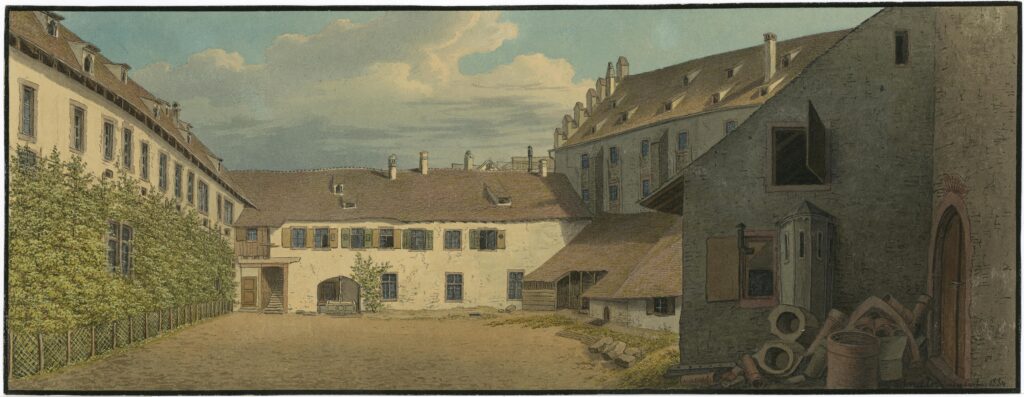
Gnadental’s history began around 1231, when the Franciscans established a monastery just outside Basel’s medieval city walls. They moved to the newly founded Barfüsser Convent approximately two decades later, leaving the buildings to successive communities of Cistercian nuns and Poor Clares.
In 1279, lay sisters from Gnadenthal near Niederwil arrived and gave the monastery the name by which it became known. The community remained there until the Reformation brought its religious life to an end.
The buildings subsequently underwent several transformations. In 1573, builders reused substantial portions of the former convent, particularly material from its church, to establish a granary. The granary survived until the late 19th century, when workers demolished it to make way for a vocational school. By then, the last visible traces of the medieval monastery had disappeared from the site.
The latest archaeological investigation has brought those remains back into view. Alongside the heating system, researchers uncovered medieval walls and mortar floors, allowing them to reconstruct part of the lost convent’s layout.
The discovery also comes at a turning point for the building. The University of Basel plans to establish a new university library location at the former vocational school, alongside facilities for its Department of Social Sciences and the dean’s office of the Faculty of Humanities and Social Sciences. The archaeological site lies in the basement, within an area intended to become an open-access library space.
Preserving a Rare Piece of Medieval Technology
Because comparable stone-chamber heating systems are extremely uncommon in Switzerland, the Basel team has supplemented its conventional archaeological records with a three-dimensional model of the structure.
The digital documentation captures the surviving arrangement of the installation, including features that became visible only after excavators removed the heat-storage stones. It will provide researchers with a detailed record of the construction and its relationship to the surrounding medieval remains.
Preservation plans are now under discussion. The Archaeological Service is working with Basel-Stadt’s property authorities and renovation project managers to identify a long-term solution and assess how the discovery will affect the ongoing building work.
For centuries, the machinery that once warmed Gnadental’s dining hall remained concealed beneath later construction. Its rediscovery now provides a rare opportunity to study medieval heating technology through a nearly complete original installation rather than isolated architectural fragments.