
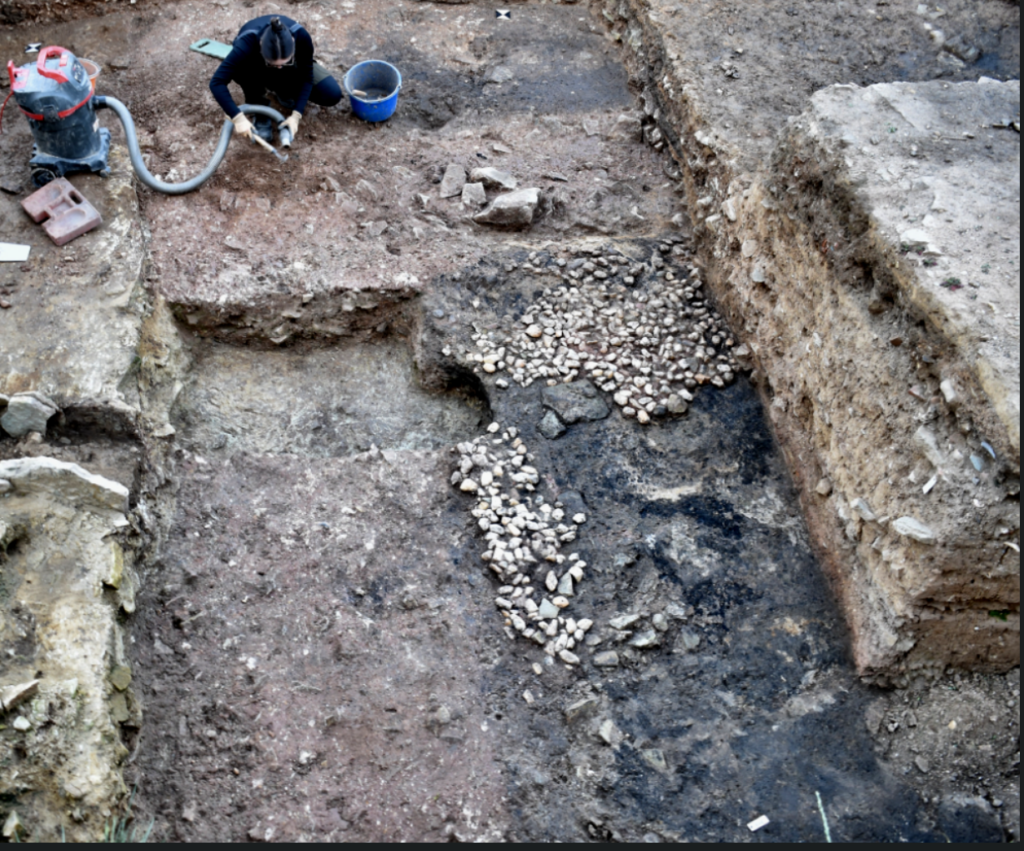
Archaeologists excavating a medieval monastery in Germany have uncovered a rare 14th-century water system that is challenging a long-held assumption about the site’s final centuries. Together with heated rooms and high-quality architecture, the new infrastructure points to a monastery that still had the resources to invest in comfort and sophisticated engineering deep into the late Middle Ages.
The discovery comes from the latest excavations on Posa Hill near Zeitz in Saxony-Anhalt, where archaeologists have been investigating an extensive complex that developed from an early medieval fortified site into an important episcopal center and later a Benedictine monastery. During the 2026 campaign, researchers expanded their work south of the monastery’s central enclosure and found that the complex extended considerably farther than previously believed.
Among the most striking discoveries is a clay water pipeline dating to the 14th century. Archaeologists have followed approximately five meters of the system, which carried water through carefully made ceramic pipes measuring around 12 centimeters in diameter and about 70 centimeters long. According to the State Office for Heritage Management and Archaeology Saxony-Anhalt, water systems of this type and date are exceptionally rare.
A rare water system beneath the monastery
The ceramic pipes were produced much like contemporary pottery. Craftspeople shaped them on a potter’s wheel, fired them, and gave the ends standardized forms that allowed one section to fit securely into the next. They then sealed the joints with clay, creating a durable network capable of carrying water through the monastery complex.
This was not Posa’s first water supply. Archaeologists have already documented numerous wooden water pipes across the site, while written records show that a system built in 1168 carried water to the monastery from more than four kilometers away. The newly discovered ceramic pipeline represents another stage in the development of that infrastructure centuries later.
Its rarity makes the find particularly significant. Researchers note that similarly early ceramic water systems are known only from a small number of monasteries and castles in southern Germany. At Posa, the system offers physical evidence that the community continued to spend considerable resources on technically demanding infrastructure during the 14th century.
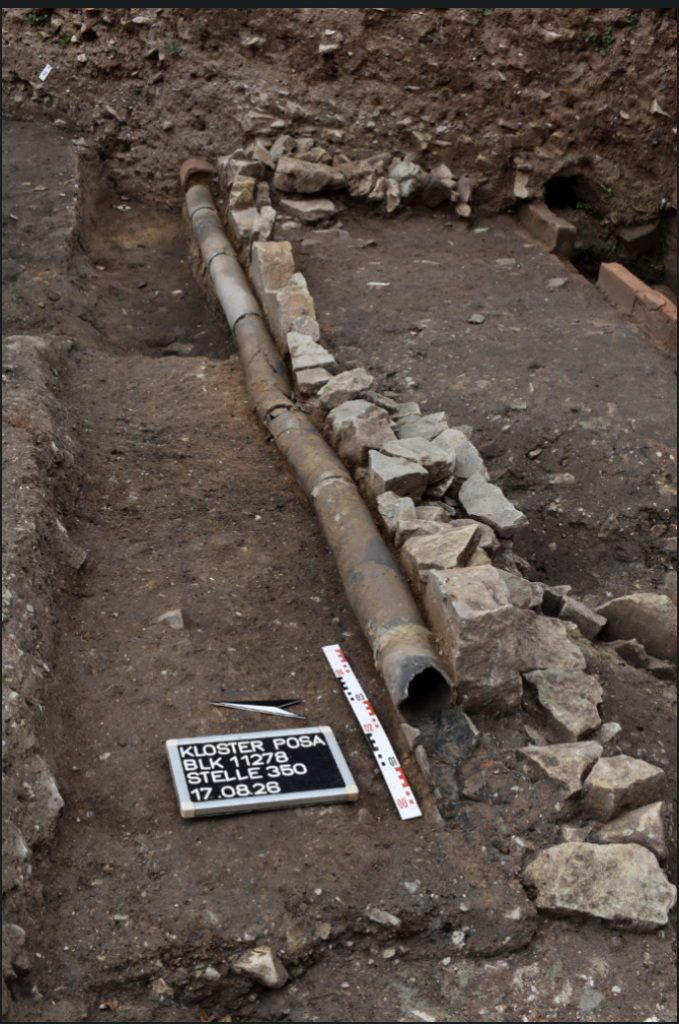
The course of the 14th-century clay water pipeline after the overlying roof tiles, which protected the pipes from damage, were removed. Credit: Landesamt für Denkmalpflege und Archäologie Sachsen-Anhalt / C. Anders.
The monastery was larger than archaeologists expected
The water system emerged as archaeologists investigated an area south of the monastery’s main enclosure. Until now, the local topography had encouraged researchers to believe that a courtyard paved during the 16th century marked the southern edge of the monastic complex. This year’s excavations changed that picture.
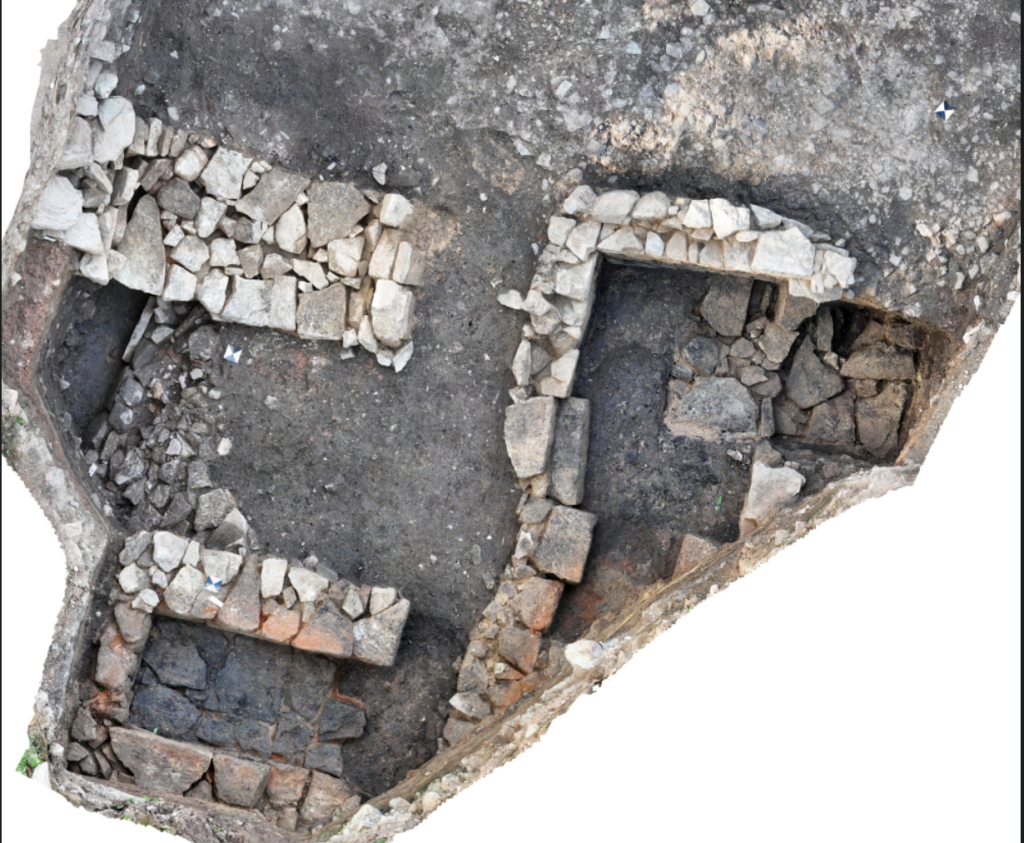
The team discovered a second monastic courtyard bordered on almost every side by additional buildings. That realization significantly expands the known footprint of Posa Monastery and shows that an area once considered peripheral was actually integrated into the functioning complex.
One small Romanesque-period building remains difficult to interpret, but the structures surrounding the southern side of the courtyard were clearly not minor service buildings. Archaeologists found evidence for a high-quality red screed floor as well as the remains of two warm-air heating systems dating to the 14th century. Together, these features suggest comfortable and carefully equipped interior spaces.
Heated rooms change the picture
Warm-air heating required more than simply placing a hearth inside a room. Medieval systems of this kind used heated air circulating through purpose-built spaces or channels to warm parts of a building, making them relatively sophisticated features within a monastic complex.
At Posa, two such heating installations appear alongside the ceramic water supply and high-quality flooring in the same broader southern area. The combination matters because it allows archaeologists to look beyond individual artifacts and reconstruct a wider pattern of investment.
That pattern does not fit comfortably with the idea of a monastery slowly losing its economic strength during the late Middle Ages. The Saxony-Anhalt archaeological authority argues that the newly exposed infrastructure instead reflects a high level of development and a healthy economic position during this period. The water pipeline and heating installations, in particular, provide material evidence that tells a different story from the earlier narrative of gradual decline.
From fortress to bishop’s palace and monastery
The new discoveries form only the latest chapter in a much longer history on Posa Hill. Archaeological work has shown that a fortified complex covering more than eight hectares stood here from the 9th century. Its defenses included a central stronghold and an outer enclosure positioned above the floodplain of the White Elster River.
During the 10th century, the site became the seat of the Bishopric of Zeitz, founded in 968 under Emperor Otto I. Excavations have revealed substantial remains of the bishop’s palace, a monumental building at least 18 meters wide and excavated so far over a length of roughly 30 meters. Archaeologists have even found evidence for glass windows, an expensive architectural feature that reflects the ambitions invested in the episcopal center.
After the bishopric moved from Zeitz to Naumburg in 1028, the complex continued to evolve. Bishop Dietrich I of Naumburg founded the Benedictine monastery at Posa in 1114 and brought monks from Hirsau in the northern Black Forest. Centuries of construction gradually transformed the earlier political center into a large monastic landscape.
Excavations have continued on Posa Hill since 2017, making the monastery one of the most extensively investigated monastic sites in central Germany. The 2026 campaign shows why that work is still changing the site’s history: a few meters of clay pipe, two heating systems, and an unexpected courtyard are now revealing that late medieval Posa may have been far more active and prosperous than archaeologists once thought.
