
Around 10,500 years ago, people living beside a lake in what is now northern Germany cut trees, split timber and shaped wooden posts. They were hunter-gatherers, long before farming villages and their substantial houses transformed the landscapes of Central Europe.
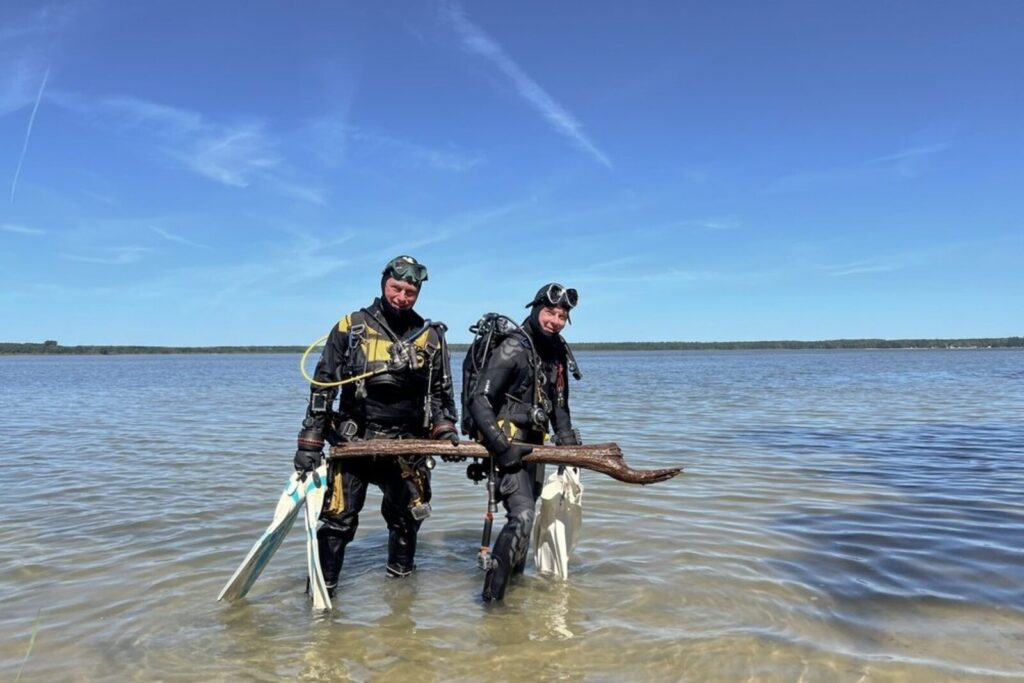
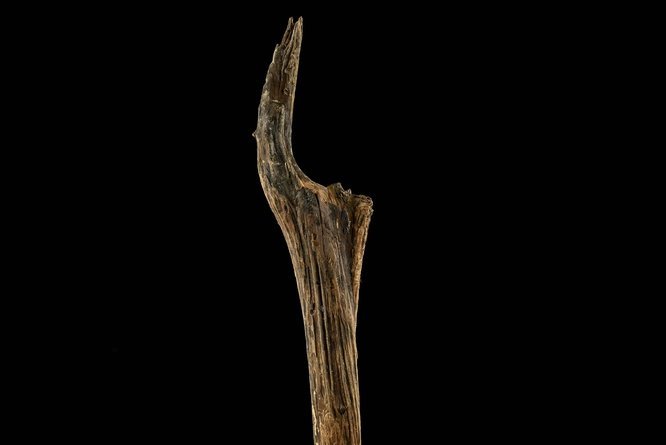
The wood they worked has now emerged from beneath Lake Arendsee in Saxony-Anhalt. Preserved under sediment at a depth of about 20 meters, the remains include a 1.6-meter-long post bearing traces of felling and working, along with split planks measuring up to 1.3 meters.
What those people were building remains the most intriguing question. Archaeologists are investigating whether the timbers belonged to dwellings or to another type of wooden structure that has not previously been recognized from the Mesolithic period in the region.
A Lost Shoreline 20 Metres Below the Water
Archaeologists from the State Office for Heritage Management and Archaeology Saxony-Anhalt have investigated Arendsee for several years. Previous underwater work revealed Neolithic fish fences as well as medieval boats, but the latest discoveries reach much further back.
The new site dates to roughly 10,500 years ago, when communities in Central Europe still relied on hunting, gathering and fishing rather than agriculture. People already occupied the shores of Arendsee during this period, but evidence for how they organized and built their living spaces has remained extremely scarce.
The landscape they knew looked very different from the lake today. Geological processes above an underground salt dome have gradually caused the bottom of Arendsee to sink. Instead of disappearing as sediment slowly filled the lake, the ancient shoreline descended with it.
That unusual process left parts of the Mesolithic landscape protected beneath only a thin layer of sediment. Today, the traces of human activity that once lay close to the water’s edge survive approximately 20 meters below the modern surface.
Wood Shaped by Mesolithic Hands
Stone tools and animal bones commonly survive at Mesolithic sites, but wooden objects rarely do. That makes the Arendsee material particularly important.
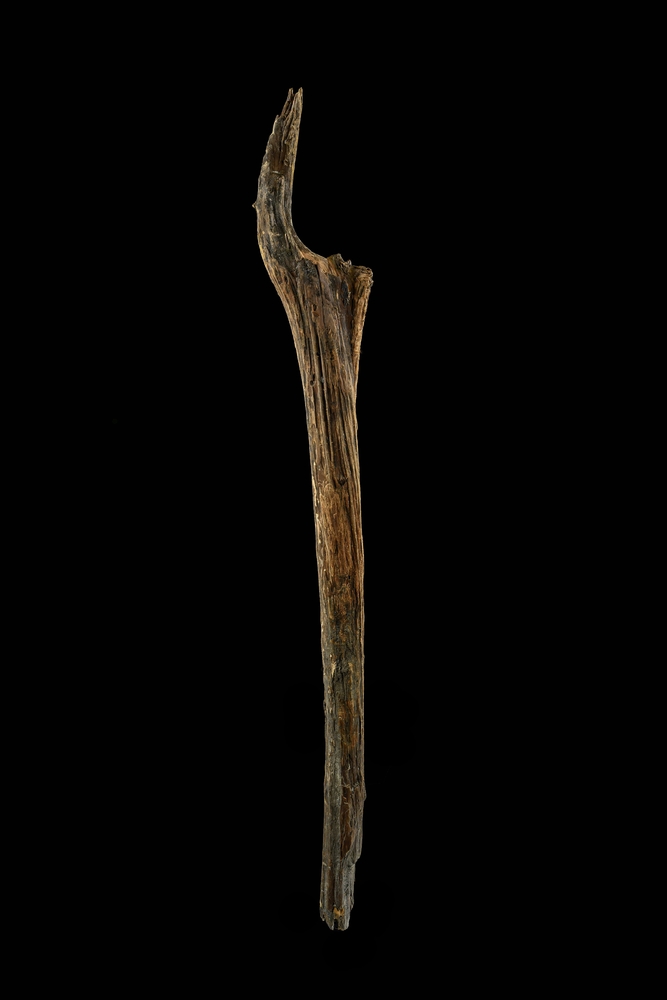
Among the finds is a wooden post about 1.6 meters long with clear felling and working marks. Researchers also recovered split boards measuring as much as 1.3 meters. Their form and treatment suggest that people did more than simply collect branches or use fallen wood.
They deliberately cut and shaped timber.
For Harald Meller, state archaeologist of Saxony-Anhalt, the preservation offers an unusually direct glimpse of a material that normally disappears from the archaeological record. In Central Germany, evidence for Mesolithic buildings has previously been recognized mainly through discolorations in the soil rather than surviving structural wood.
The Arendsee timbers therefore allow archaeologists to examine not only where hunter-gatherers lived, but potentially how they constructed the places in which they spent their time.
Were These Timbers Part of a Home?
That question remains unresolved.
Researchers consider it possible that the large post once served as a supporting element in a structure. The split boards strengthen the possibility that the site contained deliberately constructed wooden architecture, but archaeologists have not yet identified enough of the original arrangement to call it a house.
It could represent the remains of huts. It might instead belong to another kind of structure whose purpose is currently unknown.
That distinction matters because the site predates the arrival of the first farming communities and their longhouses in Central Europe by roughly 3,000 years. Farmers who reached the region around 5500 BCE have traditionally played a central role in discussions of permanent architecture and the transformation of natural landscapes into intensively shaped cultural environments.
If the Arendsee finds eventually demonstrate that hunter-gatherers built substantial structures or repeatedly modified the same living spaces, that picture would become more complex.
Project leader Marcel Weiß noted that evidence for permanent structures or intensively shaped living environments at such an early date could change how archaeologists understand both hunter-gatherer societies and the deeper origins of Europe’s cultural landscapes.
Reconstructing a Place Where People Once Lived
The researchers are now trying to establish the extent of the submerged site rather than drawing conclusions from individual pieces of wood.
After the first discoveries in spring 2026, archaeologists recovered additional samples and finds to determine the site’s age and boundaries. A second campaign brought in researchers from the Fraunhofer Institute in Ilmenau, who used a remotely operated underwater vehicle equipped with high-resolution sonar.
The scans are recording the relief of the former shoreline and helping researchers locate areas that deserve closer archaeological investigation. Mapping each find precisely may eventually reveal whether the timbers formed recognizable structural patterns.
That work could answer the question now hanging over Arendsee: whether people who lived beside this lake more than ten millennia ago were constructing homes, specialized installations or something archaeologists have yet to recognize.
Whatever the final interpretation, the preserved wood already offers something rarely available from the Mesolithic — physical traces of people cutting, shaping and assembling one of humanity’s most basic building materials thousands of years before farming transformed Central Europe.
Landesamt für Denkmalpflege und Archäologie Sachsen-Anhalt (LDA)
