National Trust rangers uncovered remarkably well-preserved marine fossils embedded in a dry stone wall in central England, offering rare insight into life in prehistoric seas 340 million years ago.
An extraordinary archaeological discovery has been made in England’s Peak District after National Trust rangers unexpectedly uncovered 340-million-year-old fossils embedded in a dry stone wall in Staffordshire’s White Peak region. The remarkably preserved specimens are offering scientists and the public a rare glimpse into life in Britain during the Carboniferous period, when the area lay beneath a warm, tropical sea.
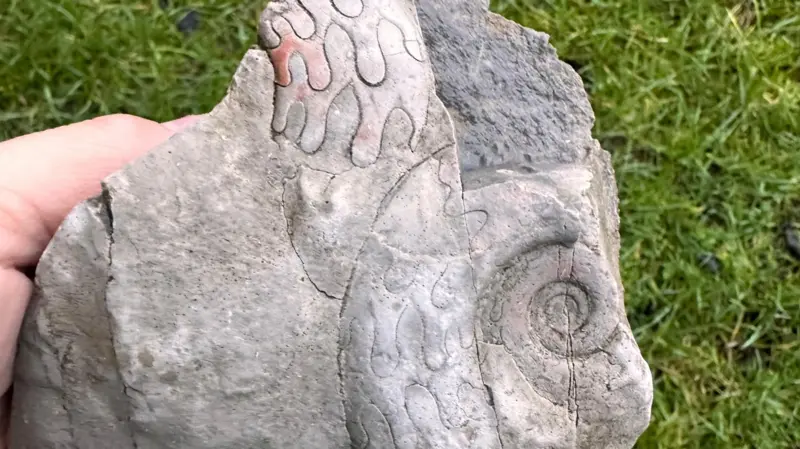
The fossils belong to two marine creatures known as goniatites, extinct relatives of today’s squid and octopus. What makes the find especially significant is the exceptional level of detail visible on the fossilized shells, something National Trust staff say is unlike anything they have previously encountered in the area.
Ranger David Ward, who was present when the fossils were discovered, said he was initially stunned by their appearance. Speaking to the BBC, Ward recalled thinking the delicate patterns had been drawn onto the rock by hand. The fine, wavy markings on the limestone stood out immediately, highlighting how well preserved the remains were compared with typical fossil fragments found in the region.
Limestone across the Peak District is known to contain fossils, but they are usually broken or incomplete. According to Ward, finding intact specimens with such clarity is extremely rare. Because of this, the National Trust has decided not to reveal the exact location of the wall, fearing that public attention could lead to damage or unauthorized fossil hunting.
📣 Our WhatsApp channel is now LIVE! Stay up-to-date with the latest news and updates, just click here to follow us on WhatsApp and never miss a thing!!
The discovery has drawn interest from academic experts as well. Dr Susannah Lydon, a palaeontologist from the University of Nottingham, explained to the BBC that goniatites were shelled cephalopods that thrived around 340 million years ago. At that time, much of what is now central England was submerged beneath shallow, tropical seas teeming with marine life.
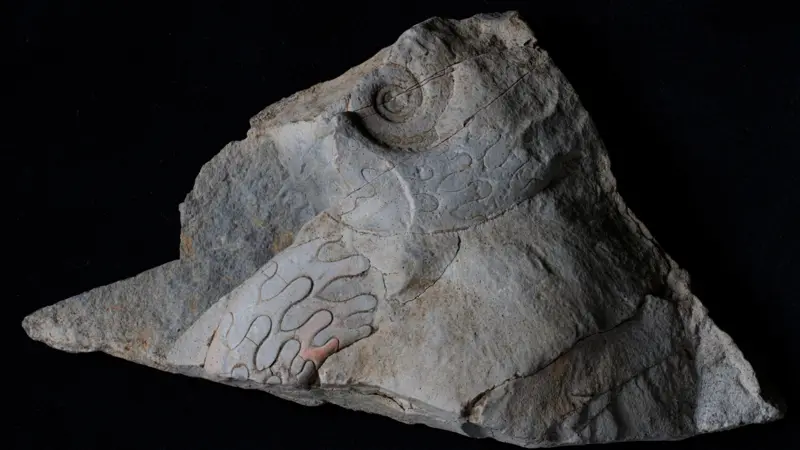
When goniatites died, their shells sank to the seabed and were gradually buried by sediment. Over millions of years, pressure and mineralization turned those shells into stone, preserving intricate surface details. Dr Lydon noted that goniatites are often compared to ammonites, another extinct marine group that appeared later and is famously found along the UK’s Jurassic Coast, including Whitby and Lyme Regis.
Beyond their scientific value, the fossils also carry cultural and educational importance. Dr Lydon emphasized that local discoveries help people connect with the deep history of their surroundings. Finding fossils beneath one’s feet, she explained, can change how communities understand their place on the planet and humanity’s long relationship with Earth’s changing environments.
Additional research suggests that goniatites are particularly useful to scientists because they evolved rapidly and spread widely across ancient oceans. This makes them valuable index fossils, helping geologists date the rocks in which they are found and reconstruct ancient climates and sea levels. The White Peak fossils therefore contribute not only to local heritage but also to broader studies of prehistoric ecosystems.
The National Trust has confirmed that the specimens will be carefully preserved and retained as part of its educational resources. Ward told the BBC that the fossils will be used during guided talks and outreach events to inspire curiosity about geology and archaeology, while also reinforcing the importance of protecting historic landscapes.
As climate change and erosion increasingly threaten natural heritage sites, discoveries like this highlight the hidden stories still locked within Britain’s landscapes. The unexpected unearthing of these ancient sea creatures from a simple stone wall serves as a powerful reminder that traces of Earth’s distant past can surface in the most ordinary places, offering extraordinary insights into life hundreds of millions of years ago.
Cover Image Credit: National Trust