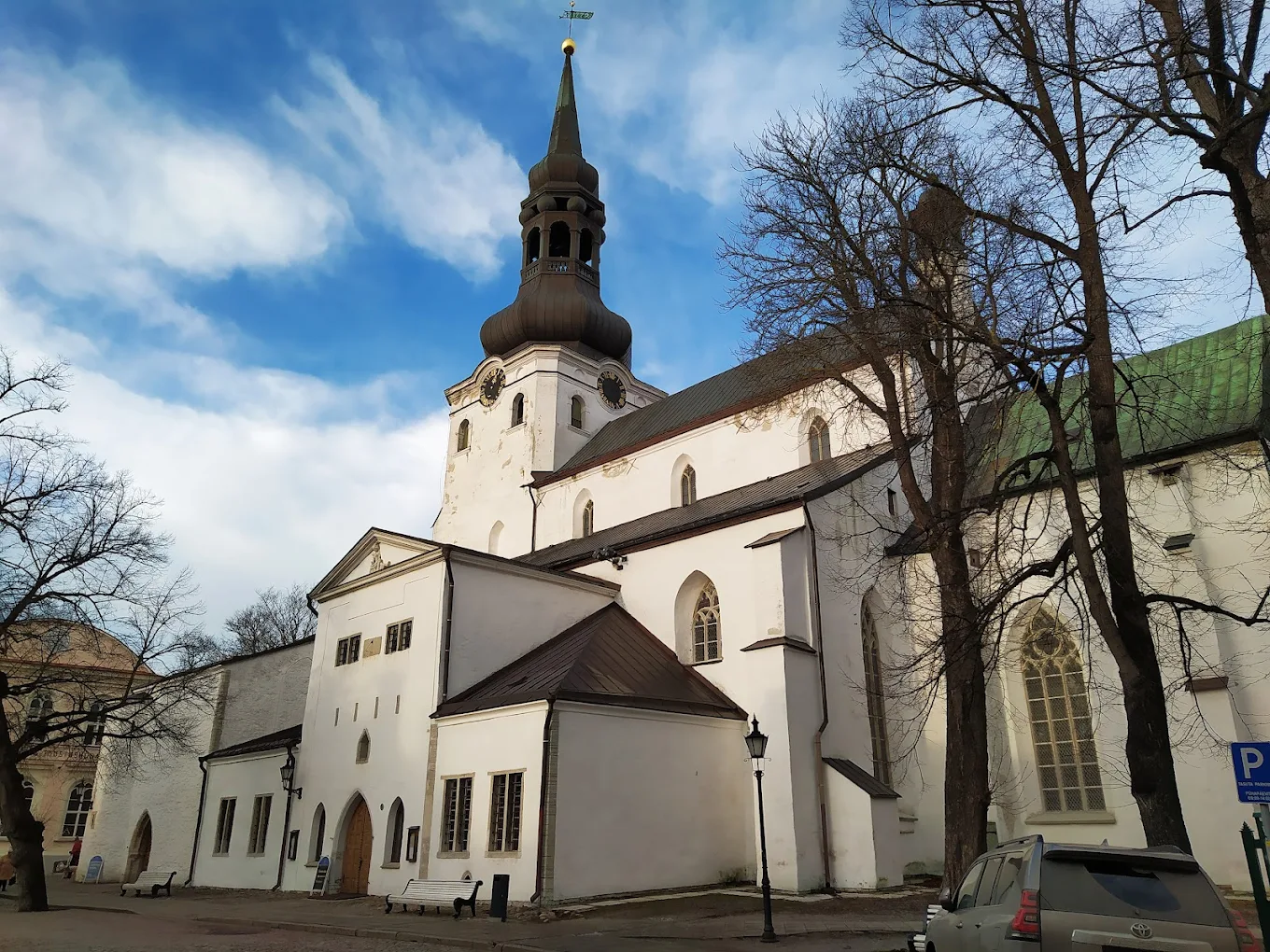
Researchers in Estonia have identified what is now believed to be the oldest surviving wooden door in the country, and one of the oldest in Northern Europe. Hidden in plain sight inside St. Mary’s Cathedral (Toomkirik) in Tallinn’s Old Town, the medieval door dates back roughly 650 years, offering a rare and tangible link to the region’s late medieval past.
The discovery was confirmed through a detailed scientific study that used dendrochronology, or tree-ring dating, to determine the age of the wood. According to the research team, the door was most likely manufactured between 1378 and 1394, with the strongest evidence pointing to the year 1382. This makes it approximately 16 years older than the door in Tallinn’s Bremen Tower, which previously held the title of Estonia’s oldest known door.
A Door Older Than the City Walls’ Record Holder
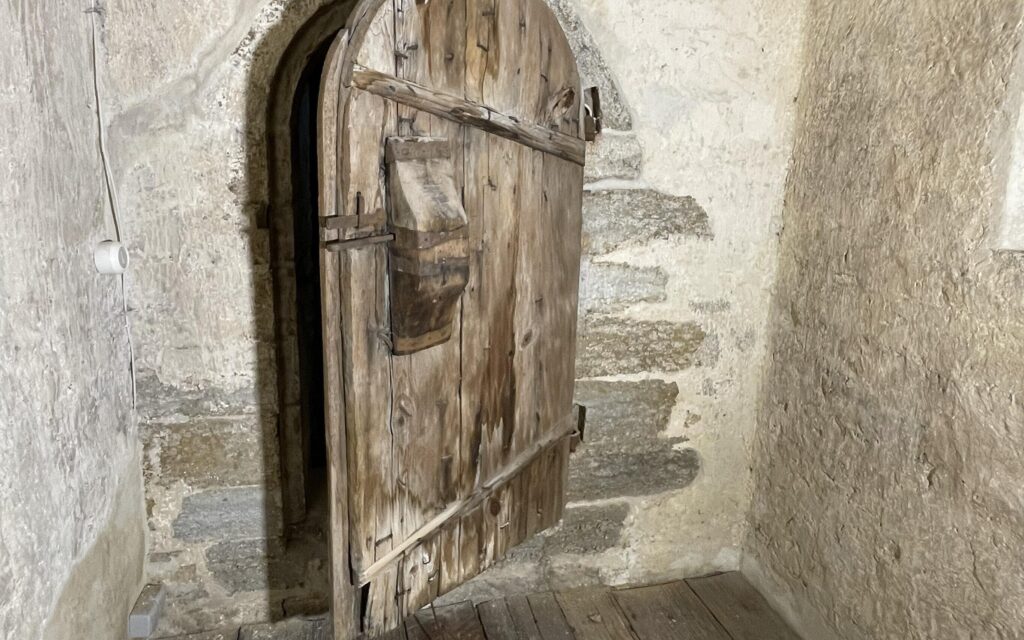
For years, historians believed the nearly 630-year-old Bremen Tower door, part of Tallinn’s medieval city wall, was the oldest of its kind in Estonia. The new findings overturn that assumption. The newly dated door is located inside the King’s Chapel, a small, double-vaulted room built into the thick western wall of St. Mary’s Cathedral during the second half of the 14th century.
Although visible to visitors who tour the cathedral tower, the door itself is rarely used. It opens inward to the King’s Chapel, a quiet and secluded space whose original purpose remains somewhat uncertain. Church officials and historians suggest it may have served as a private chapel for a ruler or noble, fitting with the cathedral’s long association with the Baltic German nobility.
How Scientists Determined the Door’s Age
The breakthrough came after researchers carefully removed the door from its hinges to analyze its wooden structure. The interior of the door is made primarily from pine planks, while the exterior is clad with oak boards, reinforced with iron rivets. By examining the annual growth rings preserved in both types of wood, scientists were able to compare them with established tree-ring chronologies from the Baltic and Northern European regions.
📣 Our WhatsApp channel is now LIVE! Stay up-to-date with the latest news and updates, just click here to follow us on WhatsApp and never miss a thing!!
Tree rings act as natural historical records, reflecting environmental conditions year by year. By matching ring patterns from the door with reference chronologies, the team was able to narrow down when the trees were felled and, by extension, when the door was made. The results suggest that the oak used for the outer planks was cut around the early 1380s, aligning closely with the most probable construction date of the door.
Craftsmanship Preserved for Centuries
Beyond its age, the door also stands out for its craftsmanship. The combination of pine and oak reflects medieval building practices, where durability and availability of materials played a key role. The oak exterior provided strength and protection, while the pine interior offered structural support.
Experts involved in the study note that the door appears to have been carefully constructed as a single unit rather than assembled from reused parts. Its hinges, planking techniques, and overall design are consistent with late 14th-century workmanship, reinforcing the dendrochronological findings.
Cultural Heritage and Responsibility
The identification of Estonia’s oldest door is more than just a record-breaking moment. According to cultural heritage specialists, it helps refine the construction history of St. Mary’s Cathedral and deepens understanding of medieval architecture in the Baltic region. Each precisely dated element adds another piece to the historical puzzle of how Tallinn developed during the Hanseatic era.
After the analysis was completed, the door was rehung in its original place inside the cathedral. Church representatives have emphasized the responsibility that comes with housing such an important artifact. Preserving the door ensures that future generations can continue to experience a physical piece of Estonia’s medieval heritage.
Could an Even Older Door Exist?
Researchers are careful to note that while the King’s Chapel door is currently the oldest known surviving door in Estonia, it may not be the oldest that ever existed. As scientific methods improve and more historic structures are studied, even older examples could one day come to light.
For now, however, the heavy wooden door in St. Mary’s Cathedral stands as a remarkable survivor from the 14th century, silently bearing witness to more than six centuries of history in the heart of Tallinn’s Old Town.
Läänelaid, Alar and Kilumets, Juhan and Uueni, Andres and Borghaerts, Paul, Investigating the age of the door of the King’s Chapel in Tallinn Dome. Available at SSRN: http://dx.doi.org/10.2139/ssrn.5655466
Cover Image Credit: Wikipedia Commons