
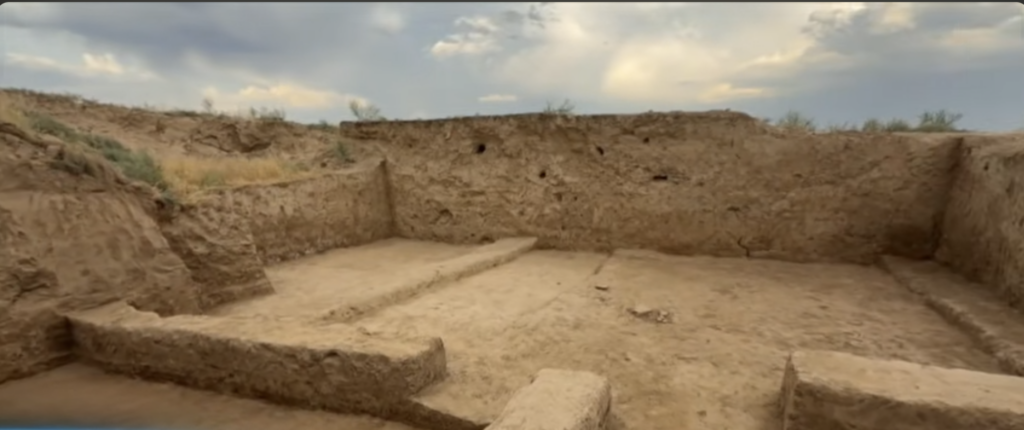
Archaeologists in southern Kazakhstan have uncovered new written fragments and rare burial artifacts linked to the ancient Kangju Kingdom, adding fresh evidence to one of Central Asia’s least understood early states.
The discoveries were made during the latest field season at the Kultobe settlement and the nearby Kylyshzhar burial ground by an expedition from the Archaeology Center of South Kazakhstan Pedagogical University named after Uzbekali Zhanibekov. The finds include inscribed bricks, a possible device for reproducing written texts, and grave goods from Kangju-period burials.
New texts emerge from Kultobe
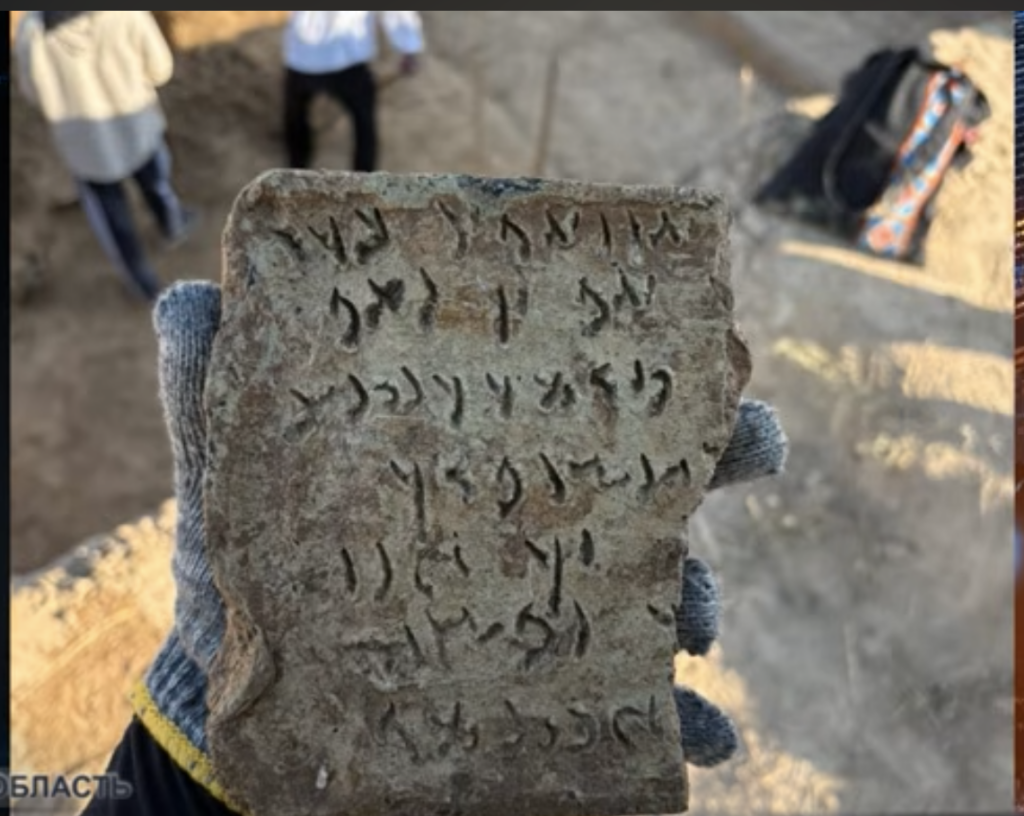
At Kultobe, researchers found a large platform-like structure containing ceramic material and fired brick. Among the most important finds were rectangular and trapezoidal bricks bearing ancient inscriptions.
According to the excavation team, 14 fragments of writing were recovered this season. One of them preserves an almost complete text, while two others contain significant historical and linguistic information. Professor Alexander Podushkin said the new material adds roughly 300 to 400 signs and about 15 lines to the known written corpus from the site.
That is a substantial increase. Before the latest discoveries, researchers had recorded around 1,640 to 1,650 signs arranged in about 80 lines from Kultobe. For a region where written sources are rare, even a small fragment can shift the discussion. Here, archaeologists appear to have gained a meaningful new body of text.
Part of one inscription has already been deciphered. It reportedly refers to an important geopolitical event connected with the founding of a city on lands associated with nomads. Researchers also identified, for the first time in this material, an ethnic designation translated as “people of tents.” Specialists interpret the phrase as a possible reference to nomadic groups that formed part of the Kangju political world.
A possible matrix for copying texts
One of the more unusual discoveries is an impression made with a rectangular form containing pre-arranged writing. The team has interpreted it as evidence for a kind of matrix used to reproduce texts.
This is a striking detail because it suggests that writing at Kultobe may not have been limited to isolated inscriptions. It may also have involved planned copying, administrative communication, or repeated textual formulas. Podushkin compared the practice, cautiously, with much older Near Eastern traditions of reproducing written documents, including Assyrian examples associated with royal correspondence.
The comparison does not mean Kultobe was directly imitating Assyria. But it does place the discovery in a wider history of how states and complex societies used writing to manage authority, memory and communication.
Kangju was more than a nomadic power
The Kangju Kingdom, known from Chinese historical sources as Kangju or Kang-chü, existed roughly from the second century B.C. to the fourth century A.D. Its power was centered in parts of southern Kazakhstan and Central Asia, especially around the middle Syr Darya region.
For a long time, Kangju was often described mainly through the language of steppe politics: nomads, horsemen, alliances, and military movement. The finds from Kultobe complicate that picture. They point to a society in which urban settlements, burial customs, written culture, and contacts with Sogdian-speaking communities all played a role.
Kangju occupied a strategic position along early Silk Road routes, linking the steppe with the oasis cities of Central Asia. Its population was not culturally uniform. Archaeological and textual evidence suggests a world shaped by interaction between sedentary communities, traders, craftspeople, and nomadic groups.
The new reference to “people of tents” is therefore important. It does not simply name a group. It may preserve a rare internal trace of how mobile communities were recognized within the political landscape of Kangju.
What language did Kangju use?
The language question is one of the most interesting parts of the discovery.
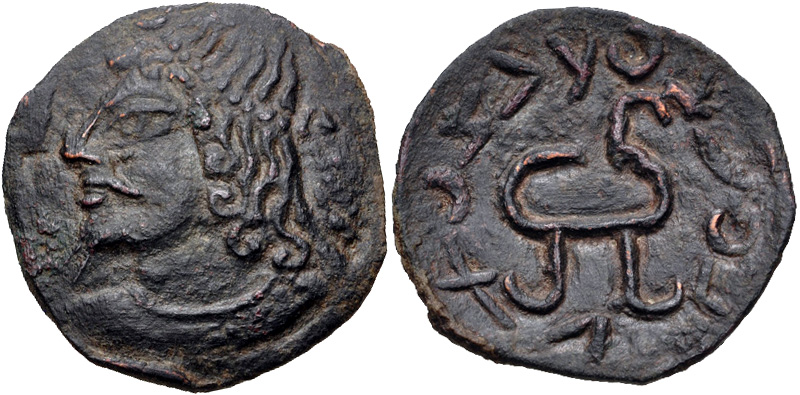
Kangju itself was a political entity, not a single language community in the modern sense. The known Kultobe inscriptions are generally understood by scholars as early or archaic Sogdian, written in a script still close to its Aramaic ancestor. Sogdian was an Eastern Iranian language that later became one of the great commercial languages of the Silk Road.
This means the inscriptions should not be described too simply as a separate “Kangju alphabet.” A safer and more accurate formulation is that they represent an early Sogdian written tradition used within the Kangju sphere.
The script was derived from the Aramaic writing system. Like other Aramaic-based scripts of Central Asia, it was written from right to left and used many Aramaic logograms. In practice, this meant that sin inherited Aramaic forms but read as Sogdian. That feature makes the texts difficult, but also extremely valuable. They show how writing moved across empires, languages, and local communities.
Earlier Kultobe inscriptions have been interpreted as referring to Sogdian groups from cities such as Samarkand, Bukhara, Kesh, and Nakhshab, as well as relations with nomadic populations north of the oasis world. The newly found texts may help clarify how these communities operated inside Kangju territory.
Burials at Kylyshzhar add a human layer
Excavations also continued at the Kylyshzhar burial ground, where archaeologists opened four burial structures with the help of students. Two had been looted in antiquity, but the others preserved finds useful for dating and cultural interpretation.
One burial contained the remains of a young woman, estimated to have been around 18 to 20 years old. Nearby, archaeologists found ceramics, a knife, and remains interpreted as sacrificial meat. The team also identified beads that may have belonged to a necklace of gilded jet or may have been sewn onto a funerary shroud.
The position of the beads in different parts of the burial chamber supports the shroud interpretation. If correct, the deceased may have been wrapped in cloth decorated with beads before burial. A small knife and two ceramic vessels were also found in the grave.
These objects do not speak as directly as the inscriptions, but they are just as important. They show the material and ritual world behind the written record: clothing, offerings, tools, ceramics, and funerary practice.
A larger written record for Central Asia
The new finds from Kultobe and Kylyshzhar strengthen the view that Kangju was one of the major political formations of ancient Central Asia. More importantly, they show that its history cannot be reconstructed from Chinese chronicles alone.
The bricks, inscriptions, stamped impressions, and graves bring the story closer to the ground. They reveal a society where nomadic and urban traditions met, where writing carried political meaning, and where the Silk Road was not only a trade route but also a zone of language, identity, and power.
For Kazakhstan’s archaeology, the importance is clear. Every new line from Kultobe increases the written record of an early Central Asian world that has long remained fragmentary. This season’s discoveries do not complete the story of Kangju. They make it harder to ignore.
Cover Image Credit: Otyrar.kz
