
More than 800 archaeological features hidden beneath the route of a future German bypass are forcing researchers to rethink the scale of prehistoric settlement near the Müritz lakes in northern Germany.
The discoveries were made near Mirow, in Mecklenburg-Vorpommern, where archaeologists have been examining the planned route of the B198 bypass. The modern road project, designed to move traffic around the town, has exposed a much older landscape below the soil: hearths, cooking pits, pottery fragments, metal objects, a possible oven and a rare pit filled with shell remains.
Together, the finds suggest that this part of the Mecklenburg Lake District was not only visited or briefly occupied thousands of years ago. It may have supported large and repeated settlement activity from the Late Bronze Age into the Pre-Roman Iron Age.
More than 800 traces beneath a future road
Archaeologists working across an area of 15,637 square meters, roughly the size of two football fields, identified more than 800 archaeological structures in the ground. Many of them were not spectacular at first glance. Some appeared as dark stains in the soil. Others were fragments of pottery, burned material or remains of everyday activity.
But for archaeologists, these small traces matter. They show where people cooked, repaired tools, built fires, discarded food and shaped daily life. When hundreds of such traces appear in one corridor, the picture changes. The site begins to look less like scattered activity and more like part of a wider settlement zone.
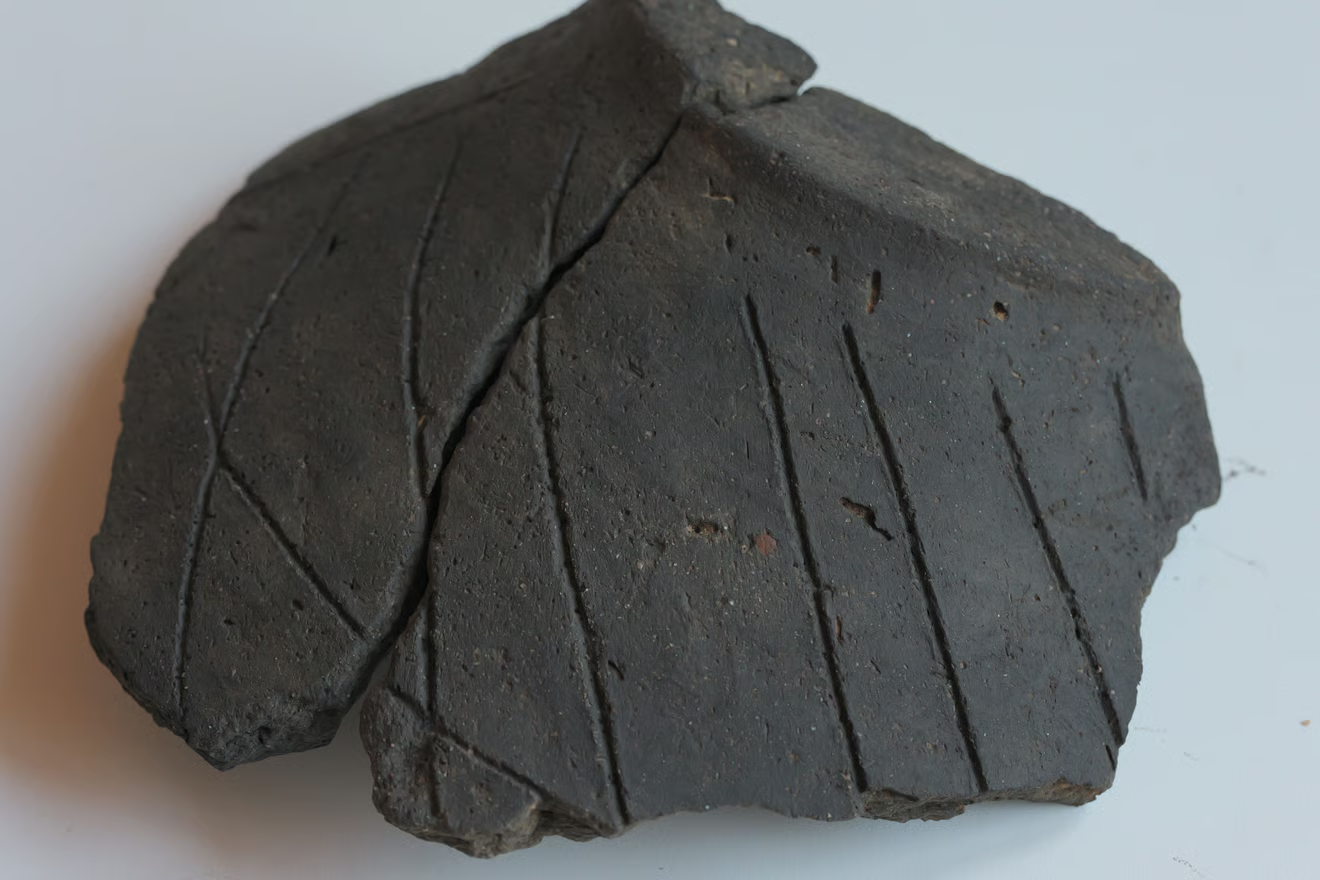
Dr. Martin Wagner of AIM-V Archäologie in Mecklenburg-Vorpommern said the discoveries include cooking and hearth places, as well as pottery fragments from cups and bowls. Some ceramic sherds were decorated. These finds have been dated to the Late Bronze Age, roughly between 1100 and 550 BC.
The most important detail is their distribution. Similar finds appeared at two nearby excavation areas between Schulzensee and Mirower See. That raises a key question: were these separate sites, or are archaeologists looking at two exposed edges of one much larger settlement?
A settlement larger than first thought
Wagner has suggested that the matching material at two nearby locations could point to a connected Bronze Age settlement. The answer may lie in the ground between them. Archaeologists plan to investigate that area to see whether the traces continue.
If they do, the Mirow finds would become more significant. The bypass may have cut through only a narrow strip of a larger prehistoric settlement, leaving most of it still buried beyond the construction corridor.
That possibility gives the discovery its real weight. The story is not simply that Bronze Age objects were found during roadwork. It is that a modern infrastructure project may have revealed the edge of a settlement landscape larger than previously known.
Iron Age life near the lakes
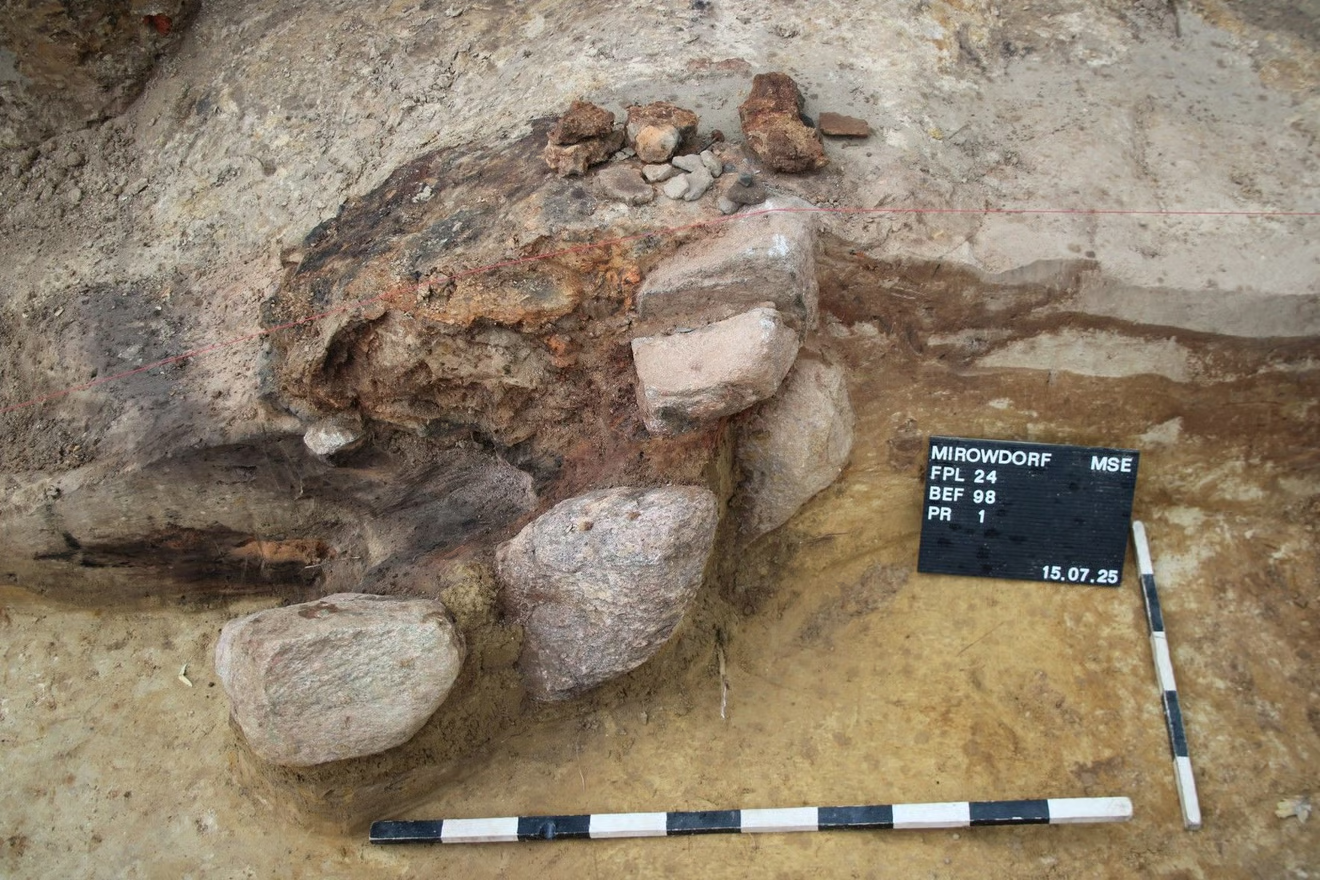
The excavation also revealed evidence from a later period. At another location, researchers found a structure interpreted as a kind of oven or heating installation, built with natural stones and containing charcoal and ash. Metal finds, including a ring, and everyday pottery were also recovered.
Wagner placed this activity in the later Pre-Roman Iron Age, around 300 to 0 BC. This suggests that the Mirow area remained attractive for settlement long after the Bronze Age phase.
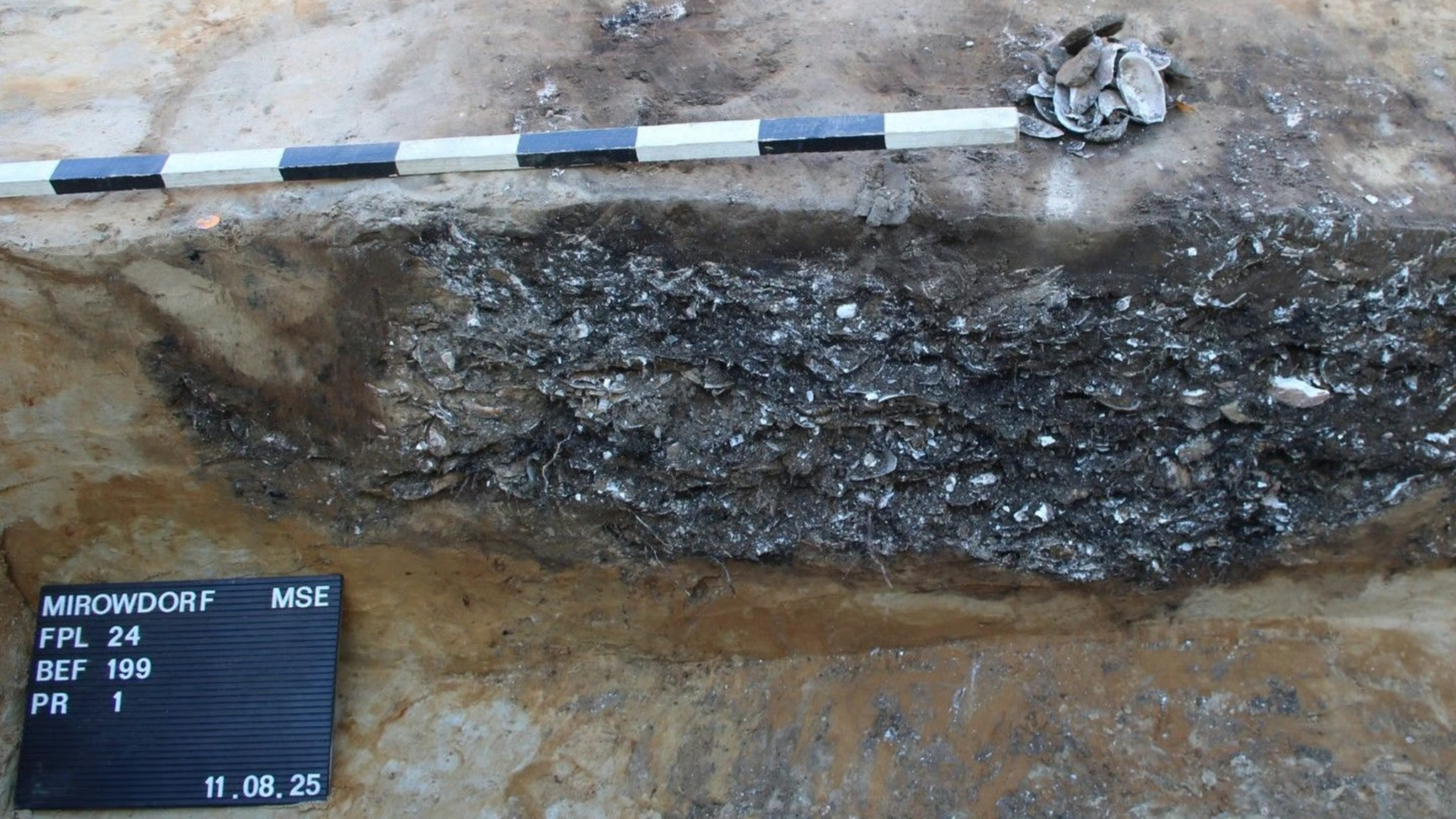
One discovery especially surprised the team: a pit containing shell remains. The find may offer rare evidence for diet and food use in the Lake District. It is not yet clear whether the shells represent food waste, a specific activity area or something more complex. Further analysis will be needed.
Still, the shell pit adds a direct human detail to the excavation. It points to people using the resources of the lake environment, not only living beside the water but drawing food and materials from it.
A landscape made for settlement
The appeal of Mirow’s prehistoric landscape is not difficult to understand. The area lies between lakes, reeds, woodland, clay deposits and patches of fertile ground. Such a setting offered water, fish, building material, fuel, grazing potential and cultivable soil.
The lakes may also have mattered as routes of movement. Wagner has suggested that older waterways, some of them no longer existing in the same form, may once have connected parts of the Mecklenburg Lake District. Direct proof remains uncertain, but the idea fits the broader archaeology of northeastern Germany.
This region was already important in the Bronze Age. The wider Mecklenburg Lake District has produced major prehistoric finds, including the exceptional hoard of seven Bronze Age swords from Mirowdorf. That discovery showed the area was not isolated. It was connected to wider networks of prestige, metalwork and exchange.
Academic research on the Tollense Valley, also in northeastern Germany, has further shown that waterways and crossings in this region could play a major role in movement, communication and power during the Bronze Age. The Lake District was significant from the Early Bronze Age, with evidence for early bronze production and long-distance connections.
Seen against that background, the new Mirow discoveries are more than local finds. They fit into a larger picture of a lake-rich region where settlement, resources, mobility and social networks were closely linked.
Roadwork opens a prehistoric window
The B198 bypass will eventually redirect traffic around Mirow. But before the road is completed, the project has given archaeologists a rare chance to examine a broad strip of buried landscape.
Large construction projects often create this kind of opportunity. They disturb ground that might otherwise remain untouched, but they also allow archaeologists to document settlement patterns at a scale rarely possible through small research trenches.
At Mirow, that scale has already changed the story. More than 800 buried features now point to a dense prehistoric landscape beneath a future road. The next question is whether those traces belong to separate activity zones or to a settlement much larger than anyone first expected.
For now, the evidence is strong enough to show that the southern Müritz region was already a busy human landscape thousands of years ago. Beneath fields, roads and modern planning maps, archaeologists are uncovering the remains of communities that lived with the lakes, worked the land, used local resources and left behind a record far larger than a handful of artifacts.
Cover Image Credit: The find that surprised archaeologists most near Mirow: shell remains discovered inside a pit. ZVG / Martin Wagner
