
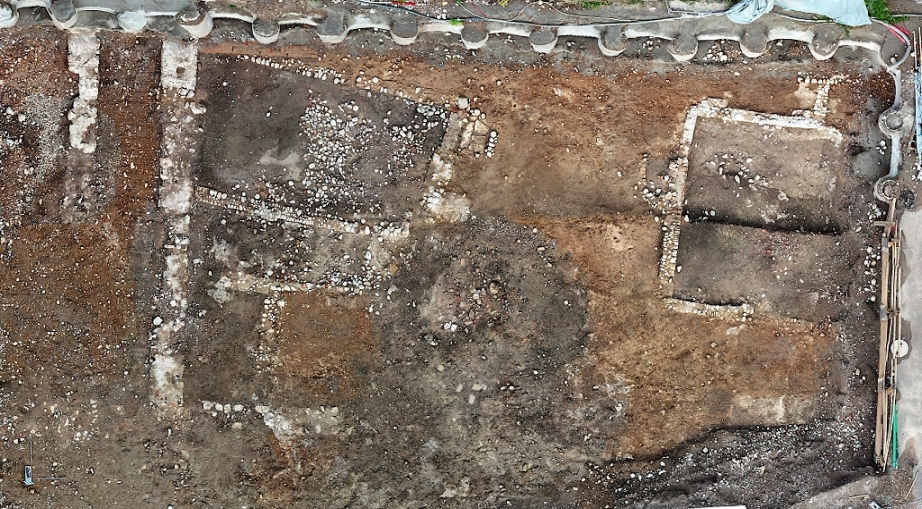
Archaeologists in Freiburg, a historic city in Germany, have uncovered a medieval pottery workshop where clay toys were once crafted. The remarkable find, dating back to the early 14th century, reveals dozens of figurines that may have brought joy to children nearly 700 years ago.
What began as routine construction work for a new finance school in Freiburg, a historic university city in southwest Germany near the Black Forest, has turned into one of the country’s most intriguing archaeological discoveries in recent years. Excavations at the site of the future Oberfinanzschule have unearthed medieval pottery kilns, remnants of a long-forgotten street, and dozens of clay figurines that may once have served as toys for children nearly 700 years ago.
The excavation, which covers an area of roughly 4,000 square meters along Albertstraße and Habsburgerstraße, lies in the so-called Neuburg, Freiburg’s first medieval urban expansion, planned shortly after 1240 under Count Konrad of Freiburg. Today, before the new building complex with an underground parking facility can rise, archaeologists are racing against time to preserve what history has left behind.
Preserved Layers Beneath Modern Freiburg
According to Dr. Bertram Jenisch of the Landesamt für Denkmalpflege (State Office for Cultural Heritage), the site is remarkably well-preserved despite later developments, including the university hospital destroyed in World War II.
“Beneath the rubble of the 20th century, we found intact walking surfaces from the early 13th century,” said Dr. Jenisch. “This gives us a large-scale window into the carefully planned medieval suburb of Freiburg.”
Among the finds is the Ziegelgasse, a medieval street once lined with the homes and workshops of artisans. Unlike Freiburg’s more prestigious inner-city houses, these dwellings were modest, with practical designs tailored to their residents’ needs. The discovery of the street’s intact body is considered a minor sensation, as most medieval streets have long been disrupted by modern infrastructure.
Kilns, Clay Figures, and the Everyday Life of Children
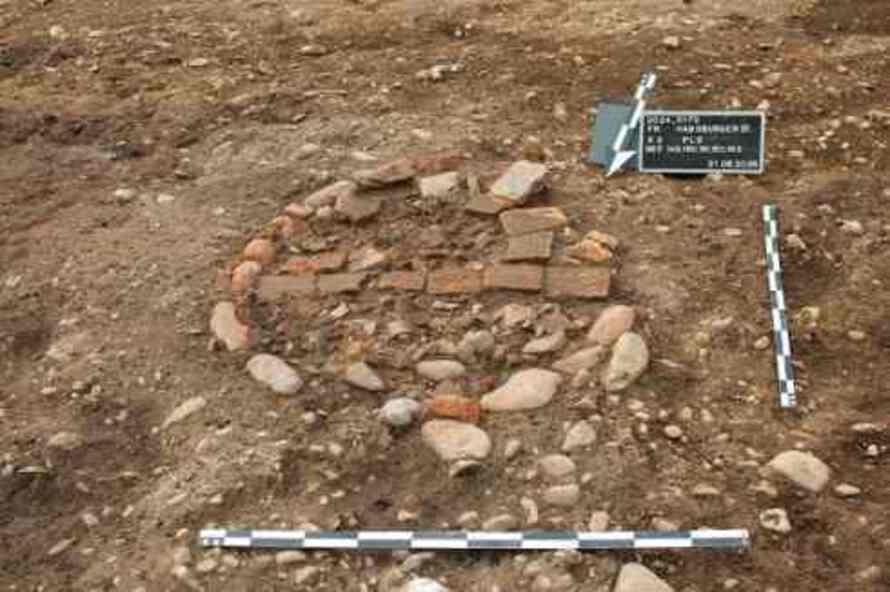
Even more surprising was the identification of pottery kilns dating back to the 13th and 14th centuries – the first ever documented in Freiburg. These kilns produced the ceramics widely used in the city during the Middle Ages, but one in particular revealed a rare glimpse into childhood centuries ago.
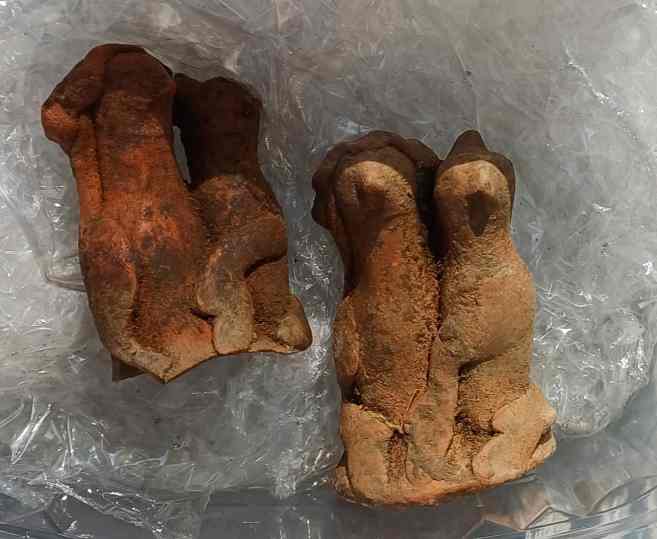
Inside, archaeologists found fragments of more than 40 small clay figurines: women with headdresses, men in caps, horses, and mothers cradling children. The figures, though simple, are unmistakably toys.
“One craftsman in the early 14th century seems to have specialized in producing clay toys,” Dr. Jenisch explained. “This discovery is a small sensation for Freiburg’s history.”
For excavation leader Benjamin Hamm, the figurines are more than artifacts; they are emotional reminders of the human side of medieval life. “They touch us because they represent play,” Hamm said. “It is moving to see that beyond war, plague, and religious strife, there was still space for childhood joy.”
Insights Into Medieval Urban Planning
The discoveries also shed light on how Freiburg’s Neuburg was planned and built. Archaeological evidence suggests that the street network was laid out first, followed by the subdivision of land with continuous boundary walls. A designated 42-meter-wide zone, known as the Allmend, was set aside for workshops, kilns, and other craft activities – possibly as a fire safety measure.
This systematic approach reflects a surprisingly modern sense of urban planning. “The archaeological record clearly shows that the founding of the Neuburg was carried out in a highly organized manner,” noted Dr. Jenisch.
Rescue Excavation Under Pressure
The Freiburg dig is part of what is known in Germany as a “rescue excavation” (Rettungsgrabung). Unlike research excavations, which allow archaeologists ample time, rescue digs must be completed swiftly before new construction makes further exploration impossible. They are often conducted under tight deadlines but play a crucial role in preserving traces of the past before they vanish.
Across Baden-Württemberg, most archaeological work falls into this category, whether linked to small-scale projects or major infrastructure developments such as industrial parks, highways, or pipelines.
A Window Into the Past
For Freiburg, the excavation offers more than just artifacts – it provides a tangible link to the city’s medieval roots and its people. The clay figurines, in particular, highlight a universal truth: that children, whether in the 14th century or today, played, imagined, and created worlds of their own.
“These finds give us an immediate glimpse into everyday life that written sources cannot provide,” Dr. Jenisch reflected. “They remind us that history is not just about rulers and wars, but also about ordinary people and their families.”
As construction of the new Oberfinanzschule moves forward, archaeologists hope to preserve and document as much as possible. While the buildings will rise above ground, the stories uncovered below will enrich Freiburg’s cultural heritage for generations to come.
Landesamt für Denkmalpflege im Regierungspräsidium Stuttgart
Cover Image Credit: Overview of the rescue excavation. Landesamt für Denkmalpflege im Regierungspräsidium Stuttgart
