
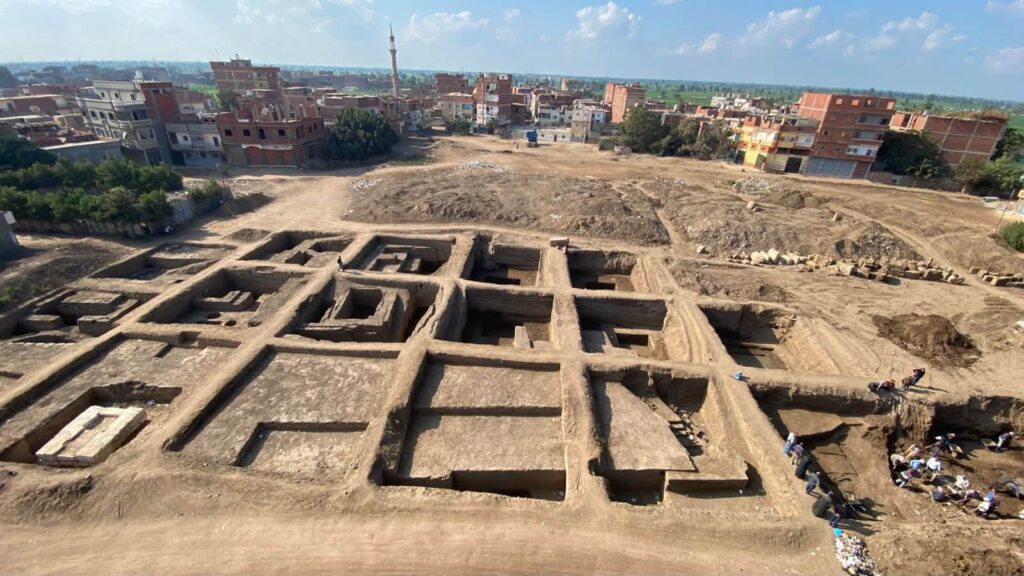
A remarkable archaeological discovery in Egypt’s eastern Nile Delta is shedding fresh light on the grandeur and complexity of ancient Egyptian civilization. The Egyptian Ministry of Tourism and Antiquities, alongside the Supreme Council of Antiquities, has announced the unearthing of a massive statue believed to represent the legendary Pharaoh Ramses II at the Tel Faraoun site in Sharqia Governorate.
Monumental Find at Tel Faraoun
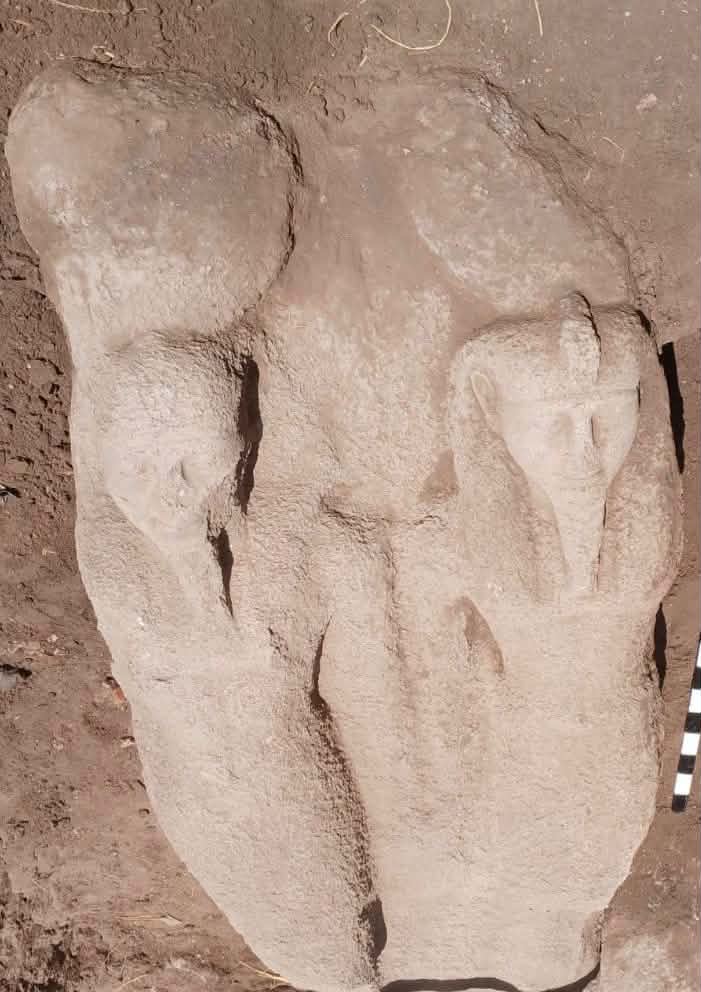
The discovery was made by an Egyptian archaeological mission working at Tel Faraoun, historically known as “Imet.” The unearthed statue is striking in both size and historical significance. Although the lower portion—comprising the legs and base—is missing, the remaining upper section still weighs between five and six tons and stands approximately 2.2 meters tall.
Despite its relatively poor state of preservation, the statue retains key artistic and royal features that strongly suggest it depicts Ramses II, one of ancient Egypt’s most powerful and celebrated rulers. Known for his extensive building projects and military achievements, Ramses II left behind a vast legacy of monuments across Egypt.
Evidence of Ancient Relocation Practices
According to Dr. Hisham Lithi, Secretary-General of the Supreme Council of Antiquities, the discovery provides valuable evidence of religious and royal activities in the eastern Delta. More importantly, it highlights the ancient Egyptian practice of relocating monumental statues between sites.
Preliminary studies indicate that the statue did not originate in Tel Faraoun. Instead, researchers believe it was originally crafted in Pi-Ramesse, the grand capital established by Ramses II. From there, it was likely transported to Tel Faraoun in antiquity for reuse within a local temple complex.
This practice of reusing royal statues in different religious contexts reflects both practical and symbolic aspects of ancient Egyptian culture. It underscores how regional centers maintained connections with major royal hubs while adapting existing monuments for new religious purposes.
Possible Part of a Royal Triad
Mohamed Abdel-Badii, Head of the Egyptian Antiquities Sector, noted that the statue may have originally been part of a larger sculptural group known as a triad. These triads typically depict a king flanked by deities, symbolizing divine protection and authority.
Similar triad sculptures have been discovered at other archaeological sites in Sharqia Governorate, reinforcing the possibility that this statue once belonged to such a composition. However, further research is needed to confirm this hypothesis.
Preservation and Restoration Efforts
To ensure the artifact’s preservation, authorities swiftly transported the statue from the excavation site to the storage facility at San El-Hagar. There, specialists will begin detailed and urgent restoration work following international scientific standards.
Experts are also conducting analyses on the stone material and carving techniques used in the statue. These studies aim to determine its precise age, origin, and the methods employed by ancient craftsmen, offering deeper insight into royal sculpture production during the New Kingdom period.
Earlier Discovery Adds Context
This latest find follows another significant discovery at the same site in September, when archaeologists uncovered a stone stela bearing a new version of the famous Canopus Decree. Issued in 238 BC by Ptolemy III, the decree honored the king and his family and was distributed across major Egyptian temples.
Together, these discoveries reinforce Tel Faraoun’s historical importance as a religious and cultural center spanning multiple eras of ancient Egyptian history.
Boost for Egypt Tourism and Archaeology
The unearthing of the Ramses II statue is expected to boost interest in Egypt tourism, particularly in lesser-known archaeological sites in the Nile Delta. It also highlights the ongoing efforts of Egyptian archaeologists to uncover and preserve the nation’s rich heritage.
As restoration and research continue, this monumental find promises to deepen our understanding of ancient Egypt’s political, religious, and artistic traditions—further cementing Ramses II’s enduring legacy in world history.
Egyptian Ministry of Tourism and Antiquities
Cover Image Credit: Egyptian Ministry of Tourism and Antiquities via Facebook
