
23 June 2026 The Future is the Product of the Past

Luxury, Hunting, and Gold: Rare Medieval Ivory Comb Reveals the World of Westphalian Nobles

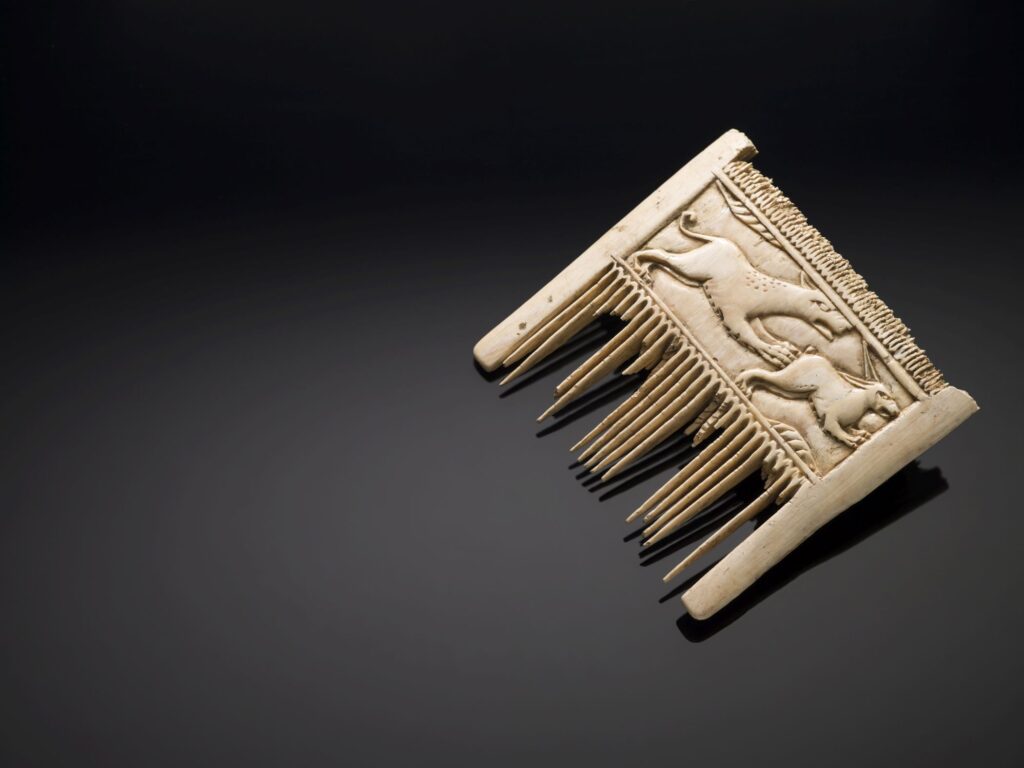
A small fragment of carved elephant ivory is offering an unusually vivid glimpse into the world of medieval aristocratic life in Westphalia. The object, a richly decorated 12th-century comb found at Holsterburg near Warburg, is now a new highlight of the permanent exhibition at the LWL-Museum für Archäologie und Kultur in Herne.

The comb measures only 6.3 by 7.1 centimeters, yet its archaeological value is far larger than its size suggests. Made from elephant ivory and decorated with finely carved scenes, it belongs to a rare group of medieval luxury objects usually associated with church treasuries, bishops, saints or kings. Its discovery in the soil of an aristocratic castle site makes it especially important.

A Luxury Object from a Medieval Castle

The ivory comb was discovered in 2017 during excavations at Holsterburg, an octagonal medieval castle in the district of Höxter. LWL archaeologist Kim Wegener, who led the excavation, immediately recognized the significance of the find. Similar combs are often described as “liturgical combs” because many known examples are linked to religious ceremonies and elite ecclesiastical contexts.

The Holsterburg comb, however, appears to tell a more secular story. Its findspot, decoration, and archaeological setting suggest that it was intended for an aristocratic owner rather than a monastic or episcopal treasury. This makes the object a rare piece of evidence for the refined material culture of Westphalian nobles in the High Middle Ages.
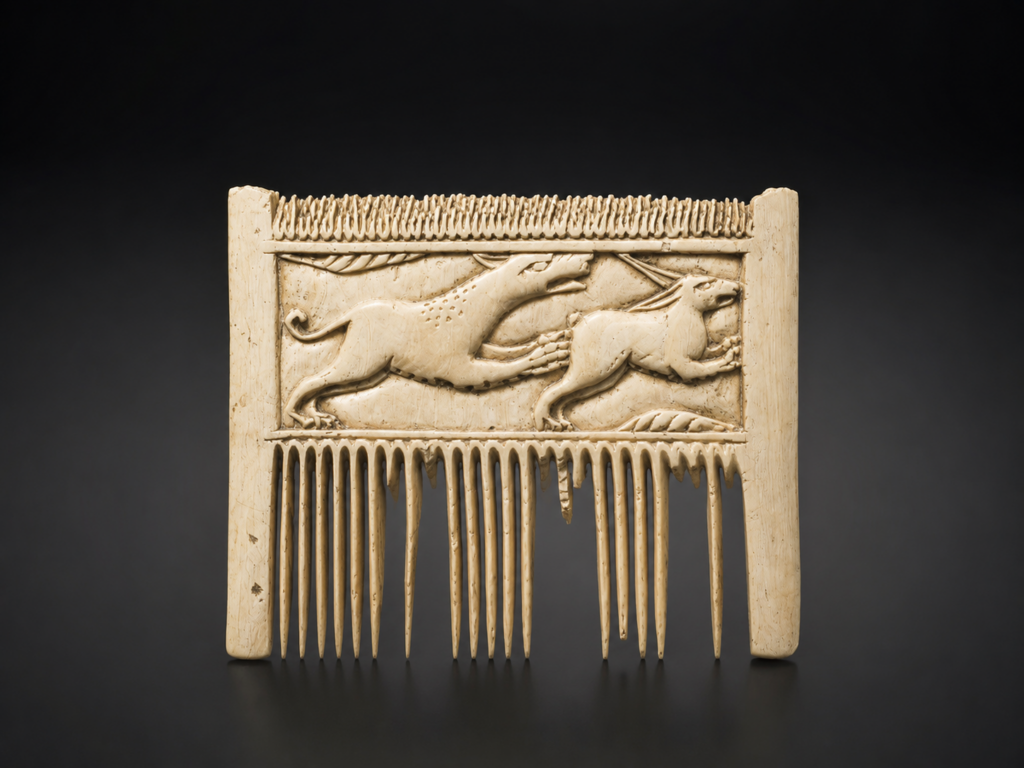
Dating to the 12th century, the ivory comb reflects the wealth and refined lifestyle of the noble lords who once lived at Holsterburg. Credit: LWL / S. Brentführer

Hunting Scene, Peacocks and Traces of Gold

The fragment preserves two carved image fields. One side shows a dog chasing a hare, a motif closely connected with aristocratic hunting culture. The other side depicts two peacocks facing one another. Both themes fit the symbolic world of medieval elites, where hunting, display and imported luxury materials helped express social rank.


📣 Our WhatsApp channel is now LIVE! Stay up-to-date with the latest news and updates, just click here to follow us on WhatsApp and never miss a thing!!


Recent microscopic examination revealed another remarkable detail: traces of gold survive in the eye of the hare and on the handle area above the peacocks. These tiny remains suggest that the comb once looked even more striking than it does today, combining ivory carving with gilded accents.

Holsterburg’s Elite Status

The comb also strengthens what archaeologists already know about Holsterburg. The castle is one of the most unusual medieval fortifications in Westphalia. Its octagonal layout, high-quality construction, and even an integrated warm-air heating system point to an ambitious building project by the Edelherren von Holthusen.

Other finds from the site, including gaming pieces, show that the castle’s residents took part in aristocratic leisure culture. The ivory comb fits this picture precisely. It was not an ordinary grooming tool, but a statement object. Whether it was made in the Mediterranean world, the Byzantine sphere, a workshop north of the Alps, or perhaps near the Weser monastery of Helmarshausen remains unresolved.

Now on View in Herne

After careful conservation by LWL restorer Ruth Tegethoff, the comb traveled through special exhibitions in Berlin, Münster, and Paderborn. It has now returned to Westphalia and entered the permanent display of the LWL Museum in Herne.

For visitors, the fragment offers more than a beautiful medieval artifact. It shows how far Westphalian nobles were willing to go to compete with the visual language of bishops, kings, and high-ranking aristocrats. In a few centimeters of carved ivory, the Holsterburg comb preserves a world of status, craft, trade, and ambition.

LWL

Cover Image Credit: LWL / S. Brentführer

Related Articles

Rare Langsax fighting blade with Viking origins discovered in Poland

20 August 2021

20 August 2021

Archaeologists working in the Wdecki Landscape Park in Poland’s Kujawsko-Pomorskie Voivodeship have discovered a rare langsax long knife with potential...

Archaeologists Find First ‘Parthenon Marbles’ Evidence at Lord Elgin’s ‘Mentor’ Wreck

19 March 2026

19 March 2026

Archaeologists uncover the first marble fragment linked to the Parthenon Marbles at Lord Elgin’s ‘Mentor’ shipwreck. Beneath the clear waters...

“Cardiff’s earliest house” unearthed during an archaeological dig may shed light on the city’s earliest inhabitants

15 July 2022

15 July 2022

Archaeological excavation in a city park in Cardiff, the capital of Wales, has uncovered what is believed to be the...

In Germany, volunteers unearthed the largest hoard of Slavic coins to date and bronze-age seven swords

29 November 2023

29 November 2023

Volunteer archaeologists found bronze age seven swords and from the 11th century 6000 silver coins in the northeastern German state...

1900 years old a Customs Inscription from the Lycian civilization reveals Anatolia’s strategic importance in maritime trade

16 September 2023

16 September 2023

A Customs Inscription from the Lycian civilization, located in Andriake port in the southern province of Antalya’s Demre district, tells...

16 New Ancient Rock Art Sites Discovered In Jalapão, Brazil

13 March 2024

13 March 2024

Archaeologists at Brazil’s National Institute of Historical and Artistic Heritage (Iphan) discovered 16 new archaeological sites while surveying a large...

New study reveals the Milky Way’s hidden role in ancient Egyptian mythology

11 April 2024

11 April 2024

The ancient Egyptians were keen observers of the night sky. They incorporated their astronomical observations into their religion, mythology, and...

Medieval ship found off the west coast of Sweden

5 February 2022

5 February 2022

A previously undiscovered wreck has been found outside of Fjällbacka on the Swedish west coast. Analysis of wood samples shows...

Before the Hittites: 8,000-Year-Old Rock Art Discovered in Kayseri, Türkiye

6 November 2025

6 November 2025

An extraordinary archaeological discovery in Kayseri’s Develi district has revealed 8,000-year-old rock art engravings, offering new insight into how early...

Neolithic Shell Trumpets Reveal Iberia’s Oldest Long-Distance Communication System

3 December 2025

3 December 2025

New research reveals that Neolithic shell trumpets from Catalonia served as the earliest long-distance communication system in the Iberian Peninsula....

Remains of 240 people found beneath Ocky White department store in Wales

13 October 2022

13 October 2022

Archaeologists found skeletal remains of over more than 240 people, from beneath a former department store in Pembrokeshire in Wales,...

No Ancient Super-Highway: The Reality of Europe’s Erdstall and the Scotland-Türkiye Tunnel

28 April 2025

28 April 2025

The internet continues to buzz with the captivating notion of an immense, prehistoric tunnel network stretching from the Scottish Highlands,...

Three New Domus de Janas Unearthed in Sardinia: 5,000-Year-Old “Fairy Houses” Discovered

29 July 2025

29 July 2025

Hidden beneath the rugged landscapes of Sardinia lie the silent dwellings of an ancient world — the Domus de Janas,...

Archaeologists unearthed a pot of copper coins in first major discovery at Mohenjo Daro in Pakistan, in 93 years

18 November 2023

18 November 2023

A pot full of copper coins was discovered from a stupa (a dome-shaped building erected as a Buddhist shrine) at...

Archaeologists find evidence of how Iron Age Britons adapted to the Roman conquest in Winterborne Kingston

29 June 2024

29 June 2024

Archaeologists from Bournemouth University (BU) have discovered human remains and artifacts which give new insight into how early Britons adapted...