
15 June 2026 The Future is the Product of the Past

Istanbul’s Iron Church of Unique Beauty

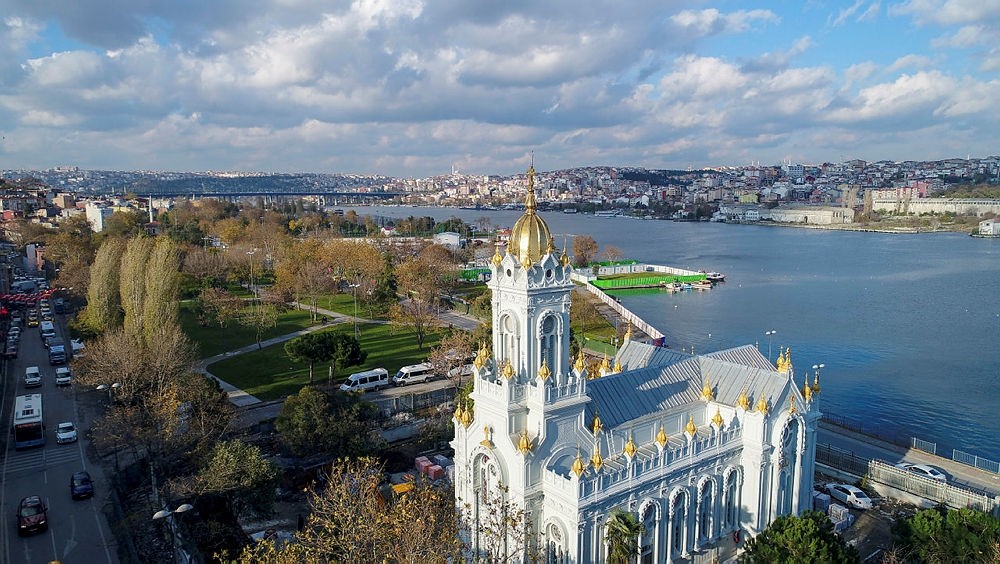
The Bulgarian Church of St. Stephens was constructed like a cross-shaped Basilica. St. Stephen Church is also known as The Iron Church since its structure is made of Cast Iron.

It is also called Stevi Stefan in Bulgarian which means Saint Stephen. this church is dedicated to Saint Stephen who is one of the first deacons and the first Christian martyr.

The first church was a wooden construction built near the Golden Horn, and the alter of the current church faces the Golden Horn. After the wooden church was destroyed in a fire, the cast-iron structure was built on its location. According to some sources, this is the only iron church standing at this moment!

Sultan Abdülaziz, according to the popular tale, refused to allow the city’s Bulgarian Orthodox minority to erect a church. The sultan stated that St. Stephen must be finished in a single month, “permitting” its construction in a manner he definitely considered failsafe. But, like so many fantastic stories, the tale of the sultan’s challenge and the Bulgarian triumph isn’t quite true.
Iron church İstanbul
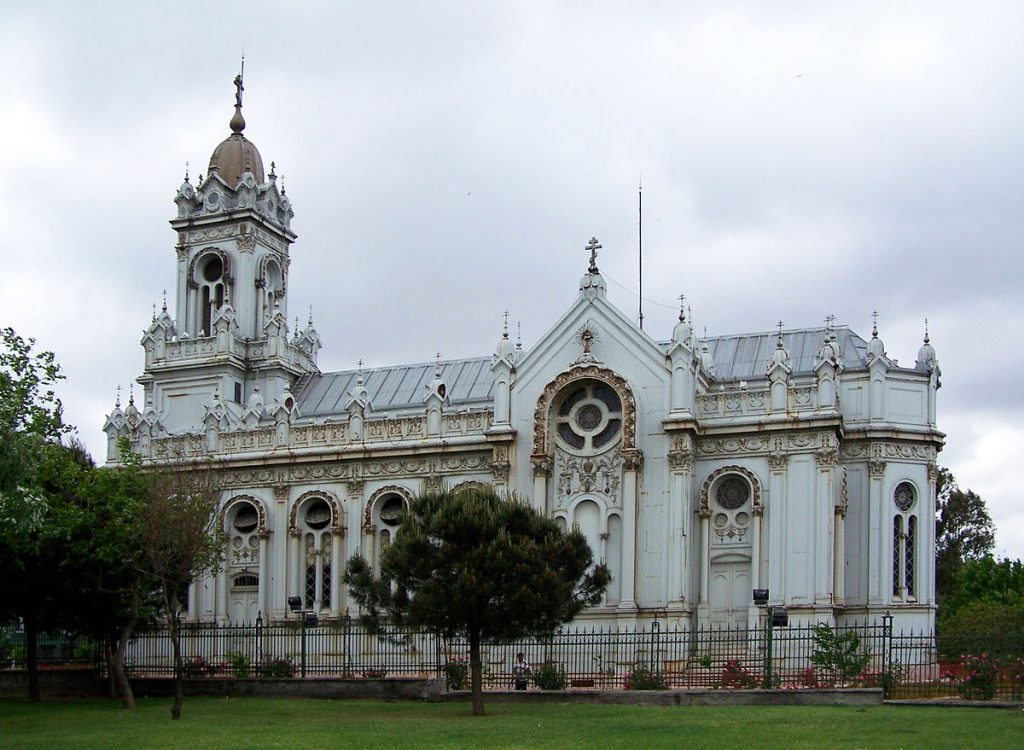
The Bulgarian St. Stephen Church is also known as The Iron Church since its structure is made of Cast Iron. Photo: Wikipedia

Nationalism waves swept the globe following the French Revolution. Furthermore, these waves had a significant impact on the Greek Orthodox Patriarchate, and Bulgarians attempted to find a means to pray in Bulgarian. As you may be aware, Catholics usually use Latin while Orthodox use Greek. And, like Bulgarians, some of the nationalities aspired to speak their own language. However, the Fener Greek Patriarchate was first unwilling to allow Bulgarians to speak their own language and create their own exarchate.


📣 Our WhatsApp channel is now LIVE! Stay up-to-date with the latest news and updates, just click here to follow us on WhatsApp and never miss a thing!!


Stefan Bogoridi wrote a letter to the sultan to explain the worship in Bulgarian and this request was accepted. He had a house where the current church was constructed. So, he moved to a new house and donated the plot.
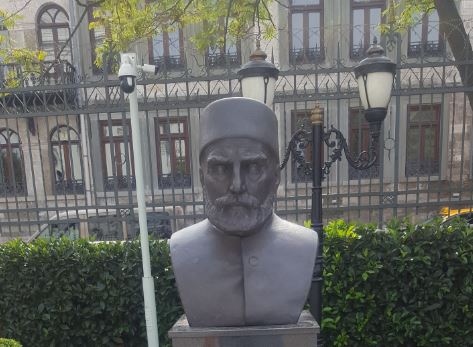
Statue of Stefan Bogoridi in the churchyard.

In 1850, they also constructed the building for priests. In 1870, the Bulgarian side left the Greek Patriarchate with Sultan Abdulaziz’s order. After this order, the Bulgarian exarchate has officially started the process.

The Iron Church

The old church was built of wood and was destroyed by a fire. The famous Fossati brothers devised a plan, but the ground was too unstable owing to its location on the coast, and the project was shelved. The exarchate then held a competition, which was won by Armenian architect Hovsep Aznavur. The building of the church began in 1893, and it was completed in 1898.
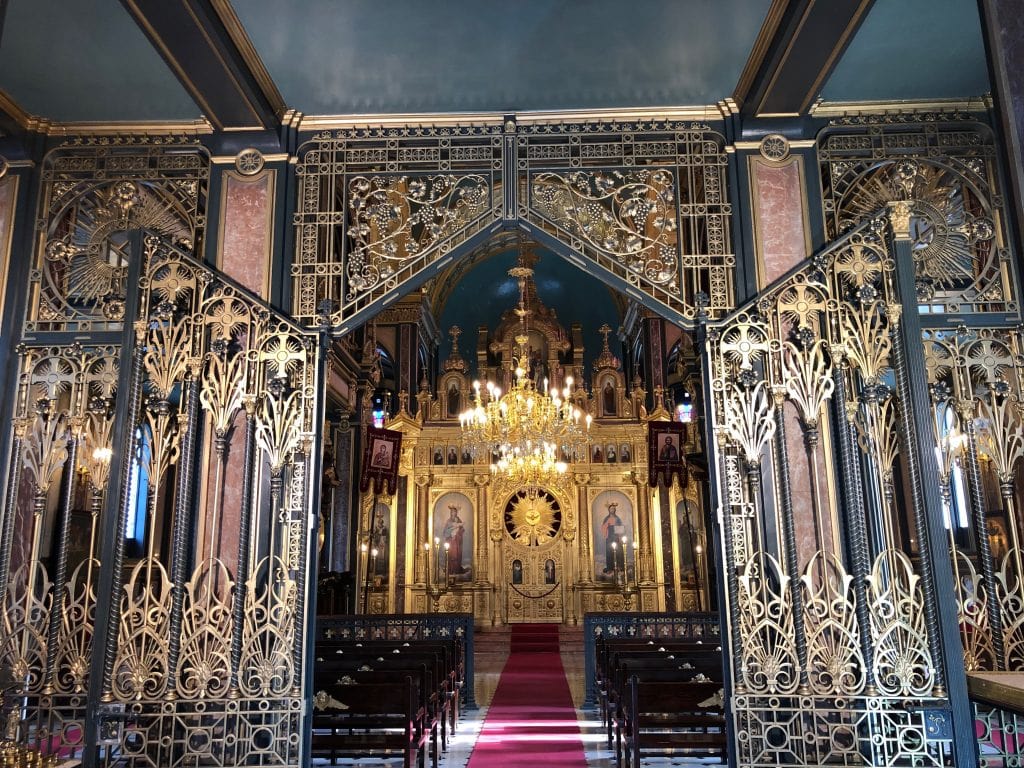
The church is in basilica form and represents neo-gothic and neo-baroque styles. There are three floors.

Waagner, a well-known Austrian business, built an entire prefabricated church and tested it before shipping it to Istanbul. The church was transported by ship across the Danube River, then transferred to the Black Sea, and finally sailed through the Bosphorus. As a result, the church weighs just 500 tons. The piles are built of wood and are quite robust. They expanded in the water and show very good strength.

The only remaining original feature from the wooden church that predated the Iron Church is its stone altar, still in use to this day. Inaugurated on September 8, 1898, one of the world’s few full-metal churches has remained in constant use ever since.

The church reopened in January 2018 after an extensive renovation. The Bulgarian Iron Church is very close to Fener pier and Balat pier.

The official address: Balat, Murselpasa Cd. No:10, 34087 Fatih/Istanbul

Related Articles

Hornelund Brooches: Exquisite Viking Gold Ornaments with Norse and Christian Symbolism Unearthed in Denmark

5 August 2025

5 August 2025

The Hornelund Brooches are rare and captivating examples of Viking Age goldsmithing, discovered in southwestern Jutland, Denmark. These two intricately...

The sunken city of God Krishna “Dwarka”

18 May 2022

18 May 2022

The legendary capital of Hindu god Lord Krishna, Dwarka is today one of the most famous submerged ancient cities underwater....

The Kyrgyz epic ‘Manas’ manuscripts were included in the UNESCO Memory of the World

10 June 2023

10 June 2023

Manuscripts of the Kyrgyz epic “Manas” by narrator Sagymbay Orozbakov have been inscribed on the UNESCO Memory of the World...

Life continues in Iran’s 12,000-year-old settlement “Meymand village”

8 February 2022

8 February 2022

At the south-eastern Iranian province of Kerman near Shahr-Babak city, there is a village dating back to the Stone Age....

Gladiators were mostly Vegetarians and they were fatter than you may think

6 August 2023

6 August 2023

What better epitomizes the ideal male physique than the Roman gladiator? Gladiators were the movie stars of the first century,...

Unsolvable Megalithic Mystery of ancient Greek “Dragon Houses”

8 January 2025

8 January 2025

The Dragon Houses of Euboea, which probably dates to the Preclassical period of ancient Greece, are one of the historical...

In 6750 BCE, A Neolithic City Built Its Own Ghosts: The Monumental Secrets of Ain Ghazal, Jordan

23 November 2025

23 November 2025

Long before the pyramids rose above the Nile or the great temples of Mesopotamia carved their mark into the ancient...

200 Feet to the Past: The Millennium-Old Mystery of the Himalayan Towers

8 May 2025

8 May 2025

In the remote and rugged landscapes of the Himalayas, a series of enigmatic structures known as the Himalayan Towers, or...

Explore 1,400-year-old ruins, submerged in Eastern China – Atlantis of China

10 June 2023

10 June 2023

Deep in Qiandao Lake, between China’s Five Lion Mountains, lie the mysterious ruins of two ancient cities, dating back to...

Georgia’s Holy City Mtskheta

13 March 2022

13 March 2022

Georgia’s ancient capital city, Mtskheta, is located 20 kilometers (12 miles) north of Tbilisi at the confluence of two mountainous...

The Mysterious Figure of Anatolia: Alexander of Abonoteichus, the False Prophet of Rome

12 February 2025

12 February 2025

In the annals of history, few figures are as intriguing as Alexander of Abonoteichus, the self-proclaimed prophet who captivated the...

Georgia’s Queen of Kings “Tamar the Great”

17 August 2021

17 August 2021

Queen Tamar (1160-1235 CE) reigned during Georgia’s Golden Age, when the country’s frontiers stretched from the Black Sea to the...

Bristol Redcliff Quarter’s outstanding medieval knife

17 May 2022

17 May 2022

In 2017 and 2018, Cotswold Archeology and Oxford Archeology, in a joint venture, undertook excavations ahead of redevelopment at Redcliff...

The Babylonian captivity or Babylonian exile

16 August 2021

16 August 2021

The Babylonian captivity or exile was an era in ancient Israel’s history. That exile began with a two-stage expulsion in...

Tutankhamun of Kazakhstan, “Golden Man”

1 August 2024

1 August 2024

The Golden Man, the main symbol of Kazakhstan’s independence, is a warrior’s costume from about the 5th century BC that...