
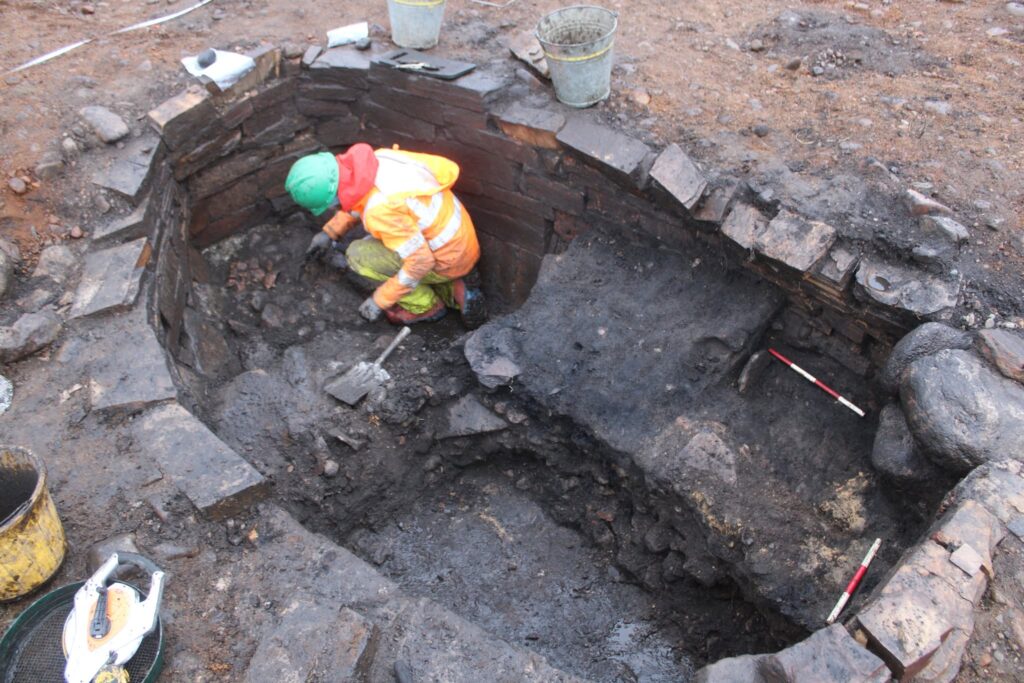
An unusual Iron Age burial discovered inside a stone-lined structure in northern Scotland has become more puzzling as archaeologists reveal what was placed above the dead. The adult, believed by excavators to have been probably female, was covered by deposits containing large quantities of animal bone, charcoal-rich soil and burned wood before the narrow entrance into the structure was eventually blocked with heavy stones.
The discovery was made at Evelix Quarry near Dornoch in Sutherland, where Highland Archaeology Services has been investigating archaeological remains ahead of quarry expansion. What initially appeared to be an extraordinary burial inside an enigmatic stone-built feature is now emerging as a much more complicated sequence of actions that may have accompanied both the burial of the individual and the deliberate ending of the structure’s use.
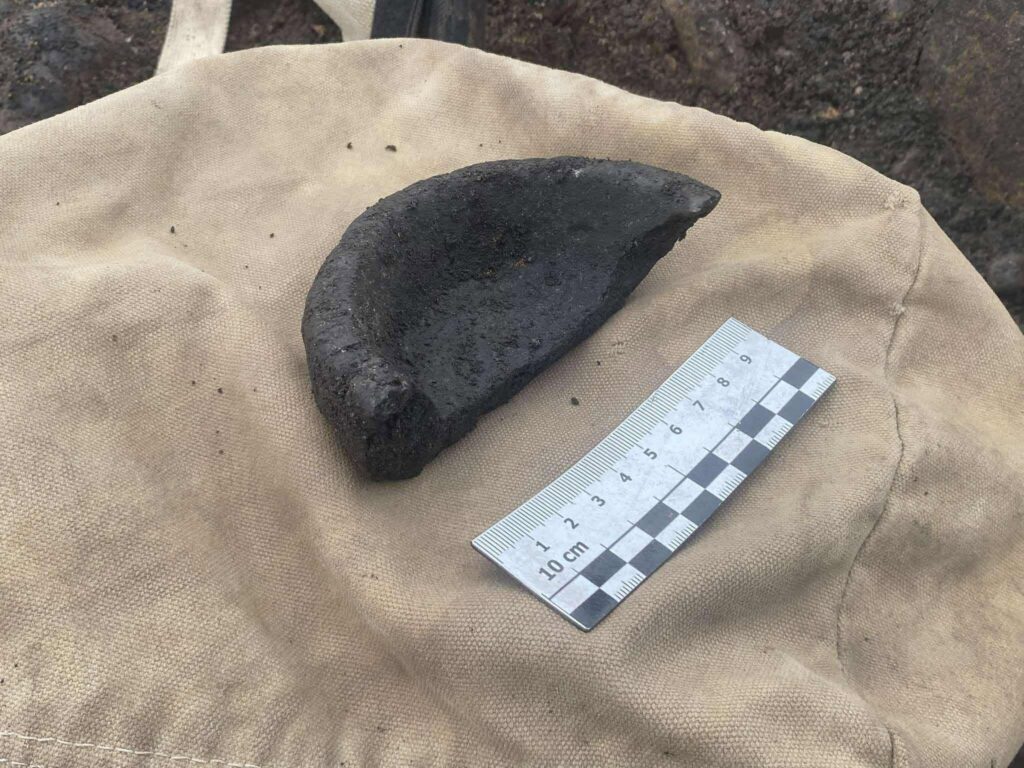
Among the material found in the deposits were a steatite stone vessel, interpreted as a possible bowl or lamp, and a lump of slag associated with metalworking. None of these objects proves that a ceremony took place, but their presence alongside animal remains, burned material, and a deliberately blocked entrance has led archaeologists to consider whether the structure was closed in a carefully organized way.
The dead were placed inside an older structure
The individual was not buried in a conventional grave dug specifically for the body. Instead, the remains were placed close to the bottom of an existing sunken structure measuring roughly three meters in length and around one meter deep, with carefully constructed stone walls, a paved floor, and steps leading down into the interior.
The lower stonework was bonded with a dense clay-like material, apparently capable of making the structure relatively watertight. This has raised the possibility that it originally held water or another liquid, and the Highland Historic Environment Record has cautiously suggested that it could have functioned as a “ritualised well,” although its original purpose remains unresolved.
The burial therefore appears to represent only the final chapter in the life of a structure that may already have had a long and very different history. Even more importantly, the body seems to have been placed inside after some sediment had already begun accumulating, suggesting that the feature was already being abandoned or transformed when the burial occurred.
What happened after the burial is the real puzzle
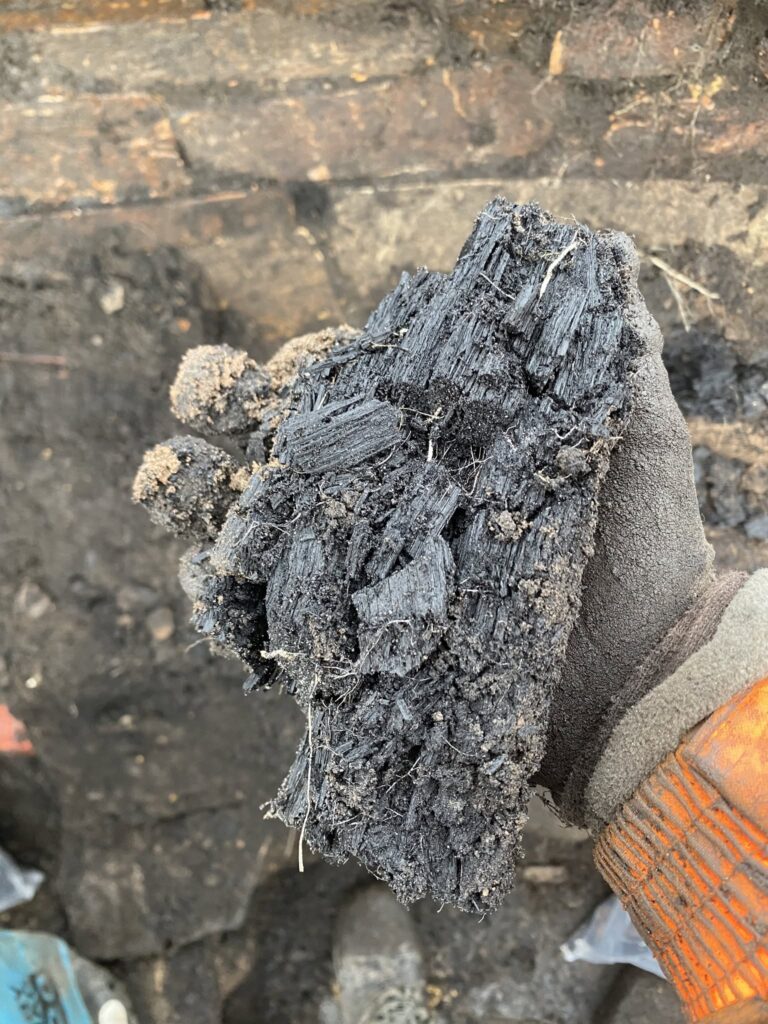
Archaeologists found substantial quantities of animal bone within deposits above the human remains, followed by charcoal-rich material containing pieces of burned wood. The presence of a possible stone lamp or bowl and metalworking slag adds further complexity, particularly because these objects were found within the same sequence associated with the structure’s final filling.
Animal bones, charcoal and industrial waste can all occur in ordinary settlement contexts, so archaeologists are cautious about automatically describing such deposits as ritual. At Evelix, however, the significance lies less in any single object than in the way different materials appear to have been introduced around a human burial before the structure was finally made inaccessible.
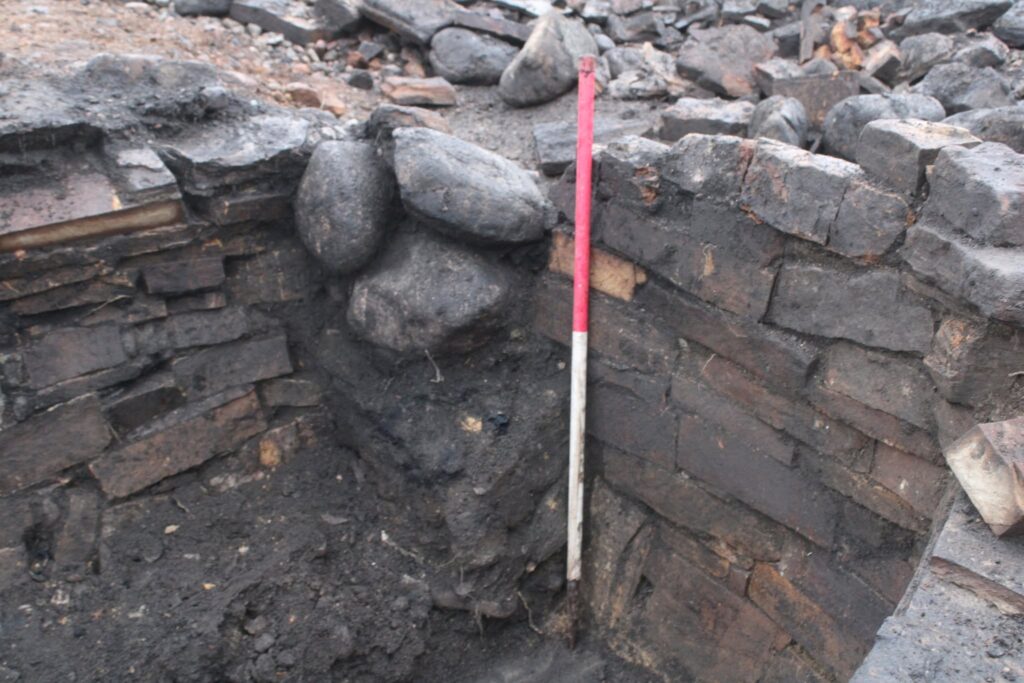
The stone steps are particularly intriguing. Highland Archaeology Services noted that they were unusually narrow, making entry and exit difficult even while the structure remained open, and several large boulders were subsequently placed into the access route.
If this blocking happened soon after the burial and the deposition of animal remains and burned material, the sequence may represent a deliberate closing act rather than gradual abandonment. In that interpretation, the burial of the individual and the “death” of the structure itself may have been closely connected.
Burial, disposal or deliberate closure?
The excavation team has deliberately avoided presenting ritual activity as a certainty. Highland Archaeology Services has instead posed a more fundamental question: were these deposits simply a practical way of abandoning an obsolete structure and disposing of the dead, or was something more elaborate taking place?
That distinction is difficult to establish archaeologically because practical and symbolic behavior are not always separate. A community could have been abandoning an old structure while simultaneously marking the event through the placement of a body, animals, objects, fire or stone, meaning that what appears functional today may also have carried meanings that are no longer recoverable.
The human burial therefore remains central to the interpretation. The structure was not simply filled with rubbish and abandoned; at some point, a person was deliberately placed inside, after which additional deposits accumulated above the remains and the route into the feature was obstructed.
Part of a wider Iron Age landscape
The Evelix discovery was made within a much larger archaeological zone. During the first phase of work between January 20 and February 25, 2026, archaeologists recorded 57 archaeological features together with the stone-built structure, despite investigating only about 18 percent of the northern part of the site.
Groups of pits and postholes may represent traces of roundhouses, suggesting that the burial belonged to an inhabited prehistoric landscape rather than an isolated location. Nearby Camore Wood also preserves an extensive complex of prehistoric settlement remains, including numerous hut circles and field systems associated with Bronze Age and Iron Age occupation.
No direct relationship between Camore Wood and the Evelix burial has yet been demonstrated. The broader evidence nevertheless shows that communities had occupied and repeatedly reshaped this landscape over many generations, providing a plausible setting in which old structures could acquire new meanings long after their original purpose had ended.
The identity of the buried person may provide the key
Important questions about the skeleton itself remain unanswered. The individual has provisionally been described as an adult and probably female, but detailed osteological results and a direct radiocarbon date for the remains have not yet been published.
Further analysis could establish age, sex, health and aspects of diet, while radiocarbon dating may clarify exactly when the burial took place. Dating the animal bones and charcoal could be equally important because it may reveal whether the body, burned material, animal remains and blocking of the entrance belonged to a single episode or accumulated across a longer period.
Until those results are available, Evelix resists a simple explanation. What survives is an unusual sequence in which an existing stone structure apparently designed to contain liquid was partly filled, a human body was placed inside, animal remains and burned material accumulated above it, objects entered the fill, and the narrow route into the structure was finally closed with stone.
Whether this was an improvised burial inside an abandoned feature or the carefully staged ending of a place that still held significance for the community remains unresolved. That uncertainty, rather than the word “ritual” itself, is what makes the Evelix discovery unusually compelling.
