24 February 2026 The Future is the Product of the Past

In the city of Gods and Goddesses Magnesia, Zeus Temple’s entrance gate found

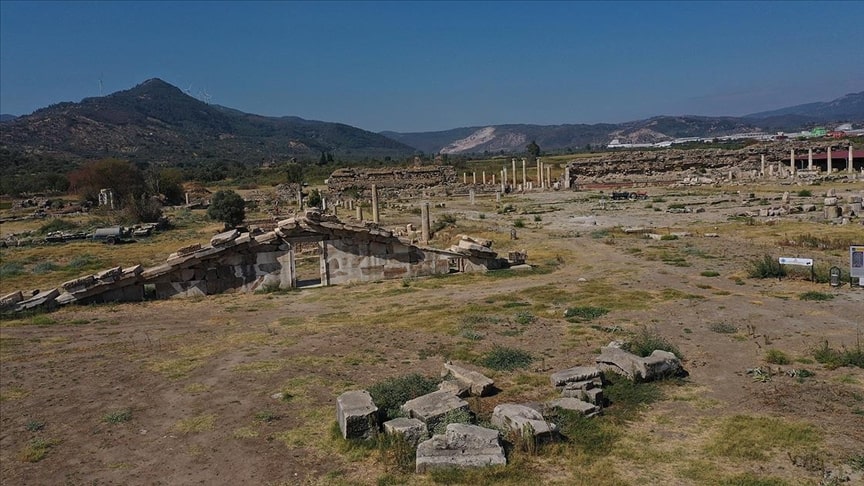
During an excavation in the ancient city of Magnesia, located in the Ortaklar district of Germencik in Turkey’s Aegean province of Aydin, the entry gate of Magnesia’s Zeus Temple was unearthed.

Magnesia, a city with a grid-planned avenue and street system, surrounded by a wall, located within the borders of Tekin Village, in an area of approximately 1300×1100 m2, is a very important city established on the strategic and commercial road.

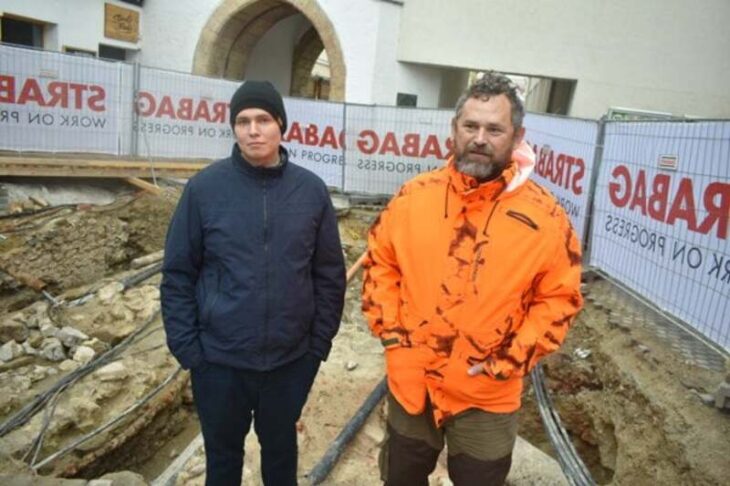
Excavations in the Ancient City of Magnesia continue under the direction of Ankara University Archeology Department Associate Professor Görkem Kökdemir.

Speaking to Anadolu Agency, Kokdemir said Magnesia was a prominent city in ancient times with its religious festivals held in temples and sanctuaries.

Görkem Kökdemir said, “This is a very important city in terms of religion. We can call it the city of ‘gods and goddesses. This has been demonstrated by the studies carried out so far. Special sanctuaries were built here for many gods and goddesses.”


📣 Our WhatsApp channel is now LIVE! Stay up-to-date with the latest news and updates, just click here to follow us on WhatsApp and never miss a thing!!
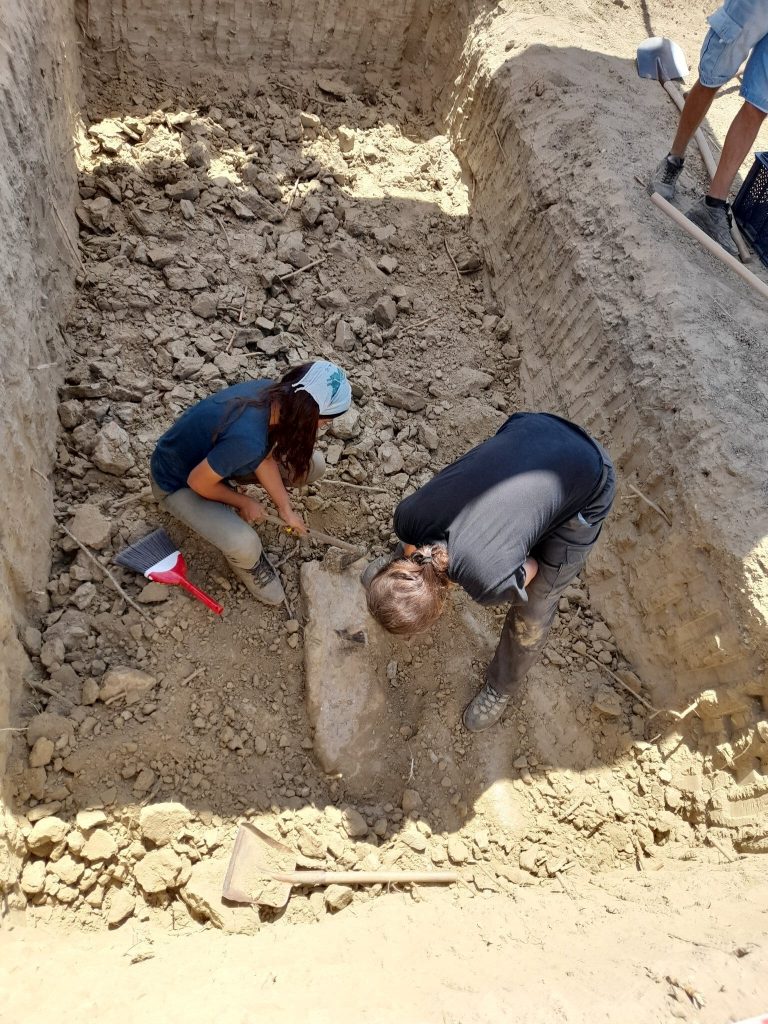


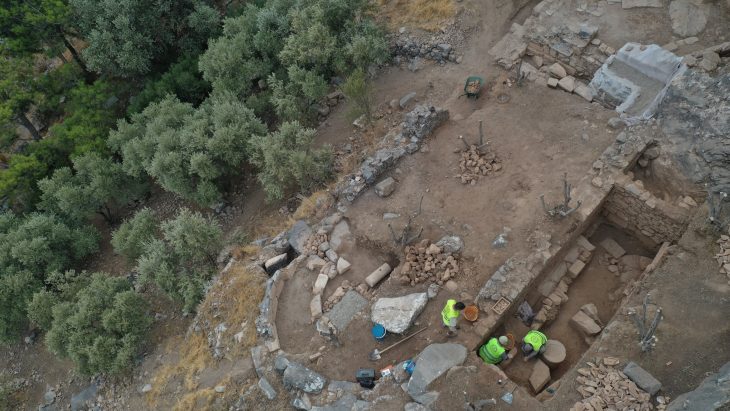
The moment when the first traces of the entrance gate of the Temple of Zeus in Magnesia were found. Photo Magnesia Excavations official Twitter account

In the news in Anadolu Agency (AA), Associate Professor Gorkem Kokdemir noted that they have started excavations in the 26 thousand square meter area known as the “religious agora”.

“We think that the temple we found in this area is as much important in the history of architecture as the 4th largest Temple of Artemis in Anatolia. It is a temple dedicated to Zeus,” he said.

He said the ancient area was previously excavated by Germans who took some pieces of Zeus Temple to Germany, which are still on display at the Berlin Pergamon Museum.

“Next year, we will reveal the origin of the structure, which is exhibited in the museum in Berlin. This is a tremendous thing. It is very important both for archaeological literature and tourism. So, we are very excited,” he said.

Stating that they will continue the excavations until the end of the year, Kökdemir said that they aim to reveal the entire temple after the entrance gate of the Temple of Zeus.

“When we unearth this temple completely, the eyes of the world’s archeology community will be here,” he added.
Related Articles

Itbaraks in Turkic Mythology: The Human-Bodied, Dog-Headed Beings Who Defied Oghuz Khagan

5 July 2025

5 July 2025

In the mist-shrouded realms of ancient Turkic epics, there exists a race that haunts both myth and memory—the İtbaraks. These...

1.77-Million-Year-Old Homo erectus Crania in China Challenge Long-Held Timelines of Human Dispersal

20 February 2026

20 February 2026

A pair of ancient skulls found along the Han River in central China have long puzzled paleoanthropologists. Were they classic...

Bronze age settlement found under in Swiss lake

23 April 2021

23 April 2021

For the first time, archaeologists discovered traces of a Bronze Age lakeside village beneath the surface of Lake Lucerne. The...

An Iron Age Necropolis was discovered in the Normandy, northwestern France

11 May 2022

11 May 2022

A modest Iron Age agricultural settlement excavated at Blainville-sur-Orne in Normandy, northwest France, led to the unexpected discovery of a...

The first time in Anatolia, a legionnaires’ cemetery belonging to the Roman Empire unearthed

18 November 2022

18 November 2022

In the ancient city of Satala, in the Kelkit district of Gümüşhane in the Eastern Black Sea region of Turkey,...

Women buried with thick twisted bronze neck rings and buckets on their feet found in Ukraine

20 January 2024

20 January 2024

Archaeologists discovered the remains of men buried with weapons such as axes, spearheads, and swords, and women buried with thick...

2,000-Year-Old Hellenistic Tomb Discovered Under Collapsed Port Road in Northern Cyprus

24 June 2025

24 June 2025

A routine alert about a collapsed road at Gazimağusa Port in Northern Cyprus has led to a remarkable archaeological breakthrough....

A Detectorist has Discovered a Completely Unique Medieval Seal Matrix in the UK

2 December 2023

2 December 2023

A medieval seal die, described by experts as ‘completely unique’, has been found by a metal detector at a field...

2800-year-old two Swords found in Germany from the start of the Iron Age

8 June 2022

8 June 2022

During archaeological excavations in preparation for the construction of the fire station in the Frieding district of Andechs in southern...

12,000-year-old ‘public building’ unearthed in southeastern Turkey’s Mardin

27 September 2022

27 September 2022

Archaeologists have discovered the remains of a “public building” thought to be 12,000 years old at Boncuklu Tarla in the...

Ancient Roman coin thought to be fake -certainly authentic and proves the existence of ‘forgotten’ leader Sponsian, study claims

26 November 2022

26 November 2022

History is littered with artifacts that were later discovered to be forgeries, but the opposite can also occur. A new...

A 900-year-old Crusader sword was found by a diver off Israel’s Carmen coast

18 October 2021

18 October 2021

A meter-long sword dating back to the Crusader period was found by an amateur diver on the seabed off the...

Smiling Medusa Found in Queen Amastris’s City: A Rare Discovery in Northern Türkiye

9 December 2025

9 December 2025

Archaeologists working in the ancient city of Amastris, located in the modern-day town of Amasra in Türkiye’s Bartın province, have...

Rare Five Bronze Age Axes found in the Forests of Poland

5 December 2023

5 December 2023

Archaeologists in Poland have discovered five Bronze Age axes in Starogard Forest District, located in Kociewie. A metal detectorist named...

First Trilobite Fossil Amulet from Roman Early Empire (1st–3rd Century CE) Found in Spain

22 July 2025

22 July 2025

In a discovery that may reshape our understanding of how ancient Romans perceived the natural world, archaeologists have uncovered a...