For more than three centuries, Halley’s Comet has been synonymous with the British astronomer Edmond Halley, who famously calculated its periodic return in the early modern era. However, new interdisciplinary research suggests that the comet’s cycle was already understood nearly 600 years earlier by an English monk living in medieval Britain. According to findings supported by Leiden University, the true pioneer behind the comet’s recurring pattern may have been Eilmer of Malmesbury, an 11th-century Benedictine monk and chronicler.
The research, led by astrophysicist Professor Simon Portegies Zwart in collaboration with historian Bob Zwart Lewis, reveals that Eilmer successfully linked two separate appearances of the same comet—in 989 and 1066—long before Halley’s calculations in the 17th century. Their conclusions were published in the scholarly volume “Dorestad and Everything After: Ports, Townscapes & Travellers in Europe, 800–1100”, which examines trade, travel, and intellectual exchange in medieval Europe.
A Forgotten Observation in Medieval Chronicles
The key historical evidence comes from William of Malmesbury, a respected 12th-century historian whose writings documented English history following the Norman Conquest. In his chronicles, William describes how an elderly monk named Eilmer (also known as Aethelmaer) witnessed a bright comet in 1066 and recognized it as the same celestial object he had seen decades earlier, in 989.
At the time, celestial events were commonly interpreted as divine signs. Eilmer reportedly warned that the comet’s return heralded political turmoil—a belief consistent with medieval thought, where astronomical phenomena were closely tied to theology and royal fate.
Despite the significance of this observation, historians and astronomers had long overlooked its scientific implications. According to the Leiden-led research, Eilmer’s realization effectively represents the earliest known identification of a periodic comet, predating Edmond Halley by centuries.
📣 Our WhatsApp channel is now LIVE! Stay up-to-date with the latest news and updates, just click here to follow us on WhatsApp and never miss a thing!!
Edmond Halley and the Comet’s Modern Fame
Edmond Halley (1656–1742), one of Britain’s most prominent astronomers, earned lasting recognition by demonstrating that the bright comets observed in 1531, 1607, and 1682 were the same object returning roughly every 76 years. His prediction that the comet would return in 1758—after his death—was later confirmed, cementing his legacy and leading to the comet being named 1P/Halley.
While Halley’s mathematical proof was groundbreaking for modern astronomy, the new research suggests that conceptual recognition of the comet’s recurrence existed long before the Scientific Revolution, albeit without the mathematical tools to formalize it.
The 1066 Appearance: A Comet That Changed History
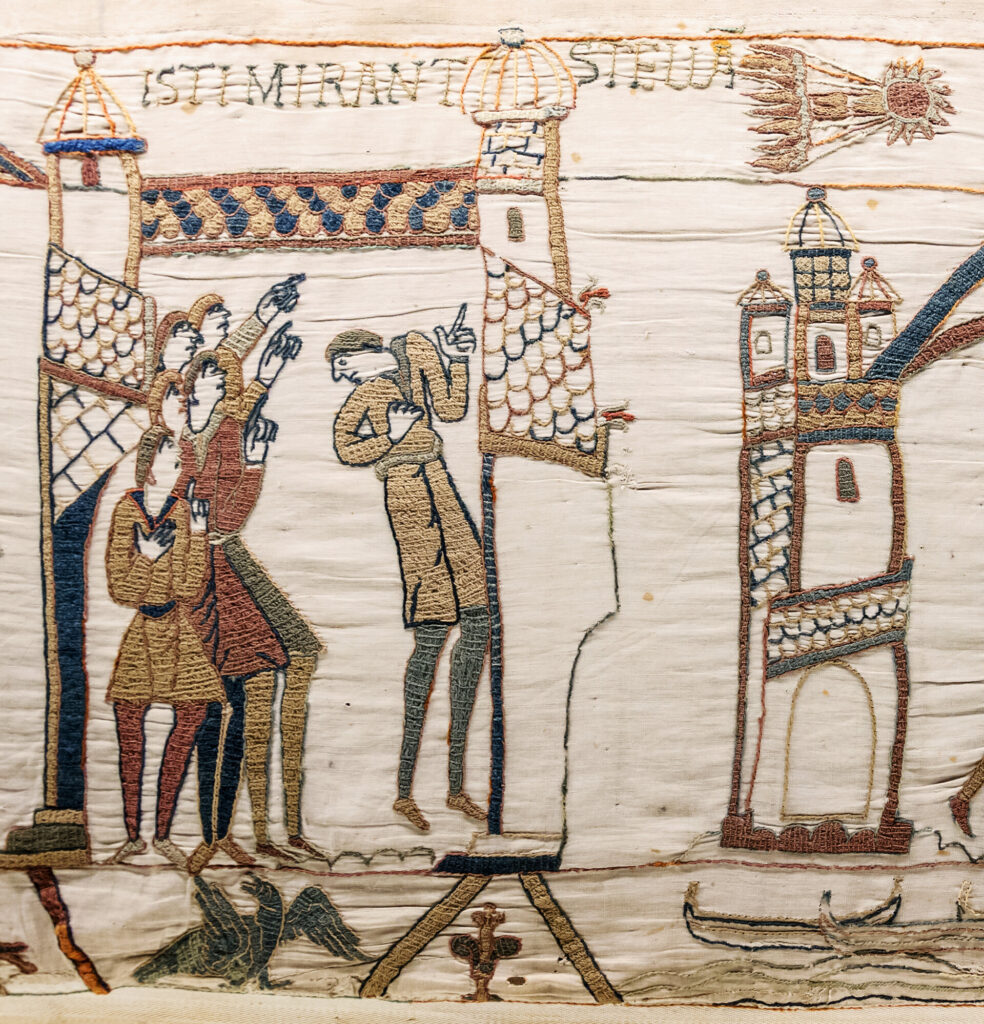
The comet’s 1066 appearance was one of the most widely recorded astronomical events of the Middle Ages. Chinese astronomers observed it for more than two months, noting its peak brightness on 22 April 1066. In Europe, it became visible in the British Isles on 24 April, shortly before the Norman Conquest.
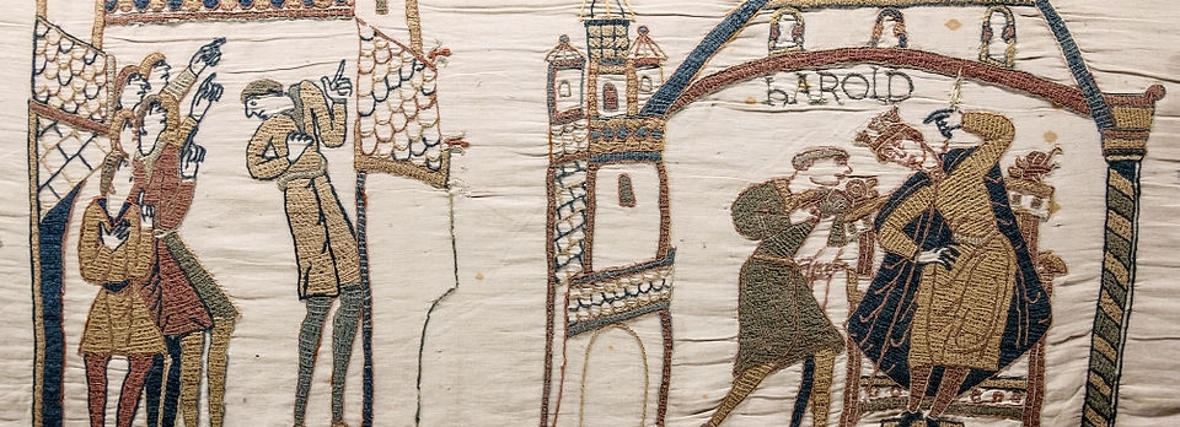
The comet is famously depicted on the Bayeux Tapestry, where it appears as an omen during the reign of King Harold II Godwinson, who ruled England for just nine months before his death at the Battle of Hastings. Medieval oral traditions frequently associated comet sightings with war, famine, or the death of kings, reinforcing their symbolic power.
Researchers also note that several comet sightings mentioned in medieval sources may have been exaggerated or misinterpreted. One alleged comet linked to the death of Archbishop Sigeric of Canterbury in 995, for example, may represent an early form of misinformation intended to inspire fear or moral reform.
Should Halley’s Comet Be Renamed?
Given Eilmer’s early recognition of the comet’s cycle, the researchers argue that the name “Halley’s Comet” may no longer accurately reflect its discovery history. While no official renaming has been proposed, the findings call for a broader reassessment of how scientific credit is assigned across cultures and centuries.
“This project was great fun, but also challenging,” said Professor Portegies Zwart. “Working at the intersection of astronomy and medieval history required us to rethink assumptions on both sides. We hope this opens the door to further research into early observations of periodic comets.”
Rewriting the History of Astronomy
The discovery highlights the often-underestimated scientific contributions of medieval scholars and underscores the value of interdisciplinary research. By combining historical texts with astronomical analysis, scholars are now revealing that the foundations of modern science may stretch further into the past than previously believed.
As research continues, Eilmer of Malmesbury may finally receive recognition as one of the earliest thinkers to glimpse the long-term rhythms of the cosmos—centuries before telescopes and equations made such insights commonplace.
Cover Image Credit: The oldest known depiction of Halley’s Comet on the Bayeux Tapestry. Wikimedia Commons