
8 December 2025 The Future is the Product of the Past

Gadebridge Park Roman Villa Marks England’s Largest Private Roman Swimming Pool

Beneath the grass and walkways of Gadebridge Park lies one of England’s most extraordinary Roman relics: a villa complex with a swimming pool so large it ranks second only to the Great Bath at Bath in private Roman Britain.

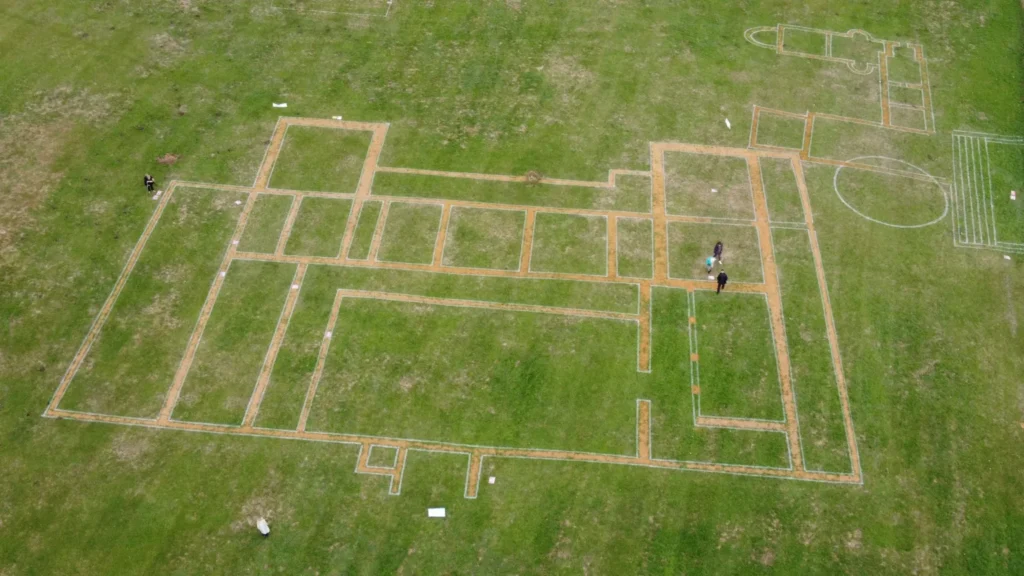
After decades of being buried and largely forgotten, the footprint of this ancient marvel was given new life this month, as local archaeologists and community groups marked out its outline for public viewing—and reminded residents of the grandeur that lies underfoot.

A Discovery in the 1960s: From Farmstead to Luxury Villa

The story began in the early 1960s, when road construction works uncovered masonry beneath the soil. Excavations led by archaeologist Dr. David S. Neal between 1963 and 1968 revealed a site that had been occupied for more than 300 years.

What started as a modest timber farmstead soon after the Roman conquest of AD 43 grew into a lavish stone villa. During the Antonine period in the 2nd century, extensions included corridors, bathhouses and grand wings, turning the complex into one of the largest and most impressive rural estates in the region.

The Grand Pool

By the early 4th century, the villa reached its height of luxury. A huge swimming pool measuring approximately 21 metres by 12 metres was constructed as part of an elaborate bathhouse. Visitors would descend five broad steps—one designed as a bench-seat—into the water. Ingeniously, holes in the base allowed fish to escape, hinting that the pool was fed naturally by water from the nearby River Gade.


📣 Our WhatsApp channel is now LIVE! Stay up-to-date with the latest news and updates, just click here to follow us on WhatsApp and never miss a thing!!


This remarkable feature makes it the largest private swimming pool ever discovered in a Roman villa in England, surpassed only by the monumental baths at Bath.
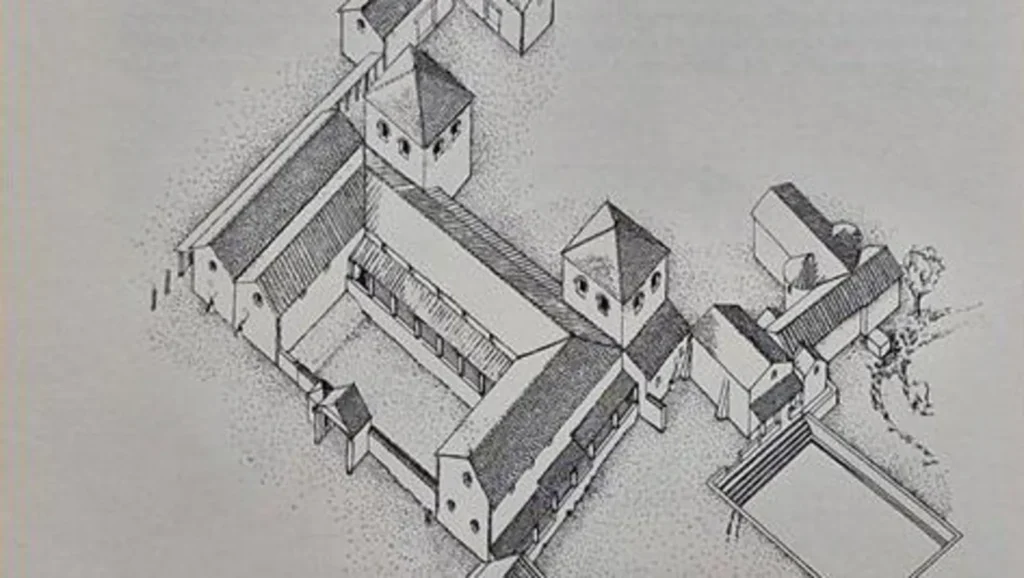
A drawing detailing the reconstruction of the Gadebridge Roman villa by Dr Neal, showing the swimming pool (bottom right). Credit: Hemel Hempstead History Society

Decline and Burial

Around AD 350, the villa was deliberately dismantled, possibly during political unrest. Evidence shows that grand living quarters gave way to simple agricultural use, with animals and small outbuildings replacing fine mosaic-floored rooms. Over centuries, the site disappeared beneath farmland, and later, a modern road. To preserve its remains from weather damage, much of it was reburied under protective sheeting and paving.

Bringing History to Life: Heritage Open Day

On 13 September, Dr Neal returned to Gadebridge Park not to excavate, but to guide visitors across the marked outlines of the villa. Paths, rooms, corridors and the famous pool were traced in the grass, allowing people to walk where Roman families once lived and bathed.

The event drew large crowds, many with personal memories of the original excavations. For many visitors, the highlight was standing at the spot of the pool steps, vividly recalling photographs from the 1960s dig. Seeing the outlines marked across the park brought the villa back to life in a way that written reports never could.

Why It Matters

The Gadebridge Park villa is far more than buried stone. It represents:

A window into Roman luxury: heated rooms, intricate mosaics, bathhouses and one of the grandest pools in Roman Britain.

An evolving history: from a simple farmstead to a symbol of wealth and status, and eventually to a ruin reclaimed by the land.

A community legacy: generations of local people contributed to its discovery, excavation and now its rediscovery as living heritage.
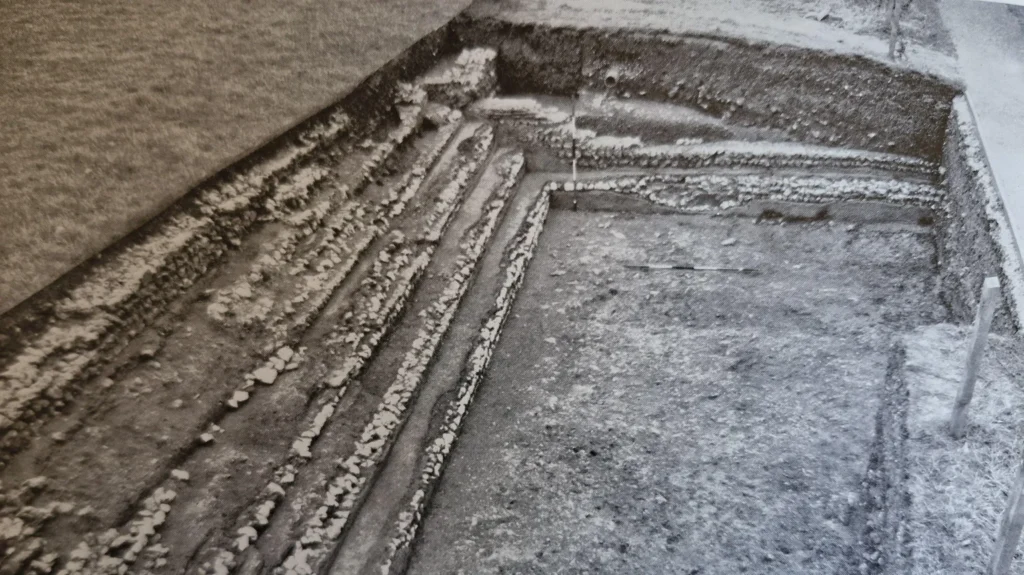
A huge swimming pool measuring approximately 21 metres by 12 metres was constructed as part of an elaborate bathhouse. Visitors would descend five broad steps—one designed as a bench-seat—into the water.  Credit: Hemel Hempstead History Society
A huge swimming pool measuring approximately 21 metres by 12 metres was constructed as part of an elaborate bathhouse. Visitors would descend five broad steps—one designed as a bench-seat—into the water. Credit: Hemel Hempstead History Society

In Summary

What was once uncovered, then forgotten, now lives again in the heart of Hemel Hempstead. The Roman villa of Gadebridge Park, with its monumental swimming pool, is no longer just buried archaeology—it is a story the community can see, walk across, and connect with. History, quite literally, lies beneath our feet.

Cover Image Credit: The site was marked out by rollers normally used to mark out football pitches. BBC – B. Mills

Related Articles

The excavations in Selinunte, Italy, which has the largest Agora in the Ancient World, “The results have gone well beyond expectations”

29 July 2022

29 July 2022

In the Selinunte, one of the most important archaeological sites of the Greek period in Italy, the outlines of the...

A 4000-Year-Old Seal Found in the prehistoric coastal site of Kalba on the Gulf of Oman

5 April 2024

5 April 2024

Archaeologists discovered a Gulf-type seal made of soft stone dating to the end of the third millennium BC at Kalba,...

Archaeologists discovered on Tunisian coast three shipwrecks, one of which 2,000 years old

8 June 2023

8 June 2023

A team of archaeologists from eight countries—Algeria, Croatia, Egypt, France, Italy, Morocco, Spain, and Tunisia bordering the Mediterranean Sea has...

The Mysterious Prehistoric Underwater Structure Beneath Lake Michigan

6 February 2024

6 February 2024

A prehistoric structure reminiscent of England’s iconic Stonehenge has been uncovered in Grand Traverse Bay, an arm of Lake Michigan...

Underneath an Illegal Excavation House, a Subterranean City Is Revealed!

25 June 2021

25 June 2021

Upon the information that illegal excavations were carried out in a house in the İscehisar district of Afyonkarahisar in western...

Ancient terracotta dancers, and musicians unearthed in China

13 November 2022

13 November 2022

Chinese archaeologists recently discovered a large group of terracotta figurines from a tomb in a group dating to the Northern...

Historic Leeds cemetery discovery unearths an ancient lead coffin belonging to a late Roman aristocratic woman

14 March 2023

14 March 2023

Archaeologists in northern Britain uncovered the skeletal remains of a late-Roman aristocratic woman inside a lead coffin, as well as...

Headless skeletons discovered in Prehistoric mass grave

14 January 2023

14 January 2023

Archaeologists have found a mass grave site containing 38 decapitated burials at a Neolithic settlement in Vráble, Slovakia. The remains...

7,000-Year-Old Alutiiq Villages Discovered on Alaska’s Shuyak Island

3 July 2025

3 July 2025

A recent archaeological survey led by the Alutiiq Museum has revealed significant discoveries on Shuyak Island, part of the Kodiak...

2500-year-old Persian ancient palace dish discovered in Oluz Höyük, Türkiye

18 October 2023

18 October 2023

A 2,500-year-old earthenware pot containing bone fragments and grains from the Persian-era palace kitchen was discovered during archaeological excavations at...

Archaeologists conducting excavations at the Roman Fort of Apsaros in Georgia, found evidence of the Legion X Fretensis

27 May 2023

27 May 2023

Polish scientists discovered that Legion X Fretensis, known for its brutal suppression of Jewish uprisings, was stationed in the early...

Bronze Age metal hoard discovered in the Swiss Alps at Roman battle site

29 June 2023

29 June 2023

Archaeologists excavating the Switzerland Oberhalbstein valley have discovered a metal hoard containing more than 80 bronze artifacts dating from 1200...

Riddle of Former Crater Lakes in the Highest Mountains of the Sahara Solved

18 August 2025

18 August 2025

An interdisciplinary research team, led by scientists from the Free University of Berlin and the Max Planck Institute for Meteorology,...

409 silver coins, found in the Mleiha area of Sharjah, were inspired by Alexander the Great and the Seleucid dynasty

17 July 2021

17 July 2021

409 silver coins dating to the 3rd century have been found in the Mleiha area of Sharjah in the United...

Excavations at Coleshill may rewrite English Civil War history

5 February 2023

5 February 2023

Archaeologists excavating the site of Coleshill Manor in Warwickshire have revealed evidence of what could be one of the first...